Louisiana electric vehicles are subject to a $110 annual road-usage fee beginning in 2026. This new charge applies to battery electric vehicles and helps offset lost gas tax revenue for road maintenance. As of 2026, it’s one of the ways states are adapting to the rise of EVs.
The fee kicks in at registration, so if you own or plan to buy an EV in Louisiana, this will be part of your annual costs. Here’s what it means for you and how it stacks up against other states.

Quick Answer
Louisiana electric vehicles are subject to a $110 annual road-usage fee beginning in 2026. It applies to battery electric vehicles. The fee is collected during vehicle registration.
It replaces some of the gas tax revenue lost from EVs.
The Quick Answer: Who Pays and When
This fee targets battery electric vehicles (BEVs) only. Plug-in hybrids (PHEVs) are not included under the current law. The $110 charge starts January 1, 2026, and you’ll pay it when you register or renew your EV’s registration.
The Louisiana Department of Revenue (LDR) will handle collection, likely through the same process as your annual registration.
Why Louisiana Is Charging EVs a Road-Usage Fee
Gas taxes fund road repairs, but EVs don’t use gas. Louisiana’s $110 fee helps fill that gap. The state’s gas tax is 20 cents per gallon, and as more drivers switch to EVs, that revenue shrinks.
The Louisiana Department of Transportation and Development (DOTD) relies on these funds to maintain highways and bridges. Without them, road quality could decline. This fee ensures EV drivers contribute fairly to infrastructure upkeep.
How the $110 Fee Works in Practice
You’ll pay the fee once per year when you renew your vehicle registration. The LDR will add it to your registration bill, so there’s no separate payment process. If you don’t pay, your registration won’t be valid.
The fee is flat, meaning it doesn’t change based on how much you drive. Whether you commute daily or only drive occasionally, the cost stays the same.
Does This Apply to Hybrids or Just Full EVs?
The $110 fee only applies to battery electric vehicles (BEVs). Plug-in hybrids (PHEVs) and traditional hybrids are not included.
This distinction matters because PHEVs still use gasoline and pay gas taxes. Louisiana’s law targets vehicles that never use gas, ensuring they still contribute to road funding.
How Louisiana’s Fee Compares to Other States
Louisiana’s $110 fee sits in the middle of the pack. Some states charge more, some charge less, and a few charge nothing at all.
Here’s how it breaks down in nearby states:
| State | Annual EV Fee | Notes |
|---|---|---|
| Texas | $200 | One of the highest in the U.S. |
| Arkansas | $200 | Applies to EVs and PHEVs |
| Mississippi | $75 | Lower than Louisiana’s fee |
| Alabama | $0 | No EV fee currently |
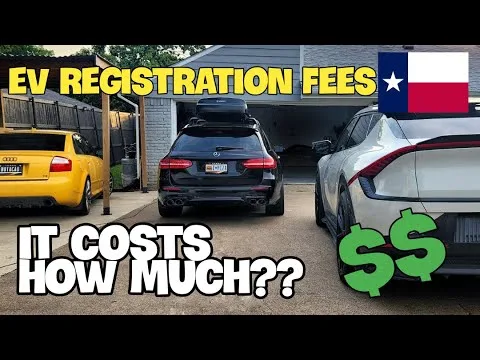
Texas and Arkansas lead with $200 fees, while Alabama charges nothing. Louisiana’s $110 is competitive but not the cheapest.
The Pros and Cons of the New EV Fee
The fee has clear benefits for road funding. It ensures EV drivers contribute to infrastructure they use. Without it, gas tax revenue would keep shrinking as EV adoption grows.
But there are downsides. EV owners may see this as an unfair penalty, since they already pay higher upfront costs for their vehicles. The flat fee also doesn’t account for actual road usage, unlike gas taxes which scale with driving.
For the state, it’s a predictable revenue stream. For drivers, it’s a fixed cost that’s easy to budget for.
What Happens If You Don’t Pay the Fee
If you skip the fee, your vehicle registration won’t be processed. That means you can’t legally drive your EV until you pay.
The Louisiana Department of Revenue will likely send a notice if payment is missed. Persistent non-payment could lead to late fees or even a registration suspension.
The simplest solution is to pay the fee on time. It’s bundled with your registration, so there’s no extra step.
How to Pay the Fee When It Starts in 2026
You’ll pay the fee when you renew your vehicle registration. The process will be the same as paying your annual registration fee.

Most drivers handle this online through the Louisiana Office of Motor Vehicles (OMV) portal. You can also pay in person at a local OMV office or by mail. The fee will appear as a line item on your registration bill.
Will This Fee Change as More EVs Hit the Road?
The $110 fee is set for now, but it could evolve. As EV adoption grows, Louisiana may adjust the fee to keep pace with road funding needs.
Other states have raised their EV fees over time. For example, Ohio started at $200 and later increased it. Louisiana could follow a similar path if revenue falls short.
For now, the fee is locked in through 2026. Any changes would require new legislation, so drivers will have time to adapt.
Frequently Asked Questions
Does the fee apply to used EVs?
Yes, the $110 fee applies to all battery electric vehicles regardless of age. Whether you buy new or used, you’ll pay it at registration.
Can I get a discount if I drive less?
No, the fee is flat and doesn’t adjust based on mileage. It’s tied to vehicle ownership, not usage.
What if I move to Louisiana with an out-of-state EV?
You’ll pay the fee when you register your vehicle in Louisiana. The state requires this for all EVs, even if they were previously registered elsewhere.
Will the fee increase over time?
There’s no scheduled increase, but the state could adjust it later. Any change would require new legislation.
Do commercial EVs pay the same fee?
The current law doesn’t specify exemptions for commercial EVs. Unless stated otherwise, they’ll likely pay the same $110 annual fee.
How does this compare to gas taxes?
Louisiana’s gas tax is 20 cents per gallon. The $110 EV fee roughly equals the tax on about 550 gallons of gas, which is less than the average driver uses annually.