ByMax Lee
Missouri Uninsured Motorist Coverage Rules & Penalties
Driving without insurance happens more often than most drivers realize, and when it does, the financial damage can be devastating. If you've ever wondered about Missouri uninsured motorist coverage requirements and penalties, this guide will walk you through everything you need to know, from legal minimums to real-world claim scenarios.
Missouri law requires every driver to carry at least $25,000 in bodily injury liability per person and $50,000 per accident, but that minimum stops far short of covering serious crashes. As of 2026, roughly 14% of Missouri drivers still operate vehicles without any insurance at all, which makes adding uninsured motorist protection one of the smartest decisions you can make with your auto policy.
Quick Answer
Yes, Missouri technically allows you to decline uninsured motorist coverage if you sign a written rejection form. But doing so leaves you completely exposed if an uninsured or underinsured driver causes your accident. The state penalty for driving without insurance alone is steep: a $300 fine plus license suspension until you provide proof of coverage.
You want coverage you can actually call on when the other driver has nothing to offer.
YouTube / Bprotech (YouTube thumbnail (fair-use with source credit))
Is Uninsured Motorist Coverage Required in Missouri?
Missouri law does not force you to carry uninsured motorist coverage on your auto policy. However, insurance companies must offer it to you in writing, and if you want to turn it down, you have to formally reject it on paper. That rejection stays on your policy record until you change your mind and request it again.
Most experienced agents strongly recommend keeping UM coverage even though it is optional. Missouri has about 14% of drivers operating without insurance. If one of those drivers hits you and you declined UM coverage, you are looking at personal responsibility for your medical bills, lost wages, and vehicle repairs.
The state does require liability insurance. Every registered vehicle must carry minimum bodily injury and property damage coverage. Failing to maintain those required liability limits triggers fines, suspension, and possible SR-22 filing requirements.
Missouri's Minimum UM/UIM Coverage Limits (2024)
When you do add uninsured and underinsured motorist coverage, you need to understand how the limits work. Missouri follows a split-limit system for both liability and UM coverage.
The state minimum Bodily Injury Liability requirement is $25,000 per person and $50,000 per accident, along with $10,000 for property damage. When UM coverage matches those same minimums, here is what each number actually covers in a real crash.
| Coverage Type | Per Person Limit | Per Accident Limit | What It Covers |
|---|---|---|---|
| Bodily Injury Liability (required) | $25,000 | $50,000 | Other person's injuries you caused |
| Property Damage Liability (required) | $10,000 | $10,000 | Damage you caused to their property |
| Uninsured Motorist Bodily Injury | $25,000 | $50,000 | Your injuries from an uninsured driver |
| Underinsured Motorist Bodily Injury | $25,000 | $50,000 | Your injuries when the other driver's limits fall short |

YouTube / Stokes Stemle, LLC, Personal Injury Attorneys (YouTube thumbnail (fair-use with source credit))
Those minimums sound reasonable until you factor in real-world costs. A single serious accident involving multiple injuries can easily exceed $100,000 in medical bills. An airbag deployment, broken bones, and a week in the hospital can push past the $25,000 per-person limit within hours.
Many Missouri drivers opt for higher limits like $50,000 per person and $100,000 per accident. The premium difference is usually modest, often adding only $50 to $150 annually, but the protection increase is substantial.
Stacked vs. Unstacked UM Coverage in Missouri: Which Should You Choose?
This distinction matters more than most drivers realize. Stacked and unstacked coverage determine how many policy limits are available when you file an uninsured motorist claim, especially if you own multiple vehicles.
With unstacked coverage, you are limited to a single set of limits regardless of how many cars you drive. If your policy carries $25,000 per person and you are injured in an accident involving one of your vehicles, that $25,000 cap applies.
Stacked coverage works differently. Each vehicle on your policy adds its own layer of UM protection. With three cars stacked at $25,000 each, you could potentially access $75,000 in coverage if you are injured while riding in one of your insured vehicles.
| Feature | Stacked Coverage | Unstacked Coverage |
|---|---|---|
| How limits work | Each vehicle adds its own limit | Single limit applies across all vehicles |
| Total available per person | Multiple limits can combine | Capped at one limit amount |
| Cost | Higher premium | Lower premium |
| Best for | Households with multiple cars | Single-car households or budget-conscious drivers |
YouTube / 1800TrialPro (YouTube thumbnail (fair-use with source credit))
The stacked option costs more, but the price jump is rarely dramatic. A typical stacked endorsement might add $100 to $300 per year depending on your insurer and driving record.
What Happens If You're Hit by an Uninsured Driver in Missouri?
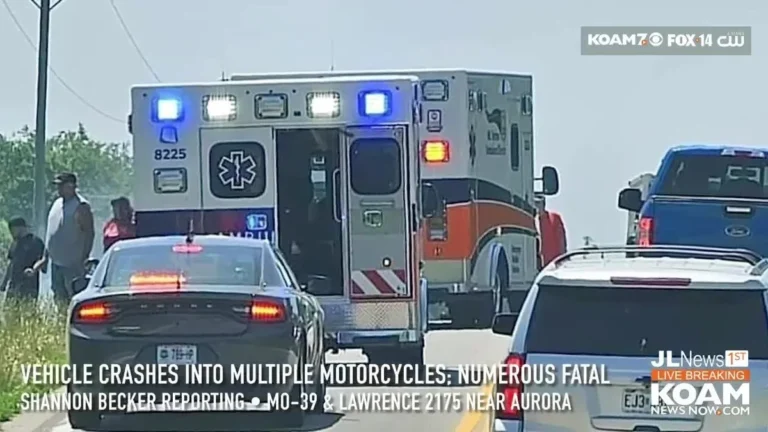
Being struck by a driver who lacks insurance is one of the most stressful situations a motorist can face. The immediate steps you take after the crash will shape your entire claim and potentially your financial recovery.
First and foremost, call 911 if anyone is injured. Police reports become essential documentation when you file an uninsured motorist claim, since you need to prove the other driver was actually uninsured.
Exchange information at the scene just as you would in any crash. Get the other driver's name, contact details, license plate number, and vehicle description. Unfortunately, you will likely not receive insurance information, but having the license plate allows investigators to trace the vehicle through state records later.
YouTube / Erik Popplewell (YouTube thumbnail (fair-use with source credit))
Seek medical attention promptly, even if you feel fine. Some injuries, particularly whiplash and soft tissue damage, do not produce immediate symptoms.
Contact your insurance company as soon as practical to report the accident and initiate your UM claim. Missouri allows a five-year statute of limitations for personal injury claims, but waiting too long can weaken your case.
How to File an Uninsured Motorist Claim in Missouri (Step by Step)
Filing a UM claim in Missouri follows a clear process, but moving through it methodically makes a significant difference in how smoothly your claim gets processed and resolved.
Step One: Document everything at the scene. Take photographs of vehicle damage, skid marks, road conditions, and visible injuries if safe to do so. Collect witness contact information if anyone stopped to help.
Step Two: Report the accident to law enforcement. A police report provides an official third-party account of the incident, including notations about the other driver's insurance status.
Step Three: Notify your insurance company. Call your agent or claims department within 24 to 48 hours of the accident. Provide them with the police report number, the other driver's information, and a basic timeline of events.
Step Four: Complete the required claim forms. Your insurer will send specific UM claim paperwork, including a statement detailing your injuries, medical treatment received, and any missed work.
Step Five: Cooperate with the investigation. Your UM adjuster may request medical records, employment verification for lost wages, and possibly an independent medical examination.
Step Six: Review the settlement offer carefully. UM settlements often start lower than the actual value of your claim. You have the right to negotiate, request a detailed breakdown of the calculation, and countersuggest a higher amount if the initial offer does not adequately cover your losses.
If your claim gets denied or the settlement feels unfair, you can request arbitration as outlined in many Missouri policies, or consult with a personal injury attorney who understands insurance disputes. The Michigan approach to uninsured motorist disputes offers some useful comparison points.
Penalties for Driving Without Insurance in Missouri
Missouri takes driving without insurance seriously, and the consequences go well beyond a simple traffic ticket. The penalties escalate quickly if you get caught multiple times, and they can affect your ability to drive legally for months or longer.
A first offense carries a $300 fine and a license suspension that lasts until you file proof of insurance with the state. That means even after paying the fine, you cannot legally drive until your insurer submits an SR-22 or equivalent certificate to the Missouri Department of Revenue. The reinstatement fee runs $20.
| Offense Level | Fine | License Suspension | Reinstatement Fee | Additional Requirements |
|---|---|---|---|---|
| First offense | $300 | Until proof of insurance filed | $20 | None |
| Second offense | $400 | Up to one year | $20 | Possible SR-22 filing |
| Third or subsequent offense | $500 | Up to one year | $20 | Mandatory SR-22 for three years |
YouTube / EINSURANCE (YouTube thumbnail (fair-use with source credit))
The financial impact extends well beyond the court fines. Insurance premiums spike dramatically after a lapse, sometimes doubling or tripling once you reinstate coverage.
Missouri's "No Pay, No Play" Law and How It Affects You
Missouri has a unique statute that can dramatically reduce what an uninsured driver recovers if they get into an accident, even when they are not at fault. This law exists to discourage driving without insurance, but it affects everyone on the road, not just the uninsured.
Under Missouri's no pay, no play rule found in Revised Statutes § 303.170, an uninsured motorist who is injured in an accident cannot recover the first $25,000 in bodily injury damages or $10,000 in property damage, even if another driver caused the collision.
YouTube / Rob Freeman | Insuring The Built Environment (YouTube thumbnail (fair-use with source credit))
This law creates an interesting dynamic for insured drivers. If you have proper UM coverage and get hit by an uninsured motorist, your own policy steps in to cover your injuries up to your limit. The no pay, no play statute does not penalize you because you maintained the insurance the law expects every driver to carry.
Do You Need More Than the Minimum UM Coverage in Missouri?
The short answer depends on your personal circumstances, but the longer answer leans heavily toward yes. The state minimum of $25,000 per person sounds adequate on paper, but modern medical costs tell a different story.
A single emergency room visit runs $2,000 to $5,000 before any diagnosis begins. Surgery for a broken femur can exceed $50,000. Consider increasing your UM coverage if you own a home or other significant assets, you have dependents relying on your income, or you frequently drive with passengers.
Can You Drop Uninsured Motorist Coverage After Initially Accepting It?
Once you have UM coverage on your policy, dropping it is possible but never straightforward. Your insurer will require a written request to remove the coverage, and the change only takes effect at your next renewal date or policy modification point.
Before removing UM coverage, ask yourself whether your circumstances have fundamentally changed. If you no longer own a vehicle, moved out of state, or switched to a policy through an employer that includes equivalent protection, then dropping UM may make sense.
UM vs. Collision vs. PIP: What’s the Difference in Missouri?
UM covers your injuries when an uninsured driver hits you. Collision covers damage to your car regardless of fault. Missouri doesn’t require PIP, so UM is your primary protection for medical bills after a crash with an uninsured motorist.
Collision pays for your vehicle repairs whether you hit a tree or an uninsured driver hits you. PIP would cover medical expenses for you and passengers regardless of fault, but Missouri uses a traditional liability system instead.
Real-Life Scenarios: When UM Coverage Saves You (and When It Doesn’t)
UM pays out if an uninsured driver totals your car and injures you. It also covers hit-and-run accidents where the other driver flees the scene. Without UM, you’re on the hook for all medical and repair costs.
UM won’t help if you’re at fault for the accident. It also doesn’t cover mechanical breakdowns or damage from non-collision events like hail or theft.
FAQs About Missouri Uninsured Motorist Coverage
Can I add UM coverage after an accident?
No. You must have UM coverage in place before the accident occurs to file a claim.
Does UM cover passengers in my car?
Yes. UM extends to all passengers in your vehicle at the time of the accident.
What if the uninsured driver is a family member?
Most policies exclude household members. Check your specific policy language for details.
Does UM apply to rental cars?
Only if your personal policy includes it. Rental companies offer separate coverage options.
Final Verdict: Should You Get (or Keep) UM Coverage in Missouri?
Yes. The risk of encountering an uninsured driver in Missouri is too high to go without protection. The small premium cost is worth the financial security.