ByMax Lee
Missouri School Bus Stop Law on Divided Highways Explained
Missouri school bus stop law for all drivers on divided highways can be confusing, especially when you're unsure whether to stop or keep going. The rules change based on the road type, and mistakes can endanger children or lead to fines.
In Missouri, the law is clear: you must stop for a school bus with flashing red lights and an extended stop arm unless you're on the opposite side of a physically divided highway. As of 2026, violations can cost up to $250 and add points to your license.
Quick Answer
Missouri school bus stop law for all drivers on divided highways requires you to stop if traveling in the same direction as the bus. On a divided highway with a physical barrier, vehicles in the opposite direction may proceed. Amber lights mean prepare to stop.
Red lights and an extended stop arm mean stop completely. Never pass a bus with red lights flashing.
Why Getting This Law Right Matters
School buses transport over 500,000 Missouri students daily. A single mistake can lead to tragic accidents or serious legal consequences. Understanding the rules keeps children safe and helps you avoid fines, points on your license, or even criminal charges.
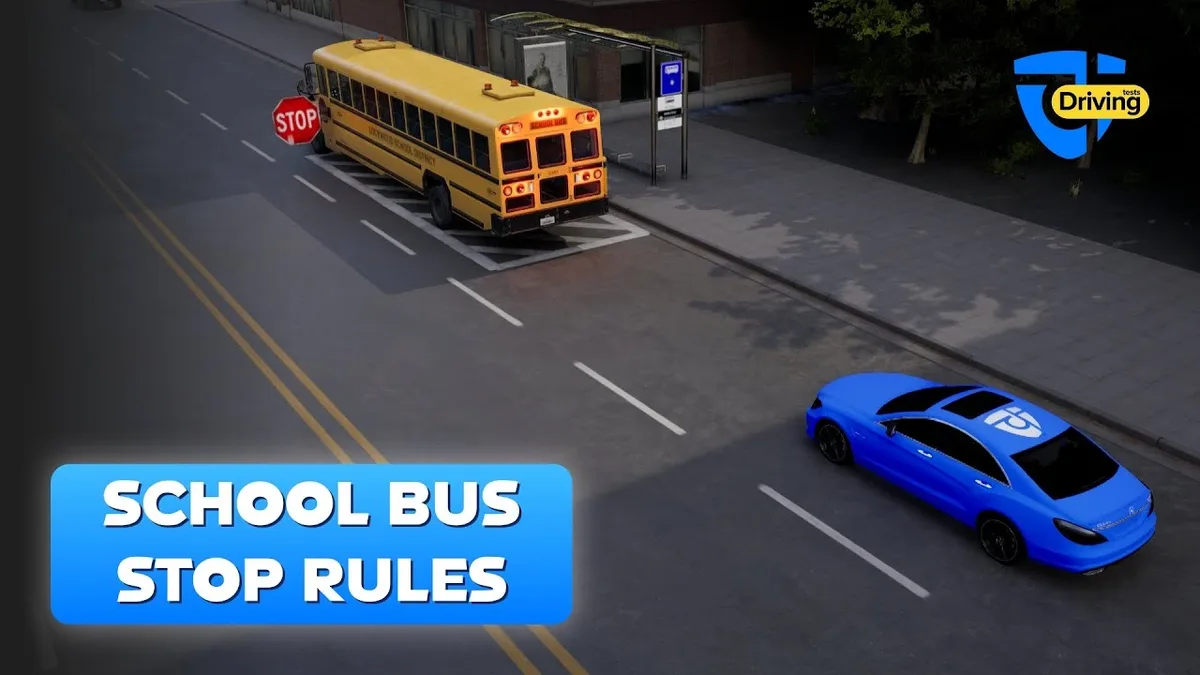
YouTube / Driving-Tests.org (YouTube thumbnail (fair-use with source credit))
Understanding Missouri’s School Bus Stop Law
Missouri’s school bus stop law is governed by RSMo Section 304.050. It applies to all drivers and is designed to protect children boarding or exiting a bus.
What the Flashing Lights Mean
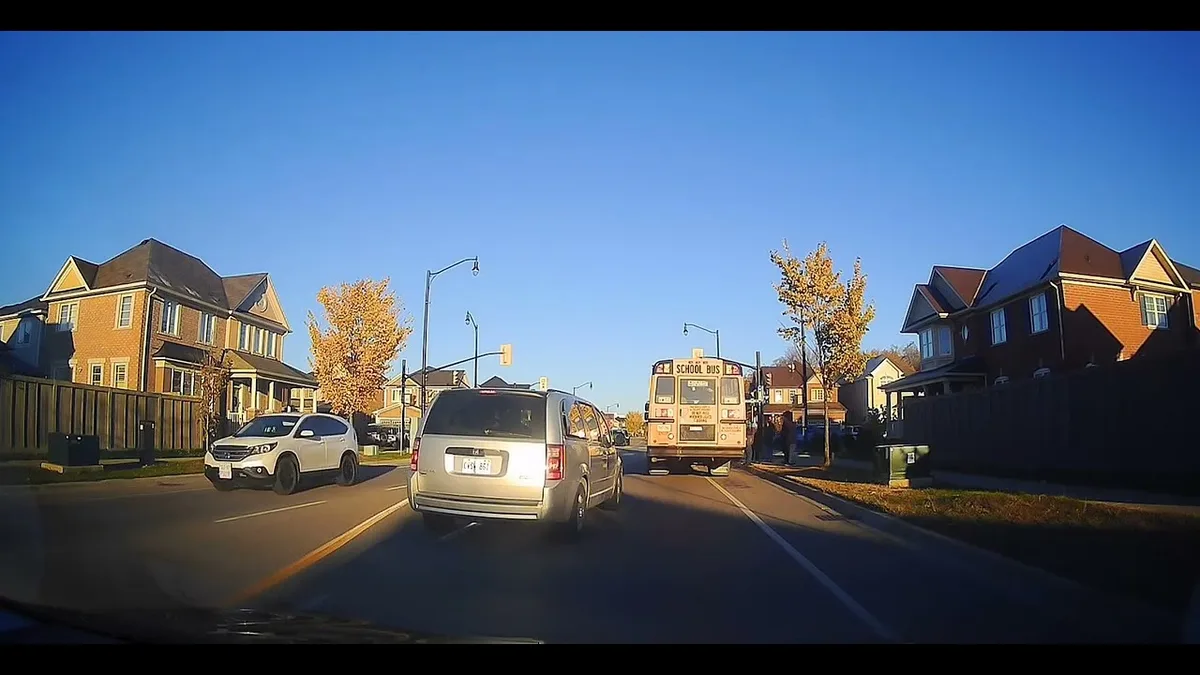
School buses use a two-stage light system. Alternating amber lights indicate the bus is preparing to stop. Alternating red lights, along with the extended stop arm, signal that the bus is stopped and children may be crossing.
YouTube / HelpingAll (YouTube thumbnail (fair-use with source credit))
When you see amber lights, slow down and prepare to stop. When the red lights flash and the stop arm extends, you must come to a complete stop at least 20 feet from the bus.
Real Scenarios: Do You Have to Stop?
The answer depends on your direction of travel and the type of highway.
| Scenario | Must You Stop? |
|---|---|
| Same direction as the bus on any road | Yes |
| Opposite direction on a two-way road | Yes |
| Opposite direction on a divided highway with a physical barrier | No |
| Opposite direction on a divided highway without a physical barrier | Yes |
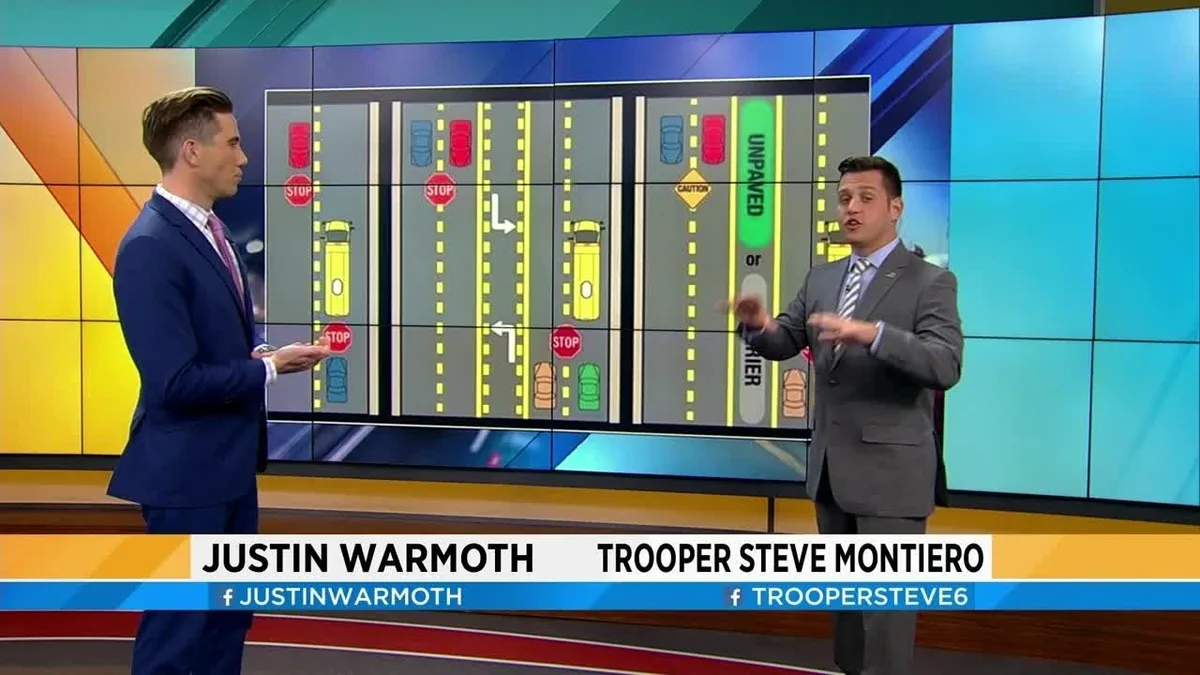
A physical barrier can be a concrete divider, grass median, or any separation that prevents vehicles from crossing into the opposite lane.
The Divided Highway Exception
On a divided highway, vehicles traveling in the opposite direction of the bus are not required to stop if there is a physical barrier separating the lanes. This exception exists because the barrier prevents children from crossing into the path of oncoming traffic.
YouTube / WKMG News 6 ClickOrlando (YouTube thumbnail (fair-use with source credit))
If there is no physical barrier, such as a center turn lane or painted lines, you must stop regardless of your direction.
Stopping Safely: What You Need to Do
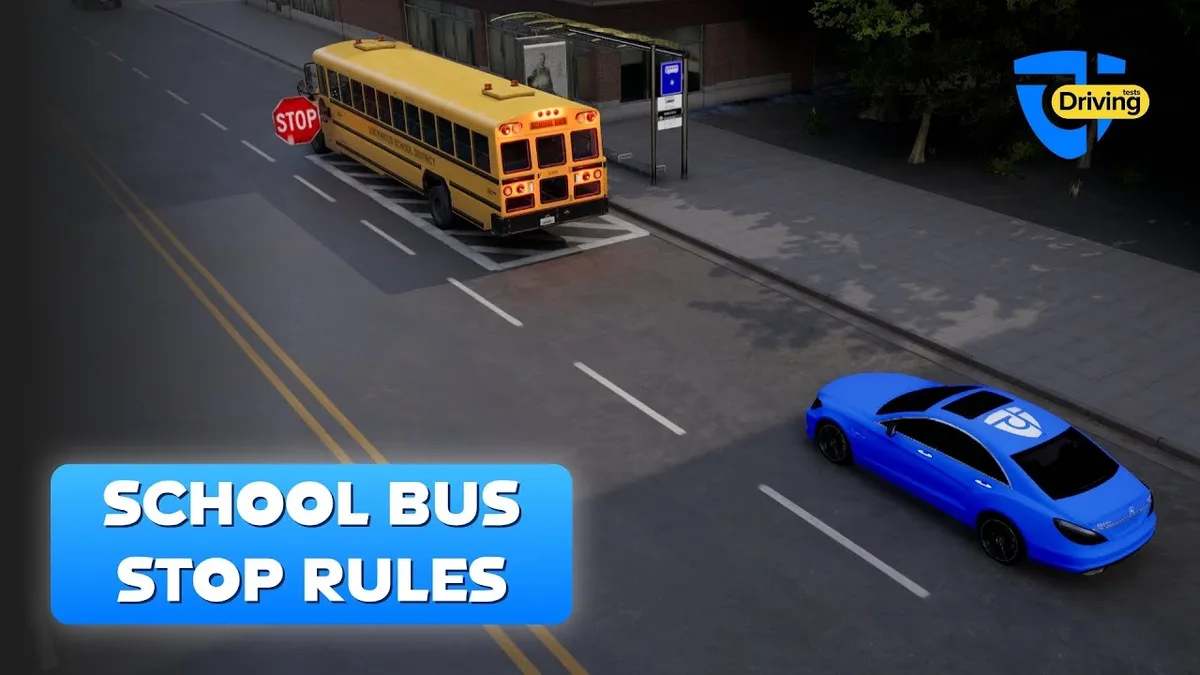
When you see a school bus with its amber lights flashing, begin slowing down and prepare to stop. Once the red lights start flashing and the stop arm extends, come to a complete stop at least 20 feet from the bus. Remain stopped until the bus resumes motion, the red lights turn off, and the stop arm retracts.

Wikimedia Commons / Bambizoe from Dresden, Germany
Check for children crossing the street before proceeding. Some may still be crossing or may not see your vehicle.
Penalties for Violating School Bus Laws in Missouri
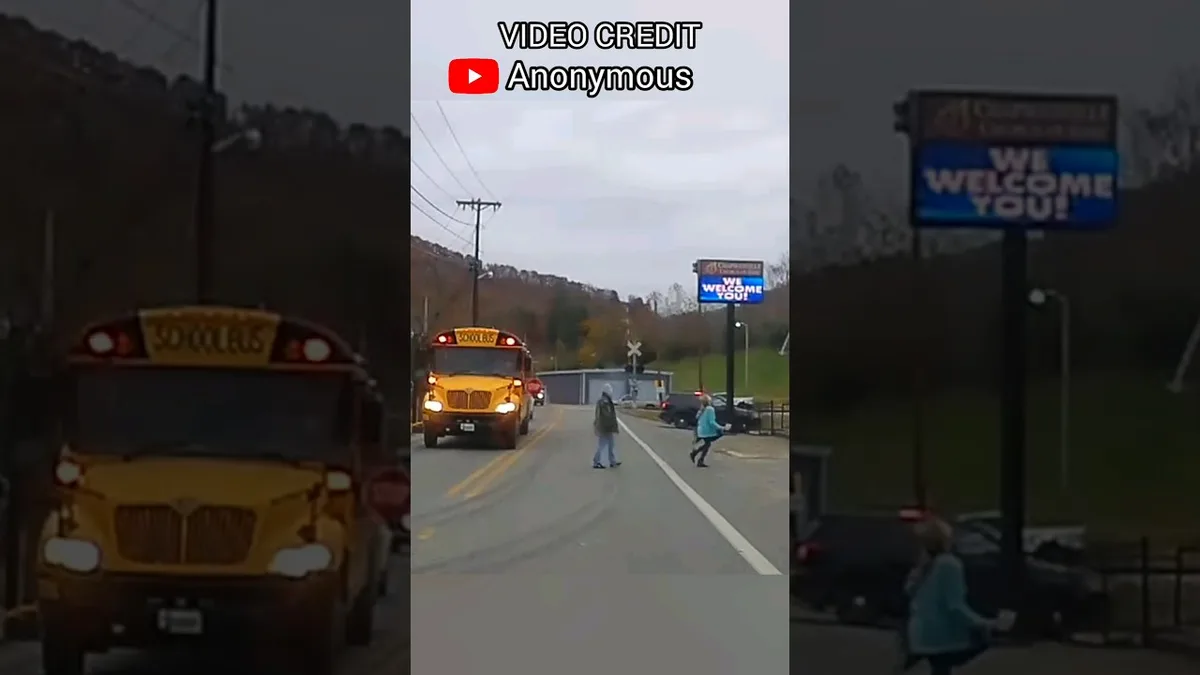
Passing a stopped school bus with its red lights flashing is a class A misdemeanor in Missouri. First-time offenders face fines up to $250 and four points on their driving record. Repeat violations can lead to higher fines, license suspension, or even jail time.
These penalties exist because illegal passes are a leading cause of school bus-related fatalities. Missouri State Highway Patrol reports that most child fatalities occur when drivers fail to stop for a bus’s flashing red lights.
YouTube / Dash Crash Cam (YouTube thumbnail (fair-use with source credit))
Common Mistakes Drivers Make
Many drivers assume they can pass a school bus if they don’t see children crossing. This is dangerous and illegal. The law requires you to stop regardless of whether children are visible.
Another common mistake is misjudging the type of highway. Drivers often treat a center turn lane as a physical barrier, but it is not. If there’s no concrete divider or raised median, you must stop for a bus with flashing red lights.
Some drivers also ignore the amber lights, which are a warning to prepare to stop. Failing to slow down during this phase can lead to rear-end collisions or force the bus to stop abruptly.
Expert Tips for Staying Compliant
Always maintain a safe following distance behind a school bus. This gives you more time to react when the bus activates its lights.
If you’re unsure whether a highway is divided, assume it is not. Stopping when you don’t have to is far safer than risking a child’s life or breaking the law.
YouTube / Driving-Tests.org (YouTube thumbnail (fair-use with source credit))
Watch for children near bus stops, even if the bus hasn’t activated its lights yet. Kids can be unpredictable and may dart into the street. Slow down in residential areas and near schools, especially during morning and afternoon hours.
Frequently Asked Questions
Do I have to stop for a school bus on a divided highway in Missouri?
Yes, if you’re traveling in the same direction as the bus. If you’re on the opposite side of a physically divided highway, you may proceed with caution.
What’s the difference between amber and red flashing lights on a school bus?
Amber lights mean the bus is preparing to stop. Red lights mean the bus is stopped and children may be crossing. You must stop for red lights.
Can I pass a school bus if no children are getting on or off?
No. The law requires you to stop whenever the bus’s red lights are flashing and the stop arm is extended, regardless of whether children are visible.
What’s the fine for passing a stopped school bus in Missouri?
The fine for a first offense is up to $250, plus four points on your driving record. Repeat offenses can result in higher fines and license suspension.
Are school bus stop laws the same in all states?
No. Each state has its own laws. For example, Maryland’s school bus stop law on divided highways differs slightly from Missouri’s.
Always check local regulations when driving in a new state.