ByMax Lee
Motorcycle Registration in American Samoa: $40 Fee
American Samoa's $40 registration fee for motorcycles and mopeds is a straightforward flat rate that keeps your two-wheeled vehicle legal on public roads. Per the territory's motor vehicle code, this single fee applies to both motorcycles and mopeds regardless of engine size. That covers your annual registration, proof of ownership, and basic road eligibility as of 2026.
Getting the registration right matters because riding an unregistered vehicle can lead to fines, impound, or even a suspended license. We've tracked the exact paperwork, payment steps, and common pitfalls so you can get on the road without hassle.
YouTube / AS for Permant FBI Office (YouTube thumbnail (fair-use with source credit))
Quick Answer
The American Samoa $40 registration fee for motorcycles and mopeds covers your annual vehicle registration. You pay this flat rate to the Department of Public Safety's Motor Vehicle Division. The fee registers the motorcycle or moped for one full year.
You must pay it to ride legally on public roads. Without it, you risk fines or vehicle impound.
What the $40 Motorcycle and Moped Registration Fee in American Samoa Covers
The $40 registration fee isn't a one-time title transfer charge. It's an annual fee that keeps your motorcycle or moped legally registered each year. When you pay the $40, you're covering several administrative and legal requirements at once.
First, you're securing your vehicle's registration sticker and license plate. Those prove your bike is registered and allow you to ride it on public roads. Second, the fee covers the territory's record-keeping system.
Every registered vehicle is tracked in American Samoa's database for safety and tax purposes. Third, registration funds support local road maintenance and enforcement.
The fee applies equally to motorcycles and mopeds. American Samoa doesn't tier the registration cost by engine displacement. A 50cc moped pays the same $40 as a 600cc motorcycle.
If you've recently purchased a used bike, you might wonder whether the $40 covers a title transfer too. It doesn't. Title transfers have their own fees.
You'll pay the registration fee on top of any transfer charges.
Our research shows that riders often mistake registration for a one-time purchase. It's not. You must renew annually or face penalties.
Why This Fee Matters for Riders in American Samoa
Paying the registration fee isn't just paperwork. It's what keeps you legal, insured, and protected. Riding an unregistered motorcycle or moped in American Samoa carries real risks.
Law enforcement can issue fines, impound your vehicle, or suspend your license.
Beyond legal trouble, registration links your vehicle to proof of ownership. If your bike is stolen, a registered vehicle is easier to recover. Police can run the plate and trace it back to you.
Registration also ties into insurance requirements. Some insurers require valid registration before issuing a policy. If you're in an accident without registration, your claim might be denied.
For new residents or recent purchases, getting registered quickly matters. You typically have a short window after buying a bike to complete registration.
Who Needs to Pay the $40 Registration Fee
Not everyone who rides a motorcycle or moped in American Samoa must pay the $40 fee. The requirement depends on where you live, where you ride, and how you classify your vehicle.
American Samoa residents who own a motorcycle or moped must register it. This includes full-time residents, students attending local schools, and military personnel stationed in the territory.
Out-of-territory riders visiting temporarily don't need to register. If you're from Hawaii, California, or another U.S. state and riding for a vacation, your home registration covers you.
New residents moving to American Samoa must register within 30 days of establishing residency.
Commercial riders using motorcycles for delivery or ride-sharing must register. The $40 fee applies to personal and commercial use alike.
If you're unsure whether you need to register, ask the Department of Public Safety. They can confirm your status based on residency and vehicle type.
Motorcycle vs. Moped: How American Samoa Defines Them
American Samoa draws a clear line between motorcycles and mopeds. The distinction affects not only registration but also licensing, helmet laws, and where you can ride.
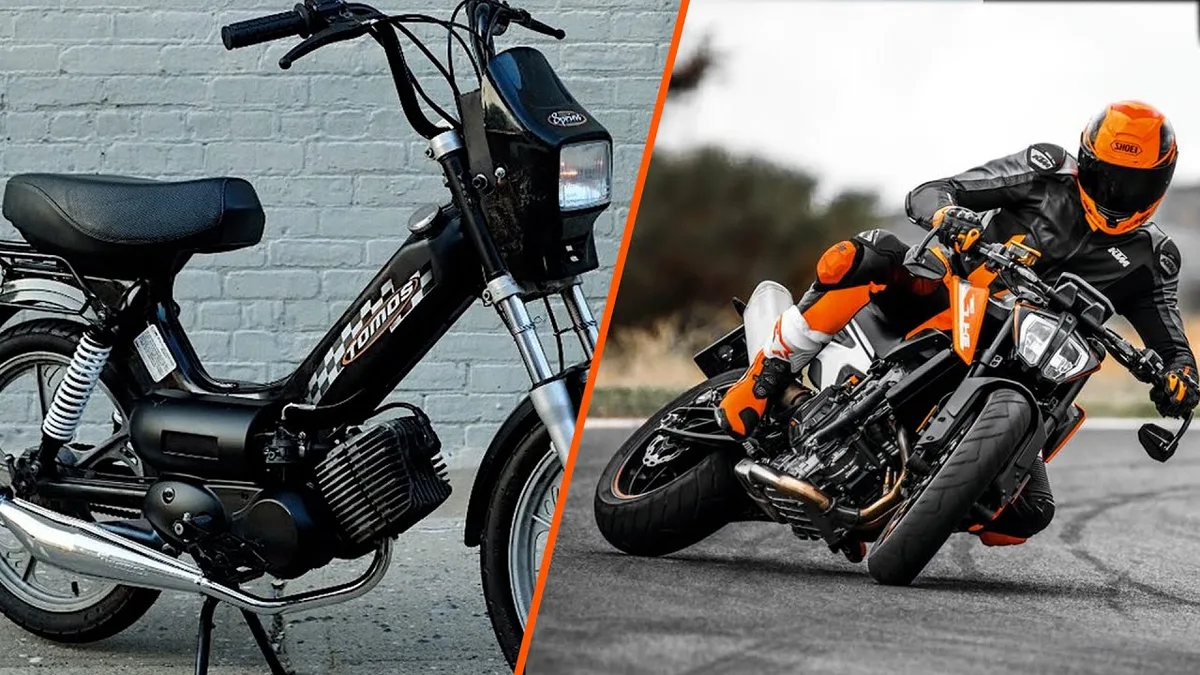
A motorcycle in American Samoa is any two-wheeled motor vehicle with an engine larger than 50cc. Riders must hold a motorcycle endorsement on their driver's license. Helmet use is mandatory for all riders and passengers.
A moped is defined as a two-wheeled vehicle with an engine of 50cc or less. Some mopeds don't require a motorcycle endorsement. Instead, a regular driver's license may suffice.
| Vehicle Type | Engine Size | License Required | Helmet Law | Registration Fee |
|---|---|---|---|---|
| Motorcycle | Over 50cc | Motorcycle endorsement | Mandatory for all | $40 annual |
| Moped | 50cc or less | Regular driver's license or endorsement | Varies by model | $40 annual |
Some riders treat mopeds like bicycles. That's a mistake. Mopeds are motor vehicles.
They must be registered, insured, and ridden legally.
YouTube / Bikely (YouTube thumbnail (fair-use with source credit))
Step-by-Step: How to Register Your Motorcycle or Moped
Registering your motorcycle or moped in American Samoa follows a clear process.
Step 1: Gather Your Documents
Before you head to the Motor Vehicle Division, collect these items:
- Proof of ownership (title or bill of sale)
- Valid photo ID (driver's license or passport)
- Proof of residency (utility bill or lease agreement)
- Proof of insurance (if required)
- Completed application form (available at the office)
Step 2: Visit the Motor Vehicle Division
Go to the Department of Public Safety's Motor Vehicle Division in Pago Pago. Check hours online or call ahead.
Step 3: Submit Your Paperwork
Hand your documents to the clerk. They'll verify each item.
Step 4: Pay the Fee
Pay the $40 registration fee. Accepted methods usually include cash, check, or money order.
Step 5: Receive Your Registration
Once payment is processed, you'll get your registration sticker and plate.
YouTube / WETM 18 News (YouTube thumbnail (fair-use with source credit))
If you're registering a vehicle from out of state, you might need a VIN verification.

YouTube / Prasad Constructions & interiors Studio, Belgaum (YouTube thumbnail (fair-use with source credit))
Required Documents for Registration
You'll need a few key documents to register your motorcycle or moped.
Bring your proof of ownership, which is typically the title or a signed bill of sale. If the bike is new, the dealer's invoice works.
You'll also need valid ID like a driver's license or passport. If you're a new resident, bring proof of residency such as a utility bill or lease agreement.
If your bike was previously registered out of state, you might need a VIN verification.
Where and How to Pay the $40 Fee
The $40 fee is paid in person at the Department of Public Safety's Motor Vehicle Division in Pago Pago.
Accepted payment methods usually include cash, check, or money order. Always get a receipt for your records.
If you're registering multiple vehicles, you'll pay $40 for each.
How Long the Registration Lasts
Your registration is valid for one year from the date of payment.
The expiration date is printed on your registration sticker. Mark your calendar to avoid riding with an expired registration.
YouTube / Power House (YouTube thumbnail (fair-use with source credit))
If you sell your bike before the registration expires, the new owner must register it under their name.
Penalties for Riding Unregistered
Riding an unregistered motorcycle or moped in American Samoa carries serious consequences.
If you're caught without valid registration, you may face a fine of $100 or more. Your bike could also be impounded.
In some cases, riding unregistered can result in license suspension.
YouTube / Ayon The Bangla Vlogger (YouTube thumbnail (fair-use with source credit))
What the Fee Doesn’t Include
The $40 registration fee covers your annual registration, but it doesn't include everything.
It doesn't cover insurance. It also doesn't include licensing costs for a motorcycle endorsement.
If your bike needs safety inspections, those are separate.
The fee also doesn't cover title transfers.
Common Mistakes That Delay Registration
Bringing incomplete paperwork is the top reason for delays.
Another common issue is mismatched information. Small errors like typos in the VIN can also cause problems.
Some riders assume their out-of-state registration transfers automatically. It doesn't.
American Samoa’s Other Vehicle Registration Rules
Motorcycles and mopeds aren't the only vehicles with registration requirements.
For example, passenger vehicles typically have higher registration costs. Trailers may have separate rules.
If you own multiple vehicles, you'll need to register each one individually.
FAQs About the $40 Motorcycle and Moped Fee
Is the $40 fee annual or one-time?
The $40 fee is annual. You must renew your registration each year to stay legal.
Can I register my motorcycle online?
No, American Samoa requires in-person registration at the Motor Vehicle Division.
Do I need insurance to register?
Insurance requirements vary. Check with the Motor Vehicle Division to confirm if proof of insurance is needed.
What happens if I lose my registration sticker?
You'll need to visit the Motor Vehicle Division to request a replacement. There may be a small fee.
Can I transfer my registration to a new owner?
No, registration doesn't transfer with the vehicle. The new owner must register it under their name.