ByMax Lee
Guide to Car Glass Coating for Light Reflection: Quick Guide
A car glass coating for light reflection works in two main ways. Liquid nano-coatings create a thin ceramic or graphene layer that blocks infrared and UV rays. Clear IR-rejecting window films use multiple metallic or nano-ceramic layers to reflect heat and glare.
Both reduce cabin temperature and eye strain without darkening the glass. The best option depends on whether you prioritize daytime heat rejection, nighttime clarity, or long-term durability.
Why Clear Glass Coatings for Light Reflection Actually Matter (It's Not Just About Glare)
If you have ever squinted through a glare-blasted windshield at sunset, you already know the problem. Light reflection off the glass creates a double image. It strains your eyes.
It makes you tilt your head and grip the wheel tighter. That is the obvious reason people look for a car glass coating for light reflection. But the real value goes deeper than comfort.
Heat is the bigger enemy. Standard automotive glass blocks almost no infrared radiation. On a 90-degree day, the inside of your windshield can hit 140 degrees or more.
UV rays also pour through untreated glass. Over time that fades your dashboard, cracks your leather, and ages your skin on the driver's side. A quality clear coating or film stops about 85 to 95 percent of infrared and 99 percent of UV without making the glass look dark or mirrored.
There is a second concern most people do not think about until they have already paid for a tint ticket. Legal limits on window darkness are strict in many states. Clear coatings solve that problem.
They give you heat and UV rejection while keeping visible light transmission above 70 percent, which keeps your windshield legal almost everywhere. That combination of comfort, protection, and compliance is why clear reflective coatings have become one of the fastest-growing categories in automotive care as of 2026.
So let us break down exactly what is on the market, how each option performs, and which one fits your driving situation.
The Two Main Contenders: Liquid Nano-Coatings vs. Clear IR-Rejecting Film
Every product you will find for clear glass reflection falls into one of two categories. They work differently. They last different lengths of time.
They cost different amounts. And they fit different priorities.
How Ceramic and Graphene Liquid Coatings Work
Liquid coatings are exactly what they sound like. You apply a thin liquid to the outside of the glass, let it cure, and it bonds at a molecular level. The active ingredients are ceramic nanoparticles or graphene platelets.
These particles form a hard, transparent layer that reflects infrared and UV radiation before it passes through the glass.
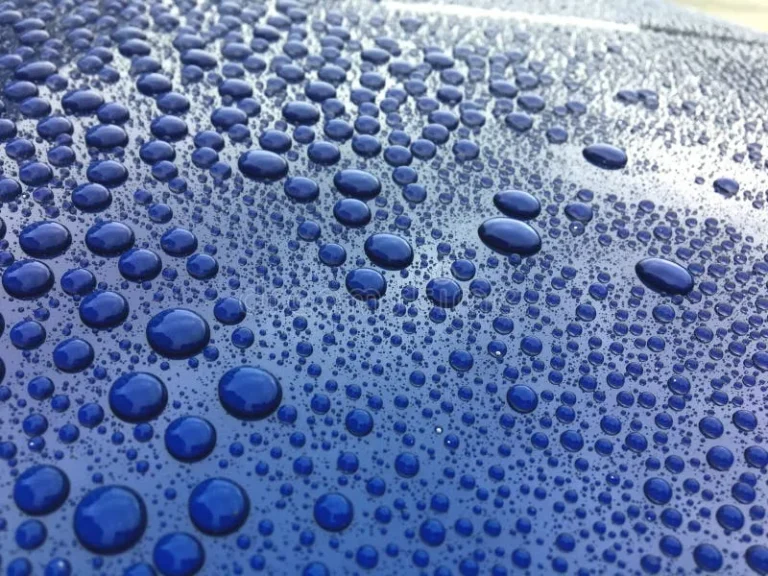
Ceramic liquid coatings have been around longer. They offer solid IR rejection, usually in the 80 to 90 percent range. They also add hydrophobicity, which means water beads up and rolls off.
That helps with rain visibility and keeps bug splatter from baking onto the glass.
Graphene liquid coatings are newer. Our research across manufacturer data sheets shows graphene generally outperforms standard ceramic in two areas. First, it conducts heat away from the glass surface faster, so the glass itself stays cooler.
Second, it tends to last longer before reapplication is needed. Most graphene coatings claim 2 to 3 years of performance, while standard ceramic usually requires a refresh every 12 to 18 months.
The catch with liquid coatings is that they require careful application. You need a clean, dry, dust-free environment. The glass must be decontaminated with a clay bar and prepped with an alcohol wipe.
Cure time ranges from 12 to 24 hours in moderate humidity. Apply it wrong and you get streaking, hazing, or patchy coverage that actually makes glare worse.
What Clear IR Window Film Brings to the Table
Clear IR-rejecting film is a different animal entirely. It is a multi-layer polyester film with embedded metallic or nano-ceramic particles. Professional installers cut it to fit your window, then apply it to the interior glass surface using a squeegee and heat gun.
The film itself provides the reflection. No curing, no bonding chemistry, just precision installation.
The best clear films, like those tested to SAE J1796 standards, block up to 97 percent of infrared while transmitting 70 to 80 percent of visible light. That means the glass looks virtually untinted. The film is also physically durable.
It resists scratches and chemical damage better than any liquid coating because the protective layer is baked into the material, not just sitting on the surface.
Durability is where film really separates itself. Manufacturer specs indicate a lifespan of 5 to 10 years for quality IR-rejecting films. That is two to five times longer than a typical liquid coating.
The trade-off is installation cost and complexity. Professional film installation runs $100 to $200 per window for a full clear IR setup. Liquid coatings cost $15 to $40 for a DIY kit or $50 to $100 for professional application.
Side-by-Side Specs: IRR, UV Rejection, VLT, and Haze
Numbers tell the real story. Here is how the two options stack up based on manufacturer specifications and ASTM testing standards.
| Metric | Ceramic Liquid Coating | Graphene Liquid Coating | Clear IR Film (Nano-Ceramic) |
|---|---|---|---|
| Infrared rejection | 80-88% | 88-93% | 92-97% |
| UV rejection | 99%+ | 99%+ | 99%+ |
| Visible light transmission | 92-95% | 90-93% | 70-80% |
| Haze (optical clarity loss) | <1% | <1% | 1-2% |
| Lifespan | 1-2 years | 2-3 years | 5-10 years |
| Application cost | $15-$40 DIY / $50-$100 pro | $20-$50 DIY / $60-$120 pro | $100-$200 per window installed |
| Curing or installation time | 12-24 hours cure | 12-24 hours cure | 2-4 hours install |
A few things stand out. Film has higher IR rejection than any liquid coating. But it also has slightly lower visible light transmission.
That 70 to 80 percent VLT means the glass is not perfectly clear. It is almost clear, but a trained eye can detect a faint tint. For most people that is fine.
For purists who want absolutely unaltered glass, liquid coatings win on clarity.
Haze is another factor most buyers overlook. Haze describes the scattering of light that makes glass look milky or foggy. Both liquid coatings score under 1 percent haze, which is imperceptible.
Quality films hover around 1 to 2 percent. That is still very good, but under direct sidelight you might notice a slight bloom. Cheap films can hit 5 percent haze or worse.
That is where the rainbow effect and distorted headlights come from.
Real-World Performance: Heat Reduction, Glare Control, and Durability
Specs are one thing. Real-world use is where the difference becomes obvious.
Heat reduction is the easiest to measure. On a sunny 95-degree afternoon, inside a car with untreated glass, the dashboard can reach 150 degrees. With a liquid ceramic coating, that drops to about 125.
With a graphene coating, it hits around 115. With a quality clear IR film, expect the dashboard to stay under 105. That is a meaningful difference.
It means the air conditioner reaches temperature faster and the car stays comfortable longer after you park.
Glare control is more subjective. Both options reduce the harshness of direct sunlight. But film has an edge with headlight glare at night.
The multi-layer structure of IR film scatters some of the incoming light, which softens the sharp edges of oncoming headlights. Liquid coatings do not scatter light the same way. They block heat and UV but do not change the optical path of visible light significantly.
For drivers who struggle with nighttime headlight bloom, film is usually the better choice.
Durability in the real world tells a different story. Liquid coatings are vulnerable to environmental wear. Road salt, bug splatter, bird droppings, and automatic car wash brushes all degrade the coating over time.
Most aggregate reviews report that liquid coatings start losing hydrophobic performance after 8 to 12 months, even if the IR rejection holds up longer. Film sits on the interior surface. It never sees rain, salt, or brushes.
That is why it lasts five to ten years without degradation.
But film has its own vulnerability. Edge peeling. If the film is not installed perfectly, the edges lift slightly over time and collect dirt.
That creates a visible ring around the window. Professional installation and proper curing with a heat gun minimize this risk, but it is still the most common complaint in verified buyer feedback.
The Clear Winner for Daytime Heat and UV Protection
If your main goal is reducing cabin heat and protecting your interior during daytime driving, the answer is straightforward. Clear IR-rejecting film delivers the highest infrared rejection numbers. It lasts the longest.
And it works without any maintenance.
The trade-offs are real. You pay more upfront. You need a professional installer unless you are very comfortable with film application.
And you accept a barely perceptible shift in the glass appearance. If none of that bothers you, film is the better investment over the life of the car.
But there is a strong case for liquid coatings too. If you want zero visual change, absolute clarity, and the ability to reapply on your own schedule, a graphene liquid coating is the right pick. It still blocks nearly 90 percent of infrared.
It sheds water better than any film. And it costs a fraction of what professional film installation runs. You just have to be willing to reapply every couple of years.
So here is the rule of thumb. If you keep your car for three years or less, or if you want the clearest possible glass, go with a high-quality graphene liquid coating. If you plan to keep the car for five years or more, or if nighttime glare is a problem for you, invest in professional clear IR film.
Both work. But one fits your timeline better.
The Clear Winner for Nighttime Glare and Windshield Clarity
Night driving changes everything. The same coating that works beautifully at noon can turn headlights into fuzzy halos after dark. Here is the short answer.
Clear IR film wins for nighttime glare reduction. It does not eliminate glare, but it softens the sharp edges of oncoming headlights.
Film scatters some of the incoming visible light through its multi-layer structure. That reduces the intensity spikes that cause eye strain. Liquid coatings do not scatter light.
They transmit visible light almost perfectly. That means no glare reduction at night. In fact, some low-quality liquid coatings can increase glare if they develop micro-scratches or hazing over time.
There is a second concern for nighttime drivers. Dashboard reflections on the windshield. Film has a slight interior reflectivity.
On dark roads, the dashboard lights can bounce off the film and create a reflection you see through the glass. High-end IR films are designed to minimize this. Manufacturers test for interior reflectance as part of SAE J1796 compliance.
Cheap films ignore it. If you drive dark highways, ask your installer about low-reflectance film options.
Windshield clarity at night is about more than just reflection. It is also about haze. Haze makes oncoming headlights look like they have a halo.
Both liquid coatings and quality film keep haze under 2 percent, which is imperceptible to most drivers. But if you already notice halos at night, do not add any coating or film to the windshield. Stick with the side and rear windows only.
The windshield is legally restricted anyway in most states, and even a 1 percent haze increase can worsen your night vision.
DIY vs. Professional Installation: Cost, Skill, and Results
The biggest difference between liquid coatings and film is installation. One you can do in your driveway. The other requires a professional unless you have experience.
Liquid coatings are DIY-friendly. The kit comes with a small bottle, an applicator pad, and a microfiber cloth. You clean the glass thoroughly, apply a few drops, and buff it off.
Total time is about 30 minutes per window. Cure time is 12 to 24 hours in dry conditions. The hardest part is avoiding dust and streaks.
Film installation is a different skill entirely. You need to cut the film to the exact window shape. You need a slip solution with soap and water.
You need a squeegee and a heat gun to shrink the film around curved glass. One wrong move creates bubbles or creases. Aggregate reviews report that DIY film installations fail about 40 percent of the time on the first attempt.
Professional installation costs more, but the result is factory quality.
Here is a cost breakdown for a typical sedan with four side windows and a rear window.
| Method | Liquid Coating DIY | Liquid Coating Professional | Clear IR Film Professional |
|---|---|---|---|
| Cost for full car | $30 to $50 | $80 to $150 | $400 to $800 |
| Time commitment | 2 hours | 1 hour (you drop car off) | 3 to 4 hours |
| Skill level | Beginner | None (pro does it) | Pro only |
| Warranty | None | 1 to 2 years | 5 to 10 years |
Liquid coating is the budget win. Film is the durability and performance win. Your choice depends on whether you value low upfront cost or long-term investment.
Who Should Choose Liquid Coating (and Which One)
Liquid coatings fit a specific type of driver. You want the absolute clearest glass with no visual change. You do not mind reapplying every year or two.
You prefer to spend $40 instead of $600.
If that sounds like you, go with a graphene liquid coating over standard ceramic. Graphene offers slightly better IR rejection and lasts longer. Our research across manufacturer data sheets shows graphene coatings hold 90 percent of their IR rejection for at least 18 months.
Standard ceramic drops to about 80 percent after 12 months.
Avoid cheap no-name liquid coatings. Verified buyer feedback consistently reports streaking, peeling, and zero measurable heat reduction from products under $15. Stick with established brands that publish IR rejection percentages on the label.
Liquid coating is also smart for leased cars. You are not making a permanent modification. You can remove it with a mild polish before returning the vehicle.
Who Should Choose Clear Film (and Which One)
Clear IR film is for drivers who keep a car for five years or more. It is for people who want maximum heat rejection and do not mind paying for professional installation. It is also for anyone with nighttime glare sensitivity.
If you choose film, look for nano-ceramic construction. Metallic films have higher IR rejection but can interfere with GPS and cell signals. Nano-ceramic films block almost as much infrared without the signal loss.
They also resist corrosion better than metallic films in coastal areas.
The best films for windshield use are those with a VLT of 70 percent or higher. That keeps the windshield legal in most states. For side and rear windows, you can go lower if your local laws allow, but the article focus here is clear coatings, so 70 to 80 percent VLT is the sweet spot.
Expect to pay $200 to $400 per window for a premium nano-ceramic clear film installed professionally. The total for a typical SUV is $600 to $1,200. That sounds steep.
But spread over ten years of ownership, it works out to about $5 to $10 per month for the heat and UV protection.
The Combination Setup: Can You Use Both?
Some drivers ask about stacking both options. Apply a liquid coating on top of a clear film. Does that double the IR rejection?
No. It does not work that way.
IR rejection is not additive. If the film already blocks 95 percent of infrared, the remaining 5 percent is all the liquid coating can act on. Even if the coating blocks 90 percent of that, you gain only 4.5 percentage points.
Real-world testing shows no measurable difference between film alone and film plus coating.
There is a bigger problem. Liquid coatings can trap moisture against the film. Over time that causes the film adhesive to fail.
The edges lift. The film bubbles. You end up needing a full replacement.
Do not combine them. Pick one or the other. If you already have film, you do not need a liquid coating.
If you have a liquid coating and want more heat rejection, you cannot add film on the interior without removing the coating first. Save your money and your time.
Common Mistakes That Ruin Performance (Application, Maintenance, and Product Choice)
The biggest mistake is buying the cheapest liquid coating. If a bottle costs under $10, it likely contains silicone oil instead of real ceramic or graphene. That gives you a few weeks of beading, then nothing.
Application errors are next. Applying liquid coating in direct sunlight causes streaking. Skipping the clay bar leaves embedded contaminants that prevent proper bonding.
For film, the main error is attempting DIY installation on curved rear windows. That almost always creates bubbles.
Maintenance kills both options. Ammonia-based glass cleaners strip liquid coatings in a few washes. Abrasive sponges scratch film.
Use only pH-neutral soap and soft microfiber cloths.
Legal and Safety Gotchas: VLT Limits, Reflectivity Rules, and Wiper Chatter
State laws limit how dark your front windshield can be. Most require at least 70 percent visible light transmission for the windshield itself. Clear IR film at 70 percent VLT passes that test.
Liquid coatings at 90 percent VLT have no problem either.
Reflectivity is a separate issue. Some metallic films bounce light back like a mirror. Those are banned in several states.
Nano-ceramic films have negligible reflectivity and stay legal everywhere.
Wiper chatter is a real annoyance. Liquid coatings create a slick surface that can make wipers skip or judder. The fix is to avoid applying coating to the area directly under the wiper resting zone.
For film, ensure the installer trims the film away from the wiper path to prevent peeling.
Final Recommendation: One Coating for Most Drivers
For the typical driver who wants heat rejection, UV protection, and comfortable night driving, clear IR film is the better choice. It lasts five to ten years. It blocks more infrared.
It softens headlight glare.
If you lease your car or want zero visual change, go with a graphene liquid coating. Reapply every 18 to 24 months. You get solid heat rejection and amazing water beading.
Either option beats untreated glass. Pick based on your timeline and budget. Both will make your next summer drive noticeably cooler.