Black Friday deals are live on Amazon · limited-time discounts, grab them before they’re gone
Grab the deals

ByMax Lee
Do Car Washes Damage Paint Black Cars? Essential Facts Revealed
Black cars do not have paint that is inherently weaker than other colors. However, dark paint makes defects far easier to see. Swirl marks, water spots, dust, oxidation, and light scratches stand out against a black finish, especially in direct sunlight or under LED lighting.
So, do car washes damage paint on black cars? They can—but the main risk comes from dirty brushes, poor washing technique, harsh chemicals, and drying the vehicle incorrectly. A clean, well-maintained wash system may be reasonably safe, while a contaminated brush can drag abrasive grit across the clear coat. For more on this, see our guide on do i need an idp to hire a.
The safest approach is a careful hand wash using clean equipment. When convenience matters, a touchless wash usually creates less scratching risk than a brush-style automatic wash, although it may require more careful follow-up cleaning.
Why Black Car Paint Shows Damage So Easily
Most modern vehicles have a color coat protected by a clear coat. The clear coat provides gloss and some resistance to environmental damage, but it is not scratch-proof.
Black paint highlights imperfections for several reasons:
- Contrast: Light-colored scratches and dusty residue are highly visible on a dark surface.
- Reflections: A glossy black panel reflects light clearly, making circular swirl marks easier to spot.
- Dust visibility: Pollen, road film, dried minerals, and fingerprints contrast sharply with black paint.
- Heat absorption: Black panels become hotter in sunlight, causing water and cleaning chemicals to dry quickly.
- Clear-coat defects: Many marks are actually in the clear coat rather than the black color layer beneath it.
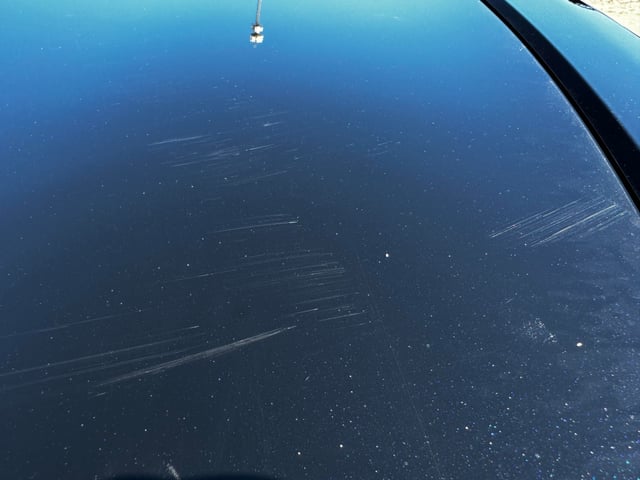
In practice, a black car can look scratched even when the damage is only superficial haze or mineral residue. Before using a polishing compound, inspect the panel in shade and then under a strong, angled light. A mark that disappears when the surface is wet may be a light clear-coat defect; a groove that catches a fingernail may be deeper.
Which Car Wash Is Safest for Black Paint?
The wash type matters, but the condition of the equipment and the technique matter just as much. This comparison shows the usual trade-offs.
| Wash type | Main paint risk | Cleaning ability | Best use |
|---|---|---|---|
| Brush automatic wash | Swirls and scratches from contaminated brushes | High | Occasional convenience when no better option exists |
| Soft-cloth automatic wash | Lower risk than stiff brushes, but still transfers dirt | High | Convenient cleaning from a well-maintained facility |
| Touchless wash | Chemical exposure, water spots, and remaining road film | Medium | Quick cleaning with minimal physical contact |
| Careful hand wash | Scratches from poor technique or dirty tools | High | Best overall control for black paint |
| Professional detail wash | Depends on the detailer’s process | High | Valuable for delicate, coated, or heavily marked vehicles |
Automatic Brush and Soft-Cloth Washes
Automatic systems clean quickly by moving brushes, strips, or cloth material across the vehicle. The problem is that these materials can collect sand, road grit, and brake dust from previous vehicles.
If that contamination is pushed across your clear coat, it can create:
- Fine linear scratches
- Circular swirl marks
- Dull-looking panels
- Uneven gloss visible in sunlight
Soft cloth does not automatically mean scratch-free. A soft material can still cause abrasion when it contains trapped grit. The quality of the wash’s maintenance, rinse process, and contact material is more important than the marketing label.
If you must use an automatic wash, choose the cleanest facility available, skip abrasive wheel brushes when possible, and avoid any system with visibly dirty or damaged equipment. Do not assume that an expensive wash package guarantees paint safety.
Touchless Car Washes
Touchless washes use detergent and pressurized water instead of physical brushes. Because nothing rubs directly against the paint, they generally reduce the risk of wash-induced swirl marks.
They have limitations:
- Heavy road film may remain after the wash.
- Strong detergents can strip wax or reduce the life of some paint-protection products.
- Mineral-rich rinse water can leave spots when it dries.
- Excessive pressure used at very close range can damage loose trim, badges, or existing paint defects.
- Repeated chemical cleaning is not a substitute for removing bonded contamination properly.
A touchless wash is often the better emergency option for a black car covered in salt, mud, or winter grime. Rinsing harmful contaminants away is usually preferable to allowing them to remain on the paint. For routine cleaning, however, a gentle hand wash generally provides a cleaner result with more control.
Hand Washing
A careful hand wash is usually the most paint-safe method because you control the tools, pressure, water flow, and order of cleaning. The common mistake is treating hand washing as automatically safe. A dirty sponge, one bucket, or a rough towel can produce the same type of damage as an automatic wash.
Use a proven two-bucket washing method with separate wash and rinse water. Keep the dirtiest areas—wheels, tires, rocker panels, and lower bumpers—away from the wash mitt used on the upper body.

Separate, clean wash tools help reduce grit being dragged across glossy black paint.
Credit: www.youtube.com
How Car Washes Create Swirl Marks and Scratches
The most common mechanism is abrasive contamination. Tiny particles become trapped in a brush, mitt, towel, or drying blade. When the tool moves across the panel, the particles cut or scuff the clear coat.
Swirl marks
Swirl marks are clusters of fine scratches that form circular or curved patterns. They often appear after repeated automatic washes, but aggressive hand washing can create them as well. On black paint, they may look like spiderwebs around a reflected light source.
Water spots
Water spots are mineral deposits left when rinse water evaporates. They are not always scratches, but acidic or alkaline deposits can etch into the clear coat if left for a long time, especially on hot panels.
Chemical damage
Incorrect products can stain trim, dull wax, or weaken protection. Household dish soap is not the best routine choice because it is designed to remove grease and may strip protective products. Some commercial wash detergents are also highly alkaline or acidic.
The EPA provides general environmental guidance on vehicle-wash wastewater because detergents, oil, and road contaminants should not be casually discharged into storm drains. Follow local rules and use a facility or wash setup that handles runoff responsibly.
Paint fading and oxidation
A normal wash does not usually cause paint to fade by itself. Fading is more commonly associated with ultraviolet exposure, neglected clear coat, harsh environmental contamination, and prior paint damage. Poor washing can accelerate the worn appearance by removing protection and adding scratches that scatter light.
The Safest Way to Wash a Black Car at Home
1. Choose the right conditions
Wash in shade, on a cool panel, and away from strong wind. Do not begin if the surface is hot enough to dry soap or rinse water before you can remove it.
If you are using compressed air to clear mirrors, grilles, emblems, and panel gaps, use clean, dry air and avoid forcing water toward electrical connectors. An appropriately sized air compressor setup can be useful for detailing tasks, but compressed air is optional—not a requirement for safe washing.
2. Rinse loose grit away first
Thoroughly rinse the entire vehicle from top to bottom. Pay attention to wheel arches, rocker panels, and the lower rear bumper, where abrasive grit accumulates.
Never begin rubbing a dry, dusty black car. Pre-rinsing reduces the amount of loose contamination that the wash mitt must contact.
3. Clean wheels separately
Wheels and tires carry brake dust and road debris. Use separate brushes and mitts for them. Do not use wheel tools on painted body panels afterward.
4. Wash from top to bottom
Use a pH-balanced automotive shampoo and a clean microfiber or lambswool mitt. Work in small sections, using straight, light passes rather than pressing hard or scrubbing in circles.
Rinse the mitt frequently. If it falls on the ground, replace or thoroughly clean it before continuing.
5. Rinse before the soap dries
Keep the surface wet while working. Rinse each completed section and give the vehicle a final rinse from the roof downward. A gentle flow can help sheet water off the panels and reduce the amount left for towel drying.
6. Dry without dragging grit
Use a clean, plush microfiber drying towel or a filtered air blower. Blotting or lightly gliding a clean towel is safer than applying pressure. Do not use an old bath towel, rough paper product, or a contaminated chamois.
If the towel touches the ground, stop using it on the paint. A single small stone can create more damage than an entire careful wash prevents.
Products That Help Protect Black Paint
Car shampoo
Choose a purpose-made car shampoo with adequate lubrication. The product should help the mitt glide while suspending dirt. More foam does not necessarily mean better cleaning or greater safety.
Microfiber towels
Use separate towels for:
- Paint
- Glass
- Wheels
- Door jambs
- Exhaust tips
- Interior surfaces
Wash them separately from household laundry. Avoid fabric softener, which can reduce absorbency and leave residue.
Wax and sealant
Wax or a synthetic sealant adds water behavior, gloss, and a sacrificial layer between contamination and the clear coat. It can make washing easier, but it cannot stop every scratch. Protection must be applied to clean, properly prepared paint and renewed according to the product’s condition rather than an arbitrary calendar.
Ceramic coatings and paint-protection film
A ceramic coating can improve chemical resistance and make contamination easier to remove, but it is not an invisible armor against stone chips or careless washing. Paint-protection film provides more meaningful resistance to certain impacts, particularly on vulnerable front-end areas, but it also requires correct installation and maintenance.
Protection works best when paired with safe washing. No coating can compensate for dirty brushes or aggressive drying.
How Often Should You Wash a Black Car?
Wash frequency depends on where and how the vehicle is driven. A car exposed to coastal air, road salt, construction dust, tree sap, bird droppings, or frequent rain may need attention sooner than a garage-kept weekend vehicle.
Use these practical guidelines:
- Wash when contamination is visibly building up rather than waiting for a thick layer.
- Remove bird droppings, insects, tree sap, and road salt promptly.
- Clean after winter driving or exposure to de-icing chemicals.
- Do not repeatedly wash a dusty car with a rinseless method unless the product and technique are designed for that level of dirt.
- Consider a professional decontamination and protection service when normal washing no longer removes the rough, bonded feel.
If you are preparing a stored or older vehicle, paint care should be part of the broader preservation plan. Owners of historic vehicles may also need to review their state’s registration requirements, such as this older-vehicle registration guide, before using the car regularly on public roads.
How to Tell Whether a Mark Is a Scratch
Use a simple inspection process:
- Wash and dry the panel properly.
- Inspect it in shade and under a bright angled light.
- Run a clean fingertip lightly over the mark.
- Apply a small amount of automotive polish to a test area.
- Reinspect before treating the entire vehicle.
A mark that is visible but smooth to the touch may be in the upper clear coat. A scratch that catches a fingernail is more likely to be deep enough to require professional refinishing. Do not keep polishing aggressively in an attempt to remove a defect that has penetrated deeply; removing excessive clear coat can create a more serious problem.
For light haze or superficial swirls, a finishing polish may improve the appearance. Deeper scratches, peeling clear coat, exposed primer, and chipped paint should be assessed by a qualified detailer or body shop.
Common Mistakes That Damage Black Paint
Avoid these habits:
- Washing in direct sun while the panels are hot
- Using one bucket for wheels and bodywork
- Reusing a dirty wash mitt
- Scrubbing bird droppings when they are dry
- Drying with a towel that has touched the floor
- Using a stiff brush on glossy paint
- Applying wax over bonded dirt
- Relying on a pressure washer at extremely close range
- Allowing automatic brushes to clean a heavily contaminated vehicle
- Assuming “touchless” means the chemicals cannot affect existing protection
For road trips, keeping the vehicle clean is only one part of responsible preparation. If you are driving through demanding mountain conditions, review the relevant vehicle preparation requirements as well as your wash plan.
Car Wash Safety: Quick Verdict
| Question | Practical answer |
|---|---|
| Can a car wash scratch black paint? | Yes, especially when brushes or cloth contain trapped grit. |
| Is a touchless wash safer? | Usually, because it avoids physical contact, but it may leave dirt or strip protection. |
| Is hand washing always safe? | No. Dirty tools and excessive pressure can still create swirls. |
| Does wax prevent scratches? | It adds protection and lubrication, but it does not make paint scratch-proof. |
| Is high-pressure water dangerous? | It can damage loose trim, existing chips, or seals when used improperly. |
| What is the safest routine? | Cool panels, pre-rinse, separate tools, lubricated shampoo, and gentle drying. |
Frequently Asked Questions
Do automatic car washes damage black cars more than other colors?
They do not necessarily damage black paint more, but black paint makes the damage easier to see. The same fine scratches that are nearly invisible on silver paint can be obvious on a glossy black hood.
Are touchless car washes safe for black paint?
Touchless washes generally reduce the risk of physical scratching because brushes do not contact the surface. However, strong detergents, poor rinsing, water spots, and incomplete cleaning can still affect the finish. Use them as a low-contact option, not as a guarantee of perfect paint care.
How often should a black car be washed?
Wash according to contamination and driving conditions. Many daily-driven vehicles benefit from cleaning every couple of weeks, while cars exposed to salt, mud, sap, or bird droppings may need to be washed sooner. Prompt spot cleaning is more important than following a rigid schedule.
Can I use dish soap on a black car?
It is better to use automotive shampoo. Dish soap can remove existing wax and may not provide the lubrication or finish compatibility intended for vehicle paint.
Does waxing hide swirl marks?
Wax can temporarily improve gloss and visually soften minor defects, but it does not remove swirl marks. A polish or professional paint correction is required to reduce clear-coat scratches.
Is a pressure washer safe for black paint?
Yes, when used responsibly. Keep the nozzle at a safe distance, use a suitable fan spray, avoid damaged paint and loose trim, and never use pressure as a substitute for proper lubrication and washing technique.
Final Verdict
So, do car washes damage paint on black cars? The answer is sometimes. Brush-style automatic washes pose the greatest risk when their equipment transfers grit from one vehicle to another. Touchless washes reduce contact-related scratches but may use stronger chemicals and leave some contamination behind. Hand washing offers the best control when performed with clean tools, plenty of lubrication, and gentle drying.
Black paint does not require mysterious treatment—it requires disciplined technique. Rinse before touching the surface, keep wheels and bodywork tools separate, wash in the shade, and replace any towel or mitt that becomes contaminated. For the safest finish, choose a careful hand wash and maintain a suitable wax, sealant, coating, or film rather than relying on the car wash alone.
Use a clean, low-contact wash process at your next cleaning to preserve gloss and prevent avoidable swirl marks.








