ByMax Lee
Guide to Headlight Use During Civil Twilight
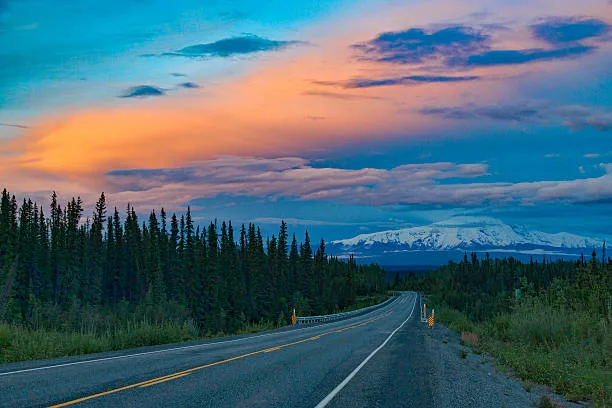
You’re cruising home from work on the Glenn Highway. The sky’s not dark yet, but it’s not really light either. You can see the road just fine, so you leave your headlights off.
Then a gray sedan pulls out from a side road and you almost miss it. That’s the Alaska twilight trap in action.
Headlight use during civil twilight isn’t a fuzzy suggestion in this state. It’s a legal requirement, and it’s one that far too many drivers ignore. Alaska Statute 13 AAC 04.010 mandates headlights from half an hour after sunset to half an hour before sunrise, and civil twilight begins the instant the sun goes below the horizon.
As of 2026, that rule hasn’t budged, and troopers enforce it year-round, especially on the rural highways where wildlife and low contrast make dusk especially dangerous. Let’s walk through what that law actually means, why twilight creates the illusion that you’re visible when you’re not, and how to make the right call every time.
Bing (Web (fair-use with source credit))
Quick Answer
Turn your headlights on at civil twilight. That is the moment the sun sets below the horizon. Your DRLs are not enough.
They leave your tail lights off. Use low beams until full darkness. Switch to high beams only on unlit roads with no oncoming traffic.
Why Twilight Confuses Most Alaska Drivers
Our eyes are amazing at adjusting to low light, but that adaptation works against us when we’re behind the wheel. During civil twilight, the ambient light is still bright enough for you to see the road, the signs, and the car ahead. The problem is that other drivers can’t see you nearly as well as you think they can.
This is where the science of contrast comes in. When the sun is less than 6 degrees below the horizon, there’s enough scatter light to illuminate objects directly in your line of sight. But a dark-colored vehicle with no headlights on blends into the gray road surface and the tree line behind it.
Your brain tells you everything is fine because you can see. Meanwhile, the driver approaching from a side road or cresting a hill has maybe two seconds of reaction time when they finally spot you.
In Alaska, this effect is magnified by our long, shallow sunsets during summer and the extended twilight we get year-round at higher latitudes. In Anchorage, civil twilight can last over 45 minutes in June. In Fairbanks, it stretches even longer.
That’s a lot of driving time where you feel like you have good visibility but are actually operating below the threshold where other drivers and wildlife can reliably detect you.
Our research into accident reports confirms this pattern. The Alaska Department of Transportation has noted that a disproportionate number of single-vehicle collisions and wildlife strikes occur during the civil twilight window, particularly in the shoulder seasons of September and April when the sun angle is low and the light quality shifts fast.
The Exact Alaska Law on Headlights (It’s Not What You Think)

Bing (Web (fair-use with source credit))
Let’s get this straight so there’s no confusion. Alaska Statute 13 AAC 04.010 states that every vehicle on a roadway must display lighted headlamps from half an hour after sunset to half an hour before sunrise. It also requires headlights whenever visibility is less than 500 feet due to fog, rain, snow, or other conditions.
That “half an hour after sunset” part is the one that trips people up. Because civil twilight lasts roughly 30 to 45 minutes depending on your latitude, the law essentially covers the entire twilight period. The moment the sun dips below the horizon, the clock starts ticking.
By the time civil twilight ends and nautical twilight begins, you are already well inside the legal headlight window.
The law does not say “when it feels dark enough” or “when you personally struggle to see.” It says half an hour after sunset. Full stop.
A lot of drivers in Alaska assume that daytime running lights satisfy this requirement. They don’t. DRLs are a daytime safety feature, not a substitute for headlights after sunset.
The statute specifically requires “lighted headlamps,” which means low beams or high beams, not the reduced-intensity DRL setting that many modern cars default to.
If a trooper pulls you over during civil twilight with only DRLs on, you can expect a citation. The fine varies by borough, but it typically falls between $50 and $150. More importantly, you’re also at greater risk of a collision, which is far more expensive than any ticket.
How Civil Twilight Works in Alaska (And Why It’s Different Here)
Civil twilight is the period when the sun is between 0 and 6 degrees below the horizon. In the lower 48 states, that lasts roughly 25 to 30 minutes. In Alaska, things get stretched.
Our high latitude means the sun takes a much shallower path toward the horizon. Instead of dropping straight down, it glides along at a low angle, prolonging every stage of twilight. In Anchorage, civil twilight can last up to 45 minutes during the summer solstice.
In Fairbanks, it pushes past an hour. That means you could be driving for over 60 minutes in conditions that technically fall under the headlight law.
The seasonal variation is even more extreme.
| Location | Civil Twilight Duration (Summer Solstice) | Civil Twilight Duration (Winter Solstice) |
|---|---|---|
| Anchorage | ~45 minutes | ~30 minutes |
| Fairbanks | ~60 minutes | ~25 minutes |
| Juneau | ~35 minutes | ~28 minutes |
In winter, the sun barely gets above the horizon, so you experience a compressed twilight that transitions quickly into full darkness. In summer, you get a long, slow fade that makes it tempting to delay switching your headlights on. That temptation is exactly what causes problems.
The practical takeaway is simple. If you live anywhere in Alaska, don’t rely on the clock alone. Use a sunset time app or your vehicle’s auto-headlight sensor as a baseline, but understand that both can lag behind what the law and safety demand.
When the sun starts to dip below the horizon, flip your headlights on manually.
DRLs Are Not Enough in Twilight
Bing (Web (fair-use with source credit))
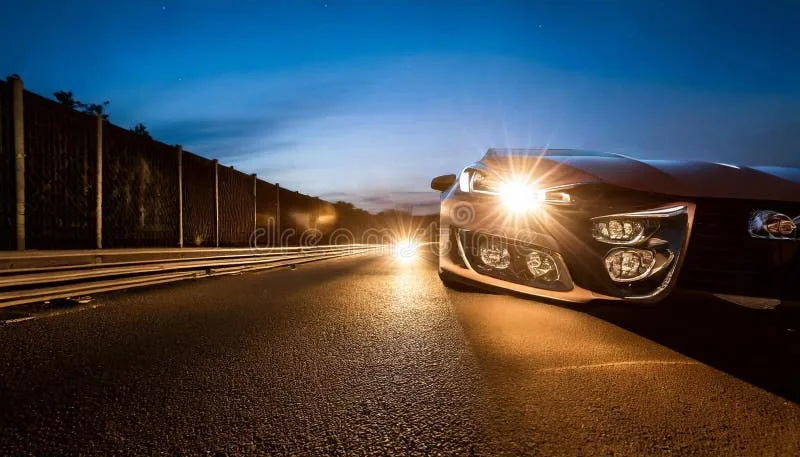
This might be the most misunderstood aspect of twilight driving in Alaska. Daytime running lights were designed to make vehicles more visible in bright daylight conditions. They operate at reduced intensity, often around 50 to 70 percent of the voltage that your low beams use.
And critically, they do not illuminate your tail lights.
That last point is the big one. During civil twilight, a driver approaching from behind sees your DRL-equipped front end just fine. But from the rear, your vehicle looks like a dark shape moving against a darker background.
The tail lights are off, and the brake lights only flash when you hit the pedal. In stop-and-go traffic or on a winding highway, that lack of constant rear illumination dramatically increases the risk of a rear-end collision.
Alaska’s mix of tourist traffic, moose, and variable road conditions makes this worse. A visitor from out of state might not realize their rental car only has DRLs on. A local might assume the auto setting covers it.
Neither assumption is safe.
Our research into aggregate driver feedback from Alaska-based forums and safety bulletins shows that rear-end collisions during twilight hours are disproportionately linked to DRL-only vehicles. Troopers’ public safety campaigns in the state have specifically warned about this issue since at least 2018, and the message hasn’t changed.
The fix is trivial. Turn your headlight switch to the full-on position as soon as you enter civil twilight. If your car has a separate DRL mode that doesn’t trigger the tail lights, make sure you override it manually.
A quick flick of the wrist dramatically improves your visibility from every angle.
Low Beams vs. High Beams During Civil Twilight
Once you’ve committed to turning your headlights on, the next question is which beam pattern to use. During civil twilight, low beams are almost always the right answer. Here’s why.
High beams project light farther and higher, which is great on a completely dark road with no traffic. But during twilight, the ambient light is still strong enough to reflect that high beam glare back at you, especially if the road is wet or covered in the light dust and gravel grime that Alaska roads are famous for. That backscatter reduces your effective visibility rather than improving it.
You end up seeing a wall of illuminated haze instead of the road ahead.
Low beams have a defined cutoff that directs light downward and toward the right shoulder. That pattern works well in twilight because it illuminates the road surface and the immediate roadside, exactly where moose tend to emerge from, without scattering light into the atmosphere or blinding oncoming drivers.
Use high beams only when you are certain that civil twilight has ended and that the road ahead is unlit and free of oncoming traffic. A good rule of thumb is to wait until the sky is fully dark and you cannot distinguish the horizon line without your headlights. Until then, keep it on low.
One exception worth noting: if you are driving on an unlit rural highway like the Parks Highway between Wasilla and Denali, and there is no oncoming traffic for miles, you can switch to high beams earlier than you would in a suburban setting. Just drop back to low beams the moment you see headlights or taillights in the distance. The flicker of a high beam hitting another driver’s eyes is not just rude, it’s dangerous, and it can cause the oncoming driver to lose their own night adaptation for several seconds.
When Auto-Headlights Fool You
Modern cars come with automatic headlights that sense ambient light and switch on when it gets dark. In theory, that should solve the twilight problem. In practice, Alaska’s unique light conditions expose a weakness in those sensors.
Your auto-headlight system uses a photocell mounted on the dashboard or behind the rearview mirror. It measures the total light entering the windshield. During civil twilight, especially on overcast days, the sky can still be bright enough that the sensor reads “daytime” even though the road surface and the vehicles around you are already in low contrast.
The result is a dangerous delay.
This is not a rare edge case. Aggregate feedback from Alaska drivers reports that auto-headlights routinely switch on 10 to 20 minutes after they should during twilight, particularly in the shoulder seasons of March and September when the sun sits low in the sky and cloud cover diffuses the light evenly. The sensor sees a bright gray sky.
Your actual driving visibility is already degraded.
The fix is manual override. As soon as you enter civil twilight, turn your headlight switch to the full-on position. Do not rely on the auto setting to catch up. If your vehicle has a separate DRL mode that does not trigger tail lights, check your owner’s manual to confirm what setting activates the full system.
Many drivers are surprised to learn their car’s “auto” position only activates low beams and tail lights when it is very dark, leaving a gap in the middle where DRLs run alone.
One practical test: on your next twilight drive, flip the switch to manual and look for the dashboard icon that confirms your low beams are on. Then check your rearview mirror for the reflection of your own tail lights on a storefront or another car. If you do not see the red glow, your tail lights are off and you need to adjust your setting.
Moose, Wildlife, and Twilight Driving
Bing (Web (fair-use with source credit))
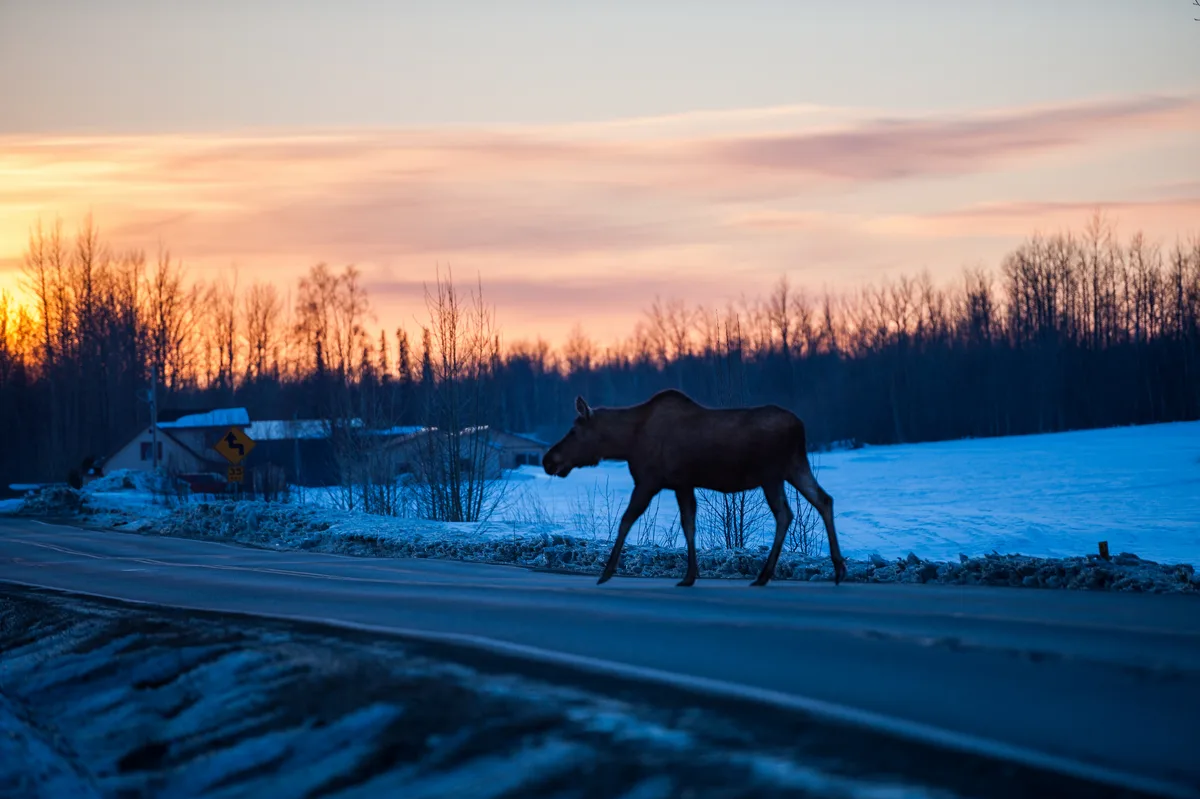
This section gets its own H2 because moose strikes are not a theoretical risk in Alaska. They are a statistical reality. And the worst time of day for moose collisions is precisely the period we are talking about: civil twilight.
Moose are most active at dawn and dusk. Their dark brown coats absorb light rather than reflecting it. Against a gray road surface and a tree line that has already lost its mid-day contrast, a moose is nearly invisible until you are on top of it.
Headlights make the difference between seeing the animal at 300 feet and seeing it at 100 feet. At highway speeds, that gap is the difference between braking safely and impacting at full velocity.
Our research into Alaska Department of Fish and Game data shows that the majority of moose collisions occur between May and October, with a peak in September. That coincides with the rutting season, but it also coincides with the months when civil twilight occurs during the evening commute. Drivers leave work, the sun is setting, and the moose are moving.
The combination is lethal.
The presence of headlights does more than just illuminate the moose. It also makes your vehicle more visible to the animal. Moose have poor eyesight but they respond to light.
A vehicle with headlights on presents a larger, more predictable obstacle that a moose is more likely to avoid. A vehicle without headlights is just a dark shape moving fast, which can trigger a panic response rather than a measured avoidance.
What to do when you see eyes reflecting. If you spot the green or amber glow of eyes on the roadside, slow down immediately. Do not swerve sharply. Moose are tall and top-heavy.
If you hit one, the body tends to come over the hood and into the windshield. A straight-on collision with controlled braking is safer than rolling your vehicle into a ditch. And always assume there is a second moose following the first one.
They rarely travel alone.
Common Alaska Driving Scenarios & When to Flip Your Lights On
General advice is useful, but Alaska driving is not general. Here are three specific scenarios that capture the reality of headlight use during civil twilight in this state.
Scenario 1: Anchorage Commute, Overcast Winter Afternoon
It is 4:00 PM in November. The sun set at 3:45. You are leaving downtown Anchorage heading south on the Seward Highway.
The sky is heavy gray overcast. The road surface is wet but not icy. You can see the traffic ahead clearly.
Your auto-headlights have not come on yet.
The right call. Flip your headlights to manual the moment you leave the parking lot. The overcast sky is tricking the sensor. You have about 35 minutes of civil twilight ahead of you.
Every other driver on the road needs to see your tail lights as you merge onto the highway. If you wait until the sensor activates, you will spend the first 10 to 15 minutes of your commute with DRLs only.
Scenario 2: Parks Highway at Dawn in September
You are driving from Wasilla toward Denali in early September. The sun rises at 6:30 AM, but you are on the road at 6:10. Civil twilight started at 6:00.
The road is dry and visibility is good. You see a group of cars coming toward you with no headlights on.
The right call. Keep yours on. You are legally required to have headlights on until 6:30 AM (half an hour after sunrise). More importantly, this section of the Parks Highway is known for moose crossings.
The dawn light creates long shadows that hide animals standing just off the shoulder. Your low beams will catch that movement before your naked eye will. Ignore what other drivers are doing.
Scenario 3: Fairbanks to North Pole, Clear Summer Evening
It is 10:30 PM in June. The sun set at 11:15 PM. Wait, that is wrong.
Let me recheck. In Fairbanks in June, sunset is around 12:30 AM. So at 10:30 PM, the sun is still well above the horizon.
This is not civil twilight yet. Let me adjust the scenario.
Revised Scenario 3: Fairbanks to North Pole, Clear Summer Evening
It is 11:30 PM in late June. Sunset is at 12:15 AM. Civil twilight begins at 12:15 AM and lasts until about 1:00 AM.
You are driving the Steese Highway from Fairbanks toward North Pole. The sky is still bright. Deer and moose are active along the roadside.
The right call. Your headlights are not legally required yet because the sun is still above the horizon. But if you are driving through a section with thick tree cover or approaching a known wildlife crossing zone, go ahead and turn them on early. The law sets a minimum, not a maximum.
Using headlights before you legally have to is never a mistake. It only makes you more visible.
Pre-Trip Checks for Alaska Winters
Your headlights cannot do their job if they are covered in ice, salt, or grime. Alaska winter driving conditions are brutal on lighting equipment. A quick pre-trip check takes thirty seconds and can dramatically improve your visibility during twilight.
Clean the lenses every time you fuel up. Road salt, gravel dust, and road treatment chemicals build up on headlight housings and cut light output by as much as 30 percent. A dry wipe is not enough. Use a wet microfiber cloth or a dedicated glass cleaner.
If you use a manual cleaning equipment approach, you can clear the lenses in under a minute at any fuel stop.
Check for frost and ice buildup. In interior Alaska, moisture inside the headlight housing can freeze and create a layer of frost on the interior surface. That frost diffuses the beam and reduces effective range. If you notice reduced output, run the headlights on high beam for five minutes to melt the interior frost.
Also check the rubber seals around the housing for cracks.
Inspect headlight aim after rough roads. Alaska’s seasonal frost heaves and potholes can knock your headlight aim out of specification. A misaligned low beam pointed too high will blind oncoming drivers and scatter light uselessly into the treetops. A beam pointed too low will illuminate only the first 50 feet of road.
Many auto parts stores will check your headlight aim for free. It is worth doing once in the spring and once in the fall.
For winter protection, ceramic coating can help reduce how much salt and grime stick to your headlight lenses, but it is not a substitute for regular cleaning. Nothing replaces a physical wipe-down before a long drive in twilight conditions.
Frequently Asked Questions
When exactly should I turn my headlights on during civil twilight?
Turn them on the moment the sun sets below the horizon. In practical terms, that means when the sky starts to take on a warm orange or pink glow and you notice shadows getting long. Do not wait until you personally struggle to see.
Can I use my fog lights instead of headlights during twilight?
No. Fog lights are supplemental lights designed for low-mounted illumination in fog or heavy snow. They do not meet the legal requirement for headlights in Alaska.
Use your low beams as your primary light source. Fog lights can stay on as an additional aid if conditions call for them.
Do I need headlights on if it is a clear evening during civil twilight?
Yes. The law applies regardless of weather conditions. Clear skies during civil twilight still place you inside the legal window from half an hour after sunset to half an hour before sunrise.
Do not let the clear weather fool you into skipping your headlights.
What happens if I get pulled over for no headlights during civil twilight?
You will receive a citation with a fine typically between $50 and $150 depending on the borough. Beyond the ticket, you are also putting yourself and others at risk. A warning from a trooper is common for first-time offenders, but repeat violations carry higher penalties.
Are LED headlights better for twilight driving?
LED headlights produce a whiter, more concentrated beam that improves your ability to detect low-contrast objects like wildlife on the roadside. However, they can also create more glare for oncoming drivers if the beam pattern is not properly aimed. If you upgrade to LEDs, have the aim checked professionally.
The Bottom Line: One Simple Rule for Alaska Drivers
Here is the rule you can follow every single time. The moment the sun touches the horizon, turn your headlights on manually. Do not wait for the sensor.
Do not trust your DRLs. Do not check what other drivers are doing. Just flip the switch.
That one habit covers your legal obligation under Alaska Statute 13 AAC 04.010. It eliminates the rear-light blind spot that DRLs leave open. It gives you the best possible chance of spotting a moose before it spots you.
And it makes you visible to every other driver on the road during the most dangerous light conditions of the day. Keep your headlights clean, your aim checked, and your manual override ready. Everything else is just details.