ByMax Lee
Guide to Two-lane Highway Passing Etiquette
Two-Lane Highway Passing Etiquette isn't just about being polite on Alaska's rural roads. It's about making smart decisions that keep you and everyone else alive. On highways like the Parks, Seward, or Richardson, you'll face long stretches of undivided pavement with oncoming traffic, limited visibility, and wildlife that can step into your path in a heartbeat.
In our research, the Alaska Department of Transportation confirms that many marked passing zones on these roads run less than a mile. That's not much room to judge closing speed, distance, and road conditions. As of 2026, those short windows mean you need a clear mental checklist before you ever pull into the oncoming lane.
Let's walk through what that looks like.
Quick Answer
Passing on a two-lane highway requires three checks. Can you see far enough? Is the gap safe?
Can your car accelerate? If any answer is no, don't pass. Wait for a designated passing lane or a turnout.
Alaska law requires a solid yellow line on your side to be respected as a no-passing zone. Safety comes before speed.
The Core Decision: Should You Even Try to Pass?
This is the first and most important question. If the answer isn't a confident yes, you stay put. Passing on a two-lane highway in Alaska carries real risk.
A head-on collision at 55 mph leaves almost no margin for error.
Start with one simple rule. Only consider passing if the vehicle ahead is moving significantly slower than the speed limit. If they are doing 50 in a 65 zone, it's worth evaluating.
If they are doing 62, just relax and stay behind. The time you save by passing someone going near the limit is negligible.
Here's a quick breakdown of when passing makes sense and when it doesn't:
| Situation | Passing Worth Considering? | Why |
|---|---|---|
| Vehicle ahead at 45 mph, limit 65 | Yes | 20 mph difference, significant time saved |
| Vehicle ahead at 55 mph, limit 60 | No | Minimal gain, high risk for small benefit |
| Vehicle ahead towing a trailer at 50 mph | Yes | Likely to stay slow for miles |
| Vehicle ahead is an RV on a winding road | Yes | RVs often can't maintain speed on grades |
| Vehicle ahead matches your desired speed | No | Zero benefit, maximum risk |
The core decision comes down to patience versus payoff. If you've ever driven the Glenn Highway during summer tourist season, you know what it's like to be stuck behind a line of RVs for 20 miles. That frustration can tempt you into a bad pass.
But here's the truth: a single safe pass might save you two minutes over the next ten miles. A bad pass can cost you everything.
So the first filter is simple. If the speed difference is small, don't bother. If it's large enough to matter, move to the next check.
Before you even start the process, make sure your vehicle is in good shape for the trip. A quick pre-trip wash using proper equipment can keep your windows and mirrors clear for those critical visibility checks. Dirty glass makes it harder to judge distance.
The First Check: Can You See Far Enough?
This is where most passing accidents start. You need a clear, unobstructed view of the road ahead for a safe distance. In Alaska, that means more than just checking for curves and hills.
It means watching for wildlife on the shoulder, low sun glare, and fog that can roll in without warning.
How much distance do you actually need? At 55 mph, a typical passenger car needs roughly 1,000 to 1,500 feet of clear roadway to complete a safe pass. That's about a quarter of a mile.
If you can't see that far, you cannot make the pass.
Here's what to look for:
- Curves that hide oncoming traffic
- Hill crests where the road disappears
- Trees or brush close to the road that block your view
- Low sun that makes it hard to see vehicles in the distance
- Fog, rain, or blowing snow reducing visibility
- Wildlife on the shoulder that might step into the road mid-pass
If anything blocks your view, abort. No exception. Solid yellow lines on your side of the centerline mean a no-passing zone for a reason.
Those lines are painted where engineers have determined visibility is insufficient for safe passing.
Here's an if/then approach to the visibility check:
- If you can see clearly for at least a quarter mile with no obstructions, proceed to check two.
- If you have any doubt about what's around the next curve or over the hill, don't pass. Wait for a straight, open section.
- If you see a solid yellow line on your side, you legally cannot pass. Period.
Alaska's highways have plenty of long straight sections, especially on the Parks Highway north of Wasilla and on parts of the Richardson. But they also have tight mountain passes where visibility is terrible. Know the road you're driving and respect its limits.
The Second Check: What's Coming the Other Way?
You've confirmed you can see far enough. Now comes the math. This is the part drivers get wrong more than anything else.
They see a car in the distance and think they have plenty of time. But that car is moving toward you at highway speed.
Let's do the numbers. If you're driving 60 mph and the car approaching is also doing 60 mph, your closing speed is 120 mph. That's 176 feet per second.
A car that looks a mile away will be on top of you in about 30 seconds. And your pass might take 10 to 15 seconds.
So you need a gap that gives you a comfortable margin. Our research suggests a minimum gap of at least 20 seconds of travel time between you and the oncoming vehicle. That's roughly a mile and a quarter at highway speeds.
More is better.
Here's the rule of thumb:
- If the oncoming vehicle looks like a small dot in the distance, you probably have enough time. Start your checks.
- If you can identify the color of the oncoming vehicle, it's too close to start a pass.
- If you can see headlights or shape details clearly, forget it. Wait for the next gap.
Also watch for multiple vehicles coming in a group. A single gap might look clear, but there could be a second or third vehicle behind the first one, tucked closely. Wait until you can see the entire stretch is clear.
Another factor is whether the vehicle ahead of you is going to be predictable. If they speed up as you try to pass, that's a problem. If they drift left, that's a bigger problem.
If you're unsure about the driver ahead, don't pass.
One more thing about Alaska specifically. Watch for moose on the shoulder. A moose can step onto the road in two seconds.
If you're in the oncoming lane during a pass when a moose appears, you have no escape path. That's why visibility checks in Alaska need to include the shoulder, not just the road.
The Third Check: Can Your Vehicle Actually Make the Pass?
This one surprises a lot of drivers. They assume any car can accelerate enough to pass safely. That's not true.
Your vehicle's power-to-weight ratio matters a lot on Alaska's two-lane highways, especially at elevation.
A fully loaded sedan with four passengers and camping gear might struggle to accelerate from 55 to 70 mph quickly on a mountain grade. An older truck towing a boat has even less passing power. A compact car with a small engine on the Seward Highway's hills will take longer to get around a slower vehicle.
Here's what you need to think about:
- Your vehicle's 0 to 60 time in real conditions, not on paper
- How much weight you're carrying (passengers, cargo, trailer)
- The road grade (uphill passing takes much more power)
- Altitude (engines lose power at higher elevations, and parts of Alaska's highways go through mountain passes)
If you know your car accelerates slowly, you need even bigger gaps. If you're towing, your passing distance roughly doubles. If you're going uphill, triple your distance estimate.
Here's an honest breakdown based on vehicle type:
| Vehicle Type | Passing Ability | Recommended Gap Increase |
|---|---|---|
| Modern sedan or SUV (200+ hp) | Good | Standard |
| Older compact car (under 150 hp) | Moderate | Add 50% more distance |
| Pickup truck (empty) | Good | Standard |
| Pickup truck (loaded/towing) | Poor to moderate | Double or triple distance |
| RV or motorhome | Poor | Triple distance, better to wait for passing lane |
| Any vehicle at high altitude | Reduced | Add 30-50% more distance |
If you're towing, pay extra attention to your vehicle's maintenance. Brake fluid condition matters when you need to slow down quickly after a pass. Old, contaminated brake fluid can compromise stopping power at the worst moment.
The bottom line is this. Know your vehicle's limits before you pull into the oncoming lane. If you're not confident that you can accelerate past the vehicle ahead and return to your lane quickly, don't attempt it.
A long, drawn-out pass with an underpowered vehicle is dangerous for everyone.
Road Surface and Weather: Alaska's Wild Card Variables
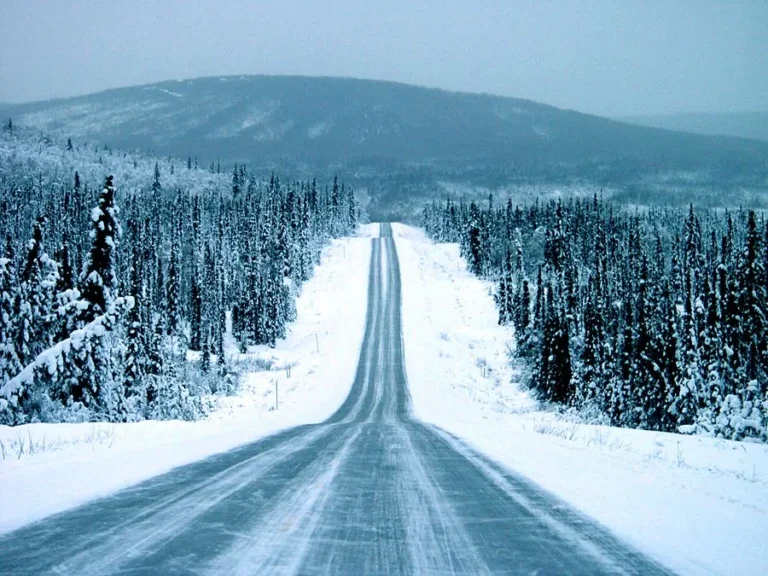
Even if you have perfect visibility, a safe gap, and plenty of power, the road itself can ruin your pass. Alaska's weather and road conditions change fast. What looks like dry pavement at the start of a pass can turn into ice, gravel, or loose dirt halfway through.
Here's what to watch for:
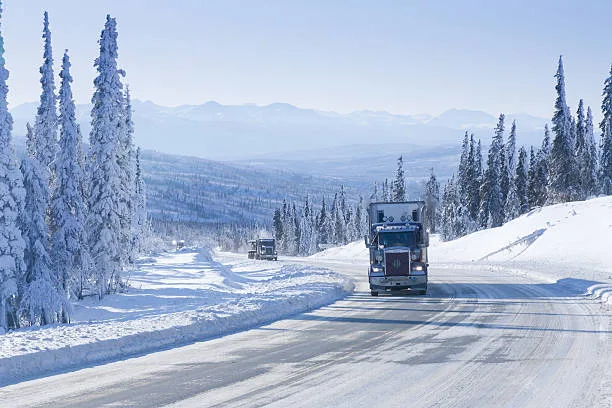
- Ice and packed snow. Winter roads in Alaska are slick. Accelerating during a pass can cause wheel spin. Braking to slot back into your lane can cause a slide.
- Gravel and loose surfaces. Many rural Alaska highways have unpaved sections or loose gravel on the shoulder. If you drift wide during a pass, you risk losing traction.
- Rain and standing water. Hydroplaning at highway speed during a pass is terrifying and dangerous.
- Frost heaves and potholes. Hitting a frost heave mid-pass at 70 mph can throw your car off course.
- Low sun angle. Alaska's winter sun sits low on the horizon. It can blind you just as you need to see oncoming traffic clearly.
The decision tree here is simple. If road conditions are less than ideal, the risk of passing goes up exponentially. Ice makes a 10-second pass feel like an eternity because you can't accelerate or brake normally.
Seasonal considerations matter a lot. In winter, limit passing to stretches where you can see bare pavement or well-packed snow with good traction. In summer, watch for gravel trucks and construction zones.
In spring, watch for frost heaves that can upset your car's balance.
Here's a quick judgment guide:
- Dry pavement, clear weather: Standard passing rules apply.
- Wet pavement, light rain: Add 30% to your gap estimates. Braking distances increase.
- Snow or ice: Avoid passing unless absolutely necessary. If you must, use extreme caution and only on completely straight, level sections.
- Gravel roads: Reduce speed before attempting any pass. Loose gravel reduces traction for both acceleration and braking.
- Fog or heavy rain: Do not pass. You cannot reliably judge distance or see oncoming vehicles.
Alaska's highways demand more respect for weather than roads in the lower 48. A clear day in June can turn into rain in ten minutes. September mornings often bring fog that doesn't burn off until noon.
Always check the forecast for your route, and be ready to change your plans.
After a long day of highway driving in Alaska's conditions, your car will need a proper wash to remove road salt, grime, and debris. Using the right car shampoo for your paint protection film helps maintain visibility through clean windows and protects your vehicle's finish from the corrosive effects of Alaska's winter road treatments.