ByMax Lee
Guide to Anti-gelling Fuel Additives
If you drive a diesel vehicle in Alaska, you know the feeling of walking out to a truck that won't start because the fuel turned to slush overnight. Anti-Gelling Fuel Additives are your main defense against that exact problem. They lower the temperature at which diesel wax crystals form and keep your fuel flowing in conditions that would freeze untreated fuel solid.
Per ASTM D975 specifications, standard Diesel #2 starts forming wax crystals around 15°F. For context, the average low in Fairbanks in January is -20°F. That's a 35-degree gap where untreated fuel simply won't work.
Understanding how these additives bridge that gap is essential for anyone who relies on a diesel vehicle in Alaska.
Bing (Web (fair-use with source credit))
Quick Answer
Anti-Gelling Fuel Additives are chemical treatments that prevent diesel fuel from solidifying in cold weather. They lower the pour point of the fuel. They stop wax crystals from clogging your fuel filter.
You add them before filling your tank. They keep your engine running in Alaska's worst winter conditions.
Why Alaska Diesel Drivers Need to Care About This
Let's get real about what's at stake when your diesel gels at 40 below. A single tow off the Dalton Highway can run you thousands of dollars. If you're parked in Fairbanks or a remote village, help might be hours away.
And the damage from gelled fuel is not cheap.
When wax crystals form in your fuel, they don't just stop your engine. They clog your fuel filter first. If you keep cranking, you can damage your high-pressure fuel injection pump.
Those CP4 pumps found in many modern diesel trucks can cost $5,000 to $8,000 to replace. That's not a repair you want to explain to your wallet.
Alaska fuel quality varies too. A station in Anchorage might have well-treated winter blend diesel. A station in Tok or Nenana might be selling fuel that sat in an older tank all summer.
You can't always trust what's in the pump. That's why relying on the fuel's natural cold-flow properties alone is a gamble.
The stakes are higher here than in the Lower 48. In Montana or Minnesota, a gelled truck is an inconvenience. On the Parks Highway at 2 AM, it's a safety risk.
Keeping your fuel treated is part of basic winter vehicle maintenance, just like plugging in your block heater or checking your battery.
The Simple Science Behind Fuel Gelling (And Why It Hits Alaska Harder)
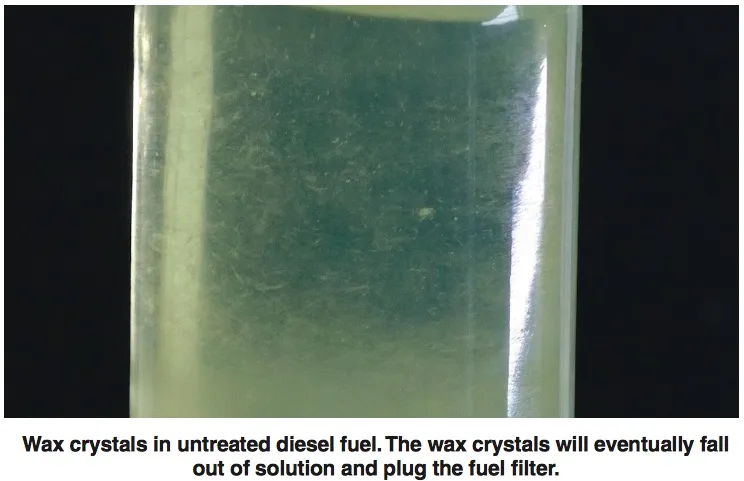
Diesel fuel contains paraffin wax. That's normal. In warm weather, that wax stays dissolved in the fuel and flows through your system like any liquid.
But when temperatures drop, those wax molecules start linking together into crystals. Think of it like Jell-O setting in the fridge.
Here's the key distinction every Alaska diesel owner needs to know:
| Term | What It Means | Typical Temp (Diesel #2) |
|---|---|---|
| Cloud Point | First visible wax crystals form | 15°F to 20°F |
| Pour Point | Fuel stops flowing altogether | 0°F to 15°F |
| Cold Filter Plugging Point | Wax crystals block the filter | 10°F to 15°F |
That cloud point is your first warning. Before your fuel fully gels, those tiny crystals float through the fuel like snowflakes. They look harmless.
But they stack up on your fuel filter like a pile of leaves in a drain grate. Once that filter plugs, your engine starves for fuel and dies.
The problem in Alaska is that these temperatures aren't theoretical. They're your daily reality. Fairbanks sees weeks where the high never cracks -20°F.
Anchorage gets extended stretches in single digits. Even Juneau, with its milder temps, deals with moisture and condensation that make crystal formation worse.
Anti-gelling additives work by modifying how those wax crystals form. Instead of big flat crystals that stack together, the additive encourages smaller, rounder crystals that slip through your filter. The fuel still thickens, but it stays flowing.
That's the whole game.
Option One: Pour Point Depressants (The Everyday Choice)
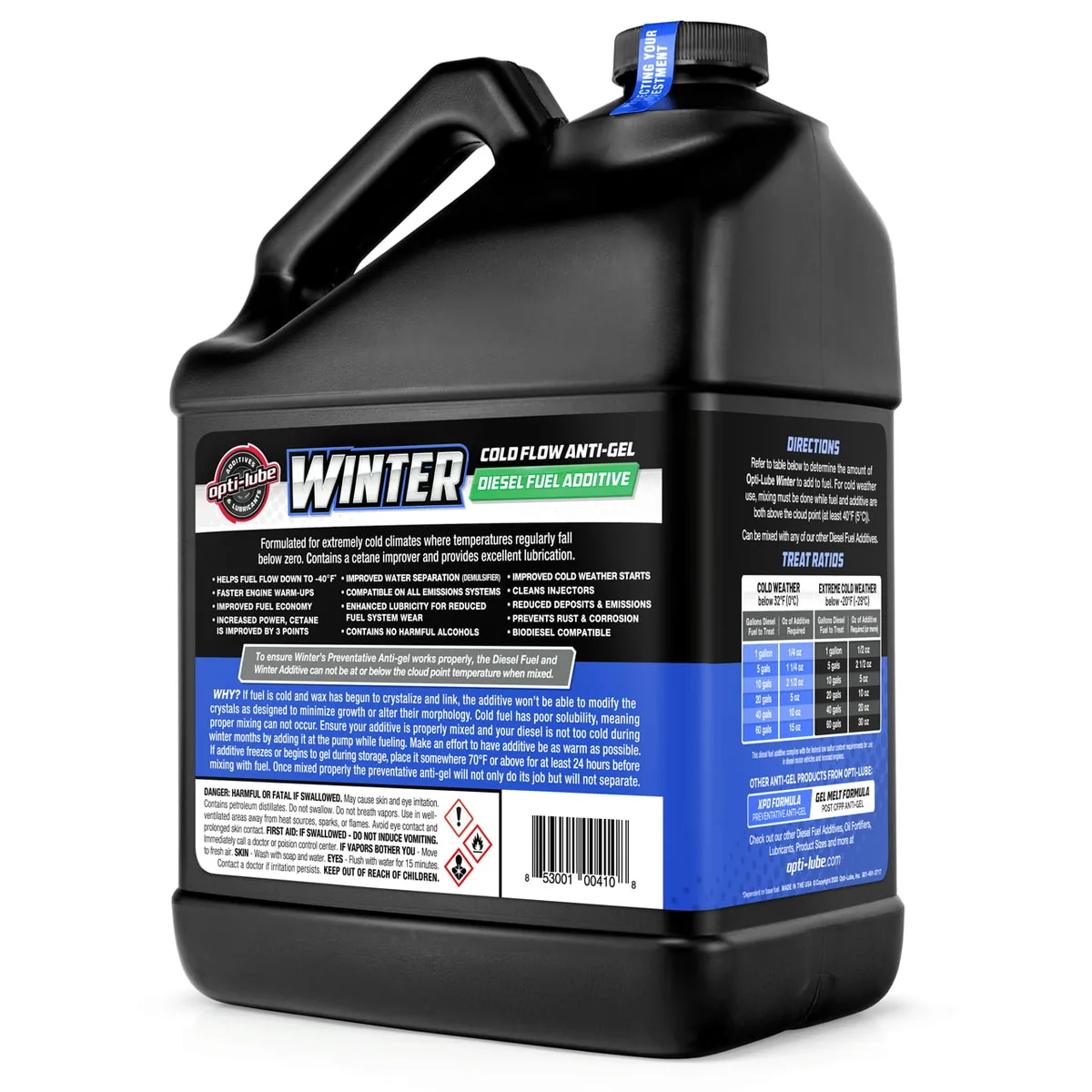
Pour point depressants are the workhorses of the anti-gelling world. They're the most common type of additive and the ones you'll see on store shelves in Alaska from October through April.
Here's how they work on a chemical level. The additive molecules bind to the surface of wax crystals as they form. This keeps the crystals small and spherical instead of letting them grow into big flat plates.
Small crystals pass through your fuel filter. Big plates don't.
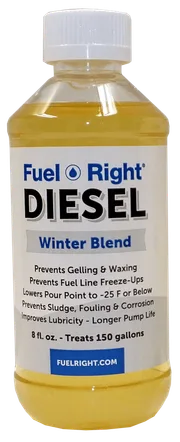
From our research, a quality pour point depressant can lower your fuel's pour point by 20°F to 35°F depending on the base fuel. That means Diesel #2 with a natural pour point of 10°F can be treated down to -25°F or lower.
Who this is best for:
- Daily drivers in Anchorage, Fairbanks, and the Mat-Su Valley
- Fleet operators running multiple diesel vehicles
- Anyone who fills up at stations with inconsistent winter blend quality
- Drivers who want a simple, one-and-done treatment per tank
What to look for:
- Products labeled "winter diesel treatment" or "cold flow improver"
- Clear temperature ratings on the bottle (look for -30°F or lower claims)
- Alcohol-free formulations for modern common-rail injection systems
Pour point depressants are best used preventatively. You add them to your tank before you fill up. The mixing action of the fuel pouring in distributes the additive evenly.
Then you drive normally. That's it.
One thing to keep in mind: pour point depressants don't do much for water in your fuel. If you have condensation in your tank, that water can freeze independently of the fuel. That's where the next option comes in.
Option Two: Water Dispersants & Cetane Improvers (The All-in-One Solution)
Some additives do more than just stop gelling. They also handle water contamination, boost cetane for easier starting, and add lubricity to protect your fuel system. These are the all-in-one winter treatments.
Water dispersants work by suspending water molecules in the fuel so they can't coalesce into droplets that freeze. Instead of ice forming in your fuel lines, the water passes through the system harmlessly and burns off during combustion. This is critical in Southeast Alaska, where high humidity leads to more condensation in fuel tanks.
Cetane improvers raise the fuel's cetane number, which affects how easily it ignites under compression. Higher cetane means faster, cleaner starts in cold weather. If you've ever cranked a diesel for ten seconds in -20°F before it catches, you understand why this matters.
Lubricity additives compensate for the low sulfur content of modern ultra-low sulfur diesel. ULSD has poor natural lubricity, and cold weather makes the fuel thicker and harder on injection pumps. Extra lubricity protects those expensive CP4 pumps we mentioned earlier.
Who this is best for:
- Drivers in rainy, humid parts of Alaska like Juneau, Ketchikan, and Seward
- Older diesel engines with mechanical injection pumps (pre-2007 models)
- Vehicles that sit for extended periods between drives
- Anyone who wants one bottle that handles multiple problems
The trade-off? These all-in-one additives usually cost more per treatment than a basic pour point depressant. You're paying for the extra chemistry.
For most Alaska drivers, the added water protection is worth it. Water in your fuel is a year-round problem, but it's especially dangerous in winter when that water can freeze and block lines even if the diesel itself isn't gelling.
Option Three: Emergency De-Gellers (For When You're Already Stuck)
Sometimes the damage is already done. You walk out to your truck, turn the key, and the engine cranks but won't fire. Your fuel filter is clogged with wax.
Your fuel lines are full of gel. This is where emergency de-gellers come in.
These are different from preventative additives. They're formulated to dissolve existing wax crystals and liquefy gelled fuel. Think of them as the fire extinguisher you hope you never need but keep in your truck anyway.
How they work:
- Contain stronger solvents that break down wax crystal structures
- Raise the fuel temperature locally as they mix
- Restore flow within minutes in most cases
The catch: You can't just pour an emergency de-geller into a gelled tank and expect magic. The fuel needs to flow enough to mix. If your fuel lines are completely blocked, you may need to warm the filter housing first.
Many experienced Alaska drivers carry a spare fuel filter and a bottle of emergency treatment together.
How to use it:
- Pour the recommended dose into your fuel tank
- If possible, warm the engine bay (block heater, portable heater, or even a hairdryer on the fuel filter)
- Crank the engine in short bursts. Do not crank continuously.
- If it doesn't start after several attempts, replace the fuel filter
Emergency de-gellers are not a substitute for preventative treatment. They're a rescue tool. Using them regularly is a sign that your winter prep needs an upgrade.
They also tend to be more expensive per ounce than preventative additives because of the stronger chemistry.
Who this is best for:
- Every diesel vehicle regardless of your normal winter prep
- Remote drivers where a tow isn't practical
- Backup storage in your vehicle emergency kit
Who should skip this:
- Drivers who diligently use preventative additives every fill-up
- Anyone storing fuel in bulk tanks (these products affect stability over time)
The smartest approach is to keep both: a bottle of preventative additive in your garage and a bottle of emergency de-geller in your truck. You'll probably never need the emergency bottle. But when you do, you'll be glad it's there.
Bing (Web (fair-use with source credit))
Bing (Web (fair-use with source credit))