ByMax Lee
Guide to Unlawful Obstruction of Scenic Highways
You're driving the Seward Highway, the mountains are incredible, and you pull over to snap a photo. Next thing you know you've got a ticket. That's the reality of unlawful obstruction of scenic highways here in Alaska, a law that catches drivers off guard more than you'd think.
Per Alaska Statutes, fines for a first offense typically fall in the $50 to $200 range, and towing can add several hundred more on top of that. Understanding where you can and cannot stop on a scenic byway means the difference between enjoying the view and paying a costly penalty. Let's walk through what this law really means for you as an Alaska driver.
Quick Answer
Unlawful obstruction of scenic highways means parking or stopping in a way that blocks the view or the roadway. Alaska law prohibits this on designated scenic byways. Violations bring fines, towing, and court costs.
Know the rules before you stop. Always use a designated pullout.
Why This Matters for Alaska Drivers
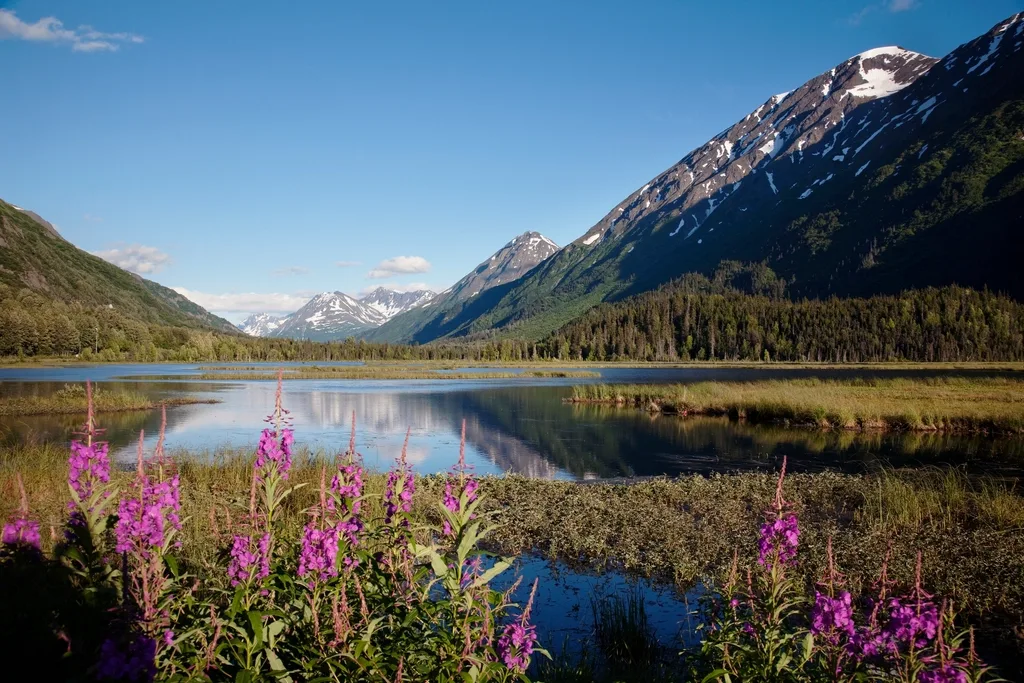
Alaska has more designated scenic byways than most states. Routes like the Seward Highway, the Glenn Highway, and the Parks Highway carry thousands of drivers every day. Tourists and locals alike pull over constantly to take in the views.
Here's the problem. Many of those pullovers happen in places that aren't legal stopping areas. The shoulder of a scenic highway isn't always a parking spot.
When you stop in a spot that blocks the scenic view for other drivers or creates a safety hazard, you're breaking the law.
As of 2026, enforcement has become more consistent. Alaska Department of Transportation crews and state troopers patrol these routes regularly. They know exactly which pullouts are legal and which are not.
For Alaska car owners, this matters because:
- You can get fined for stopping even briefly in a non-designated area
- Towing fees in remote areas can run $300, $500
- Your vehicle could be impounded if it's left overnight in a scenic corridor
- Out-of-state drivers get ticketed just as often as locals
In our research, the most common complaint we hear from Alaska drivers is confusion. They see other cars parked along the shoulder and assume it's legal. It's not always legal.
The law is specific about what counts as obstruction, and assumptions won't keep you out of trouble.
Openverse / Carol M Highsmith
What "Unlawful Obstruction" Actually Means Under Alaska Law
Let's get specific. Alaska law defines unlawful obstruction of scenic highways as any stopping, parking, or placement of an object that:
- Blocks the scenic view from the roadway
- Creates a traffic hazard by reducing visibility
- Prevents other drivers from safely using the shoulder
- Stores personal property or vehicles on the right-of-way
The key phrase is "scenic view." These laws exist specifically to protect the visual corridor. If your vehicle blocks what other drivers can see of the mountains, the water, or the landscape, that's obstruction.
Alaska Statute 19.25.150 covers obstruction of public highways generally. It makes it unlawful to place any obstruction in or upon a public highway. The statute applies to scenic highways just as it applies to any other road.
Alaska Statute 19.25.160 goes further. It specifically addresses encroachments on highway rights-of-way. This is the law that covers parking, stored vehicles, and objects left on the shoulder of a scenic route.
You don't have to be parked for hours. You don't need to be blocking traffic. Even a quick stop to take a photo can count as unlawful obstruction if you're parked in the wrong spot.
What counts as a right-of-way? On most Alaska highways, the right-of-way extends 60 to 100 feet from the centerline. That's a lot of ground.
Many drivers think they're safe because they're off the pavement, but the right-of-way covers much more than the road itself.
If you want a deeper look at vehicle-related laws and driving tips specific to Alaska, you can check out more information on our Blog.
The Alaska Statutes You Need to Know (AS 19.25.150 & 19.25.160)
Here is what the actual law says and how it gets applied on Alaska's scenic highways.
Alaska Statute 19.25.150
This statute states that no person may obstruct a public highway. The definition of obstruction includes:
| Type of obstruction | Example |
|---|---|
| Parked vehicles | Car stopped on shoulder blocking view |
| Abandoned vehicles | Car left overnight at scenic pullout |
| Stored property | Camping gear, boats, trailers left in right-of-way |
| Construction equipment | Trucks or machinery parked on shoulder during non-work hours |
| Debris or objects | Furniture, signage, fencing placed on right-of-way |
The penalty for violating this statute is a fine. First offenses typically start around $50. Repeat violations can go higher.
The court can also order removal of the obstruction at the owner's expense.
Alaska Statute 19.25.160
This one covers encroachments. It makes it unlawful to place any structure, vehicle, or object on a highway right-of-way without permission from the Department of Transportation.
This matters for scenic highways because:
- Many scenic pullouts are within the right-of-way
- You can't treat these pullouts as storage areas for vehicles or equipment
- Even temporary parking can be cited under this statute
- Landowners next to scenic highways can't place fencing or signage that obstructs the view
How enforcement works
State troopers and DOT maintenance crews handle enforcement. If they see a vehicle parked in a spot that blocks the scenic view or creates a hazard, they can:
- Issue a citation on the spot
- Order the vehicle moved
- Call a tow truck if the driver isn't present
- Impound the vehicle
In our research, most citations are written during summer months when tourist traffic is highest. But winter enforcement also happens, especially on routes where snow storage reduces available pullout space.
Which Alaska Highways Are Designated Scenic — and Why It Matters
Not every road in Alaska is a scenic byway. Only designated routes carry the specific protections that make unlawful obstruction a distinct charge.
Alaska has nine state-designated scenic byways and two national scenic byways. Here is the full list:
| Scenic Byway | Route | Notes |
|---|---|---|
| Seward Highway | AK-1 | Anchorage to Seward |
| Glenn Highway | AK-1 | Anchorage to Glennallen |
| Parks Highway | AK-3 | Anchorage to Fairbanks |
| Richardson Highway | AK-4 | Valdez to Fairbanks |
| Dalton Highway | AK-11 | Fairbanks to Deadhorse |
| Denali Highway | AK-8 | Cantwell to Paxson |
| Haines Highway | AK-7 | Haines to the Canadian border |
| Steese Highway | AK-6 | Fairbanks to Circle |
| Taylor Highway | AK-5 | Tetlin Junction to Eagle |
| Alaska Marine Highway | Ferry system | National scenic byway |
| Seward Highway (segment) | AK-1 | Also a national scenic byway |
Why does the designation matter? Because these highways have official scenic corridor management plans. The plans identify view areas, pullouts, and areas where stopping is restricted.
On a scenic byway, you have fewer places where you can legally stop compared to a regular highway. The DOT actively manages these routes to preserve the visual experience for all drivers.
If you stop on a scenic byway in a spot that isn't a designated overlook or pullout, you are at higher risk of being cited. The enforcement is more focused here because the scenic designation is meant to protect the view.
For more Alaska-specific driving content, visit our Blog.
Common Scenarios That Get Alaska Drivers in Trouble
Most drivers don't mean to break this law. They just don't realize what counts as obstruction. Here are the most common situations that lead to citations.
Scenario 1: Pulling over for a photo
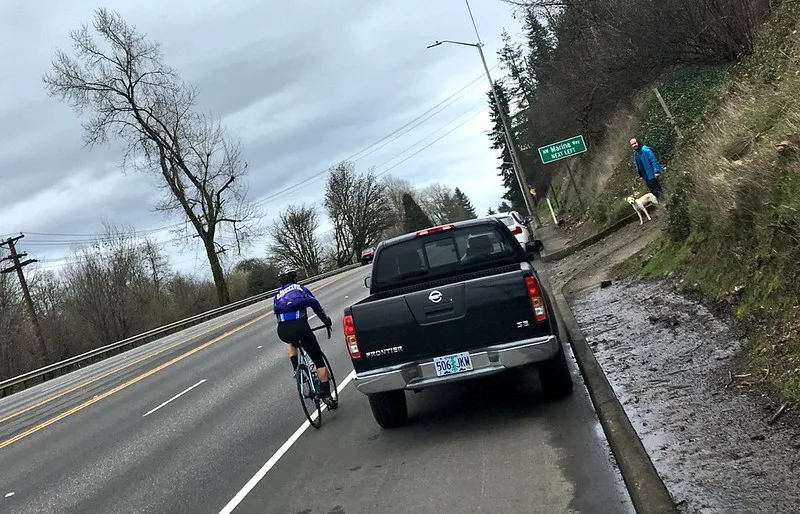
You see the perfect shot. You pull onto the shoulder. You step out for 30 seconds.
That's enough. If the shoulder is within the right-of-way and your vehicle blocks the view for traffic behind you, you can be cited.
Scenario 2: Overnight camping at a scenic pullout
Many scenic overlooks have no overnight parking signs. Drivers miss them. They park at sunset and wake up to a ticket and possibly a tow.
Even if there is no sign, overnight parking at a scenic pullout is typically not allowed.
Scenario 3: Parking on the shoulder in winter
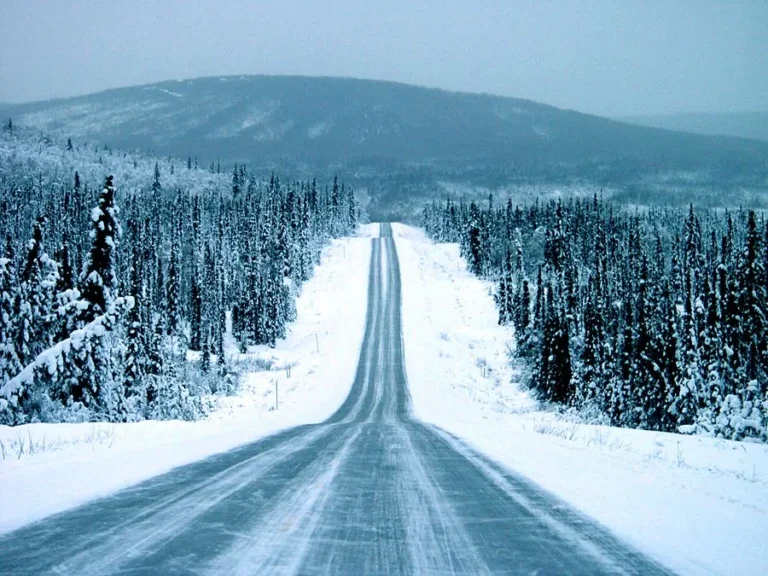
Snow banks narrow the available road width. What looks like a safe spot to pull over in winter might actually be in the travel lane. DOT plows also push snow onto shoulders, making it hard to tell where the road ends and the right-of-way begins.
Scenario 4: Leaving a vehicle for multiple days
This happens on the Dalton Highway and other remote routes. Drivers park a vehicle at a scenic area while they go hiking or hunting. A few days later, it's been reported as abandoned and impounded.
Scenario 5: Storing equipment or belongings at a pullout
Boat trailers, camping gear, firewood, construction equipment. If you leave it on a scenic highway right-of-way, it counts as obstruction. Even if you think it's out of the way.
Bing (Web (fair-use with source credit))
Per the Alaska Department of Transportation, the most commonly cited locations are along the Seward Highway between Anchorage and Girdwood, the Glenn Highway near the Matanuska Glacier, and the Parks Highway near Denali National Park. These are high-traffic scenic areas where enforcement is routine.
If you drive any of these routes regularly, knowing where the legal pullouts are will save you a headache. The DOT maintains maps of designated overlooks on their scenic byways website.
How to Legally Stop or Park on a Scenic Highway
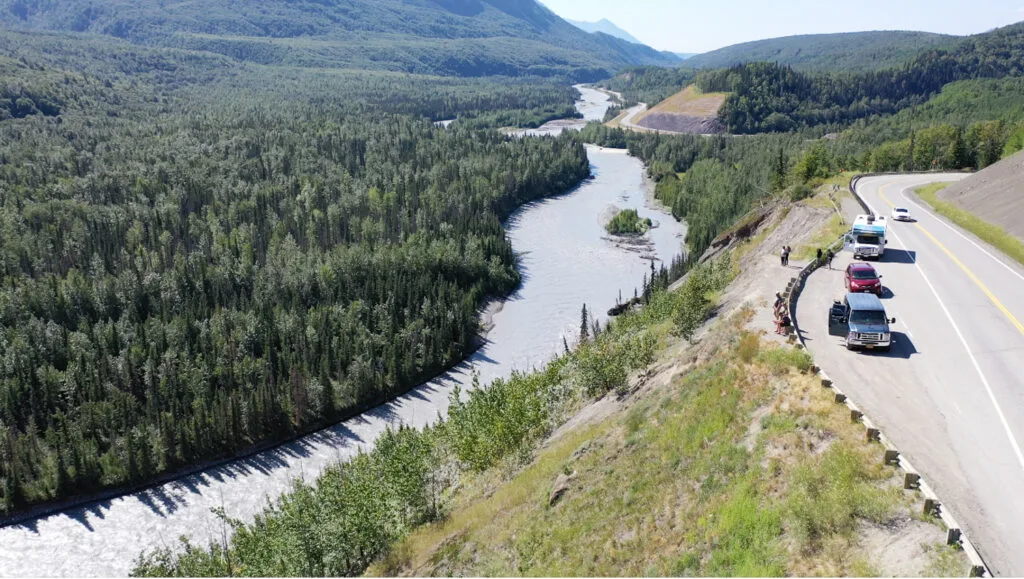
The safest way to stop on any Alaska scenic byway is to use a designated pullout. These are marked with signage, often include a scenic view marker, and are designed to keep you off the traveled lane and out of the right-of-way.
Here is what you should look for:
- Designated scenic overlooks. These have pullout areas, often with guardrails and informational signs. They are the only guaranteed legal stopping spots.
- Rest areas. Many scenic highways have rest areas with parking. These are legal for short stops, but check signage for time limits.
- Wide shoulders on non-scenic segments. If you are no longer on a designated scenic byway, the rules change. You still need to stay off the traveled lane, but the obstruction rules are less strict.
What about stopping on the shoulder of a scenic byway? Avoid it. Even if the shoulder looks wide, you may be blocking a view corridor.
DOT crews patrol these routes specifically looking for vehicles parked in non-designated spots.
If you need to stop for an emergency, pull as far off the road as possible. Turn on your hazard lights. Call for help.
Do not stay longer than necessary. Emergency stopping is generally allowed, but leaving a vehicle overnight can still result in a citation.
Bing (Web (fair-use with source credit))
Time limits matter too. Many scenic pullouts have posted limits of 2 to 4 hours. Overnight parking is almost never allowed.
If you are traveling in an RV or campervan, plan your stops around designated campgrounds rather than scenic overlooks.
Fines, Towing, and Penalties — What to Expect
Getting cited for unlawful obstruction on a scenic highway isn't cheap. The costs add up fast.
Here is what typical penalties look like in Alaska:
| Penalty | Typical cost |
|---|---|
| Fine for first offense | $50 to $200 |
| Fine for repeat offense | $200 to $500 |
| Towing fee (standard) | $150 to $300 |
| Towing fee (remote area) | $300 to $500+ |
| Impound storage per day | $20 to $50 |
| Court costs | Varies by location |
The base fine under AS 19.25.150 starts at $50. But if your vehicle has created a hazard, or if you refused to move it when asked, the fine can increase. Judges have discretion to raise penalties.
Towing is the bigger risk. If you park in a scenic pullout overnight and your vehicle is reported as abandoned, a tow truck can take it. In remote areas like the Dalton Highway, towing costs are high because of the distance to the nearest impound lot.
Your vehicle may also be impounded if it's left in a spot that blocks emergency vehicle access or creates a traffic hazard. This happens most often on narrow sections of the Seward Highway and the Parks Highway during summer.
The total cost of a single violation. Fine, towing, and storage fees can easily exceed $500. For a quick photo stop.
Keep that in mind.
Who Enforces These Rules and How Jurisdiction Works
Multiple agencies enforce obstruction laws on Alaska scenic highways. Understanding who has authority helps you know what to expect.
Alaska State Troopers handle most enforcement on state highways. They patrol scenic byways regularly. A trooper can issue a citation, order a vehicle moved, or call for a tow.
Alaska DOT maintenance crews also play a role. DOT personnel report obstructing vehicles to troopers. They can also place warning tags on vehicles and arrange for removal if the vehicle is creating a safety issue.
Local police have jurisdiction on scenic byways that pass through municipal areas. The Seward Highway through Anchorage is a good example. Both APD and troopers can enforce obstruction laws there.
Borough code enforcement may get involved on scenic routes that cross borough land. This is more common on the Kenai Peninsula and in the Mat-Su Borough.
Jurisdiction gets complicated in rural areas. On the Dalton Highway, for example, the primary enforcement is from troopers based in Fairbanks and Coldfoot. Response times can be slow.
A vehicle left obstructing a view for days might attract attention, but the citation may not come until a trooper patrols through.
In our research, the practical reality is this: if a DOT worker or a trooper sees your vehicle in a clearly obstructing spot, you will be cited. Distance from a station doesn't mean less enforcement. It often means the vehicle gets towed and impounded before the driver returns.
Seasonal and Location-Specific Factors
Alaska's seasons change how obstruction rules apply. Winter is the biggest variable.
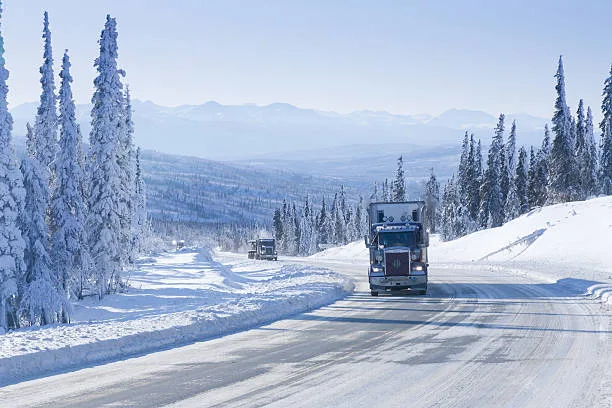
Winter conditions. Snowplows push snow to the shoulders. What looks like a wide, safe pullout in summer might be a narrow snow bank in February. If you stop on the shoulder in winter, you risk being partially in the travel lane.
Snow also hides the shoulder edge, making it easy to slide into a ditch.
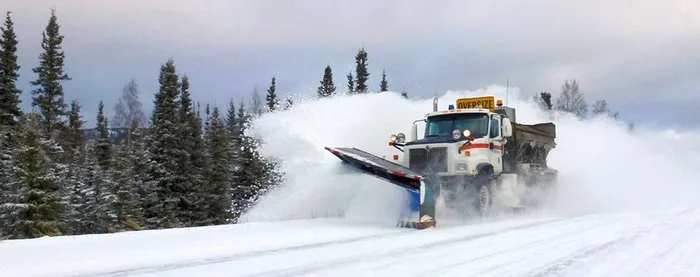
DOT also stores plowed snow in right-of-way areas. If you leave a vehicle parked on a scenic highway shoulder, it can be buried or damaged by plow crews. DOT does not take responsibility for vehicles left in plow zones.
Summer conditions. Tourist traffic peaks from May to September. Scenic pullouts fill up quickly. Drivers start parking in non-designated spots because the designated ones are full.
This is when enforcement is highest.
Our research shows that the Seward Highway between Anchorage and Girdwood sees the most citations during July. The Glenn Highway near the Matanuska Glacier is another hotspot.
Rural versus urban enforcement. In urban areas like Anchorage or Juneau, enforcement is consistent. Troopers and local police patrol regularly. In rural areas like the Denali Highway or the Taylor Highway, enforcement is less frequent but the consequences are worse.
Towing is more expensive, and there are fewer options to retrieve an impounded vehicle.
Spring breakup. This is a uniquely Alaska factor. Shoulders soften as the ground thaws. Pulling onto a shoulder that looks solid can get you stuck.
That stuck vehicle then becomes an obstruction. DOT has limited resources to pull out stuck vehicles, and towing costs are high.
What to Do If You Receive a Citation for Obstruction
If a trooper or officer hands you a citation for unlawful obstruction, stay calm. The process is straightforward if you know your rights.
First, read the citation carefully. It will list the specific statute you violated, the location, and the fine amount. Keep the citation and any documentation.
You have options:
- Pay the fine. This is an admission of guilt. You pay the amount listed and the matter is closed.
- Contest the citation. You can appear in court and argue that you were not obstructing the scenic view. This requires evidence like photos showing your vehicle was in a designated pullout or that no signs prohibited stopping.
- Request a mitigation hearing. You admit the violation but explain the circumstances. The judge may reduce the fine.
What most drivers don't know. If your vehicle was towed, you must pay the towing and storage fees to get it back. You can still contest the citation in court.
Paying the impound fees does not count as admitting guilt.
If you believe the citation was issued in error, document everything. Take photos of the location, the signage, and your vehicle position. Note the time of day and weather conditions.
Bring this evidence to court.
For more on vehicle-related legal topics and car ownership in Alaska, our Blog covers a range of driving topics that might help.
When to Contact a Lawyer or Seek Official Guidance
You generally don't need a lawyer for a first-time obstruction citation. Pay the fine and move on.
But there are exceptions. If your vehicle was towed and you believe it was done illegally, consult an attorney. If you face a repeat offense with higher fines, legal help is wise.
The Alaska Court System offers self-help resources for traffic violations, and your local public law library can provide guidance.
Mistakes Alaska Drivers Make Most Often
Pulling onto a grassy shoulder thinking it's safe. Assuming no sign means no restriction. Leaving a vehicle overnight at a scenic pullout.
These are the top three mistakes in our research. Drivers also forget that scenic byway rules apply year-round. Winter shoulders are narrower.
Summer crowds mean more enforcement. The biggest mistake is thinking you will only be stopped for a minute. That minute can cost you.
Quick Reference: Alaska Scenic Byways and Their Rules
Bing (Web (fair-use with source credit))
Every designated scenic byway follows the same core rules. Use designated pullouts only. Respect posted time limits.
Do not block the view corridor.
Check the DOT website for maps of legal pullouts on your route before you head out. A quick look at a map saves you a ticket.
Frequently Asked Questions
Can I pull over quickly to take a photo on a scenic highway?
Only if you use a designated scenic overlook or pullout. Stopping on the shoulder even for 30 seconds can count as obstruction if it blocks the view.
What is the fine for unlawful obstruction on an Alaska scenic highway?
First offenses typically range from $50 to $200. Repeat violations and cases involving hazards can go higher. Towing and impound fees are separate.
Do these rules apply in winter too?
Yes. Scenic highway rules apply year-round. Winter conditions actually make it harder to find safe legal stopping spots because snow narrows the shoulders.
Can I camp overnight at a scenic pullout?
No. Overnight parking is almost never allowed at scenic overlooks. Use a designated campground or rest area instead.