Florida window tinting legal limits and light transmission percentages trip up more drivers than just about any other car modification rule we see. That's because the law treats sedans differently than it treats SUVs, vans, and pickup trucks. Even your front side windows have a different limit than the rear ones.
As of 2026, the key measurement is Visible Light Transmission or VLT. It's the percentage of light your window lets through. Factory glass usually starts around 70 to 80 percent VLT.
Any tint film you add reduces that number. Understand VLT and you've already unlocked most of the law.
Why Florida Tint Laws Confuse Almost Everyone
Most drivers assume there's one simple number for the whole state. That's wrong. Florida Statute 316.2951 sets different limits based on your exact vehicle type.
A sedan and an SUV don't follow the same rules. Even the same car has different limits for front windows versus rear windows.
The confusion usually starts at the tint shop. A customer asks for "the legal limit" and the installer applies a film that's legal for their buddy's pickup. But that same film could get the first driver ticketed if they drive a sedan.
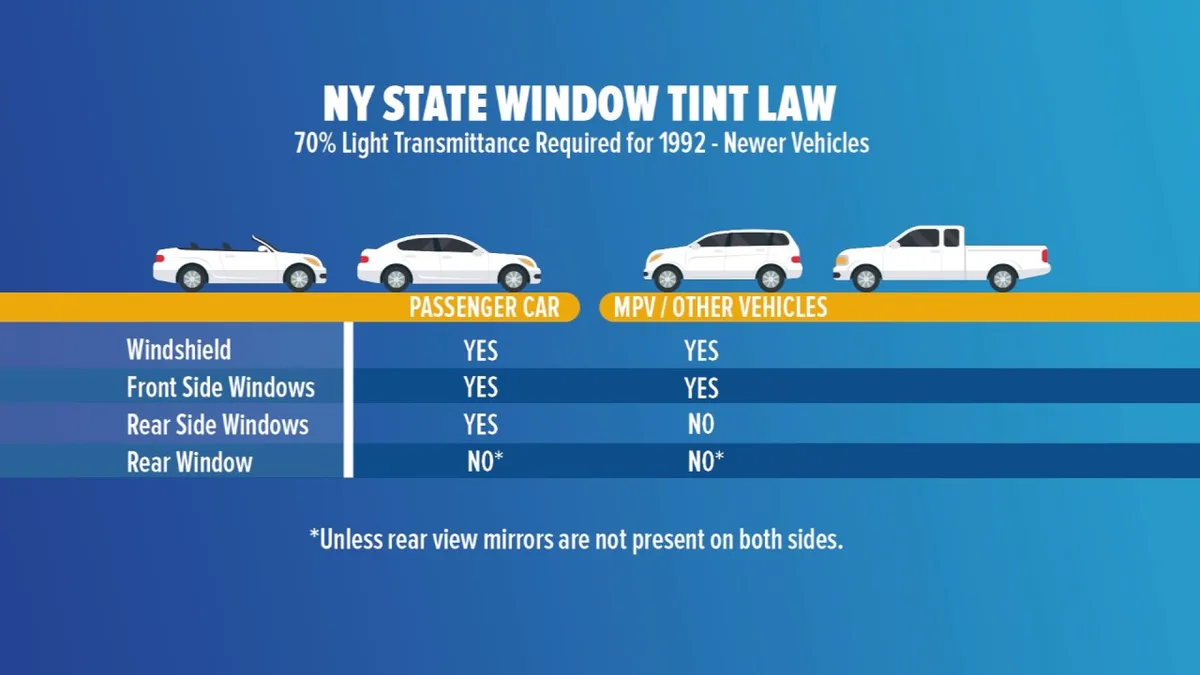
That's because Florida splits vehicles into two categories: passenger cars (sedans, coupes, convertibles) and multipurpose passenger vehicles (SUVs, vans, pickup trucks). Get your category wrong and you get the law wrong.
Vehicle classification also matters for comparing laws in other states. For example, comparable laws in other states apply similar distinctions between vehicle types.
Visible Light Transmission (VLT): The Single Number That Controls Everything
VLT is the percentage of visible light that passes through the glass and film combined. A higher VLT means more light comes through. A lower VLT means darker glass.
Florida's laws are written entirely around this net VLT measurement.
The math is simple. If your factory glass transmits 75 percent of light and you add a film that transmits 40 percent, the net VLT is 75 percent of 40 percent. That comes out to 30 percent.
We multiply, we don't add. A lot of drivers assume 40 percent film gives them 40 percent total. It doesn't.
Here's what that means in practice. Most newer cars have glass that lets through about 75 to 80 percent of light. A 35 percent film on that glass gives a net VLT around 26 to 28 percent.
That barely squeaks past Florida's 28 percent minimum for front side windows. Drop to 30 percent film and you're below the legal limit before you even leave the parking lot.
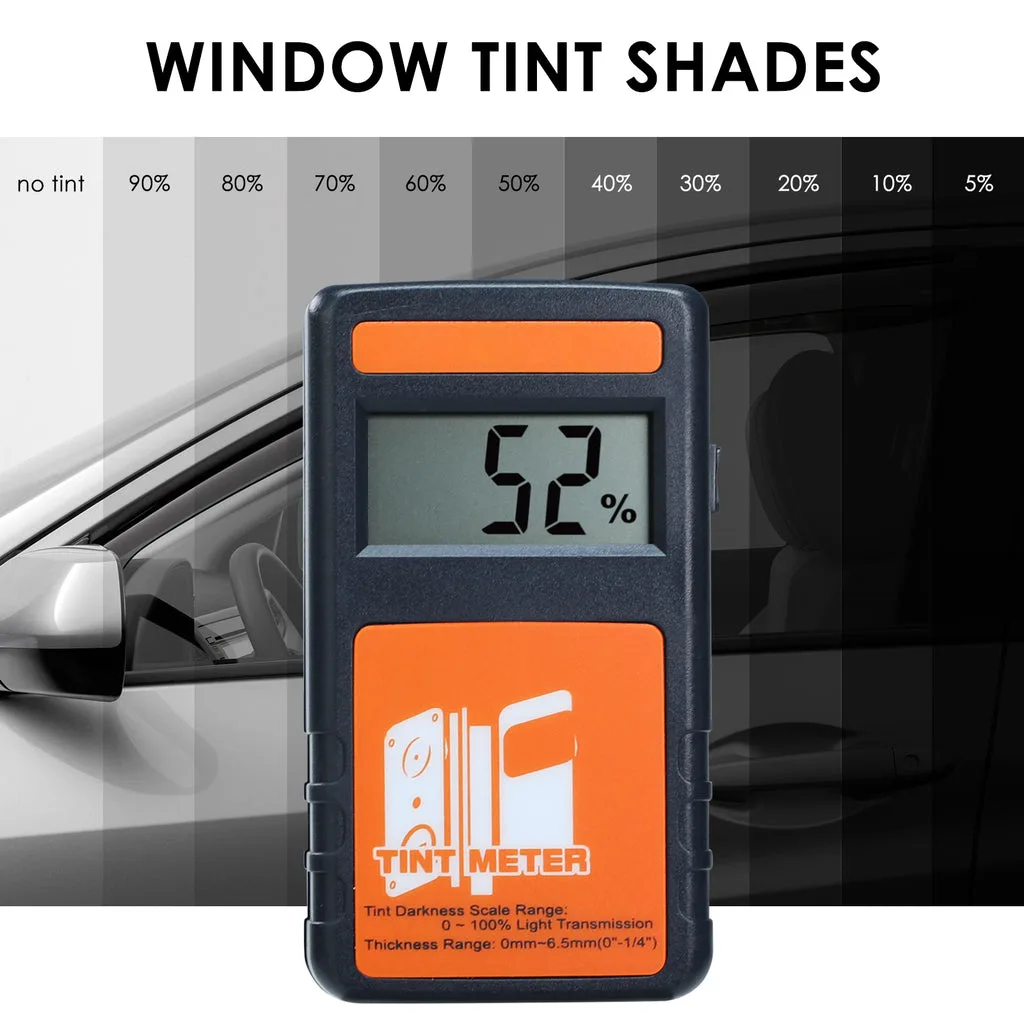
Law enforcement checks VLT with a handheld device called a tint meter. The officer places it on the closed window and gets a reading in seconds. If the meter shows a number below the legal threshold for that window and vehicle type, you get a ticket.
There's no grace period and no warning.
The Florida Tint Decision Tree: A Step-by-Step Workflow
This is the process that tells you exactly what's legal for your specific vehicle. Work through these four steps in order and you'll have your answer.
Step 1: Identify Your Vehicle Type – Sedan or SUV/MPV?
Florida law makes a hard split between passenger cars and everything else. A passenger car is a sedan, coupe, convertible, or station wagon. Every other vehicle that can carry people or cargo counts as a multipurpose passenger vehicle (MPV) or light truck.
This covers SUVs, pickup trucks, vans, and minivans.
If your vehicle has a truck bed or is built on a truck chassis, it's an MPV. If it's a traditional car body, it's a passenger car. When in doubt, check your title or registration.
The classification matters because the rear window rules are completely different between the two categories.
Step 2: Locate the Window Positions That Matter
Florida law identifies three window positions: windshield, front side windows, and rear windows (which includes back side windows and the rear windshield). The front side windows are the ones next to the driver and front passenger. The rear windows are everything behind the front doors.
The windshield has its own rule. You can apply tint on the top five inches or down to the AS-1 line, whichever is longer. The AS-1 line is a marking etched or printed on the glass near the top of the windshield.
Tint below that line is illegal.
Step 3: Apply the Correct VLT Limits for Your Vehicle
For passenger cars (sedans), the front side windows must allow more than 28 percent VLT. The rear side windows and rear windshield must allow more than 15 percent VLT.
For SUVs, vans, pickup trucks, and other MPVs, the front side windows must also allow more than 28 percent VLT. But the rear side windows and rear windshield have no VLT restriction. You can go as dark as you want back there.
This is the part that catches sedan owners. They see a friend's truck with limo tint in the back and assume they can do the same. They can't.
If you drive a sedan, the back windows still have a 15 percent minimum.
Step 4: Check the Reflection Limit and Side Mirror Rule
Tint can't reflect more than 25 percent of light on any window. This applies to all vehicles regardless of type. Mirror-like or reflective films are common violations.
Even a standard metallic film can push reflectance over the limit if it's too bright.
If your rear window is tinted below 15 percent VLT, or if you have any tint on that rear window that significantly reduces visibility, you need dual side mirrors. Both driver and passenger side mirrors must be present and unobstructed. This rule applies even if your car originally came with just a rearview mirror.
Florida Tint Limits at a Glance: Sedans vs. SUVs/MPVs
The table below shows the legal limits for both vehicle types. All numbers refer to net VLT after accounting for the factory glass.
| Window Position | Passenger Car (Sedan) | SUV / MPV / Van / Truck |
|---|---|---|
| Windshield strip | Top 5 inches or below AS-1 line | Top 5 inches or below AS-1 line |
| Front side windows | More than 28% net VLT | More than 28% net VLT |
| Back side windows | More than 15% net VLT | No restriction |
| Rear windshield | More than 15% net VLT | No restriction |
| Maximum reflection | 25% on all windows | 25% on all windows |
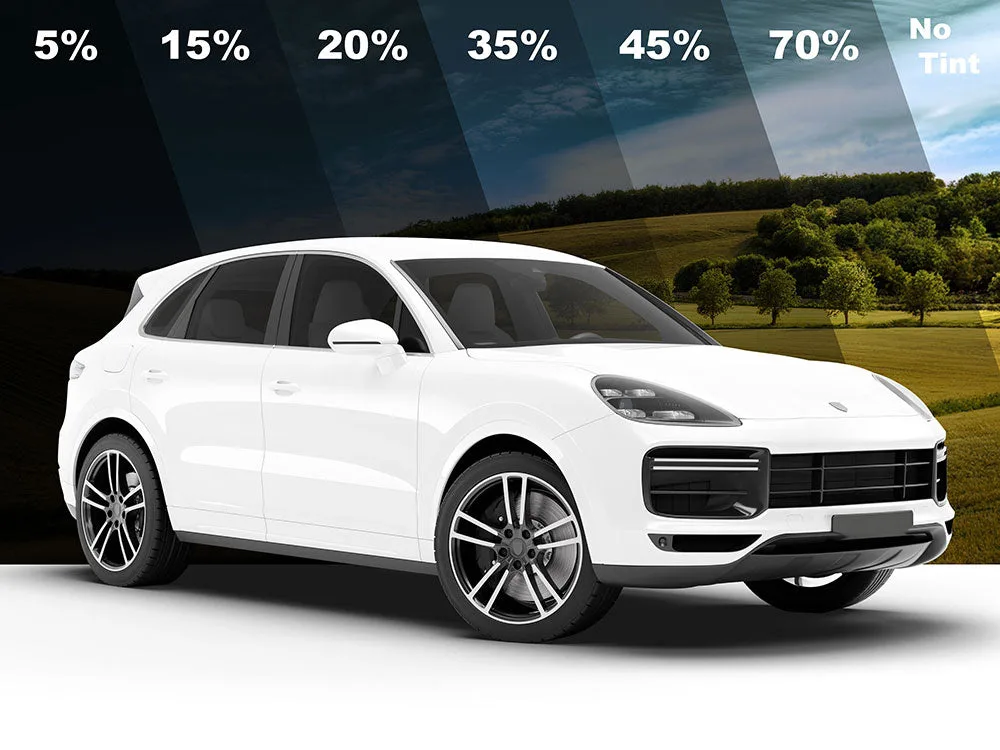
One quick reality check. A lot of factory privacy glass comes standard on SUVs and minivans. That glass typically measures around 20 to 25 percent VLT from the factory.
That's legal on an SUV in the rear windows but not on a sedan. If you own a sedan with dark rear glass, check whether it's factory tint or aftermarket. Factory privacy glass on sedans is rare but not unheard of.
Medical Tint Exemptions: How to Legally Go Darker in Florida
Florida allows darker tint for people with medical conditions that require reduced light exposure. This covers lupus, photosensitivity, certain skin conditions, and some eye disorders. You can't just claim the exemption.
You have to apply for it through the Florida Department of Highway Safety and Motor Vehicles.
The process starts with form HSMV 72010. A licensed medical professional must certify your condition and the need for reduced light transmission. Once approved, you receive a medical exemption card and a decal for your vehicle.
The exemption allows tint darker than the standard limits, but the exact allowed VLT depends on what your doctor specifies. In most cases, it's substantially lower than the standard 28 percent front limit, sometimes as low as 6 percent.
You must carry the exemption card in the vehicle at all times. Law enforcement can ask to see it during a traffic stop. Without the card, you're treated as a standard violation even if you have a legitimate condition.
The exemption lasts for two years and requires renewal.
Many states have similar medical exemption processes, though the specific forms differ. If you are interested in how other jurisdictions handle these permits, you can look at medical exemption permits in Connecticut.
6 Mistakes That Get Florida Drivers Tinted Tickets
The most common mistake is assuming the film's VLT matches the installed net VLT. A 35 percent film on 75 percent factory glass gives roughly 26 percent net. That's below the 28 percent limit.
Always have the shop meter the finished install.
Second mistake: ignoring the vehicle classification rule. People tint their sedan's rear windows as dark as their friend's SUV. That's a ticket waiting to happen.
A sedan's back windows must stay above 15 percent net VLT. SUVs have no back window limit. Know your vehicle type before you pick a film.
Third mistake: forgetting the reflection limit. A highly reflective metallic film can exceed the 25 percent cap even if the VLT is legal. Florida measures reflection separately.
Some installers don't check.
Fourth mistake: covering the windshield below the AS-1 line. Tint below that marker is illegal. Even a small strip lower can get you pulled over.
Fifth mistake: skipping the compliance sticker. After installation, the shop must place a certification sticker on the driver's side window between the film and glass. No sticker means an officer has probable cause to test your tint.
Sixth mistake: letting a medical exemption expire. The card is valid for two years. Forgetting to renew means your dark tint becomes illegal overnight.
Mark your calendar.
Tint Tickets and Removal Fees: The Real Cost of Non-Compliance
A Florida window tint violation is a non-moving offense. The fine typically runs around $100 plus court costs. But the real cost goes beyond the ticket.
If an officer finds illegal tint during a traffic stop, they may issue a fix-it order. You have a set period to remove the tint and show proof. If you don't, the fine escalates.
Tint removal from a shop costs $50 to $100 per window. Doing it yourself takes a few hours and risks damaging rear defroster lines. Replacement tint adds another $150 to $400.
So one ticket can turn into a $500 expense.
Repeated violations can lead to your vehicle being flagged in the system. Officers may target you for future stops. In some cases, illegal tint can affect insurance rates.
For commercial vehicles, penalties can be higher.
To avoid this, invest in a tint meter reading beforehand. Shops often check for free. Or use a $20 handheld meter yourself.
It's cheaper than a single ticket.
Installer Tips: Getting a Tint That Passes Inspection the First Time
Choose a shop that guarantees compliance with Florida law. Ask if they meter the glass before and after installation. A good installer will factor your factory glass VLT and choose a film that keeps you above 28 percent for the front sides.
Request a non-reflective film if you're unsure about the reflection limit. Dyed and carbon films reflect less than metallic ones. Ceramic films also stay within the 25 percent reflectivity cap while providing superior heat rejection.
Before leaving the shop, check the net VLT reading yourself. Many shops will show you the meter. If they won't, find another installer.
Ask about the compliance sticker. It should be clearly visible on the driver's side window, listing the installer's name and film VLT. Keep your proof of purchase and the film specifications in your glove box.
If you're ever pulled over, you can reference those details.
For sedan owners, pay extra attention to rear windows. The 15 percent limit is generous, but 20 percent film on 75 percent glass gives about 15 percent net. That's borderline.
Go with 25 percent or higher to be safe.
Proper maintenance will extend the life of your tint. Use a soft cloth and appropriate cleaners. For recommendations, see our advice on keeping your tinted windows clean.
Legal Compliance Checklist: Every Florida Driver Should Know
Before you drive with fresh tint, run through this checklist.
- Confirm your vehicle type: passenger car (sedan) or MPV (SUV/van/truck).
- Front side windows: net VLT greater than 28 percent.
- Rear windows: sedan must be greater than 15 percent; MPV no restriction.
- Windshield tint: only top five inches or to the AS-1 line.
- Reflection: no more than 25 percent on any window.
- Dual side mirrors present if rear window is heavily tinted.
- Compliance sticker affixed to driver's side window.
- If medical exemption: carry card and decal, renew every two years.
One final check: if you bought the car used with factory privacy glass, verify the VLT with a meter. Factory glass on some sedans from certain years can dip below 15 percent in the rear. That's legal from the factory but still must meet the limit if it's below 15 percent?
Actually, factory glass is exempt? No, Florida law says no window can be manufactured with less than 28% VLT for front sides and 15% for rear on sedans. But factory privacy glass on SUVs is not restricted.
If you have a sedan with factory dark rear glass, check the VLT. It might be around 20 percent, which is legal. But if it's below 15%, it's not allowed.
Most sedan factory glass is above 15%, but double-check.
For a broader look at vehicle equipment regulations, you might also check our post on safety equipment rules. And for general state-specific driving laws, visit the blog on our site.
Before you drive with fresh tint, run through this checklist.
- Confirm your vehicle type: passenger car (sedan) or MPV (SUV/van/truck).
- Front side windows: net VLT greater than 28 percent.
- Rear windows: sedan must be greater than 15 percent; MPV no restriction.
- Windshield tint: only top five inches or to the AS-1 line.
- Reflection: no more than 25 percent on any window.
- Dual side mirrors present if rear window is heavily tinted.
- Compliance sticker affixed to driver's side window.
- If medical exemption: carry card and decal, renew every two years.
One final check: if you bought the car used with factory privacy glass, verify the VLT with a meter. Factory glass on some sedans from certain years can dip below 15 percent in the rear. That's legal from the factory but still must meet the limit if it's below 15 percent?
Actually, factory glass is exempt? No, Florida law says no window can be manufactured with less than 28% VLT for front sides and 15% for rear on sedans. But factory privacy glass on SUVs is not restricted.
If you have a sedan with factory dark rear glass, check the VLT. It might be around 20 percent, which is legal. But if it's below 15%, it's not allowed.
Most sedan factory glass is above 15%, but double-check.
For a broader look at vehicle equipment regulations, you might also check our post on safety equipment rules. And for general state-specific driving laws, visit the blog on our site.
Your Personal Tint Decision Guide: From Uncertainty to Legal Compliance
Follow this decision tree if you're still unsure.
If you drive a sedan:
- Front sides: choose film that results in net VLT > 28 percent.
- Rear sides and rear: net VLT > 15 percent.
- Windshield strip only.
If you drive an SUV, van, or truck:
- Front sides: net VLT > 28 percent.
- Rear sides and rear: any darkness you want.
- Windshield strip only.
If you need darker tint for medical reasons:
- Get form HSMV 72010 from your doctor.
- Submit to FLHSMV.
- Carry exemption card in vehicle.
If you want reflective tint:
- Keep reflectance at or below 25 percent.
- Avoid mirror-like films.
Still unsure? Visit a reputable tint shop and ask for a free VLT reading. Many will test your current windows for free.
And if you're planning a road trip out of state, check that state's limits too. For instance, you can research prohibited window tint colors in other states to avoid tickets while traveling.
Frequently Asked Questions
What is the darkest legal tint in Florida for front windows?
The front side windows must have a net VLT greater than 28 percent. That means no tint that brings the total light transmission to 28 percent or lower. In practice, a film with about 35 percent VLT on modern glass is the darkest you can use and stay legal.
Can I tint my windshield in Florida?
You can apply a non-reflective tint on the top five inches of the windshield, or down to the AS-1 line if that line is less than five inches from the top. Tint below that line is illegal. No tint is allowed on the rest of the windshield.
Do Florida tint laws apply to out-of-state drivers?
Yes. If you drive in Florida, your vehicle must comply with Florida tint laws regardless of where it is registered. Out-of-state drivers with non-compliant tint can be ticketed during traffic stops.
How long does a medical tint exemption last in Florida?
A medical tint exemption is valid for two years. You must reapply before it expires by submitting a new form HSMV 72010 with a doctor's certification. Failure to renew means your dark tint becomes illegal.
What happens if I get caught with illegal tint in Florida?
You will receive a non-moving violation. Fines start around $100 plus court costs. You will be required to remove the illegal tint and provide proof.
Continued non-compliance can lead to higher fines and potential vehicle impoundment in extreme cases.
Is there a grace period for new tint installations?
No. Once your tint is applied, it must meet Florida's limits immediately. There is no grace period for curing or settling.
Your tint must pass inspection from the moment you drive off.