ByMax Lee
Florida Bicycle Safety: The 3-Foot Passing Law
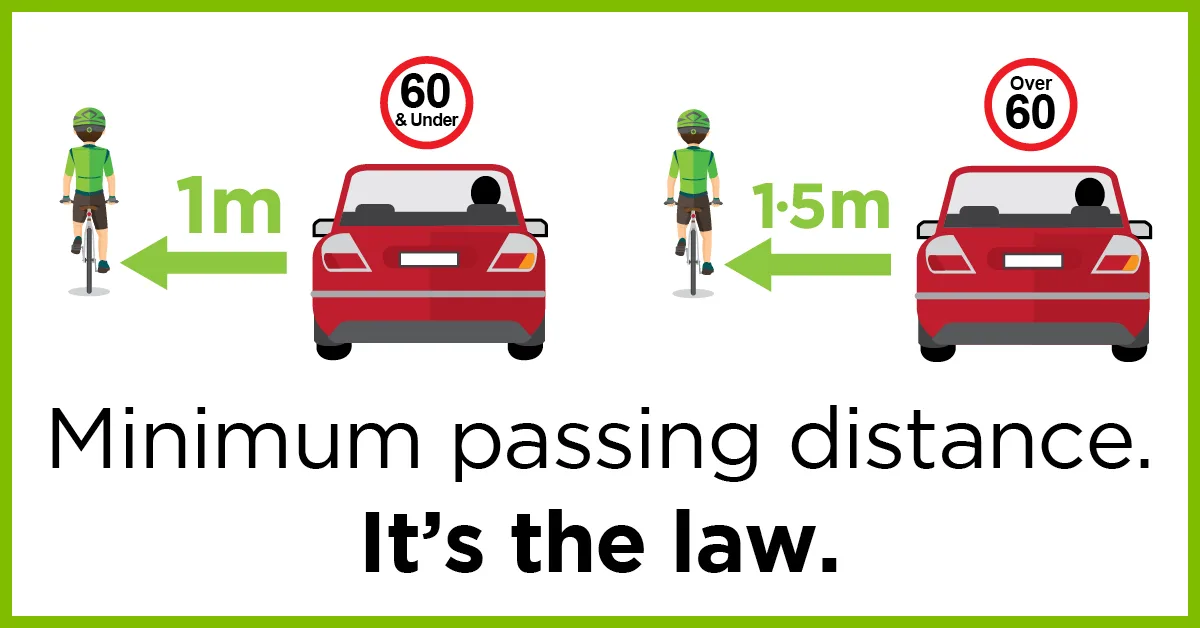
If you ride a bike on Florida roads, you’ve felt it. A car rushing by so close you could touch its mirror. The Florida bicycle safety law and 3 foot passing distance requirement is meant to stop those moments.
It gives cyclists room to stay safe and gives drivers a clear rule to follow.
Data from the Florida Department of Highway Safety and Motor Vehicles shows more than 5,000 bicycle-related crashes statewide each year. Close passes cause a big portion of those collisions. Understanding the exact requirements helps everyone share the road without incident.
Here’s what you need to know.
Bing (Web (fair-use with source credit))
Quick Answer
Florida law requires at least 3 feet of clearance when passing a bicyclist. The rule covers all public roads. Violation results in a moving violation with fines and 3 points on your license.
Both drivers and cyclists must obey traffic laws. Stay at least 3 feet away to stay legal and safe.
Why Accurate Knowledge of the 3-Foot Law Saves Lives
For a state with year-round cycling weather, Florida sees a lot of bike traffic. Tourists rent beach cruisers. Commuters take bike lanes.
Drivers often don’t realize how close they’re passing until it’s too late. The 3-foot rule gives everyone a number to aim for.
Without that clear benchmark, many drivers rely on guesswork. And guesswork leads to sideswipe accidents. In 2023, 147 cyclists died on Florida roads.
Not all were caused by passing distance, but a measurable number were.
To compare how different states handle these rules, you can browse our detailed breakdown of state traffic laws. For now, focus on Florida’s specific requirement. It could make the difference between a safe ride and a hospital visit.
Florida Statute §316.083(5): The Exact Rule and Its Requirements
The law reads: “The driver of a vehicle overtaking a bicycle or other non-motorized vehicle must pass safely at a distance of at least 3 feet between the vehicle and the bicycle or its operator.”
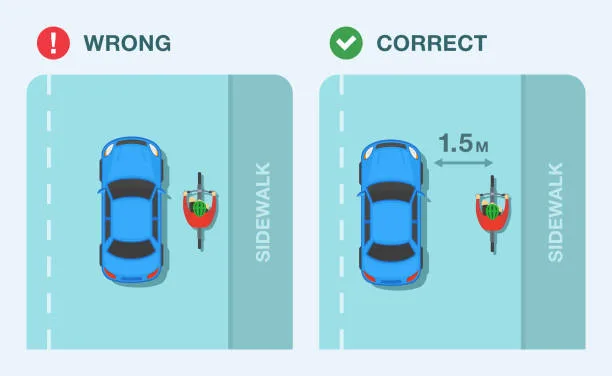
The measurement is taken from the widest point of the car, usually the side mirror, to the widest point of the cyclist, such as their handlebars or body. If the lane is too narrow to leave that gap, the driver must slow down and pass with extreme care.
Here is a quick breakdown of the rule:
| Key Element | Requirement |
|---|---|
| Minimum passing distance | 3 feet |
| Measurement | Widest point of each vehicle |
| When lane is too narrow | Driver must reduce speed and pass cautiously |
| Moving fully into the left lane | Required only when it is safe and legal to do so |
| Harassment | Honking, yelling, or threatening cyclists is illegal |
The statute is clear: this is not a suggestion. For more bicycle safety resources, visit the official pedestrian and bicycle safety page from the Florida Department of Highway Safety and Motor Vehicles. Just like towing equipment requirements vary by state, Florida’s passing rule is specific and enforced.
Who Must Follow the Law: Motorists, Cyclists, and Tourists
This law applies to every driver on any public road in Florida. That includes residents, out-of-state visitors, delivery drivers, and tourists in rental cars. Ignorance of the law is not a defense.
Cyclists also have duties under Florida Statute §316.2065. They must ride as far to the right as practical, use hand signals for turns and stops, and have a front light and rear reflector at night. Following those rules builds goodwill and sets a legal foundation if an incident occurs.
For example, some states have additional requirements for specific vehicle types, such as trailer towing equipment or historic vehicle license plates. In contrast, the 3-foot rule is straightforward. It applies to everyone, no exceptions.
If you want to see how other states handle special vehicle classifications, check the requirements for historic vehicle plate regulations in other states. But in Florida, this bicycle law is universal.
Penalties for Violating the 3-Foot Rule: Fines, Points, and Insurance Impact
A citation for violating the 3-foot passing law is a moving violation. That means it goes on your driving record and adds three points to your license.
Here is what you are looking at financially:
| Penalty | Detail |
|---|---|
| Base fine | $30 |
| Court costs and fees | Typically $100–$200 |
| Total estimated cost | $130–$230 |
| Points on license | 3 |
| Insurance increase | Varies, average 15–30% |
If the close pass causes a crash, expect higher fines, possible civil liability, and even criminal charges depending on injury.
This kind of state-specific statute is just one example of how local traffic laws vary. It is worth checking similar rules in other states you drive through. For instance, restrictions on emergency lights in Connecticut differ from what you might expect.
For a broader perspective, our blog covers more on driving violations and their consequences.
Real-World Risk Scenarios: Close Passes, Dooring, and Lane Sharing
The 3-foot rule is designed to prevent three common hazards.
- Close passes: A driver squeezes past without moving left. The cyclist risks losing balance or being hit by the mirror.
- Dooring: A driver opens a car door directly into the bike lane. Cyclists have no time to react.
- Lane sharing: On narrow roads, vehicles and bikes occupy the same lane. Without 3 feet, the cyclist is pushed toward the curb.
Each of these scenarios becomes a crash when the space is not given. Much like tire tread depth requirements for winter driving in Colorado, this law is based on real accident data. It is not just a suggestion.
Give cyclists the full lane when possible. If you cannot, slow down to a crawl before passing. That 3 feet could separate a normal day from a lawsuit.
A Driver’s Step-by-Step Guide to Passing a Cyclist Safely
Passing a bicycle isn’t complicated, but it requires attention. Most drivers just don’t think about it until they’re in the moment. Here is the exact process.
Step 1: Check your mirrors and blind spots. A cyclist may be in the lane next to you. Look for them before you signal.
Step 2: Signal your intention early. Put on your left turn signal. This tells the cyclist and other drivers you plan to move over.
Step 3: Slow down to match the cyclist’s speed. Do not accelerate toward them. Reduce speed so you can control the gap.
Step 4: Move left when it is safe. Fully change lanes if possible. If the road is too narrow, open the gap to at least 3 feet.
Step 5: Pass at a steady pace. No sudden movements. Keep the wheel straight.
Step 6: Check the cyclist in your mirror before returning. Do not merge back until you see the bicycle clearly behind you.
Remember, if you cannot give 3 feet, you must slow down and pass with extreme caution. The law does not let you squeeze by.
Bing (Web (fair-use with source credit))
Some drivers worry about crossing a double-yellow line to leave room. In Florida, you can legally cross a double-yellow line to pass a bicyclist as long as the way is clear and it is safe. That applies even on two-lane roads.
This nuance is not always taught in driver’s ed. For more details on how traffic rules vary, you can explore our guide to bicycle safety on the blog. The important thing is to give space, not to get a ticket.
A Cyclist’s Step-by-Step Guide to Riding Defensively
Cyclists in Florida have the same rights and responsibilities as drivers. Riding defensively reduces your odds of a close pass.
Step 1: Ride in a predictable line. Do not weave between parked cars or swerve suddenly. Hold a steady course.
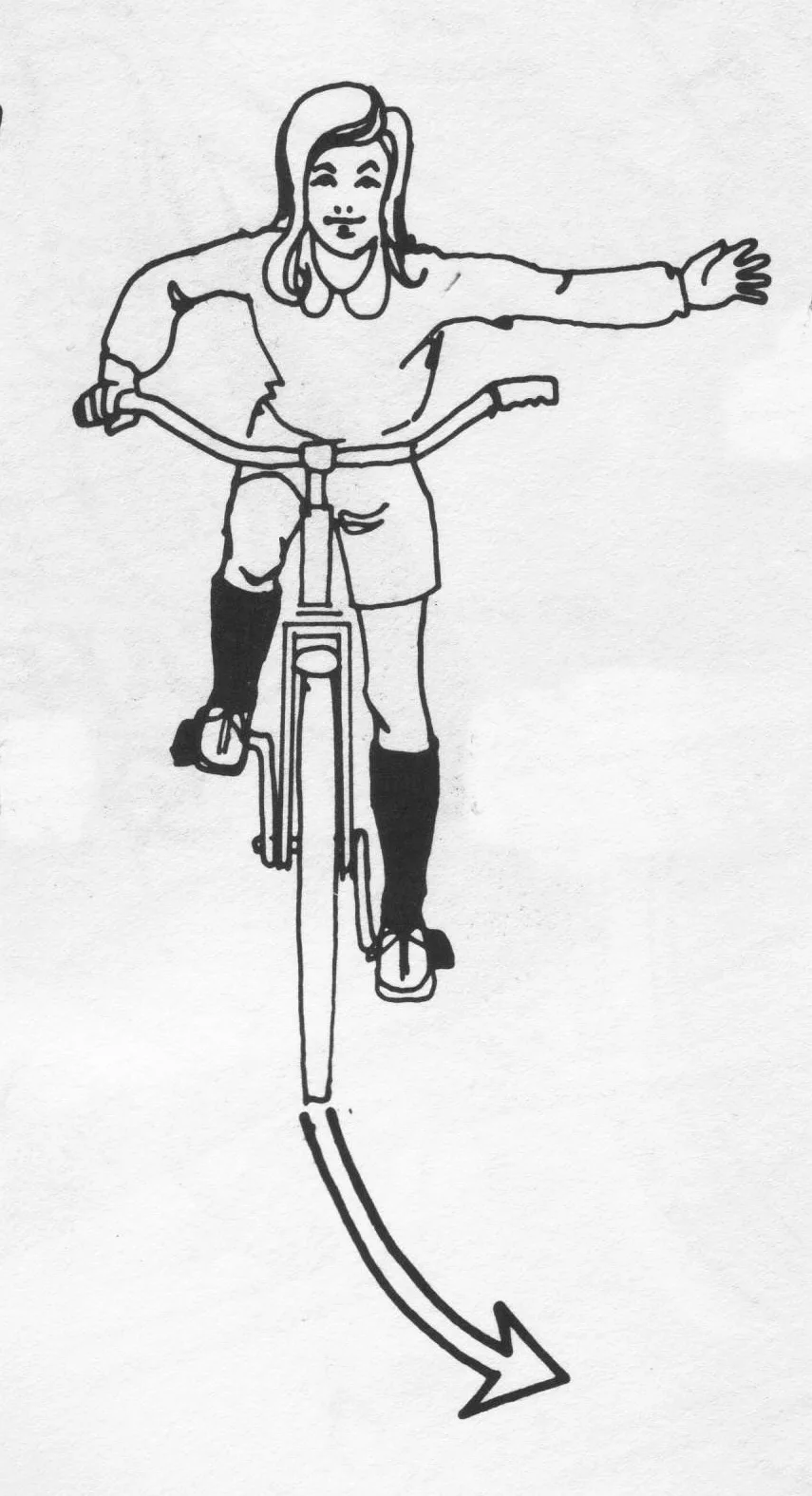
Step 2: Use hand signals for every turn and stop. Point left or right with your arm extended. Signal before you move.
Step 3: Take the lane when necessary. If the lane is too narrow for a car to pass with 3 feet, move to the center. This forces drivers to slow down and wait.
Step 4: Avoid riding in door zones. If parked cars line the street, stay at least 4 feet from them. A sudden door opening can knock you off instantly.
Step 5: Make eye contact with drivers at intersections. Confirm they see you before proceeding. Never assume.
Step 6: Use lights and reflective gear at night. Florida law requires a front white light visible from 500 feet and a rear reflector or red light.
Wikimedia Commons / Sears Sports Center
Many close passes happen because cyclists hug the curb too tightly. That invites drivers to squeeze by. Take the lane when it is not safe for a pass.
If you are ever unsure about your legal position in traffic, review the rules for lane usage in our blog archive.
Common Driver Mistakes That Lead to Violations
Even good drivers make errors when passing bicycles. Knowing the most common ones helps you avoid a citation.
Not moving left at all. Some drivers stay in the same lane and pass with only inches to spare. That is a violation every time.
Overtaking just before a curve or hill. You cannot see if oncoming traffic is coming. You may be forced to cut the cyclist off.
Honking while overtaking. Florida law prohibits unnecessary honking at cyclists. It can startle the rider and cause a crash.
Passing too fast. High speed reduces reaction time. The 3-foot rule applies at any speed, but the faster you go, the less control you have.
Failing to check for cyclists after turning. Right-hooks and left-hooks cause many collisions. Always scan the bike lane before turning.
Bing (Web (fair-use with source credit))
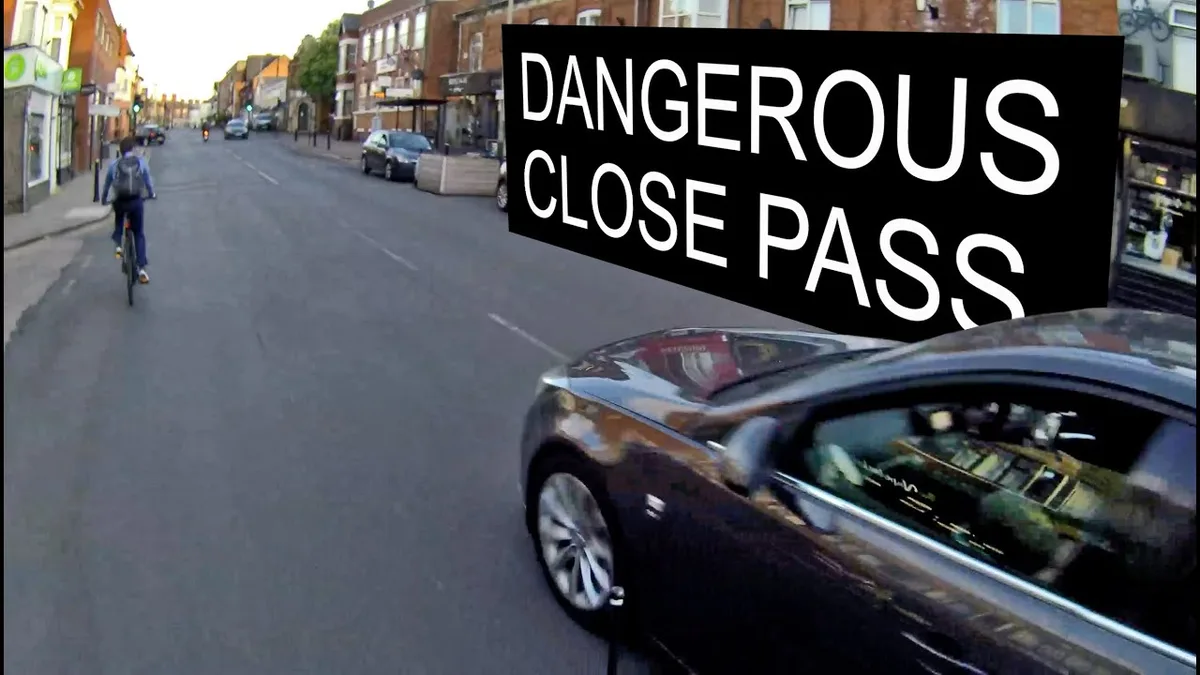
A close pass is not just rude. It carries fines and points. Getting passed this way is stressful for riders too.
If you spot a driver who looks impatient, wait for a safe gap and wave them by. Aggressive driving on the road only escalates risk, whether you are behind the wheel or behind handlebars.
For similar state-specific driving laws that can catch you off guard, check our post on blue and red light restrictions for vehicles to see how other states regulate emergency light colors.
Common Cyclist Mistakes That Erode Safety and Credibility
Drivers are more patient with cyclists who follow the rules. When cyclists ignore traffic laws, it creates tension and raises the risk.
Rolling through stop signs. Bicycles must stop like any vehicle. Running stop signs erodes goodwill and invites close passes.
Riding without lights at night. This is illegal and extremely dangerous. You are nearly invisible until the last second.
Wearing headphones in both ears. Florida law allows one earphone only. Two earbuds block emergency sirens and car horns.
Shoaling (pulling ahead at red lights). Weaving to the front of the queue at a light annoys drivers who had been waiting. Hold your position in line.
Riding against traffic. Always ride with the flow. Wrong-way cycling is a top cause of bicycle accidents.
Each of these behaviors makes drivers less trusting. When a driver feels a cyclist is unpredictable, they give less space. That hurts everyone.
Be predictable. Signal your moves. Obey the lights.
The law backs you up when you do. But when you cut corners, you lose the moral advantage in a crash report.
How to Report a Violation and What to Do After an Accident
If a driver violates the 3-foot rule, you have options. But you need evidence.
Report a violation after the fact. The easiest way is to file a complaint with the local police department where it happened. Provide the license plate, a description of the vehicle, and the location.
Use a camera. Helmet cameras or handlebar cameras capture close passes. Many law enforcement agencies accept video evidence. Just make sure the clip clearly shows the 3-foot gap (or lack thereof).
What to do immediately after a crash:
- Check yourself for injuries. Call 911 if you are hurt.
- Move to safety if possible. Do not leave the scene.
- Exchange information with the driver. Get their license number, insurance, and contact.
- Take photos of the scene. Capture the road, the bike position, and any debris.
- Get the names and numbers of any witnesses.
- File a police report. Without one, insurance claims are harder.
If you are a driver who hits a cyclist, stop immediately. Leaving the scene is a criminal offense. Contact law enforcement and an attorney.
For more on what happens when a vehicle incident involves special circumstances, read our article on the Connecticut abandoned vehicle removal process for contrast. Otherwise, carry a camera and know your rights.
The 3-foot law exists to protect everyone. Knowing how to enforce it and respond when it fails gives you confidence on the road.
How Florida’s Law Stacks Up Against Other States
Florida’s 3-foot rule sits in the middle of the national pack. Twenty-one states have a 3-foot requirement. A handful of states go further.
| State | Passing Distance | Notes |
|---|---|---|
| Florida | 3 feet | Standard 3-point moving violation |
| Pennsylvania | 4 feet | Requires 4 feet when passing at any speed |
| Wisconsin | 3 feet | Enhanced penalty for causing injury |
| Georgia | 3 feet | Applies to bicycles and other slow-moving vehicles |
| New York | 3 feet | Must change lanes when possible |
Some states classify close passes as reckless driving. Florida has no separate vulnerable road user law with extra penalties. That means the base fine and points apply the same way for a close pass as for any moving violation.
If you cross state lines with your bike, check the local law. A 3-foot rule in Georgia won’t help you in Pennsylvania. And in some rural states, no specific passing distance exists at all.
Answers to the Most Common Questions About the 3-Foot Law
What exactly counts as the 3-foot distance?
The measurement runs from the widest point of your vehicle to the widest point of the bicycle. That usually means your side mirror to the cyclist’s handlebars. Three feet is the minimum, not a target.
More space is always better.
Can I cross a double-yellow line to pass a bicyclist?
Yes, in Florida you can. The law allows crossing a double-yellow line to pass a bicyclist as long as the way is clear and it is safe. Just make sure no oncoming traffic is present.
Does the 3-foot rule apply on roads with bike lanes?
Yes, it does. Even when a bike lane is marked, drivers merging across it must give 3 feet. The bike lane is not a passing zone.
Cyclists also have the right to leave the bike lane to avoid hazards like drainage grates or debris.
What should I do if a driver violates the 3-foot law?
If you have video evidence, file a complaint with the police department where it happened. If you don’t, a witness statement can help. For serious violations resulting in a crash, contact law enforcement immediately.
Do bicyclists have to follow the same traffic laws as drivers?
Yes. Under Florida Statute §316.2065, bicycles are vehicles. Cyclists must obey stop signs, traffic lights, and lane markings.
Doing so builds credibility and keeps everyone safer.
How is the 3-foot distance measured by law enforcement?
Officers use visual estimates, reference lines on the road, or onboard video from patrol vehicles or bicycle cameras. Some training courses use a 3-foot measuring pole to help officers gauge the distance accurately.
The Bottom Line: What Every Road User Needs to Remember
The Florida 3-foot passing law exists for one reason. It saves lives. It gives cyclists the space they need to ride safely and gives drivers a clear rule to follow.
As a driver, treat a bicycle like any slow-moving vehicle. Wait for a clear opening. Pass with at least 3 feet.
Never honk or harass.
As a cyclist, ride predictably. Use hand signals. Avoid unnecessary risks.
When you follow the rules, you earn respect.
Both sides have responsibilities. When everyone does their part, Florida roads become safer for every trip. If you ever feel unsafe, report it.
If you are ever involved in a crash, document everything and get help.
The law is clear. The distance is simple. Stay 3 feet apart and stay safe.