ByMax Lee
Illinois Class 4 Felony for Scott’s Law Violations
An Illinois Class 4 felony for Scott's Law violation resulting in injury or death carries serious penalties, including prison time and heavy fines. This law, also called the "Move Over" law, requires drivers to change lanes or slow down when approaching emergency vehicles with flashing lights.
As of 2026, violations causing injury can lead to 1, 3 years in prison and up to $25,000 in fines, with mandatory license suspension. Understanding the exact requirements can help you avoid these severe consequences.
Quick Answer
An Illinois Class 4 felony for Scott's Law violation resulting in injury or death is a criminal charge. It applies when a driver fails to move over or slow down near a stationary emergency vehicle. Penalties include 1, 3 years in prison.
Fines can reach $25,000. License suspension is mandatory.
What Scott’s Law Is and Why It’s a Big Deal in Illinois
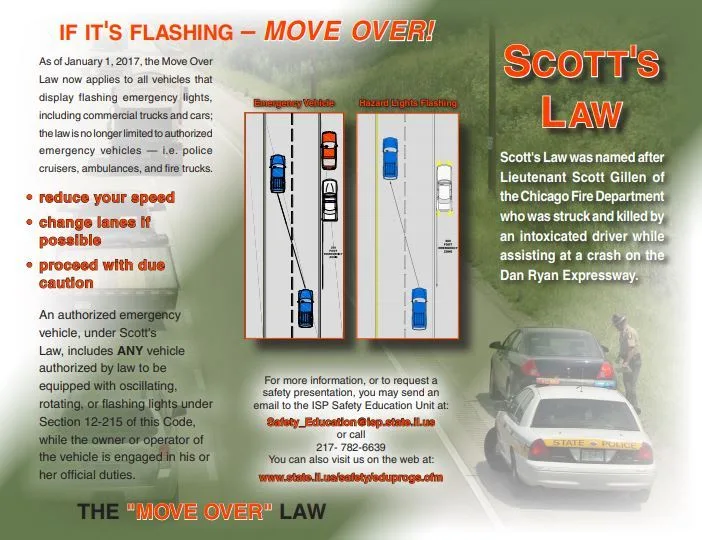
Scott’s Law, officially known as the Illinois "Move Over" Law (625 ILCS 5/11-907), exists to protect emergency responders and roadside workers. It mandates that drivers reduce speed and, when safe, change lanes to create a buffer for stopped emergency vehicles with flashing lights.
Bing (Web (fair-use with source credit))
This law covers all emergency vehicles, including police cars, fire trucks, ambulances, and tow trucks. The stakes are high because violations can lead to injuries or fatalities among those working to keep roads safe. Illinois has seen a rise in incidents where responders are struck by passing vehicles, making compliance critical.
The Exact Penalty for a Scott’s Law Violation Causing Injury or Death
If a violation results in injury, it’s classified as a Class 4 felony. The penalties are strict:
- Prison time: 1 to 3 years
- Fines: Up to $25,000
- License suspension: Minimum of 6 months
If the violation results in death, the charge escalates to a Class 3 felony, with penalties increasing to 2, 5 years in prison and the same fine cap. These penalties are outlined in the Illinois Vehicle Code.
The severity of the charge reflects the seriousness of endangering those who are already in high-risk situations. Courts take these cases seriously, often imposing the maximum penalties to deter future violations.
How Illinois Class 4 Felony Charges Work in These Cases
A Class 4 felony is the least severe felony classification in Illinois, but it still carries significant consequences. When a Scott’s Law violation leads to injury, prosecutors will review evidence such as dashcam footage, witness statements, and accident reconstruction reports to determine intent and negligence.
The legal process typically involves:
- Arraignment: Where charges are formally presented
- Plea bargaining: Potential for reduced charges if the defendant cooperates
- Trial: If no plea agreement is reached
- Sentencing: Where penalties are determined based on the severity of the injury or death
Judges often consider aggravating factors, such as prior violations or reckless driving history, which can lead to harsher sentences.
What the Law Actually Requires You to Do on the Road
Scott’s Law is straightforward but often misunderstood. When you see a stationary emergency vehicle with flashing lights, you must:
- Change lanes if it’s safe to do so, moving away from the emergency vehicle
- Slow down significantly if changing lanes isn’t possible
Bing (Web (fair-use with source credit))
The law applies to all lanes of traffic, not just the one closest to the emergency vehicle. Failure to comply can result in a traffic stop, citation, or, in cases of injury or death, felony charges.
How a Violation Turns Into a Felony (And When It Gets Worse)
A Scott’s Law violation starts as a traffic offense, but it escalates to a felony if it results in injury or death. The progression works like this:
- No injury: Typically a misdemeanor with fines and possible license suspension
- Injury: Class 4 felony with prison time and higher fines
- Death: Class 3 felony with even stricter penalties

Bing (Web (fair-use with source credit))
The difference between a misdemeanor and a felony often comes down to the outcome of the violation. If someone is hurt or killed because a driver failed to move over or slow down, the legal consequences become far more severe.
Real-Life Consequences: Fines, Jail Time, and License Suspension
The penalties for a Scott’s Law violation causing injury or death go beyond just legal trouble. You’ll face immediate and long-term consequences that affect your daily life.
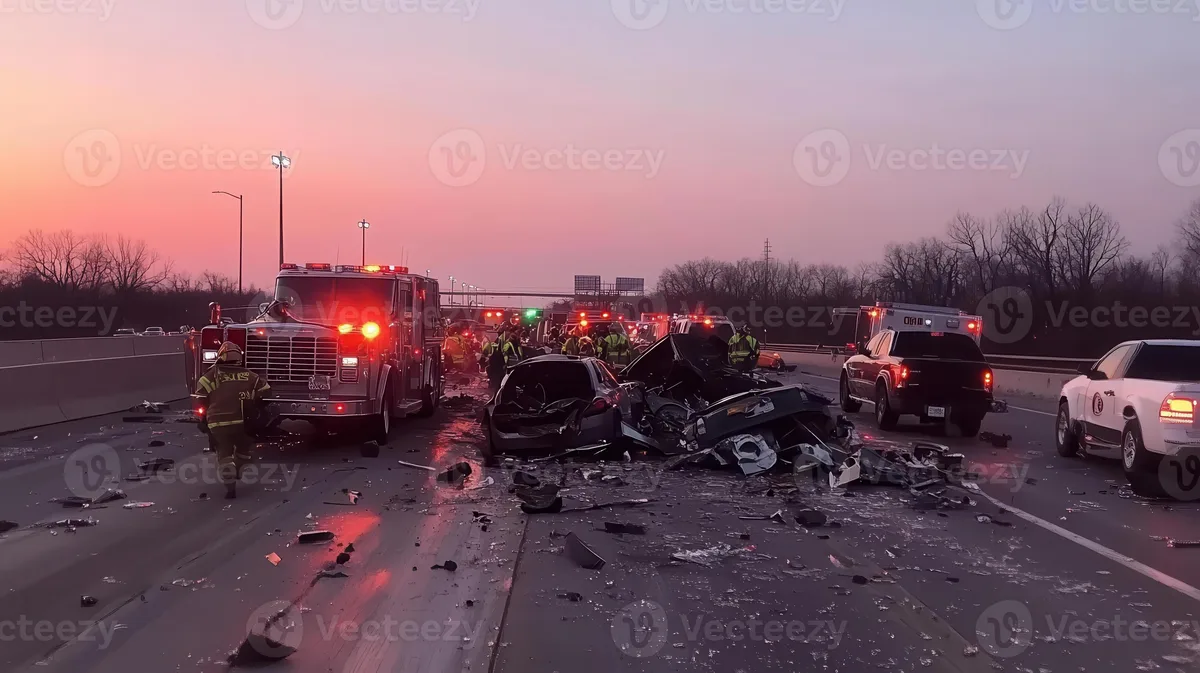
Bing (Web (fair-use with source credit))
Fines can reach $25,000, which doesn’t include court costs or civil lawsuits from injured parties. Your driver’s license will be suspended for at least 6 months. A felony conviction also stays on your record, impacting future employment, housing, and other opportunities.
Common Ways Drivers Break Scott’s Law Without Realizing It
Many violations happen because drivers don’t fully understand the law. Some assume slowing down is enough, but the law requires changing lanes when possible.
Others fail to notice flashing lights in time, especially in heavy traffic or bad weather. Distracted driving, like texting or adjusting the radio, is a major contributor. Even if you’re not directly next to the emergency vehicle, you must still take action if you’re in a position to do so safely.
What Happens After You’re Charged (The Legal Process)
Once charged, the process moves quickly. You’ll receive a court date for arraignment, where you’ll enter a plea. If you plead not guilty, the case goes to trial, where prosecutors must prove you violated Scott’s Law and caused injury or death.
If convicted, sentencing follows. Judges consider factors like your driving history, the severity of the injury, and whether you showed remorse. Probation is possible for first-time offenders, but jail time is likely for serious violations.
Possible Defenses—And Why They’re Hard to Prove
Defending a Scott’s Law violation is difficult but not impossible. One common defense is that the emergency vehicle’s lights weren’t visible, making it impossible for you to comply. Another is that changing lanes would have been unsafe due to traffic conditions.
However, these defenses require strong evidence, like dashcam footage or witness testimony. Prosecutors often argue that drivers should always err on the side of caution.
How to Avoid a Scott’s Law Violation (And Stay Safe)
The best way to avoid a violation is to stay alert. Always scan the road ahead for emergency vehicles, especially on highways where speeds are higher.
If you see flashing lights, check your mirrors and blind spots before changing lanes. If you can’t move over, reduce your speed well below the limit. Remember, the law applies to all emergency vehicles, not just police cars.
What to Do If You’re Involved in an Incident
Stay at the scene and call 911 immediately. Leaving can turn a bad situation into a hit-and-run charge, which carries even harsher penalties.
Cooperate with police but avoid admitting fault at the scene. Anything you say can be used against you in court. Request to speak with an attorney before answering detailed questions.
Illinois Scott’s Law vs. Other Traffic Offenses
Scott’s Law violations are criminal offenses, not just traffic tickets. Unlike speeding or running a red light, a violation can lead to a felony charge if injury or death occurs.
Other traffic offenses typically result in fines or points on your license. Scott’s Law carries jail time, higher fines, and a permanent criminal record. This makes it one of the most serious traffic-related charges in Illinois.
Key Numbers: Penalties, Statistics, and Enforcement Trends
Illinois State Police report about 20 Scott’s Law violations annually. In 2023, 27 troopers were struck by vehicles, some fatally.
Penalties escalate quickly. A misdemeanor violation with no injury can still cost up to $2,500 in fines. Injury cases jump to a Class 4 felony with 1, 3 years in prison.
Death cases become Class 3 felonies with 2, 5 years.
FAQs About Scott’s Law and Felony Charges
Does Scott’s Law apply to all emergency vehicles?
Yes. It covers police cars, fire trucks, ambulances, tow trucks, and IDOT vehicles with flashing lights.
What if I couldn’t move over safely?
You must slow down significantly. The law requires action, whether it’s changing lanes or reducing speed.
Can I get probation for a Scott’s Law felony?
Possibly, but it depends on the circumstances. First-time offenders with no prior record may receive probation. Serious injuries or deaths make probation less likely.
How long does a felony stay on my record in Illinois?
A felony conviction is permanent unless expunged or sealed. Expungement is rare for violent or serious offenses like those involving injury or death.
What’s the difference between a Class 4 and Class 3 felony?
Class 4 felonies carry 1, 3 years in prison. Class 3 felonies, which apply in death cases, carry 2, 5 years. Both include fines up to $25,000.
Do I need a lawyer for a Scott’s Law violation?
Yes. The stakes are too high to represent yourself. A criminal defense attorney can help navigate the legal process and potentially reduce charges.