The Idaho abandoned vehicle removal process on public and private land trips up property owners and tow operators because the statutes draw hard lines between highway, private parcel, and federal land. Miss a notice period by a single day and the tow becomes a conversion claim. This guide walks through each legal track so you can move metal without buying a lawsuit.
Idaho Code Title 49 Chapter 18 sets four distinct timelines: 48 hours on state highways, 7 days on private ground, 10 days for certified-mail notice before sale, and a 30-day minimum hold at the tow yard. As of 2026 the ITD-3403 certificate remains the single document that turns a questionable tow into a clean title transfer.
Quick Answer
Idaho law separates removal into three tracks. Public highways use a 48-hour law-enforcement tag. Private land requires a 7-day written notice before a licensed tow.
Federal land needs BLM or USFS authorization first. Every track demands an ITD-3403 filing, a lienholder search, 10-day certified notice, and a 30-day hold before auction or junk sale.
Why Getting This Wrong Costs Real Money
A wrongful tow triggers conversion liability under Idaho Code § 6-202. The vehicle owner can recover actual damages plus attorney fees and, in egregious cases, punitive damages. Courts have voided sales where the tow company skipped the lienholder search or used regular mail instead of certified mail with return receipt. *Towne v.
Smith*, 162 Idaho 417 (2018) confirmed that a missing UCC search makes the sale voidable. Tennant v. Rojas, 159 Idaho 732 (Ct. App. 2015) held that certified mail to the last registered owner is a constitutional floor.
Criminal trespass under § 18-701 applies when a private landowner tows without the 7-day written notice. The financial exposure dwarfs the tow fee.

What Idaho Actually Means by "Abandoned," "Unattended," and "Junk"
The statutes define three categories and each triggers a different removal authority. An abandoned vehicle under § 49-1801(1) is any motor vehicle left unattended on public property for 48 hours or more or on private property for 7 days or more without the consent of the owner or person in control of the property. An unattended vehicle under § 49-1801(2) is a vehicle left on a highway shoulder for more than 24 hours or on other public property for more than 48 hours.
A junk vehicle under § 49-1801(3) is a vehicle that is inoperable, partially dismantled, wrecked, or has a fair market value of $500 or less. The distinctions matter because law enforcement tags abandoned vehicles on highways while private landowners initiate self-help removal for vehicles on their own ground. Junk vehicles valued at $500 or less can skip the public auction and go straight to a scrapper after the notice period.

| Category | Statute | Typical Location | Who Initiates | Key Timeline |
|---|---|---|---|---|
| Abandoned | § 49-1801(1) | Public ≥ 48 hrs, Private ≥ 7 days | LEO (public) / Owner (private) | 48 hrs public, 7 days private |
| Unattended | § 49-1801(2) | Highway shoulder > 24 hrs | LEO only | 24 hrs shoulder, 48 hrs other public |
| Junk | § 49-1801(3) | Anywhere, value ≤ $500 | LEO or owner | Same as above, but auction optional |
The "Move It" law in § 49-627 creates a narrow exception. A vehicle moved from the travel lane after a minor crash is not abandoned if the owner arranges a tow within 24 hours. That window protects drivers who follow the statute.
Public Highway Removal: The 48-Hour Law-Enforcement Track
Only a peace officer can tag a vehicle on a state highway, county road, or city street. The officer attaches a 48-hour notice tag listing the date, time, location, and vehicle description. If the vehicle is not moved within 48 hours the officer authorizes a licensed tow company to remove it.
The tow operator must file the ITD-3403 Abandoned Vehicle Certificate with the Idaho Transportation Department within 24 hours of taking custody. The operator then runs a VIN check through ITD and a UCC lienholder search through the Secretary of State. Both searches are mandatory.
Within 10 days the operator sends certified-mail notice to the last registered owner at the address on file with ITD and to every lienholder shown in the searches. The vehicle sits in the tow yard for a minimum of 30 days. After the hold the operator publishes auction notice in a newspaper of general circulation once a week for three consecutive weeks.
The auction minimum bid equals tow charges plus storage plus publication costs. Surplus proceeds go to the owner or lienholder. The buyer receives an ITD-3404 Auction Affidavit to apply for title.
Key steps in order:
- Officer tags vehicle with 48-hour notice
- Owner fails to move vehicle within 48 hours
- Licensed tow company removes vehicle
- Tow company files ITD-3403 within 24 hours
- VIN inspection and dual lienholder search
- Certified-mail notice to owner and lienholders (10-day minimum before sale)
- 30-day minimum storage
- Three-week newspaper publication
- Public auction with ITD-3404 issued to buyer
Private Land Removal: The 7-Day Self-Help Track
On private property the landowner or person in control acts without law enforcement. The process starts with a written notice posted on the vehicle and, if practical, mailed to the last known address of the owner. The notice must state that the vehicle has been on the property for at least 7 days without consent and that it will be towed if not removed.
Photograph the posted notice for evidence. After 7 full days the landowner contacts a licensed tow company. The tow company follows the same ITD-3403, VIN, lienholder search, certified-mail notice, 30-day hold, and auction chain as the highway track.
The critical difference is the 7-day private notice replaces the 48-hour LEO tag. No peace officer involvement is required. However, many cities including Boise, Meridian, and Nampa require posted signage at property entrances stating "Unauthorized vehicles towed at owner's expense per I.C. § 49-1806." Without signage a court may find the 7-day notice insufficient.
Common pitfalls on private land:
- Towing before 7 full days elapse
- Skipping the written notice on the vehicle
- Using a tow company without a current Idaho tow license
- Failing to photograph the posted notice
- Omitting the lienholder search
- Sending notice by regular mail instead of certified mail
Federal Land (BLM/USFS): The Extra Authorization Layer
Vehicles abandoned on Bureau of Land Management or U.S. Forest Service roads add a federal jurisdictional step. The landowner or reporting party contacts the local BLM field office or USFS ranger district.
The federal agency confirms the vehicle is on federal land and authorizes removal. Only then does an Idaho peace officer tag the vehicle under the standard 48-hour highway process. BLM Instruction Memorandum ID-2021-012 outlines the coordination protocol.
The tow company still files ITD-3403, runs the searches, sends certified notices, holds 30 days, and auctions. The federal agency may require environmental fluid recovery before the vehicle leaves the site. Expect longer timelines because the federal authorization step can take days to weeks depending on staffing.
Do not tow from BLM or USFS roads without written agency clearance; doing so risks federal trespass claims on top of state conversion liability.
The Paperwork Chain: ITD-3403, Lienholder Search, and Certified Notice
The ITD-3403 Abandoned Vehicle Certificate is the backbone of every legal removal in Idaho. The tow operator must file it with the Idaho Transportation Department within 24 hours of taking custody. The form captures the VIN, make, model, year, color, license plate if present, tow date, tow company name, storage location, and the initiating authority (officer badge number or private landowner statement).
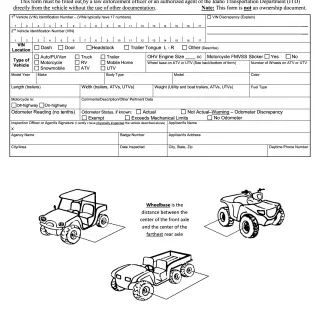
A VIN inspection is mandatory when the plate is missing, damaged, or the VIN plate is obscured. Only an Idaho State Police officer or an ITD-certified VIN inspector can perform this inspection. The inspector signs the ITD-3403 confirming the VIN matches the vehicle.
The lienholder search has two required parts. First, query the ITD vehicle record for any security interest on file. Second, run a UCC financing statement search through the Idaho Secretary of State.
Both searches must be documented and attached to the case file. Skipping either search voids the later sale under Towne v. Smith.
Within 10 days of filing the ITD-3403, the tow operator sends certified mail with return receipt requested to the last registered owner at the ITD address and to every lienholder found in the searches. The notice must state the vehicle description, storage location, charges accruing daily, the date after which the vehicle may be sold (at least 10 days from mailing), and the right to reclaim by paying all charges. Keep the green cards and tracking printouts.
They are your proof of due process.
Auction, Direct Sale, and Title Transfer: The 30-Day Hold and ITD-3404
After the 10-day notice period expires, the vehicle must remain in storage for a total of 30 days from the tow date before any sale. This hold is statutory and cannot be shortened. At the end of the hold, the tow operator publishes a notice of public auction in a newspaper of general circulation in the county where the vehicle is stored.
The notice runs once a week for three consecutive weeks. It must include the vehicle description, storage location, auction date, time, and minimum bid. The minimum bid equals the sum of tow charges, daily storage fees, publication costs, and a $15 ITD administrative fee.
The auction is open to the public. The highest bidder above the minimum receives an ITD-3404 Auction Affidavit signed by the tow operator. The buyer takes the ITD-3404, a bill of sale, and the ITD-3403 to any county DMV office to apply for title.
If no bidder meets the minimum, the tow operator may retain the vehicle by paying the ITD fee and applying for title in the company's name.
For junk vehicles valued at $500 or less, the auction step is optional. After the 30-day hold and proper notices, the tow operator may sell directly to a licensed scrap processor or dismantler. The operator still completes the ITD-3404 marking the sale as "junk" and submits it to ITD.
The scrapper receives the same title pathway. This shortcut saves publication costs but requires a documented valuation at or below $500. An independent appraisal or salvage yard quote should be kept in the file.
| Sale Type | Value Threshold | Auction Required | Publication | Form |
|---|---|---|---|---|
| Public auction | Any value | Yes | 3 weeks | ITD-3404 |
| Direct junk sale | ≤ $500 | No | No | ITD-3404 marked junk |
| Tow company retention | Any value | No bid met | 3 weeks | ITD-3404 to company |
Mistakes That Invalidate the Tow and Trigger Conversion Claims
The most expensive error is towing from private property before the 7-day notice period expires. Courts treat this as criminal trespass and civil conversion simultaneously. Another fatal flaw is filing the ITD-3403 late.
The 24-hour deadline starts when the tow truck leaves the scene, not when the vehicle arrives at the yard. Missing the lienholder search, either the ITD record or the UCC filing, makes the sale voidable even if the owner never shows up. Using regular mail or email instead of certified mail with return receipt fails the due-process test from *Tennant v.
Rojas*. Selling before the 30-day hold ends violates § 49-1808 and exposes the tow company to triple damages. Auctioning without three weeks of publication voids the buyer's title.
Failing to photograph the private-property notice leaves no evidence the 7-day wait occurred. Accepting a tow from an unlicensed operator shifts all liability to the landowner. Each of these mistakes has been litigated in Idaho courts.
The pattern is clear: procedural shortcuts cost far more than compliance.
When to Involve an Attorney or Bonded Tow Operator
If the vehicle owner appears during the process and disputes the abandonment, stop and consult counsel. A signed statement from the owner claiming they never abandoned the vehicle creates a factual dispute that a tow operator cannot resolve. If the VIN inspection reveals a mismatch or a possible stolen vehicle, contact law enforcement immediately.
Do not proceed with the ITD-3403. If a lienholder demands the vehicle but refuses to pay the accrued charges, the statute allows the lienholder to reclaim by paying all charges, but disputes over the charge amount belong in court, not at the tow yard gate. For high-value vehicles (over $5,000), consider having an attorney review the notice letters and auction timeline before the sale.
The cost of a one-hour review is trivial compared to a conversion judgment. HOA boards and commercial property managers should have their tow contracts reviewed annually to ensure the signage, notice language, and tow-company licensing clauses track current statute. A bonded tow operator with errors-and-omissions insurance adds a layer of protection.
Verify the operator's bond is current through the Idaho Transportation Department's tow license lookup.
Quick-Reference Compliance Checklist by Land Type
| Step | State Highway / County Road / City Street | Private Property (Residential, Commercial, Ag) | Federal Land (BLM / USFS) |
|---|---|---|---|
| Authority to Tag | Peace officer only | Landowner / person in control | BLM / USFS authorizes, then peace officer |
| Initial Notice | 48-hour tag on vehicle | 7-day written notice posted on vehicle | Federal authorization letter, then 48-hour tag |
| Signage Required | No | Yes — at all entrances per I.C. § 49-1806 | Per federal agency policy |
| Tow Company | Licensed Idaho tow operator | Licensed Idaho tow operator | Licensed Idaho tow operator |
| ITD-3403 Filing | Within 24 hrs of tow | Within 24 hrs of tow | Within 24 hrs of tow |
| VIN Inspection | If plate missing/damaged | If plate missing/damaged | If plate missing/damaged |
| Lienholder Search | ITD record + UCC | ITD record + UCC | ITD record + UCC |
| Certified Notice | 10 days before sale | 10 days before sale | 10 days before sale |
| Minimum Hold | 30 days from tow | 30 days from tow | 30 days from tow |
| Auction Publication | 3 weeks newspaper | 3 weeks newspaper | 3 weeks newspaper |
| Environmental Check | Standard fluid recovery | Standard fluid recovery | BLM/USFS may require extra documentation |
Keep this table at the tow office or in the property management binder. Check each box before moving to the next step. The statute does not forgive skipped steps.
| Step | State Highway / County Road / City Street | Private Property (Residential, Commercial, Ag) | Federal Land (BLM / USFS) |
|---|---|---|---|
| Authority to Tag | Peace officer only | Landowner / person in control | BLM / USFS authorizes, then peace officer |
| Initial Notice | 48-hour tag on vehicle | 7-day written notice posted on vehicle | Federal authorization letter, then 48-hour tag |
| Signage Required | No | Yes — at all entrances per I.C. § 49-1806 | Per federal agency policy |
| Tow Company | Licensed Idaho tow operator | Licensed Idaho tow operator | Licensed Idaho tow operator |
| ITD-3403 Filing | Within 24 hrs of tow | Within 24 hrs of tow | Within 24 hrs of tow |
| VIN Inspection | If plate missing/damaged | If plate missing/damaged | If plate missing/damaged |
| Lienholder Search | ITD record + UCC | ITD record + UCC | ITD record + UCC |
| Certified Notice | 10 days before sale | 10 days before sale | 10 days before sale |
| Minimum Hold | 30 days from tow | 30 days from tow | 30 days from tow |
| Auction Publication | 3 weeks newspaper | 3 weeks newspaper | 3 weeks newspaper |
| Environmental Check | Standard fluid recovery | Standard fluid recovery | BLM/USFS may require extra documentation |
Keep this table at the tow office or in the property management binder. Check each box before moving to the next step. The statute does not forgive skipped steps.