Black Friday deals are live on Amazon · limited-time discounts, grab them before they’re gone
Grab the deals

ByMax Lee
Why Do Car Washes Cover Back Wipers: Essential Protection Tips
Car washes cover back wipers to prevent brushes, wash curtains, high-pressure water, and drying equipment from catching or dislodging them. A rear wiper may look small and flexible, but its arm, pivot, motor, blade, and mounting point can be damaged by sideways force.
The risk is greatest on SUVs, hatchbacks, crossovers, minivans, and wagons, where the rear wiper sits exposed on a vertical liftgate. Covering it does not make every automatic wash completely risk-free, but it is a simple precaution that can prevent a bent arm, torn blade, scratched glass, or damaged wiper mechanism. For more on this, see our guide on ny lemon law new car protection repair rights.
What Is a Rear Wiper?
A rear wiper consists of several connected parts:
- Wiper blade: The rubber or synthetic edge that clears water and dirt.
- Wiper arm: The spring-loaded metal or composite arm that presses the blade against the glass.
- Pivot and spindle: The shaft that transfers movement from the motor to the arm.
- Wiper motor and linkage: The powered mechanism that moves the blade across the window.
- Washer nozzle: The nozzle that sprays fluid onto the rear glass.
Rear wipers are usually shorter than front wipers, but they are not necessarily stronger. They are often mounted directly to a liftgate or rear window, close to spoilers, cameras, trim, and washer nozzles. That exposed position allows wash equipment to grab the arm or blade from several directions.
A properly maintained wiper should move smoothly, sit evenly against the glass, and park in its designed position. If it is already loose, cracked, stiff, or misaligned, an automatic wash can turn a minor defect into a complete failure.
Maintaining all visibility equipment matters for safe driving. The National Highway Traffic Safety Administration’s vehicle safety guidance includes visibility and vehicle maintenance among the issues drivers should take seriously.
Why Automatic Car Washes Can Damage Back Wipers
Different parts of a wash system create different types of force. The main danger is not usually water itself; it is the combination of movement, friction, pressure, and snagging.
| Wash component | Possible effect on a rear wiper | Relative concern |
|---|---|---|
| Rotating brushes | Catches the blade or pushes the arm sideways | High |
| Soft-cloth strips | Can drag across or hook under the blade | Medium to high |
| Hanging wash curtains | May pull against an exposed arm | High |
| High-pressure jets | Can lift a loose blade or force water into gaps | Medium |
| Air dryers | May move a damaged or poorly seated blade | Medium |
| Wax or detergents | Can leave residue or accelerate rubber deterioration over time | Low |
A touch-free wash removes brush contact, but it does not eliminate every risk. High-pressure water can expose a loose blade, while powerful air can shift a brittle or partially detached wiper. The condition of the vehicle is just as important as the type of wash.
Five Reasons Car Washes Cover Rear Wipers
1. To prevent the wiper arm from bending
A brush or curtain can catch the arm and push it away from its normal travel path. Even a small change in the arm’s shape can reduce contact pressure across the glass.
A bent arm may cause:
- Unwiped areas
- Streaks and hazy visibility
- Chattering or squeaking
- Uneven rubber wear
- Excessive pressure on one section of the blade
In practice, an arm does not need to look dramatically bent to create a problem. If the blade no longer rests evenly from end to end, the arm or its spring may have been stressed.
2. To keep the blade from tearing or detaching
The blade can snag on a brush, cloth strip, or curtain. This is more likely when the rubber is already brittle from sunlight, heat, age, or chemical exposure.
A damaged blade may have:
- Cracks along the wiping edge
- Split or curled ends
- Missing sections of rubber
- A loose retaining clip
- Hardened areas that no longer flex
If the blade detaches during a wash, its holder or arm may contact the glass directly. That can create scratches, especially when dirt or grit is trapped underneath.
3. To reduce the chance of glass damage
Rubber normally should not scratch automotive glass. However, a damaged blade, exposed metal edge, loose fastener, or trapped abrasive particle can act like a scraper.
A wiper cover helps keep the assembly stable and reduces the chance that:
- Sand is dragged across the window
- The arm is forced against the glass at an unusual angle
- A blade insert comes loose
- A plastic or metal edge contacts the window
- A wash curtain pulls the blade sideways
Covering the wiper is therefore a glass-protection measure as well as a component-protection measure.
4. To protect the pivot, spindle, and motor
The wiper motor is designed to move the arm through its normal arc. It is not designed to absorb repeated sideways impacts from wash equipment.
Excessive force can affect:
- The spindle where the arm attaches
- The pivot bearing
- The motor mounting
- The linkage connecting the motor and arm
- The arm’s park position
After a wash, warning signs include grinding, clicking, slow movement, failure to return to the park position, or a blade that stops in an unusual location. Do not repeatedly cycle a wiper that appears misaligned; additional movement can worsen the damage.
5. To prevent interference with wash machinery
An exposed rear wiper can catch on equipment and create a problem for both the vehicle and the wash system. A snagged arm may be pulled away from the liftgate, while a loose blade can become trapped in a rotating brush or hanging curtain.
For this reason, some facilities cover rear wipers as part of their standard vehicle check. Others may direct vehicles with unusual wipers, spoilers, roof accessories, or loose trim to a different wash type.
What Does “Covering” a Rear Wiper Mean?
Covering generally means placing a soft protective sleeve, wrap, or guard over the blade and sometimes part of the arm. The goal is to reduce snagging and keep the blade from being directly grabbed by cloth, brushes, or curtains.
Common approaches include:
- Purpose-made wiper sleeves: Soft covers designed to fit over the blade.
- Wash-approved protective wraps: Non-abrasive material secured without excessive tension.
- Temporary protective guards: Used by the wash operator according to its equipment and policy.
- Manual positioning: Placing the wiper in an approved position only when the vehicle manufacturer allows it.
Do not assume any tape, cloth, or plastic is safe. Rough material can trap grit, and aggressive adhesive can leave residue or affect paint, trim, or rubber. A wash operator should use materials appropriate for the equipment and vehicle.
Never force a rear wiper away from the glass simply because it appears movable. Some arms have a service position, while others are designed to remain against the window. The owner’s manual is the best source for instructions specific to the vehicle.

A soft sleeve helps shield the blade from brushes, curtains, and wash debris.
Credit: www.amazon.com
Do All Car Washes Cover Back Wipers?
No. The practice depends on the wash design, the vehicle, and the operator’s procedures.
Touch-free automatic washes
These systems do not use rotating brushes or cloth strips, so they remove the most obvious snagging hazard. However, high-pressure water and air can still disturb a loose, cracked, or improperly installed blade.
Soft-cloth or brush washes
These washes may clean more aggressively, but the moving material can contact the rear wiper. Confirm whether the facility protects rear wipers before entering.
Self-service bays
A self-service bay gives you more control, but careless spray technique can still cause problems. Keep the wand away from the wiper’s edge, avoid forcing water under the blade, and do not aim high pressure directly at a loose mounting point.
Hand washing
Hand washing offers the most control around fragile components. It is especially useful for older vehicles, vehicles with unusual rear wipers, or vehicles with loose trim and accessories.
For a paint-safe process, the two-bucket wash setup helps separate dirty rinse water from your washing solution. That method does not replace careful wiper handling, but it reduces the chance of dragging grit across the vehicle.
How to Check a Rear Wiper Before Washing
Perform a brief inspection before entering an automatic wash. A minute spent finding a loose part can prevent a more expensive repair.
Check the blade
Look for:
- Splits, cracks, or hardened rubber
- A curled or lifted wiping edge
- Missing sections
- A blade that is separating from its holder
- Dirt or stones trapped beneath the rubber
Check the arm and mounting point
Gently observe whether the arm:
- Sits firmly on the spindle
- Rests evenly against the glass
- Has unusual side-to-side looseness
- Parks in the normal position
- Clears the spoiler, trim, camera, and washer nozzle
Do not force the arm through its travel. If it feels unusually stiff or loose, stop and consult the owner’s manual or a qualified technician.
Check the washer system
Confirm that rear washer fluid reaches the glass and that the nozzle is not blocked. A wiper operated on dry, dirty glass can create unnecessary friction and may drag grit across the window.
If the blade is visibly damaged, replace it before washing. A cover can reduce wash-related stress, but it cannot repair deteriorated rubber or a loose pivot.
How to Prepare a Vehicle for an Automatic Wash
Use this sequence before entering the wash lane:
- Read the vehicle’s wash instructions. Check the owner’s manual for wiper positioning, automatic-wash restrictions, and accessory guidance.
- Close all openings. Secure windows, doors, the liftgate, sunroof, and fuel door.
- Remove or secure accessories. Roof racks, bike carriers, magnetic signs, loose antennas, and exterior decorations may not be compatible with the wash.
- Inspect the rear wiper. Look for looseness, cracks, exposed hardware, and anything that could catch.
- Ask about protection. Confirm whether the facility covers the rear wiper and whether its wash is suitable for your vehicle.
- Turn off the wipers. Make sure rain-sensing or automatic wiper functions cannot activate during the wash.
- Follow lane instructions. Use the gear, brake, and steering settings specified by the wash operator.
- Inspect the vehicle immediately afterward. Check the blade position, glass, trim, and surrounding liftgate before driving away.
If you frequently maintain your own vehicle, having the right equipment also helps with routine care; guidance on selecting suitable tire-service equipment can be useful when checking tire pressure between washes.
Which Wash Type Is Safest for a Rear Wiper?
There is no single safest option for every vehicle. The best choice depends on the wiper’s condition, the wash equipment, and your ability to control the cleaning process.
| Wash type | Main advantage | Main limitation |
|---|---|---|
| Hand wash | Maximum control around the wiper | Requires more time and effort |
| Self-service bay | You control spray direction and pressure | Incorrect wand use can still damage parts |
| Touch-free automatic | Avoids direct brush contact | High-pressure water and air remain |
| Soft-cloth automatic | Convenient and thorough | Cloth can catch a loose or exposed wiper |
| Traditional brush wash | Fast and widely available | Greater chance of snagging vulnerable parts |
For an older vehicle or a wiper that has already become loose, hand washing or a carefully managed self-service wash is usually the prudent choice. For a well-maintained vehicle, a reputable automatic wash may be reasonable if its equipment is compatible and its operators protect exposed components.
When Should You Replace the Rear Wiper?
Replace the blade when it leaves persistent streaks, skips across the glass, squeaks, chatters, or shows visible cracking and hardening. A blade that has lost flexibility cannot maintain consistent contact with a curved or vertical rear window.
Some vehicles accept a replacement rubber insert, while others require a complete blade assembly. Check the vehicle’s parts specifications before buying.
A new blade will not correct every problem. Have the arm or mechanism inspected if you notice:
- A loose arm at the mounting point
- A blade that parks crooked
- Slow or intermittent movement
- Grinding or clicking
- A motor that runs but does not move the blade
- Contact with the spoiler, trim, or camera housing
Do not operate a damaged wiper in rain simply to test it repeatedly. If the arm is bent or metal is exposed, it may scratch the glass.
What to Do if a Car Wash Damages the Wiper
If you notice damage immediately after washing:
- Stop operating the wiper.
- Photograph the blade, arm, mounting point, and any glass damage.
- Record the wash location, time, lane, and payment information.
- Notify the operator before leaving if it is safe to do so.
- Ask for the facility’s incident-report process and equipment inspection.
- Have the wiper inspected before driving in poor weather.
A wash-related repair is not automatically a vehicle warranty or lemon-law issue. Lemon-law rules generally address qualifying manufacturing defects under state law, not damage caused by an outside service. If you are dealing with a broader new-vehicle defect, the vehicle repair-rights overview may provide useful background, but document the wash incident separately.
Common Myths About Covered Rear Wipers
“A cover makes the wash completely safe.”
A cover reduces the chance of snagging, but it cannot correct a loose pivot, deteriorated blade, damaged trim, or an unsuitable wash process.
“Touch-free washes cannot damage a wiper.”
They eliminate brush contact, but strong water and air can still move a loose or broken component.
“Every rear wiper should be lifted before washing.”
Not necessarily. Some designs have a service position, while others can contact trim or glass if forced upward. Follow the vehicle’s instructions.
“Any tape will work.”
Tape may leave adhesive, trap dirt, or damage nearby surfaces. Use only a wash-approved protective method, and never wrap a wiper so tightly that it stresses the arm.
“The rubber blade is the only part that can fail.”
The arm, spindle, linkage, motor, and mounting hardware can also be bent, loosened, or damaged.
Frequently Asked Questions
Why do car washes cover back wipers?
They cover back wipers to reduce the chance that brushes, cloth curtains, water jets, or dryers will bend the arm, tear the blade, scratch the glass, or interfere with wash equipment.
Can an automatic car wash break a rear wiper?
Yes. The risk is higher when the blade is cracked, the arm is loose, the pivot is worn, or the wash uses moving brushes and curtains. A well-maintained wiper is less vulnerable, but no automatic wash is risk-free.
Should I remove the rear wiper before washing?
Usually not. Removing it is unnecessary and can expose the spindle or create an installation problem. Follow the vehicle manufacturer’s instructions instead.
Is a touch-free wash safer?
Generally, it reduces the risk of brush-related snagging. It can still disturb a loose wiper through high-pressure water or drying air.
Can a rear wiper scratch the window?
The rubber itself normally should not. Scratching can occur when grit is trapped beneath the blade, the rubber has detached, or a metal or plastic edge contacts the glass.
What should I do if the wiper is loose before washing?
Do not rely on a cover to hold it together. Avoid a brush-based wash and repair or replace the damaged component first.
Should the rear wiper be turned off?
Yes. Turn off the wiper and any automatic rain-sensing function before entering the wash. Also follow the wash lane’s instructions for the vehicle’s transmission and parking controls.
Other Exterior Parts to Check
Rear wipers are only one vulnerable area. Before using an automatic wash, inspect:
- Loose badges, trim, and weather seals
- Roof racks, cargo boxes, and bike carriers
- Antennas and exterior cameras
- Liftgate spoilers and washer nozzles
- Damaged mirrors or mirror caps
- Magnetic signs and temporary decorations
- Underbody or catalytic-converter shields
A vehicle’s equipment and dimensions can also affect whether it is suitable for certain roads, lanes, or facilities; broader vehicle equipment guidance can help when evaluating unusual modifications or accessories.

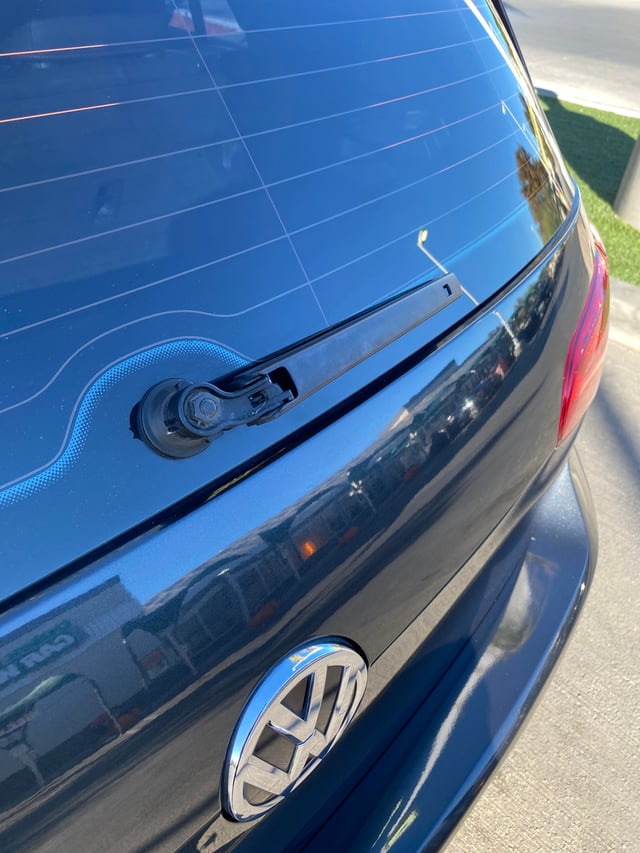
Rear wiper designs vary, so inspect the arm, blade, and nearby trim before washing.
Credit: www.reddit.com
Conclusion
Car washes cover back wipers because exposed rear blades and arms can be caught by brushes, curtains, high-pressure jets, or dryers. The resulting damage may range from a torn rubber insert to a bent arm, scratched glass, damaged pivot, or failed motor.
Before your next wash, inspect the wiper, turn off automatic activation, remove incompatible accessories, and ask how the facility protects rear wipers. If the blade or arm is already damaged, repair it before washing. For the lowest-risk option, use a controlled hand wash and keep abrasive dirt away from the glass. Taking these steps preserves rear visibility and helps prevent a minor wash hazard from becoming an expensive repair.








