ByMax Lee
Kansas Repo Title Fees: $10 + Application Costs
Getting a repossession title in Kansas isn’t just about the $10 base fee. The Kansas $10 title fee and additional application fees for repossession titles can add up fast if you’re not prepared, and missing a single document or fee can mean a rejected application.
As of 2026, the Kansas Division of Vehicles requires specific paperwork and fees beyond the base cost, depending on your situation. Here’s what you need to know to avoid surprises at the county office.
Bing (Web (fair-use with source credit))
Quick Answer
The Kansas $10 title fee covers the base cost for a repossession title. Additional fees often include a $10 lien recording fee and $1, $5 county processing charges. Notarization may add $2, $10.
Total costs typically range from $21 to $35.
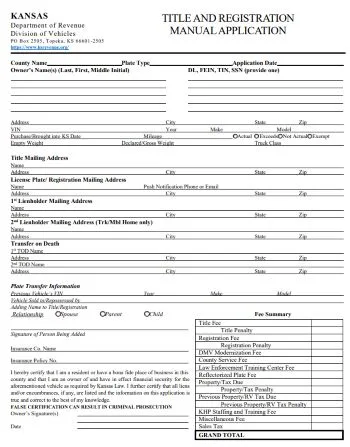
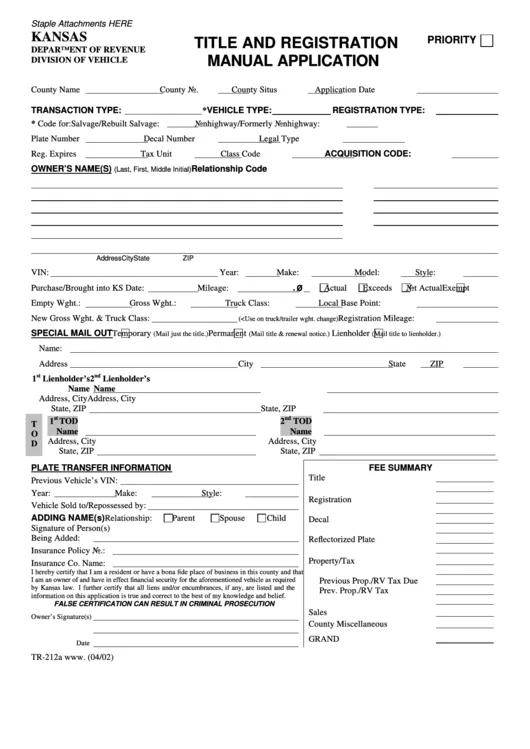
You’ll apply at your local County Treasurer’s Office using Form TR-212a. Processing takes 7, 10 business days.
Why Kansas Repossession Title Fees Matter (And How to Get Them Right)
A repossession title proves legal ownership after a vehicle is seized. The $10 fee is just the starting point, and additional charges stack up for lien releases, notarization, and county-specific processing.
If you skip a fee or submit incomplete paperwork, the Kansas Division of Vehicles will reject your application. That means more trips to the office, more fees, and more delays.
The $10 Title Fee: What It Actually Covers
The $10 fee is the state-mandated base cost for issuing a title in Kansas. This applies whether you’re transferring a standard title or obtaining one for a repossessed vehicle.
What it doesn’t cover:
- Lien recording (additional $10 if applicable)
- County processing fees ($1, $5)
- Notary services ($2, $10)
- Late fees (if you’re past the deadline)
This fee is non-negotiable and set by the Kansas Department of Revenue.
Additional Fees You’ll Likely Pay in Kansas
Beyond the $10 base, expect these common add-ons:
| Fee Type | Cost | When It Applies |
|---|---|---|
| Lien recording | $10 | If the vehicle had a lien that needs release |
| County processing | $1–$5 | Varies by county |
| Notarization | $2–$10 | Required for most title applications |
| Late fee | $10–$20 | If submitting after the deadline |
Some counties may charge extra for expedited processing, but this isn’t standard statewide.
Who Needs a Repossession Title in Kansas?
You’ll need a repossession title if:
- You’re a lender reclaiming a vehicle after default
- You bought a repossessed car at auction
- You’re a private buyer purchasing a repossessed vehicle
- The previous owner failed to transfer the title properly
This process is different from a standard title transfer. Repossession titles often require additional proof of ownership, like a court order or repossession affidavit.
Step-by-Step: How to Apply for a Repossession Title in Kansas
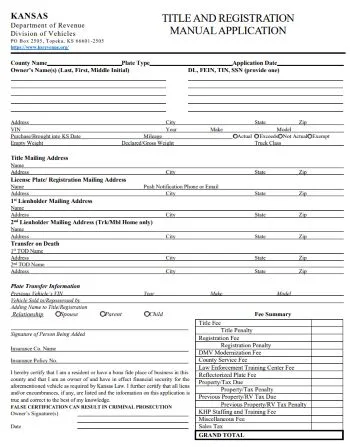
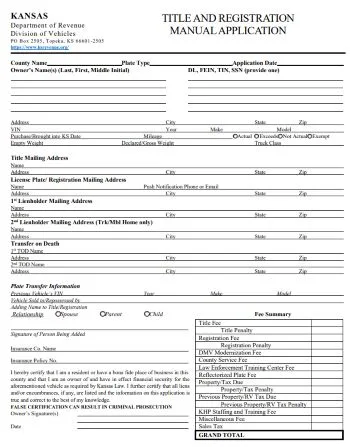
Start by gathering all required documents before visiting the County Treasurer’s Office. You’ll need the repossession affidavit, proof of ownership, and a completed Form TR-212a.
Submit your paperwork in person at your local office. Online submissions aren’t available for repossession titles in Kansas. Processing typically takes 7 to 10 business days.
Required Documents (Don’t Skip These)
You must provide the following:
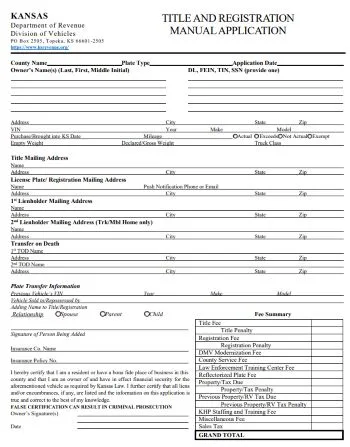
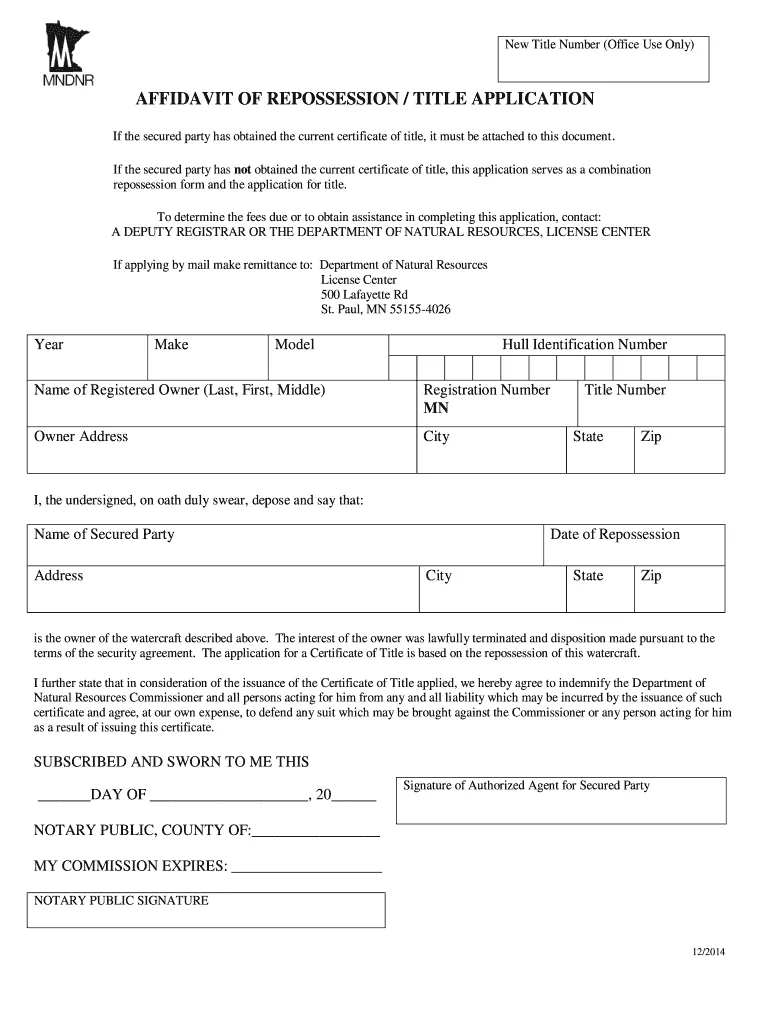
- Application for Certificate of Title (Form TR-212a)
- Repossession affidavit (signed by the lienholder or authorized agent)
- Proof of ownership (bill of sale, court order, or auction receipt)
- Lien release (if applicable)
- Valid ID (driver’s license or state-issued ID)
Bing (Web (fair-use with source credit))
Missing any of these will result in an immediate rejection. Double-check that all signatures are notarized where required.
Processing Time and What to Expect
Standard processing takes 7 to 10 business days. Some counties offer expedited services for an additional fee, but this isn’t guaranteed statewide.
You’ll receive a temporary registration if you need to drive the vehicle while waiting. This is valid for 30 days. If your application is incomplete, you’ll get a rejection notice with instructions on what’s missing.
Common Mistakes That Get Your Application Rejected
The most frequent errors include:
- Missing notarization on the repossession affidavit
- Incorrect lienholder information on the title application
- Incomplete proof of ownership (e.g., missing court order for judicial repossessions)
- Unpaid fees (forgetting the lien recording or county processing charges)
Avoid these by reviewing your paperwork with the County Treasurer’s Office before submitting.
Repossession Title vs. Salvage Title vs. Bonded Title in Kansas
A repossession title is for vehicles seized due to loan default. It proves ownership after the lien is cleared.
A salvage title is for vehicles declared a total loss by an insurer. These can’t be driven until rebuilt and inspected.
A bonded title is for vehicles with unclear ownership history. It requires a surety bond to protect against future claims.
Each type has different requirements and restrictions. Repossession titles are the most straightforward if you have the proper documentation.
Legal Risks of Getting It Wrong
Driving a repossessed vehicle without a proper title can result in fines up to $500 in Kansas. You may also face impoundment if pulled over without valid registration.
Selling a vehicle with an unresolved lien exposes you to legal liability. The new owner could sue if the original debt resurfaces.
Where to Apply: County Treasurer vs. Online Options
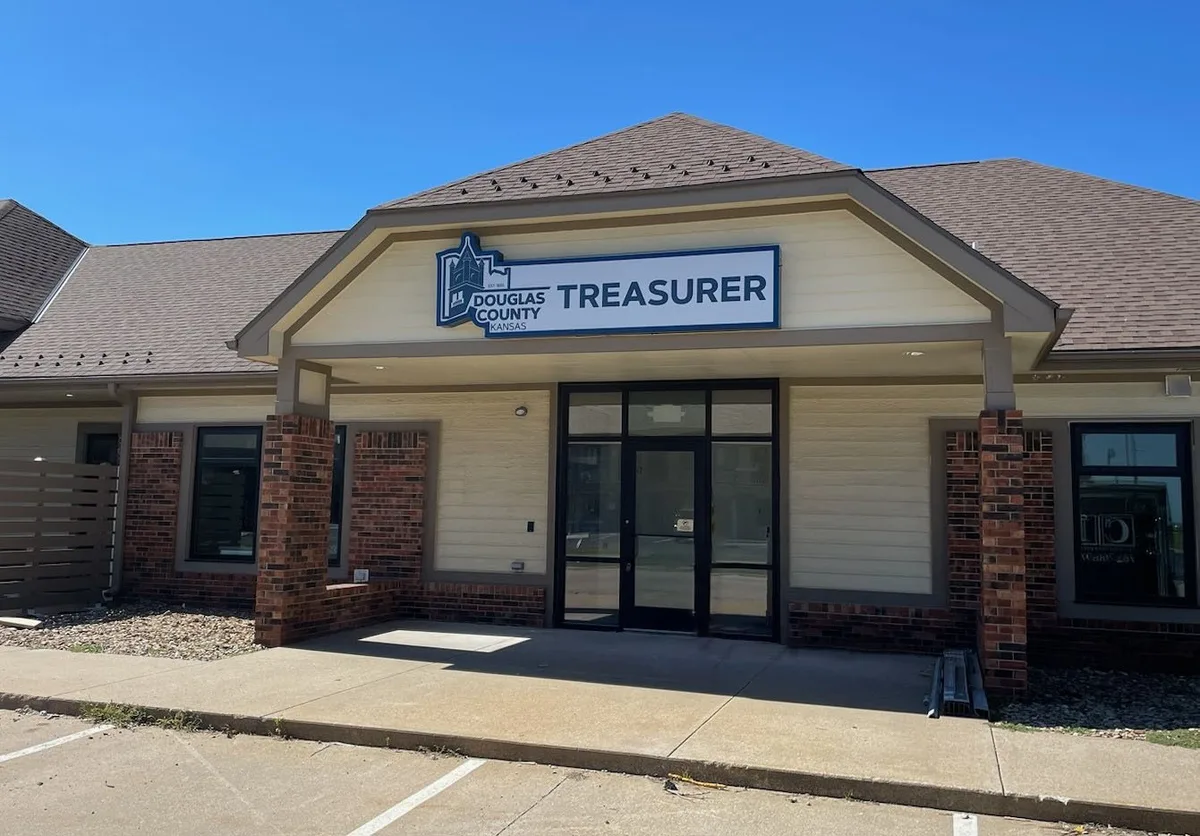
You must apply in person at your local County Treasurer’s Office. Kansas does not currently offer online title applications for repossessed vehicles.
Bing (Web (fair-use with source credit))
Some counties allow mail-in applications, but this is rare for repossession titles. Call ahead to confirm your county’s policy.
Kansas Repossession Title Fees at a Glance
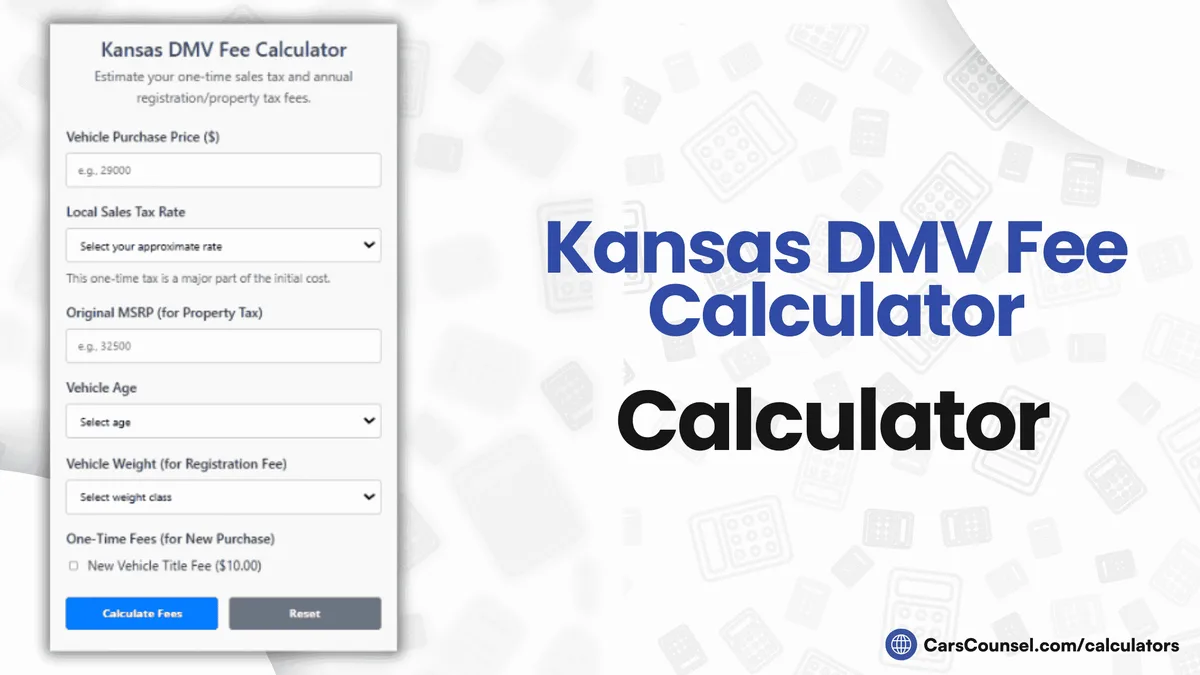
Here’s the typical cost breakdown:
| Fee Type | Cost | Notes |
|---|---|---|
| Base title fee | $10 | Mandatory for all titles |
| Lien recording | $10 | Only if a lien exists |
| County processing | $1–$5 | Varies by location |
| Notarization | $2–$10 | Per document |
| Late fee | $10–$20 | If past deadline |
Bing (Web (fair-use with source credit))
Total costs usually range from $21 to $35. Expedited processing may add another $10 to $20 if available.
When to Call the Kansas Division of Vehicles for Help
Contact them if you’re unsure about lien status or required documents. They can verify whether a lien release is needed before you apply.
Reach out if your application was rejected. They’ll explain exactly what’s missing and how to fix it. The Kansas Division of Vehicles phone number is listed on their official website.
FAQs About Kansas Repossession Title Costs
How much does a repossession title cost in Kansas?
The base fee is $10. Additional charges for lien recording, county processing, and notarization typically bring the total to $21, $35.
What forms do I need for a repossessed car title in Kansas?
You’ll need Form TR-212a, a repossession affidavit, proof of ownership, and a lien release if applicable. All must be properly signed and notarized.
Can I get a title for a repossessed car without the lienholder?
No. Kansas requires a lien release from the original lender before issuing a repossession title. Without it, your application will be denied.
How long does it take to get a repossession title in Kansas?
Standard processing takes 7 to 10 business days. Some counties offer expedited services for an extra fee.
What’s the difference between a repossession title and a salvage title?
A repossession title is for seized vehicles with cleared liens. A salvage title is for totaled vehicles that can’t be driven until rebuilt and inspected.