ByMax Lee
Calculate Connecticut Car Tax Using MSRP & Depreciation
Calculating Connecticut car tax using MSRP and depreciation schedule throws off almost every new resident. You naturally assume the state uses your car's current market value, but it doesn't. Connecticut relies on a rigid state formula that completely ignores what you paid the dealer.
Instead, the state starts with the original Manufacturer’s Suggested Retail Price. It then applies a mandated depreciation schedule, regardless of your car's actual condition or mileage.
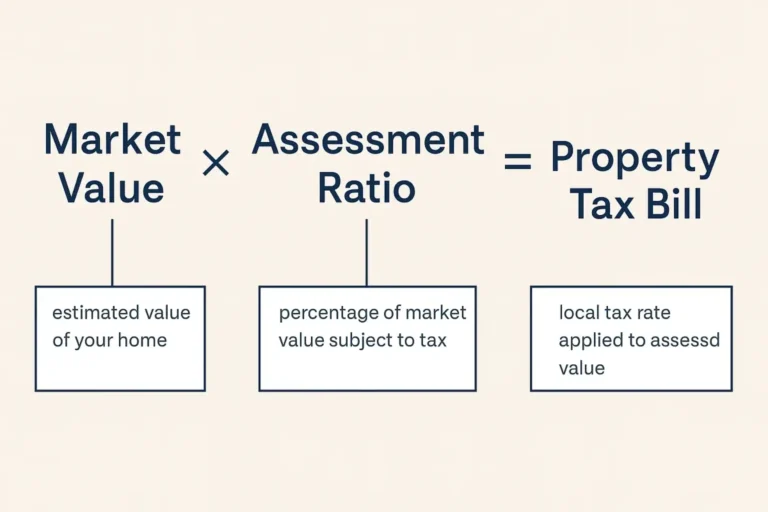
The state multiplies that depreciated value by your local mill rate, applying a standard 70% assessment ratio to the result. If you estimate your bill using private valuation guides, you will get it wrong. Let's break down exactly how this formula works so you can budget accurately.
Bing (Web (fair-use with source credit))
Why Getting Your CT Car Tax Calculation Wrong Costs You
Getting this math wrong hurts your wallet. If you underestimate your vehicle property tax, you face a nasty surprise when the bill arrives. If you overpay because an incorrect MSRP is on file, you leave money on the table.
Delinquent taxes trigger DMV holds. The state blocks your registration renewal until you clear the debt. You cannot legally drive the car if the registration lapses.
Connecticut towns are strict about collecting these funds. They charge interest on late payments. The penalties add up fast.
You need the right numbers from the start to avoid these headaches. Accurate budgeting prevents unnecessary stress and keeps your driving privileges intact.
Quick Answer
Connecticut calculates car tax using MSRP and a state depreciation schedule. The state ignores your vehicle's current market value. They take the original MSRP and apply a fixed depreciation percentage.
They then multiply that assessed value by your local mill rate. This formula applies to every registered vehicle in the state.
How Connecticut Actually Calculates Your Vehicle Property Tax
Connecticut uses a three-step formula to figure out your car tax. The process is strictly standardized. Towns follow the rules set by the Connecticut Office of Policy and Management.
First, the tax assessor looks up the original MSRP of your vehicle. This is the factory sticker price from the year it was built. It is not what you paid the dealer.
Second, they apply the state-mandated depreciation schedule to that MSRP. This drops the value by a set percentage each year.
Third, they take that depreciated amount and multiply it by 70%. This result is your assessed value. The 70% assessment ratio is a fixed standard across the state.
Bing (Web (fair-use with source credit))
The 70% Assessment Rule Explained
Connecticut law dictates that a car's taxable value is only 70% of its depreciated MSRP. This rule aims to provide a small break on the overall tax burden. For example, if your car's depreciated MSRP is $10,000, your assessed value is $7,000.
You only pay taxes on that $7,000.
The State-Mandated Depreciation Schedule
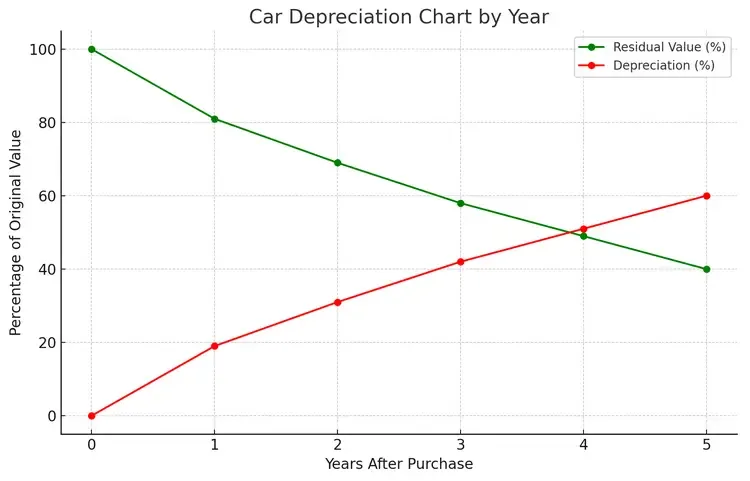
The depreciation schedule drops your car's value predictably over time. It does not account for accidents, high mileage, or market demand. As of 2026, the state uses this fixed schedule for passenger vehicles.
| Model Year Age | Depreciation Percentage of MSRP | Example MSRP $30,000 |
|---|---|---|
| Year 1 | 75% | $22,500 |
| Year 2 | 60% | $18,000 |
| Year 3 | 50% | $15,000 |
| Year 4 | 40% | $12,000 |
| Year 5 | 30% | $9,000 |
| Year 6 | 20% | $6,000 |
| Year 7 | 15% | $4,500 |
| Year 8 | 10% | $3,000 |
| Year 9 and older | 5% | $1,500 |
You must still multiply those depreciated amounts by 70% to find the actual assessed value.
Step-by-Step Guide to Calculating Your Exact CT Car Tax
You can calculate your exact bill at home if you have the right numbers. Grab your calculator and follow these steps.
- Find your original MSRP. Look at your original window sticker. If you do not have it, check your VIN decoder report or call the dealership.
- Determine your model year age. Subtract the model year from the current tax year. For a 2020 model taxed in 2026, the car is six years old.
- Apply the depreciation percentage. Find your age on the state schedule above. Multiply your MSRP by that percentage. A $30,000 car at 6 years old yields a $6,000 depreciated value.
- Calculate the assessed value. Multiply that $6,000 by 70%. Your assessed value is $4,200.
- Find your town mill rate. Look up your specific town's current mill rate on your local tax assessor's website.
- Do the final math. Multiply the assessed value by the mill rate. Then divide by 1,000. If your mill rate is 35, you pay $4,200 multiplied by 35, divided by 1,000. Your tax bill is $147.
When you budget for total ownership costs, you have to look beyond just the tax bill. Routine maintenance matters just as much. Protecting your car from harsh New England winters with proper decontamination washes preserves its life.
Using good washing gear makes that upkeep easier. You might also want quality cleaning solutions to keep the paint intact.
Understanding Mill Rates and the Minimum Assessment Floor
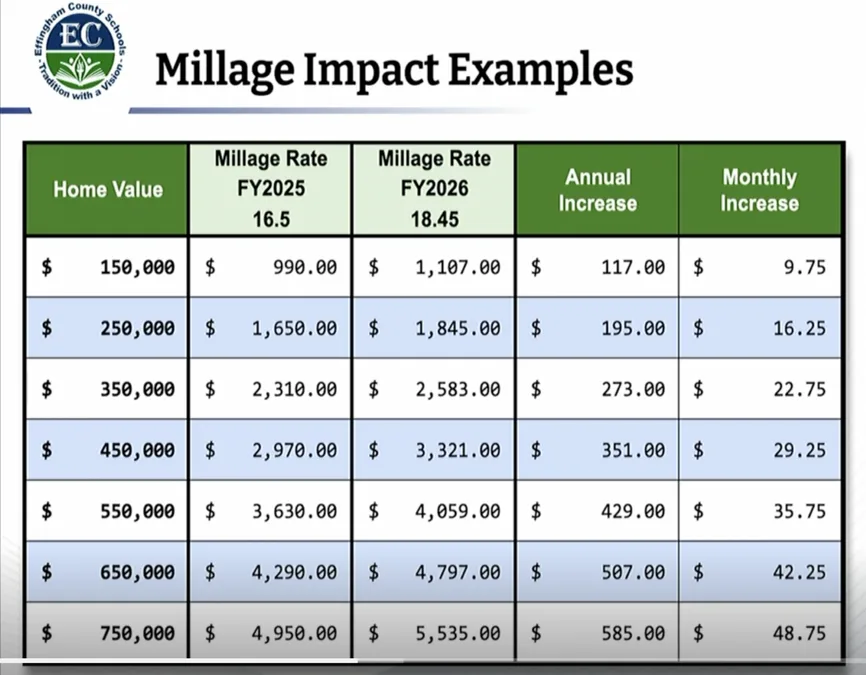
Your town's mill rate dictates the final size of your tax bill. A mill represents $1 of tax for every $1,000 of assessed value. Towns set their mill rates based on local budget needs.
This is why the exact same car costs different amounts to tax in Hartford versus Greenwich. The state does not cap these rates.
How the Minimum Assessment Floor Works
The depreciation schedule eventually drops your car's value down to just 5% of its MSRP. However, the state prevents the value from dropping to zero. They enforce a minimum assessment floor.
Even if your car is 20 years old and barely runs, it still holds a baseline taxable value. The state generally sets this floor at a $500 assessed value. This means you will always owe some tax, no matter how old the car gets.
You might spend money on spotless drying tools to keep that vintage paint looking good, but the tax floor still applies.
Bing (Web (fair-use with source credit))
Dealing With Mill Rate Changes
Mill rates change every year. Your town might lower the mill rate, but if your property values go up, your tax bill might still increase. Always check your town's current rate before doing your annual math.
You cannot appeal your tax bill simply because the mill rate went up. You can only appeal if the MSRP or the model year age is incorrect on your bill.
Common Mistakes That Lead to Overpaying or Underpaying
Even a small math error can throw off your tax estimate. Most mistakes happen because people apply standard car buying logic to Connecticut property tax rules. Here are the most common traps.
- Using Kelley Blue Book instead of MSRP. This is the number one error. Your car's market value does not matter for this calculation. Using KBB gives you a completely wrong assessed value.
- Ignoring the minimum assessment floor. If your car is ten years old, you might assume the tax is nearly zero. The state minimum floor guarantees you always pay something.
- Miscalculating the model year age. If your car is a 2020 model and you pay tax in 2026, the car is six years old. Counting it as five years old changes your depreciation tier significantly.
- Forgetting the 70% assessment ratio. Some people multiply the depreciated MSRP directly by the mill rate. You must drop that number to 70% first.
- Not updating your town of residence. If you move between towns and do not notify the DMV, your old town will bill you. Mill rates differ wildly, so your bill could be much higher than expected.
Market Value vs. MSRP: Why CT’s Method is Unique
Most states do not charge an annual property tax on vehicles at all. They collect a one-time sales tax when you buy the car and call it a day. If a state does charge an annual fee, they usually base it on the vehicle's current market value.
Connecticut ignores market value completely. This approach has pros and cons. When your used car depreciates heavily on the open market, CT still taxes it based on the original sticker price.
You might pay more in tax than the car is actually worth on a dealer lot.
On the flip side, the state method protects you from sudden spikes. If used car prices surge like they did recently, your CT tax bill stays stable. It follows the predictable state depreciation schedule instead of the wild used car market.

Bing (Web (fair-use with source credit))
The state uses MSRP because it is a fixed, verifiable number. Arguing over a car's true market value creates endless disputes between taxpayers and assessors. By locking in the MSRP and applying a fixed schedule, the state keeps the process standardized.
Real Calculation Examples: New, Used, and Older Vehicles
Let us walk through three real scenarios. These examples use a hypothetical town mill rate of 32 mills, or $32 per $1,000 of assessed value.
| Vehicle | MSRP | Model Year Age | Depreciation % | Depreciated Value | Assessed Value (70%) | Tax at 32 Mills |
|---|---|---|---|---|---|---|
| 2024 Sedan | $28,000 | 1 | 75% | $21,000 | $14,700 | $470.40 |
| 2019 SUV | $42,000 | 5 | 30% | $12,600 | $8,820 | $282.24 |
| 2012 Truck | $35,000 | 12 | 5% (Floor applies) | $1,750 | $1,225 (Floor is $500) | $16.00 |
Notice the truck example. The standard math yields an assessed value of $1,225. However, if the town applies the typical $500 minimum assessment floor for older vehicles, the assessed value drops to $500.
The tax bill then shrinks to just $16 for the year.
Legal Compliance: DMV Holds, Penalties, and Filing a Tax Appeal
You cannot ignore your Connecticut car tax bill. The state ties your tax compliance directly to your driving privileges. If you fail to pay, the DMV will place a hold on your registration.
You cannot renew your plates until you clear the balance. The town will also add interest charges to your overdue amount. These interest rates vary by municipality, but they stack up quickly.
Keeping your paperwork spotless is just as crucial as using a spot-free rinse on your paint. You need a clean slate to stay legal on the road.
When and How to File a Tax Appeal
You can appeal your car tax bill, but only for specific reasons. You cannot appeal just because the bill is too high. You can only appeal if the assessor used the wrong MSRP, the wrong model year, or the wrong mill rate.
If you bought a base model car but the town has you listed as a luxury trim package, your MSRP will be inflated. You must prove the error to the local Board of Assessment Appeals. You can find the official forms and deadlines on the Connecticut Judicial Branch website.
Gather your original window sticker or a build sheet from the manufacturer. Submit this proof with your appeal before the deadline. The board will review the evidence and adjust your bill if you are correct.
Expert Tips for Verifying Your MSRP and Managing Your Bill
You do not have to accept the first bill you get in the mail. Tax assessors make mistakes, especially with used cars that changed hands multiple times. Here is how to stay ahead of the curve.
- Verify your MSRP early. Do not wait for the tax bill to arrive. Call your local tax assessor and ask what MSRP they have on file for your VIN. If it is wrong, you have time to fix it before the billing cycle starts.
- Keep your original paperwork. That window sticker is your best friend. Store it safely. If you lost it, request a build sheet from the dealership using your VIN.
- Account for moving between towns. If you move, your tax rate changes. Notify the DMV immediately so your bill goes to the right town at the right mill rate.
- Budget for the drop-off. Your tax bill is highest in year one. It drops significantly over the first five years. Plan your budget around this sliding scale.
- Check for veterans or disability exemptions. Connecticut offers property tax exemptions for certain disabled veterans and active duty service members. Check with your local assessor to see if you qualify.
Making sure your vehicle details are accurate protects your wallet. Take a few minutes to verify the numbers. It can save you hundreds of dollars over the life of your car.
Frequently Asked Questions About CT Car Tax
Does Connecticut allow high mileage deductions on car tax?
No, Connecticut does not allow deductions for high mileage. The state bases your vehicle property tax strictly on the original MSRP and a fixed depreciation schedule. Your actual odometer reading has zero impact on the final assessed value.
What happens if I move to a different town in Connecticut?
Your tax bill changes immediately because mill rates vary by municipality. You must notify the DMV of your new address right away. Your old town will no longer bill you, and your new town will apply its specific mill rate to your assessed value.
Can I deduct my vehicle property tax on federal income taxes?
You can sometimes deduct it if you itemize your deductions instead of taking the standard deduction. The IRS allows deductions for state and local personal property taxes. However, the total deduction for all state and local taxes is capped at $10,000.
How do I find the exact MSRP my town uses for my car?
You can call your local tax assessor's office directly. Many Connecticut municipalities also host online property lookup databases. Enter your VIN or name in their portal to see the exact MSRP and assessed value they have on file for your vehicle.
Do I still pay car tax if my vehicle is not running or in storage?
Yes, you must pay the tax as long as the car holds an active Connecticut registration. The state taxes registered vehicles, not just driven ones. If you want to stop paying the tax, you must formally cancel your registration and surrender your plates to the DMV.
Your Action Plan: Verify, Calculate, and Plan
You now have the exact formula the state uses. Do not let your local assessor catch you off guard with an inflated bill. Take control of the numbers before the billing cycle starts.
First, verify your MSRP. Call your town assessor or check their online portal. Make sure they have the correct trim level and model year for your VIN.
Errors happen frequently on older used cars.
Second, lock in your mill rate. Look up your specific town's current rate on their official website. Remember that this number shifts yearly based on local budget votes.
Third, run the math. Take your depreciated MSRP, multiply by 70%, and apply the mill rate. This gives you a rock-solid estimate for your yearly vehicle property tax.
Finally, watch for exemptions. If you are a disabled veteran or active military member, ask your town about potential tax relief. A few minutes of verification saves you real money and keeps your registration safe from DMV holds.