Black Friday deals are live on Amazon · limited-time discounts, grab them before they’re gone
Grab the deals

ByMax Lee
Can I Wash My Car With Dawn Dish Soap: Safe or Risky?
Yes, you can wash a car with Dawn dish soap in an emergency, but it is not a good choice for routine car washing. Dawn is designed to dissolve food grease on dishes, while automotive shampoo is formulated to lift road grime without unnecessarily removing wax, sealants, or other paint protection.
Using Dawn once is unlikely to ruin a healthy clear coat. The bigger risk is repeated use, especially on a car protected with wax, a paint sealant, or certain dressing products. For regular washing, choose a pH-balanced car shampoo and use a method that keeps dirt away from the paint.
What Dawn Dish Soap Does Differently
Dish soap is designed to break down oils and grease aggressively. That makes it useful on plates, cooking pans, and greasy household surfaces. A car’s exterior, however, contains more than dirt:
- Clear coat over the painted surface
- Wax or synthetic paint sealant
- Plastic and rubber trim
- Unpainted textured panels
- Window seals and weatherstripping
- Previously applied ceramic or spray protection
Dawn can remove traffic film effectively, but its degreasing action may also reduce or remove wax and some surface protectants. It does not “eat through” a sound clear coat after one normal wash, but frequent use can leave the finish less protected and less slick.
A common mistake is judging safety by how many suds a soap produces. Foam can make washing feel easier, but it does not automatically mean the product is safer for automotive paint.

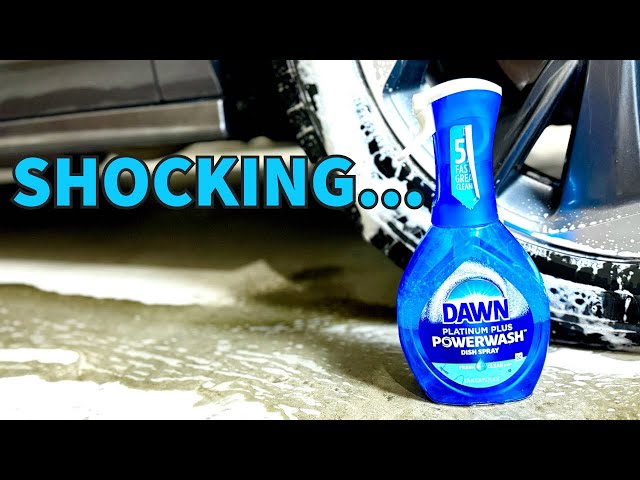
Dish soap can clean visible grime, but automotive shampoo is better suited to painted surfaces.
Credit: www.autolaundry.com
Is Dawn Safe for Car Paint?
One occasional wash
A single wash with diluted Dawn will usually not cause permanent paint damage if:
- The clear coat is in normal condition
- You use a clean, soft wash mitt
- You do not scrub aggressively
- You rinse thoroughly
- You dry the vehicle promptly
The main immediate consequence is usually reduced protection, not ruined paint. If your car has no wax or sealant, you may notice little difference after one wash.
Repeated use
Regularly washing with Dawn is risky because it can:
- Strip wax and weaken some paint sealants
- Remove oily protection from exterior trim
- Make rubber and plastic surfaces look dry over time
- Leave the finish less resistant to water spotting and contamination
- Increase exposure to UV light, road salt, and grime after protection is gone
Dawn itself is not the only factor. Sunlight, heat, hard-water minerals, abrasive towels, automatic brushes, and delayed removal of bird droppings can cause more visible damage than an occasional dish-soap wash.
For a more complete protection routine, use a product and process designed around the paint rather than relying on degreasing strength. This guide to paint-protection routine is also useful when deciding whether your vehicle needs wax, a sealant, or another protectant.
Dawn Dish Soap Compared With Car Wash Soap
| Feature | Dawn dish soap | Automotive car shampoo |
|---|---|---|
| Primary purpose | Cutting food grease | Removing road dirt safely |
| Wax and sealant compatibility | May reduce protection | Usually designed to preserve protection |
| Lubrication for washing | Varies by formula | Formulated to reduce wash friction |
| Safe for regular use | Not the preferred choice | Yes, when used as directed |
| Best use | Occasional emergency cleaning | Routine exterior washing |
| Main concern | Over-degreasing and protection loss | Incorrect dilution or poor washing technique |
Automotive shampoos generally provide more lubrication between the wash mitt and the paint. That matters because many scratches come from dragging grit across the surface, not from the soap itself.
Look for a product labeled car wash, automotive shampoo, or pH-balanced car soap. Follow the dilution instructions instead of estimating a large amount by eye. More soap does not necessarily mean a cleaner or safer finish.
When Dawn May Be Useful
Dawn can be reasonable for a limited, one-time purpose, such as:
- Washing a car before applying a new wax or sealant
- Removing heavy oily residue from a non-delicate exterior surface
- Cleaning a neglected vehicle when automotive shampoo is unavailable
- Handling a small greasy spot after first testing an inconspicuous area
Even then, do not assume Dawn removes every contaminant. Tar, tree sap, brake dust, and bonded iron particles usually need dedicated products and careful procedures.
For light dust, plain water is not always safer if you wipe without lubrication. A dry towel can grind fine particles into the clear coat. If the car is dusty rather than heavily soiled, use a proper rinseless-wash product according to its instructions instead of wiping it dry.
What to Use Instead
The best everyday choice is a dedicated automotive shampoo. Choose one that:
- Is labeled for exterior vehicle paint
- Provides good lubrication
- Is compatible with wax or sealant if protection is already applied
- Rinses cleanly in your water conditions
- Does not contain abrasive particles
Do not substitute laundry detergent, household cleaner, hand soap, or concentrated degreaser. Baby shampoo is also not a dependable car-wash substitute: its ingredients and lubrication are not designed for automotive finishes.
For a community event, a proper wash product and safe equipment matter just as much as the soap. A well-planned fundraiser wash plan can help avoid the common problem of using harsh household cleaners and dirty sponges on multiple vehicles.
How to Wash a Car Without Scratching It
1. Choose the right conditions
Wash in the shade, on a cool surface, and away from strong wind. Avoid washing hot panels because soap and water can dry before you rinse them.
Do not wash immediately after driving if the hood, roof, or wheels are hot. Heat speeds up water-spot formation and makes dried soap more difficult to remove.
2. Rinse loose grit away
Use a hose or pressure washer on a sensible setting to remove loose sand, dust, and mud. Keep the nozzle moving and avoid forcing water into damaged seals or electrical openings.
3. Use separate wash and rinse water
A two-bucket process helps keep abrasive grit away from the paint:
- Fill one bucket with diluted car shampoo.
- Fill a second bucket with clean rinse water.
- Dip the mitt in the shampoo bucket.
- Wash a small section using straight, gentle passes.
- Rinse the mitt in the clean-water bucket.
- Reload it with shampoo before moving to another section.
A dedicated two-bucket setup is especially helpful on dark-colored vehicles, where fine wash marks are easier to see.
4. Work from top to bottom
Wash the roof, glass, hood, upper doors, and trunk first. Leave the lower doors, bumpers, rocker panels, and wheels for last because they usually hold the heaviest grit.
Use separate tools for wheels and tires. Brake dust and road grit can become trapped in a wheel brush or mitt and then scratch painted panels.
5. Rinse thoroughly
Do not allow soap to dry on the surface. Rinse panel by panel, paying attention to mirrors, trim gaps, door handles, and license-plate areas where suds collect.
6. Dry with clean microfiber towels
Use a clean, high-quality drying towel and blot or lightly glide it across the surface. Do not use an old bath towel, rough paper towel, or a towel that has touched the wheels.
If your water is hard, drying promptly is particularly important because mineral deposits can etch or spot the finish.
How to Handle Bugs, Bird Droppings, and Greasy Spots
Do not attack stuck contamination with a dry sponge. Soak the area first with water or a paint-safe bug remover, then allow time for the material to soften.
For bird droppings:
- Place a wet microfiber towel over the spot.
- Leave it for several minutes.
- Lift or gently wipe away the softened residue.
- Wash and rinse the area.
- Inspect the paint for staining or etching.
Bird droppings and bug remains can become acidic or chemically aggressive as they bake in the sun. Dawn may remove surface grease, but soaking and lubrication are more important than using a stronger soap.
What If You Already Used Dawn?
Do not panic. One wash does not normally mean the paint is permanently damaged.
Take these steps:
- Rinse away all remaining soap.
- Wash the vehicle again with automotive shampoo when practical.
- Dry it with a clean microfiber towel.
- Check whether water still beads or sheets as it did before.
- Reapply a compatible wax, sealant, or spray protectant if needed.
If the paint looks dull after washing, do not immediately assume Dawn caused permanent damage. The vehicle may have pre-existing oxidation, mineral deposits, embedded contamination, or scratches that became visible when the old protection was removed.
Does Dawn Remove Wax or Ceramic Coating?
Dawn can reduce or remove some waxes and may weaken certain spray sealants. The result depends on the product, its age, concentration, water temperature, and how aggressively the vehicle is washed.
It should not be treated as a guaranteed ceramic-coating remover. A professionally installed or well-maintained ceramic coating may resist ordinary washing, but harsh chemicals, repeated degreasing, and improper maintenance can still reduce its water behavior and longevity.
If the vehicle has a ceramic coating, follow the coating manufacturer’s maintenance instructions. Use the recommended shampoo rather than experimenting with dish soap.
Environmental Considerations
Wash water can carry soap, oil, brake dust, and other contaminants into storm drains. Depending on local rules and the location, that runoff may flow directly to creeks or waterways without treatment.
When possible, wash on a permeable surface such as gravel or grass, use a commercial wash facility that captures or treats wastewater, and avoid directing dirty water into a storm drain. The U.S. Environmental Protection Agency provides broader information about stormwater pollution and runoff.
Local requirements vary, so check your city or wastewater authority if you plan to operate a public or commercial wash.
Common Myths About Dawn and Car Washing
“If it makes lots of foam, it must be safe.”
Foam is not a safety rating. Lubrication, cleaning chemistry, dilution, and washing technique matter more than suds.
“Dawn will immediately ruin clear coat.”
That is exaggerated. A normal, diluted wash is unlikely to destroy healthy clear coat. The more realistic concern is loss of wax or sealant and increased risk from repeated use.
“Dawn makes the paint shinier.”
It may make a greasy surface look temporarily cleaner, but it does not add durable gloss protection. Removing an old layer of wax can sometimes make the finish feel different without improving the paint.
“Any soft sponge is safe.”
A sponge or mitt can still trap grit. A dedicated microfiber or wool wash mitt, frequent rinsing, and separate wheel tools are safer choices.
Quick Decision Guide
| Situation | Best choice |
|---|---|
| Routine weekly or monthly wash | Automotive car shampoo |
| Emergency wash with no car soap available | Diluted Dawn once, used gently |
| Dusty vehicle with no visible grime | Rinseless-wash product or careful rinse process |
| Greasy residue | Paint-safe automotive cleaner or degreaser |
| Bird droppings or bugs | Soak, soften, then gently remove |
| Wax or sealant maintenance | Manufacturer-compatible car shampoo |
| Ceramic-coated vehicle | Coating-approved maintenance soap |
| Wheels covered in brake dust | Dedicated wheel cleaner and separate tools |
After cleaning, inspect your tires and wheels before driving. If you also need to prepare the vehicle for a trip, this guide to tire-air equipment can help you understand the equipment needed for routine inflation.
Frequently Asked Questions
Can I wash my car with Dawn dish soap once?
Yes, a single diluted wash is unlikely to cause permanent damage to healthy automotive paint. Rinse thoroughly, dry carefully, and restore the vehicle’s wax or sealant if necessary.
How often can I wash my car with Dawn?
There is no useful routine schedule for Dawn. Use automotive shampoo for regular washing, and reserve dish soap for an occasional emergency or a specific cleaning task.
Will Dawn strip car wax?
It can reduce or remove some wax and paint sealants, particularly when used repeatedly or at a high concentration. It is not a guaranteed remover for every type of protection.
Can Dawn damage a clear coat?
Normal occasional use generally will not destroy a sound clear coat. However, repeated degreasing can remove protective products and leave the finish more exposed to contamination, sunlight, and water spotting.
Is Dawn safe for car windows?
A small amount may clean exterior glass, but it is not the best glass product. It can leave residue or streaks if not thoroughly rinsed. Use an automotive glass cleaner and a clean glass towel for the clearest result.
Can Dawn remove bugs and bird droppings?
It can help dissolve some oily residue, but soaking is the safer technique. Never scrape dried contamination from paint with a dry towel or hard tool.
Should I wax my car after using Dawn?
If the vehicle previously had wax or a sealant, reapplying protection is sensible after the surface is clean and dry. Follow the protectant’s preparation and curing instructions.
Bottom Line
You can wash your car with Dawn dish soap in a pinch, and one careful wash usually will not ruin the paint. The risk comes from using it as your regular car shampoo: its grease-cutting formula can reduce wax and sealant protection, dry out some trim, and leave the finish more vulnerable over time.
For routine care, use a dedicated automotive shampoo, a clean microfiber mitt, separate wheel tools, and a two-bucket or similarly low-contamination method. That combination protects the clear coat far better than relying on stronger soap.








