ByMax Lee
Florida Boat & Vessel Fees & Safety Rules
If you own a boat in Florida or plan to bring one here, you are facing two immediate responsibilities. You need to get the registration and fees squared away. And you must make sure your safety equipment meets state law.
The Florida boat and vessel registration fees and safety equipment rules are not a one-size-fits-all checklist. They change by vessel length, county, and even where you operate. As of 2026, the base registration fee for a boat under 12 feet runs about $20.25.
But county surcharges and the 6% use tax can push that number higher. On the safety side, Florida enforces US Coast Guard standards plus state-specific rules like the personal watercraft lanyard requirement and manatee zone restrictions.
Quick Answer
Florida boat registration fees vary by vessel length, county surcharge, and use tax. Safety equipment must include USCG-approved life jackets, fire extinguishers, sound devices, and visual distress signals. Personal watercraft have additional rules like lanyard attachment.
Check the Florida Fish and Wildlife Conservation Commission for exact fee tables and equipment requirements.
Bing (Web (fair-use with source credit))
Why Florida's Boat Rules Are Different (and Why Getting It Right Matters)
Florida has more registered vessels than any other state. Over 900,000. That density means the state takes boating law seriously.
The rules exist for three main reasons.
- Safety on crowded waterways. The Intracoastal, the Keys, and big inland lakes get packed, especially on weekends. FWC marine patrols are active, and they issue citations for missing or expired gear.
- Environmental protection. Manatee zones, no-discharge areas, and seagrass protection all carry specific equipment and operational requirements. Violating these can mean federal fines.
- Funding for infrastructure. Registration fees and county surcharges pay for boat ramps, channel markers, and law enforcement. Every dollar has a purpose.
The key enforcement body is the Florida Fish and Wildlife Conservation Commission (FWC). They have the authority to stop any vessel and check both registration papers and safety equipment. Getting caught without a required item can cost you a citation.
In some cases, it adds points against your boating safety record.
If you tow your boat, the trailer has its own set of requirements. Proper lighting and safety chains matter just as much as what is on the boat itself. We have a guide covering proper trailer lighting and safety chains that applies these same principles.
We also keep our main resource page updated with tips on staying compliant.
The Quick Guide: Do You Even Need to Register Your Boat?
If your vessel has a motor (including an electric trolling motor), you must register it. Sailboats 16 feet or longer also require registration. Non-motorized vessels under 16 feet are exempt.
Canoes, kayaks, paddleboards, and small sailboats fall into that exempt category.
| Vessel type | Registration required? |
|---|---|
| Motorized (any engine, including electric trolling motor) | Yes |
| Non-motorized under 16 ft (canoe, kayak, paddleboard, small sail) | No |
| Sailboat 16 ft and over (even without motor) | Yes |
| Personal watercraft (Jet Ski, WaveRunner, Sea-Doo) | Yes |
| Federal documented vessel | Yes (you may display state numbers or rely on federal documentation, but safety equipment is still required) |
| Houseboat (self-propelled or towed) | Yes, based on length |
If you buy a used boat from a private seller, you must transfer the title and registration within 30 days. Failing to do so can result in late fees and back taxes. The process requires proof of identity and ownership, similar to applying for a Real ID.
Breaking Down the Costs: Registration Fees, County Surcharges, and Use Tax
Registration is not a flat fee. It depends on the length of your boat, the county where you live, and whether you paid sales tax when you bought it.
Here is a rough breakdown of base registration fees. These change periodically, so treat them as estimates.
| Length bracket | Approximate base fee (annual) |
|---|---|
| Under 12 ft | $20.25 |
| 12 to under 16 ft | $30.50 |
| 16 to under 26 ft | $60.75 |
| 26 to under 40 ft | $100.50 |
| 40 ft and over | $150.25 |
On top of that, each county adds a surcharge. Typically $2 to $5 per year. Densely populated coastal counties like Miami-Dade and Broward are on the higher end.
Then there is the use tax. If you bought your boat out of state and paid less than 6% sales tax there, Florida will charge you the difference when you register. That is a one-time tax, but it can be a surprise if you are not prepared.
You can register for two years at once. That usually saves you the renewal processing fee. Letting your registration lapse results in a late fee.
Boating without current registration leads to a citation with additional fines.
Managing these costs is part of responsible ownership. It is similar to budgeting for insurance programs in other states.
How to Register (or Title) a Boat Step by Step
The process differs depending on whether you bought from a dealer, a private party, or are bringing the boat from out of state.
- Gather your documents. You will need proof of ownership. That could be a manufacturer's certificate of origin (new boat), a signed title and bill of sale (used boat), or a prior registration (out-of-state).
- Verify the Hull Identification Number (HIN). For a used boat, the HIN must match the title. If it is missing or altered, you may need a law enforcement inspection to verify it.
- Complete the application forms. The main ones are HSMV 72001 (registration) and HSMV 82040 (title). Get these at a local tax collector's office or download them from the FLHSMV website.
- Pay the fees. This includes the registration fee, title fee (if applicable), county surcharge, and any use tax due.
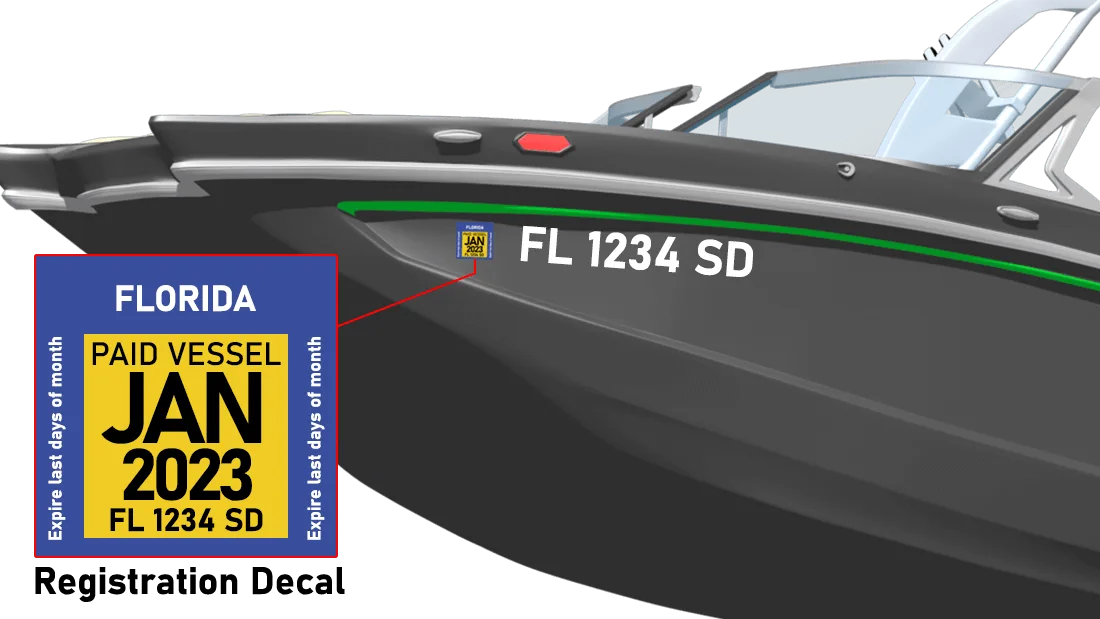
- Receive your decals and registration card. The registration card must stay on the vessel. The decals go on the port side of the hull, within six inches of the registration number. They must be visible from 100 feet.
If you bought from a dealer, they usually handle the registration. If you bought private, you are responsible for completing the transfer within 30 days.
When you move, you must update your registration within 10 days. That requirement mirrors California's address change notification rules.
The 90-Day Rule: Out-of-State Boaters and Snowbirds
Many people bring their boats to Florida for the winter. The rule is simple. If your boat is used on Florida waters for more than 90 days in any calendar year, it must be registered in Florida.
This applies even if your boat is registered in another state or has federal documentation. After 90 days, you are considered a Florida resident for boating purposes.
There are exceptions.
- Seasonal visitors. If you leave the state for at least 30 consecutive days, the 90-day clock resets.
- Federal documented vessels. You must still register in Florida if you meet the 90-day use threshold. But you can choose to display the state number or rely on the documentation alone. Safety equipment requirements remain the same either way.
Snowbirds often assume their out-of-state registration is valid year-round. It is not. If an officer stops you on day 100 with a Michigan tag, expect a citation.
The straightforward approach is to register your boat in Florida when you arrive for the season. It is simple and avoids the hassle of explaining your residency during a stop.
Out-of-state boaters should also verify their safety equipment meets Florida standards. Even if your home state allows certain items, Florida may be stricter. That is especially true for flares, fire extinguishers, and PWC lanyards.
If you fail to register and continue using the waterway, your vessel could be subject to impoundment. That process is similar to removing an abandoned vehicle from your property in other states.
Renewal and Decal Placement: Simple But Easy to Mess Up
Renewing your Florida vessel registration is straightforward. You can renew online through the FLHSMV GoRenew portal, by mail, or in person at a tax collector's office. Choose a one-year or two-year cycle.
Two years saves you the processing fee on the second year.
Once you receive your new decal, place it on the port side of the vessel. It must go within six inches of the registration number. The decal must be visible from 100 feet.
A common mistake is putting it on the starboard side. Another is covering part of the number. Officers also see people stacking new decals over old ones without removing the expired sticker.
That signals you skipped a renewal.
Set a reminder before your expiration date. FWC patrols check decals before they even approach your boat. An expired decal means an instant citation, even if you paid but simply forgot to stick it on.
Always carry your registration card on board. A current decal with no card is still a ticket.
If you sell your boat, remove the decals and complete a notice of sale. That protects you if the new owner runs up fines or abandons the vessel. There are specific rules for historic vehicle plating rules in other states that follow a similar transfer process.
The Complete Florida Safety Equipment Checklist (by Statute)
By law, every vessel on Florida waters must carry specific safety gear. The exact list depends on vessel length and whether you operate on coastal or inland waters. Here is the statutory checklist.
| Equipment | Required for | Notes |
|---|---|---|
| Life jackets (Type I, II, III, V) | All vessels, one per person | Must be USCG-approved, readily accessible, and in good condition. Children under 6 must wear a jacket on vessels under 26 ft. |
| Throwable device (Type IV) | Vessels 16 ft and over | Must be immediately accessible. A ring buoy or cushion. |
| Fire extinguisher | Vessels with engine, fuel tanks, or enclosed compartments | One B-I on vessels under 26 ft. Two B-I or one B-II on 26 ft to 40 ft. Over 40 ft requires a fixed system or additional extinguishers. Check the gauge. |
| Visual distress signals | All vessels on coastal waters (including ICW) | USCG-approved flares. Day and night signals required. Expiration date must be current. |
| Sound-producing device | All vessels | Whistle, horn, or bell. Must be audible for 1/2 mile. Not required on non-motorized vessels under 16 ft. |
| Navigation lights | Vessels operated between sunset and sunrise | Must meet USCG rules for power, sail, or at-anchor. |
| Ventilation system | Vessels with gasoline-powered engines in enclosed compartments | Natural or powered ventilation per USCG standards. |
| Backfire flame arrestor | Gasoline inboard engines | USCG-approved, clean, and unmodified. |
The most overlooked items are expired flares and a missing throwable device. Flares have a shelf life, usually 42 months from manufacture. After expiration, they are not valid.
Replace them before they expire.
For PWC and sailboats, the same core rules apply. PWC operators must also wear a lanyard attached to the ignition cut-off switch.
Bing (Web (fair-use with source credit))
By law, every vessel on Florida waters must carry specific safety gear. The exact list depends on vessel length and whether you operate on coastal or inland waters. Here is the statutory checklist.
| Equipment | Required for | Notes |
|---|---|---|
| Life jackets (Type I, II, III, V) | All vessels, one per person | Must be USCG-approved, readily accessible, and in good condition. Children under 6 must wear a jacket on vessels under 26 ft. |
| Throwable device (Type IV) | Vessels 16 ft and over | Must be immediately accessible. A ring buoy or cushion. |
| Fire extinguisher | Vessels with engine, fuel tanks, or enclosed compartments | One B-I on vessels under 26 ft. Two B-I or one B-II on 26 ft to 40 ft. Over 40 ft requires a fixed system or additional extinguishers. Check the gauge. |
| Visual distress signals | All vessels on coastal waters (including ICW) | USCG-approved flares. Day and night signals required. Expiration date must be current. |
| Sound-producing device | All vessels | Whistle, horn, or bell. Must be audible for 1/2 mile. Not required on non-motorized vessels under 16 ft. |
| Navigation lights | Vessels operated between sunset and sunrise | Must meet USCG rules for power, sail, or at-anchor. |
| Ventilation system | Vessels with gasoline-powered engines in enclosed compartments | Natural or powered ventilation per USCG standards. |
| Backfire flame arrestor | Gasoline inboard engines | USCG-approved, clean, and unmodified. |
The most overlooked items are expired flares and a missing throwable device. Flares have a shelf life, usually 42 months from manufacture. After expiration, they are not valid.
Replace them before they expire.
For PWC and sailboats, the same core rules apply. PWC operators must also wear a lanyard attached to the ignition cut-off switch.
Bing (Web (fair-use with source credit))
Personal Watercraft: Extra Rules for Jet Skis, WaveRunners, and Sea-Doos
Personal watercraft must follow all standard safety equipment rules. Florida also adds several specific restrictions. These machines are powerful and fast, so the state treats them differently.
Key additions:
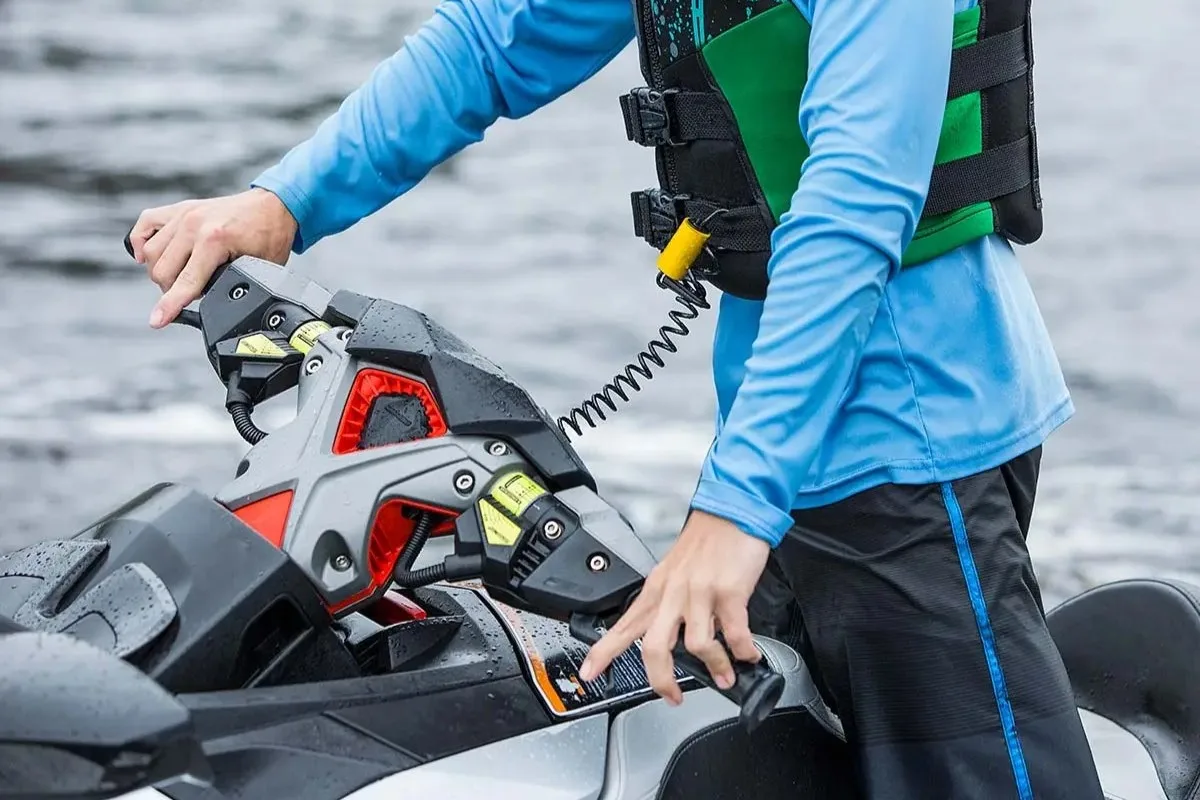
- Lanyard requirement. Attach the engine cut-off switch lanyard to your person, life jacket, or clothing. Disconnecting it is a primary offense.
- No nighttime operation. You cannot operate a PWC between half an hour after sunset and half an hour before sunrise. Navigation lights alone are not enough.
- Age restrictions. You must be at least 14 to operate a PWC in Florida. Operators under 18 must have completed a boating safety education course and carry the card.
- Towing restrictions. You cannot tow a person on skis or a tube unless the PWC is designed to carry at least three people. The observer or tow system must allow constant visual contact.
- Distance rules. Stay at least 100 feet from swimmers, divers, and shorelines in posted idle-speed zones. Manatee zones and no-wake areas apply.
A common mistake is operating a PWC near a marked swim area or within a manatee sanctuary. FWC officers patrol these zones heavily. Fines can reach $500 or more.
If you rent a PWC, the rental company must provide a safety orientation and verify your age and education. But the operator is ultimately responsible. Get caught without a lanyard and the citation is yours.
Bing (Web (fair-use with source credit))
Boating Safety Education: Who Needs the Card and How to Get It
Florida law requires anyone born on or after January 1, 1988, to complete a boating safety education course. This applies when operating a vessel with a motor over 10 horsepower. PWC operators under 18 must also show proof of completion.
The requirement covers both residents and visitors. If you are 14 and want to drive a PWC, you need the card. If you are 40 and have never taken a course, you do not need one by law.
But it is still a wise investment.
The approved course is the Florida Boating Safety Education Course. Take it online through the FWC website or in a classroom. The online version costs about $10 and takes roughly three hours.
After passing the exam, you receive a temporary certificate immediately. The permanent card arrives by mail in a few weeks.
Carry the physical card or a copy on board while operating. Officers ask for it. Not having it when required is a separate citation from other equipment violations.
Even if you are exempt by age, completing the course often qualifies you for a discount on boat insurance. Many insurers offer 10% to 15% off with proof of completion. That alone can offset the cost of registration for years.
If you lose your card, request a replacement through the FWC. Keep the temporary certificate or a digital photo as a backup.
Five Mistakes That Almost Always Get You a Ticket
Boating laws in Florida are enforced regularly. Some violations are so common that officers almost expect them. Avoid these five and you will likely pass every stop.
- Expired registration or decals. The most common oversight. People forget to renew, lose the decal, or put it on the wrong side. Set a calendar reminder and double-check the placement.
- Insufficient life jackets. Not having a jacket for every person on board is an automatic violation. The jackets must be the right size and in good condition. No tears. No missing straps. For kids under 6, the jacket must be worn on vessels under 26 feet.
- Expired flares. Flares are cheap to replace but easy to ignore. Check the date stamped on the side. If it is past, they do not count. Keep a fresh set in a waterproof container.
- No lanyard on a PWC. This is the number one PWC ticket. Operators disconnect the lanyard for convenience and forget to reattach. FWC officers patrol launch ramps and can see from a distance. Always clip it to your life jacket.
- Sound device not working. A whistle or horn that does not produce an audible tone is the same as not having one. Test yours before every trip. A cheap plastic whistle can crack and fail.
Each of these carries a fine, typically in the $50 to $150 range. Multiple violations add up fast. None of them require expensive gear.
Simple checks before launching can keep you legal.
What Happens During an FWC Stop: Your Rights and Obligations
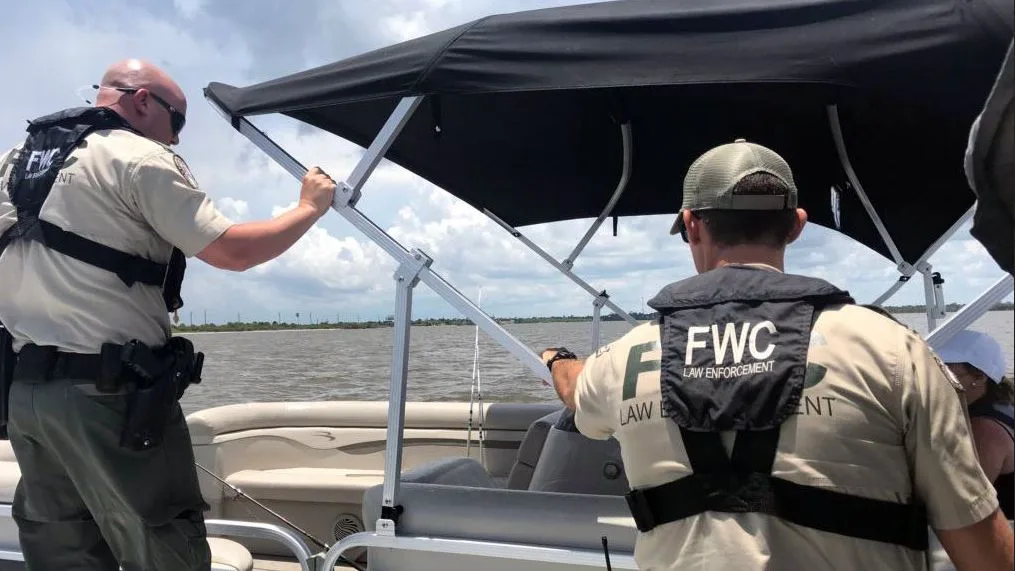
An FWC officer can stop any vessel to check registration, safety gear, and operator credentials. They approach, ask for your registration card and safety education card (if required), and visually inspect your decals and equipment.
Stop and present the requested documents. Refusing or being hostile only escalates the situation. If you have done nothing wrong, the stop usually takes five to ten minutes.
The officer may ask you to demonstrate your sound device. They may check fire extinguisher gauges and flare expiration dates.
You have the right to remain silent beyond identifying yourself and providing documents. But staying cooperative is your best strategy. If you receive a citation, you can contest it in county court later.
Bing (Web (fair-use with source credit))
Where to Get the Current, Official Information
Florida's laws and fees change. Always reference the primary sources. The Florida Fish and Wildlife Conservation Commission (myfwc.com/boating) publishes the complete safety equipment requirements and education rules.
The Florida Department of Highway Safety and Motor Vehicles (flhsmv.gov/vessel) handles registration fees, forms, and renewal. Your local county tax collector's office can answer fee questions specific to your area. Bookmark both sites and check them before every season.
Frequently Asked Questions
How much does it cost to register a boat in Florida?
The base fee ranges from about $20.25 for boats under 12 feet to over $150 for boats 40 feet and over. County surcharges and a 6% use tax on out-of-state purchases add to the total. Check the FLHSMV fee schedule for your exact length bracket.
Do I need a boating license in Florida?
Florida does not issue a boating license. Anyone born on or after January 1, 1988, must complete a boating safety education course to operate a motorized vessel. You receive a permanent card after passing the course.
Carry it on board.
Are non-motorized boats exempt from registration?
Yes. Canoes, kayaks, paddleboards, and sailboats under 16 feet without a motor are exempt from registration in Florida. If you add a motor, even an electric trolling motor, you must register the vessel.
What happens if I get stopped by FWC without safety equipment?
You can receive a citation with fines typically ranging from $50 to $150 per missing item. Officers can also order you back to shore until you have the required gear. Repeat violations can lead to higher fines and points on your boating record.
Can I use my out-of-state boat registration in Florida?
Yes, for up to 90 days in a calendar year. After 90 days, you must register the vessel in Florida. This applies to seasonal residents and snowbirds.
Federal documented vessels are not exempt from this rule.