The Florida distracted driving law and ban on texting while operating a vehicle is straightforward until you are staring at a ticket you did not see coming. It is not just about typing while cruising down I-95. The ban applies in more situations than most drivers realize, and the fines add up faster than you would expect.
As of 2026, a first offense carries a $30 base fine. After mandatory court costs and fees, that ticket usually lands between $100 and $150. If texting contributes to a crash the penalties skyrocket.
Here is what you need to know to stay legal and avoid the hidden costs.
Quick Answer
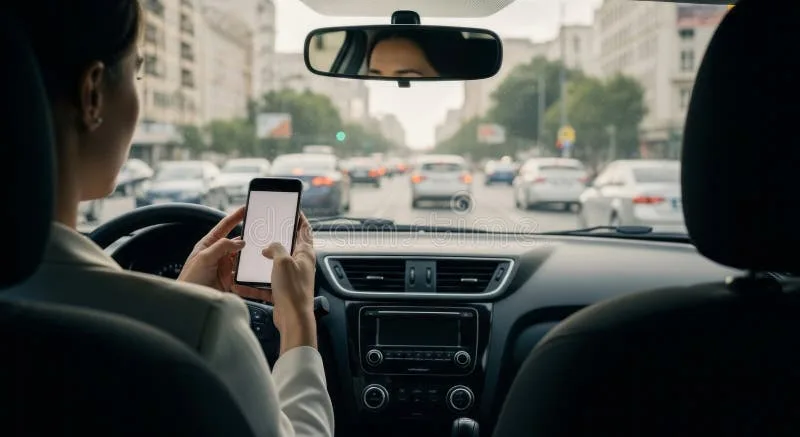
Florida's distracted driving law bans manually typing or reading text on a wireless device while operating a vehicle. Officers can pull you over just for texting. The law covers stopped traffic too.
Exceptions exist for GPS, voice commands, and emergency calls.
Why a $30 Fine Can Actually Cost You Thousands
A $30 base fine feels like pocket change. That is misleading. Once court costs are added and they vary by county you are usually looking at $100 to $150 for a first offense.
A second offense jumps to $60 base plus the same fees.
That is just the ticket. If you are texting and cause a crash the violation becomes a moving violation with six points on your driving record. Insurance companies hate points.
A single six-point assessment can spike your premiums by 30% to 50% for three years. Do the math on a $1,200 annual policy and that is an extra $360 a year. Over three years you are out over $1,000 in surcharges.
The $30 fine is a decoy. The real cost is the insurance tail.
Beyond insurance a distracted driving citation can come up in discovery if you are sued after a crash. Florida courts treat violating the texting ban as evidence of negligence per se which makes it much harder to defend a civil lawsuit. That is a financial risk no one thinks about when they glance at their phone at a red light.
The Exact Texting Ban: What Florida Statute 316.305 Covers
Florida Statute 316.305 is the core law. It makes it illegal for any person to manually type or enter letters numbers symbols or text into a wireless communication device while operating a vehicle. That covers reading an email scrolling a social media feed typing a sentence anything that involves your fingers tapping the screen.
The law is primary enforcement. An officer does not need another reason to stop you. If they see you holding your phone and looking down that is enough.
As the Florida Legislature's official text makes clear there is no affirmative defense anymore. You cannot beat the ticket simply by saying you were using GPS.
What Counts as "Operating a Vehicle" (Yes, Including Red Lights)
This is where most people get tripped up. Under Florida law operating a vehicle includes being stopped at a traffic light. It includes sitting in a drive-through lane.
It includes idling in a parking spot with the engine running. If the vehicle is in motion or stationary but under your control the texting ban applies.
Law enforcement officers are trained to watch for the glow of a phone screen in stopped cars. If your car is on and you are in the driver's seat with a phone in your hand you can be cited. No exceptions for "I was just checking the time" or "I was switching playlists" those still count as manual entry.
Devices Covered: Phones, Tablets, and Laptops
The statute says wireless communication device. That includes smartphones tablets and laptops. It also covers any device that can send or receive data wirelessly.
Basically if it has a screen and connects to a network it is covered.
The law does not ban touching your phone at all. You can swipe to answer a call if you are using a hands-free system. You can tap a single button to start navigation.
The ban targets manual entry of data anything that requires multiple taps or keystrokes.
What's Still Legal: GPS, Voice Commands, and Earpieces
Florida's law is not a full hands-free law like Georgia's. That distinction matters. You are allowed to use a GPS or navigation app if you set the destination before driving or use voice commands while driving.
You cannot manually type the address while the car is moving. You can use voice-to-text or voice commands to send a message without touching the screen. The phone must be mounted or operated with one tap to initiate the voice function.
You can wear a single earpiece or use a Bluetooth earpiece for phone calls. You can dial a number if you do it by voice command or push-to-talk feature.
Anything beyond that typing a message scrolling Instagram swiping through YouTube is a violation. The safest approach is to mount your phone on the dashboard or windshield and use hands-free controls exclusively.
The Fine Breakdown: Base Fines, Court Costs, and Points
Here is where the numbers live. The table below shows the fine schedule as of 2026.
| Offense | Base Fine | Typical Total with Court Costs | Points |
|---|---|---|---|
| First distracted driving violation | $30 | $100 to $150 | 0 |
| Second violation (within 5 years) | $60 | $130 to $200 | 0 |
| Any violation in a school or work zone | $60 | $130 to $200 | 0 |
| Violation that caused a crash | $30 or $60 base | $100 to $200 plus civil liability | 6 points |
The court costs are not fixed. Each county adds its own surcharges and administrative fees. In Miami-Dade and Broward expect the higher end.
In rural counties it might be lower. The key takeaway: do not budget based on the base fine.
If you receive a six-point penalty your insurance company will likely apply a surcharge for three years. That surcharge can cost more than all the fines combined.
Primary Enforcement: Why You Can Be Stopped for No Other Reason
Before July 1 2019 Florida's texting ban was a secondary enforcement law. That meant an officer had to pull you over for something else speeding a broken taillight before they could add the texting citation. Now it is primary enforcement.
They can stop you solely for texting.
This changes everything. It gives officers clear authority to observe driver behavior and act immediately. It also means more tickets especially in high-traffic areas like school zones and construction corridors where distracted driving is a known hazard.
As NHTSA's distracted driving data shows states with primary enforcement see a measurable drop in fatal crashes involving cell-phone distraction.

If you are stopped the officer will typically ask about your phone use. You are not required to unlock your phone but refusing may influence the officer's decision to issue a citation. Most officers will write the ticket based on visual observation alone.
Arguing that you were using GPS can work if you can show a mounted phone with a navigation app open. If the phone is in your hand expect the citation.
The Most Common Ticket Trap: Reading at a Red Light
The single biggest mistake drivers make is assuming the law does not apply when the car is stopped. It does. If your engine is running and you are in the driver's seat you are operating the vehicle.
That includes sitting at a red light waiting in a drive-through lane or parked at the curb with the key in the ignition.
Officers know this. They watch for the glow of a phone screen in stopped cars. Courts have consistently upheld that a car sitting at a traffic light is still being operated.
The same goes for stop signs and heavy traffic jams.
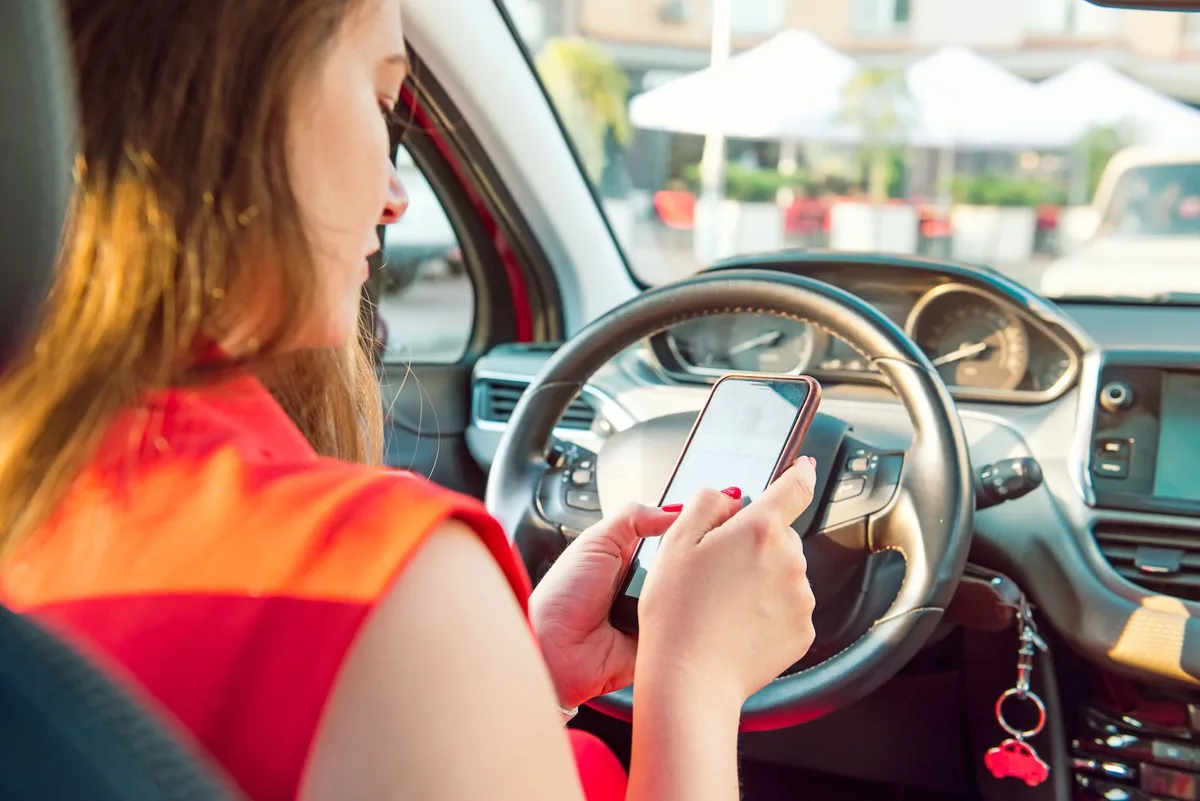
If you get caught the excuse "I was stopped" will not work. The officer does not need to see the car moving. They just need to see you handling the phone while behind the wheel.
The safest move is to treat every moment in the driver's seat the same way you treat highway driving. Put the phone down or mount it where you can use voice commands.
Teen Drivers and the GDL: Zero Tolerance for Any Cell Use
Florida's rules are even stricter for anyone under 18. Under the Graduated Driver License (GDL) program a learner's permit or intermediate license holder cannot use any wireless communication device while driving. Not even with hands-free.
Not at a red light. The only exception is a 911 call.
The penalties hit harder for teens too. A first offense means a 60-day license suspension. A second offense brings a 6-month suspension.
The fines and costs still apply. This is a separate track from the adult texting ban so a teen driver can be cited under both laws for the same act.
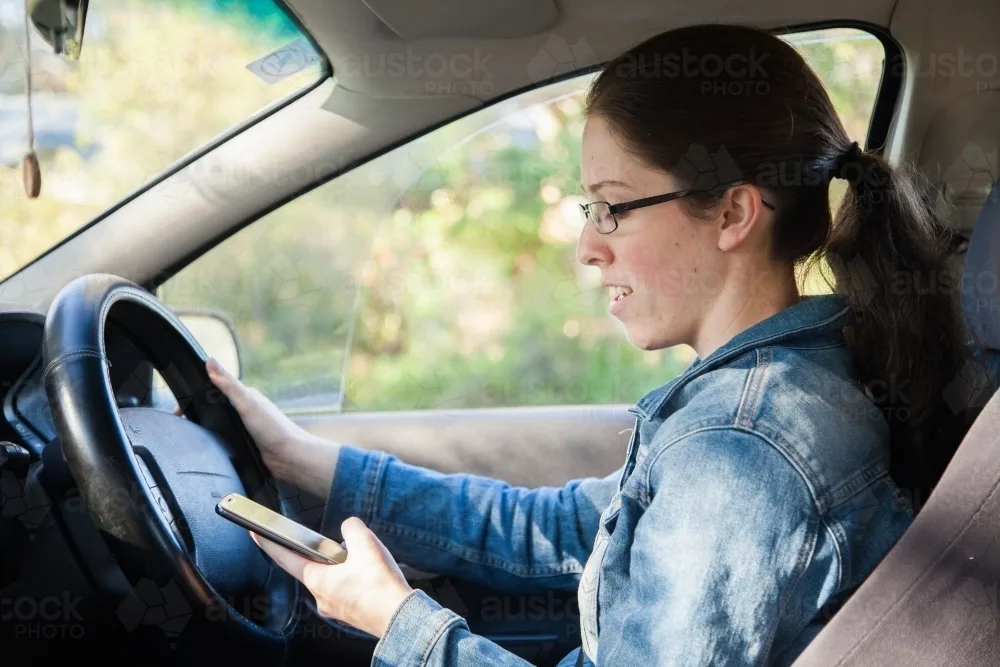
The GDL restriction lasts until the driver turns 18. Until that birthday the safest approach is to keep the phone stowed in the glove box. Even a quick tap on a music app can lead to a citation or worse.
Parents should enforce this rule at home because the consequences go far beyond the fine.
Florida vs. Georgia: How Our Law Compares to Full Hands-Free States
Here is where a lot of confusion comes from. Florida's law is not a true hands-free law. It only bans manual entry of data.
You are allowed to hold a phone to your ear and talk or use a speakerphone without a mount. Georgia by contrast makes it illegal to simply hold a phone in your hand for any reason while driving.
This matters if you cross state lines or see drivers around you making calls. In Florida a driver can legally chat away with the phone pressed to their ear. In Georgia that same action is a primary offense with a $50 fine and a point on your license.
The law leaves a notable gap you can legally chat on a handheld phone even though NHTSA research shows it significantly raises crash risk.
| Law Element | Florida | Georgia |
|---|---|---|
| Texting banned while operating | Yes manual entry | Yes manual entry |
| Handheld calls banned | No | Yes |
| Any phone use for teens banned | Yes (under 18) | Yes (under 18) |
| Primary enforcement | Yes (since 2019) | Yes |
| Points for standard violation | 0 | 1 |
| Points if crash involved | 6 | 1 |
If you drive into Georgia you need to switch to hands-free entirely. Even holding your phone to look at navigation is a violation. This catches many tourists driving down from Atlanta.
In Georgia holding your phone for any reason is illegal. Crossing the Florida state line you are legally allowed to hold a phone to your ear but picking up your phone to read a text is strictly banned. The confusion between these two standards leads to plenty of tickets at the border.
What to Do If You Get Pulled Over for Distracted Driving
Getting stopped for distracted driving is stressful but manageable. The key is to stay calm and avoid anything that makes the situation worse.
If you see the lights pull over safely. Put your phone face down on the passenger seat or in the console. Keep both hands on the steering wheel where the officer can see them.
When the officer approaches be polite and direct. Do not volunteer that you were "just checking directions" or "just swiping a song." A simple "Good afternoon officer" is enough.
Do not unlock your phone or offer to show the officer anything. You have the right to remain silent about what you were doing on the device. The officer will likely ask something like "Do you know why I stopped you?" You can answer "Not exactly but I am happy to cooperate." Do not lie but do not admit to texting.
Your Rights and Obligations During the Stop
You are required to provide your license registration and proof of insurance. After that you can remain silent. The officer may ask for your phone or ask you to unlock it.
You have the right to refuse. A warrant would be needed to compel you to unlock the phone. Refusal might make the officer more likely to write the ticket but it also preserves your privacy.
If the officer issues a citation accept it calmly. Signing the ticket is not an admission of guilt. It is a promise to appear in court or pay the fine.
You can contest it later. Never argue with the officer about the law or the fine at the roadside. That rarely ends well.
How to Contest a Citation (And When It's Worth It)
You can fight a distracted driving ticket in court. Request a hearing on the back of the citation or online within 30 days. At the hearing the officer must testify about what they observed.
If the officer does not show up the case may be dismissed.
Whether it is worth contesting depends on the circumstances. If you have a clean driving record and the fine is under $150 sometimes paying is cheaper than taking time off work. But if points are on the table meaning a crash was involved a lawyer can help reduce the charge or avoid points that would spike insurance.
For a first offense with no points consider paying and moving on. For anything involving points or a commercial license hire an attorney.
Practical Habits to Keep Your License Clean and Your Insurance Low
Prevention is the best strategy. The few seconds you save by answering a text can cost you thousands in fines and insurance surcharges. Here are habits that work.
Activate Do Not Disturb While Driving mode on your phone. It silences notifications and sends an auto-reply. Both iOS and Android have it built in.
Mount your phone on the dashboard or windshield. This makes voice commands easy and keeps your hands free. Set your destination before you shift into drive.
Even a quick address entry is a manual data violation. Pull into a parking lot if you truly need to read or send a message. A 60-second stop is legal and safe.
Check your driving record once a year for errors. Any incorrect points can be disputed. Stay informed about changes in Florida's traffic laws by following the Department of Highway Safety and Motor Vehicles updates.
Check our blog for more state-specific driving guides and vehicle ownership tips. A few small adjustments to your habits can prevent a big headache down the road.
Verified Summary: The One Rule That Keeps You Safe and Legal
If you remember only one thing from all this make it this: do not touch your phone while the car is on. That covers texting reading scrolling tapping and swiping. It covers red lights and bumper-to-bumper traffic.
Mount your phone. Use voice commands. Or wait until you are parked.
The fine is just the start. The real cost lives in points insurance surcharges and legal liability. Follow that one rule and you avoid all of it.
Frequently Asked Questions
Can I use GPS while driving in Florida?
Yes but only hands-free. Set your destination before you start driving or use voice commands to enter an address. You cannot manually type the address while the vehicle is in motion.
A mounted phone with a navigation app open is legal. A phone in your hand is a violation.
Is it illegal to eat while driving in Florida?
No there is no specific Florida law banning eating while driving. However if eating distracts you and you cause a crash you can still be charged with careless driving or reckless driving. The texting ban only covers manual entry of data on wireless devices.
What happens if I cause a crash while texting?
If you cause a crash while texting the violation becomes a moving violation with six points on your license. Your insurance can surcharge you for three years. You can also be sued for negligence per se because you violated a state statute.
The financial consequences far exceed the base fine.
Can I use my phone at a red light?
No. Under Florida law being stopped at a red light still counts as operating the vehicle. You cannot manually type or read text while the engine is running and you are in the driver's seat.
The law applies even when you are completely stopped.
Do I get points for a first distracted driving offense?
No a standard first offense carries zero points. Points only apply if the violation caused a crash or if you are cited in a school zone or work zone. The base fine plus court costs still run $100 to $150.
A second offense within five years brings a $60 base fine.