Black Friday deals are live on Amazon · limited-time discounts, grab them before they’re gone
Grab the deals

ByMax Lee
How to Open a Car Wash Business: Ultimate Step-by-Step Guide
Opening a car wash can create recurring revenue from individual drivers, fleets, dealerships, and subscription members—but it is not simply a matter of buying a pressure washer and putting up a sign. The strongest operators plan for traffic flow, water management, equipment downtime, labor, local regulations, customer retention, and seasonal demand before accepting their first vehicle.
This guide explains how to open a car wash business in 2026, from choosing a business model and validating a location to securing permits, building a financial plan, hiring staff, and measuring performance. You can also read our guide on are brushless car washes better.
1. Choose the Right Car Wash Business Model
Your operating model determines your startup cost, staffing needs, site requirements, customer experience, and potential capacity. Choose the model before you search for property or request equipment quotes.
Self-service car wash
Customers use dedicated bays, pressure wands, foam brushes, vacuums, and payment stations. This model can require fewer employees, but it depends heavily on reliable equipment, good lighting, security, and a location where customers are comfortable washing their own vehicles.
It may work well where:
- Customers are price-conscious.
- Many residents do not have suitable driveways.
- The property has enough room for multiple bays.
- Local water and wastewater rules permit the operation.
- You can maintain equipment without constant on-site staffing.
Automatic in-bay wash
The customer drives into a bay while an automatic system washes and dries the vehicle. In-bay systems generally use less land than a tunnel, but each vehicle occupies the bay during the wash cycle. The equipment selection affects wash quality, maintenance, throughput, and the amount of building modification required.
Consider:
- Vehicle queue length during busy periods.
- Equipment service agreements.
- Brush, touchless, or hybrid technology.
- Dryer performance and noise.
- Payment, membership, and license-plate-recognition systems.
Conveyor tunnel wash
A conveyor tunnel moves vehicles through a sequence of prep stations, wash equipment, rinses, waxes, and dryers. Tunnels can process a large number of cars, but they require substantial capital, a carefully engineered site, dependable utilities, trained staff, and enough traffic to justify the investment.
A common mistake is evaluating tunnel revenue without modeling the queue. A site may appear busy from the road but still be unsuitable if cars cannot enter, line up, exit, and rejoin traffic safely.
Full-service wash and detailing
Employees wash vehicles and may also vacuum interiors, clean upholstery, apply protectants, polish paint, or perform specialized detailing. This model can produce higher revenue per customer, but labor quality and consistency become central risks.
You will need procedures for:
- Key handling and vehicle inspection.
- Personal items left in cars.
- Pre-existing scratches, dents, and paint damage.
- Chemical dilution.
- Towel separation and laundering.
- Final quality checks before delivery.
Mobile car wash or detailing
A mobile operator travels to homes, offices, dealerships, or fleet yards. Startup costs can be lower than a fixed site, but travel time, weather, water access, parking restrictions, and wastewater collection can limit profitability.
Do not assume “mobile” means exempt from environmental rules. Check how your city, county, and state regulate wash water, chemical discharge, commercial vehicles, and water use.
2. Validate Demand Before Spending Money
Market research should answer a practical question: can this site generate enough profitable washes at realistic prices?
Start with a defined service area rather than assuming everyone nearby is a potential customer. Map competing washes, apartment communities, office parks, dealerships, fleet depots, shopping centers, gas stations, and major commuter routes.
Study competitors during different periods:
- Weekday morning and evening traffic.
- Lunchtime and after-work demand.
- Weekend queues.
- Rainy or unusually cold days.
- Membership and promotional offers.
- Wash completion times.
- Customer complaints in public reviews.
Record each competitor’s services, prices, hours, payment options, membership plans, queue length, and apparent staffing. You are not trying to copy its pricing. You are identifying gaps, such as poor interior cleaning, inconvenient hours, slow service, weak customer communication, or a lack of fleet accounts.
Estimate potential demand
Use a conservative operating model:
- Estimate vehicles passing the site.
- Estimate the percentage that could reasonably notice and enter.
- Estimate the percentage that will actually purchase.
- Apply different assumptions for weekdays, weekends, weather, and seasons.
- Subtract transaction fees, labor, chemicals, utilities, repairs, rent, insurance, taxes, and marketing.
For example, a model should distinguish between a theoretical maximum capacity and practical capacity. A tunnel that can technically process a vehicle every few minutes may operate below that level because of prep work, customer decisions, equipment pauses, payment issues, and traffic backups.
Identify customer segments
Different customers buy different services:
- Commuters may value speed and extended hours.
- Families may prefer memberships and interior cleaning.
- Luxury-vehicle owners may prioritize careful hand washing.
- Dealerships may need reliable volume and consistent turnaround.
- Commercial fleets may value invoicing, scheduled service, and predictable availability.
- Rideshare and delivery drivers may need affordable, frequent cleaning.
Build your menu around the segment you can serve profitably—not around every service you could possibly offer.
3. Create a Car Wash Business Plan
A business plan turns an attractive concept into an operating and financial test. It is also useful when approaching lenders, investors, landlords, equipment suppliers, and insurance providers.
Include these sections:
Executive summary
Describe the proposed model, target customers, location, competitive advantage, opening schedule, and funding requirement.
Market and competitor analysis
Summarize local demand, traffic patterns, customer segments, competing businesses, price ranges, and the gap your business intends to fill.
Services and pricing
List each service, expected duration, included tasks, upsells, membership benefits, and fleet terms. Keep the menu simple enough for a customer to understand quickly from the entrance.
Operations plan
Document:
- Opening and closing procedures.
- Vehicle inspection and damage-notification procedures.
- Chemical storage and dilution.
- Equipment maintenance.
- Water and wastewater handling.
- Payment processing.
- Lost-and-found procedures.
- Incident reporting.
- Cleaning and restroom schedules.
Staffing plan
Estimate how many people are needed per shift and what happens when someone is absent. Labor plans should include training time, payroll taxes, workers’ compensation, uniforms, and supervision—not only hourly wages.
Financial projections
Build monthly projections for at least the first operating year. Include:
- Revenue by service.
- Membership revenue and churn.
- Fleet revenue.
- Chemicals and consumables.
- Utilities.
- Payroll.
- Rent or loan payments.
- Insurance.
- Repairs and preventive maintenance.
- Software and payment fees.
- Advertising.
- Taxes.
- Cash reserves.
Model conservative, expected, and strong-demand cases. A business that only works under perfect weather and maximum volume is not ready to open.
4. Calculate Startup and Ongoing Costs
There is no universal cost to open a car wash. A small mobile detailing operation, a self-service site, and a new conveyor tunnel have entirely different financial requirements.
Common startup cost categories
| Category | What it may include |
|---|---|
| Property | Lease deposit, purchase, due diligence, legal review |
| Site work | Grading, paving, drainage, plumbing, electrical, lighting |
| Building | Bay construction, offices, restrooms, storage, signage |
| Wash equipment | Pumps, arches, conveyors, dryers, vacuums, payment systems |
| Water systems | Reclaim, filtration, softening, or treatment equipment |
| Environmental compliance | Oil-water separation, drains, sampling, permits |
| Technology | Point-of-sale system, cameras, access control, membership software |
| Opening inventory | Chemicals, towels, uniforms, safety equipment |
| Professional services | Design, engineering, legal, accounting, permitting |
| Launch costs | Branding, signs, advertising, promotions, staff training |
| Working capital | Payroll, utilities, repairs, rent, and supplies before revenue stabilizes |
Request itemized quotes rather than relying on a single headline equipment price. Ask suppliers about installation, freight, commissioning, training, warranties, replacement parts, service response times, and software fees.
Reserve working capital for equipment failures. In practice, a wash can lose valuable revenue when one pump, dryer, payment terminal, or gate is unavailable during a busy period.
5. Select and Test the Location
A visible property is not automatically a good car wash site. The entrance, exit, turning movements, drainage, utilities, zoning, and traffic direction can matter more than visibility alone.
Evaluate:
- Traffic volume and traffic speed.
- Whether drivers can safely turn into the property.
- Visibility from both directions.
- Left-turn restrictions.
- Queue space on private property.
- Access for emergency vehicles and service trucks.
- Distance from intersections and driveways.
- Flooding and stormwater conditions.
- Water, sewer, gas, and electrical capacity.
- Nearby residential properties and noise sensitivity.
- Signage restrictions.
- Winter weather and freeze risk where applicable.
- Availability of expansion space.
Conduct a site visit at different times and in different weather. Look for standing water, blocked sight lines, congestion, poor lighting, and difficult turns. Ask the utility provider whether the existing service can support pumps, dryers, heaters, lighting, vacuums, and future equipment.
Before signing a lease or purchasing land, make the agreement contingent on satisfactory zoning, environmental, utility, access, survey, and permitting due diligence. A common mistake is committing to a property before confirming that a wash is a permitted use.
6. Confirm Zoning, Licenses, and Environmental Requirements
Requirements vary by city, county, state, and water authority. Start with the local planning or zoning department, business licensing office, building department, fire marshal, sewer authority, and environmental regulator.
Potential requirements include:
- Business registration.
- Local business license.
- Zoning approval or conditional-use approval.
- Site-plan approval.
- Building and electrical permits.
- Plumbing and drainage permits.
- Sign permits.
- Fire-code approval.
- Water-service approval.
- Wastewater or sewer discharge approval.
- Stormwater permits.
- Chemical storage requirements.
- Grease, sediment, or oil-water separation.
- Accessibility compliance.
- Employer registrations and labor-law compliance.
Wash water can contain detergents, oils, road salt, metals, dirt, and other contaminants. Do not allow it to flow into a storm drain unless the responsible authority expressly permits that discharge. Ask the sewer or environmental authority what treatment, containment, recycling, sampling, and recordkeeping are required.
The U.S. Environmental Protection Agency is a useful starting point for understanding broader water and environmental responsibilities, but local authorities control many site-specific approvals.
If employees will handle concentrated chemicals, create written procedures for labeling, storage, dilution, personal protective equipment, spill response, and exposure reporting. The Occupational Safety and Health Administration provides official workplace-safety guidance that can help you build a compliant training program.
Obtain approvals in writing. Verbal assurances from a landlord, contractor, or equipment salesperson are not a substitute for permits.
7. Design the Site for Safe, Fast Vehicle Flow
Good site design reduces accidents, labor waste, customer frustration, and abandoned purchases.
Plan a clear sequence:
- Entrance and service selection.
- Payment or membership identification.
- Queue and pre-wash area.
- Wash process.
- Drying or finishing area.
- Interior-cleaning or vacuum area.
- Exit and road re-entry.
Keep pedestrian paths separate from moving vehicles wherever possible. Use non-slip surfaces, adequate drainage, protective barriers, lighting, signs, and visible emergency shutoffs.
Design the queue for peak demand rather than average demand. If vehicles back into a public road, block neighboring businesses, or prevent emergency access, the site can become unsafe and may attract regulatory complaints.
8. Choose Equipment and Chemicals Carefully
Equipment should match your model, expected volume, water quality, climate, labor plan, and maintenance capability.
Core equipment may include
- High-pressure pumps and hoses.
- Foam or detergent applicators.
- Brushes or touchless wash equipment.
- Conveyor and vehicle-positioning systems.
- Dryers and air compressors.
- Water softeners and filtration.
- Water-reclaim systems.
- Vacuums and mat cleaners.
- Payment kiosks and card readers.
- License-plate or membership systems.
- Cameras and intercoms.
- Chemical storage and dispensing systems.
- Floor drains and separators.
- Backup parts and maintenance tools.
A high-pressure system is only as useful as its water supply, pump capacity, hose condition, nozzle selection, and operator training. If you also offer tire inflation or detailing tools, size the air-compressor system for actual duty cycle and peak demand rather than tank size alone.
Select chemicals based on surface compatibility, water hardness, temperature, equipment specifications, and wastewater requirements. Store products in labeled containers and use automatic dilution where practical. Over-concentrated chemicals increase cost, can damage surfaces, and may create unnecessary safety and discharge problems.
For hand-wash or detailing services, establish a consistent process for separating dirty and clean materials. A documented paint-safe washing process can help reduce avoidable swirl marks and cross-contamination.
9. Purchase Insurance and Protect Against Claims
A car wash handles customer vehicles, employees, chemicals, water, electrical systems, and moving machinery. Speak with a commercial insurance broker before opening.
Coverage may include:
- General liability.
- Garage keepers or customer-vehicle coverage.
- Commercial property.
- Equipment breakdown.
- Workers’ compensation.
- Commercial auto for mobile operations.
- Business interruption.
- Cyber and payment-data coverage.
- Pollution or environmental liability where appropriate.
Create a vehicle intake process. Photograph or record visible damage when your staff will handle a vehicle, especially for full-service work. Use clear disclaimers without relying on them to excuse negligent conduct. Train employees never to promise coverage, admit fault, or argue with a customer after an incident; they should document the facts and escalate the issue.
10. Hire and Train the Team
A clean facility cannot compensate for careless vehicle handling or inconsistent customer service.
Train employees on:
- Safe vehicle movement and spotter procedures.
- Chemical labels and safety data sheets.
- Personal protective equipment.
- Slip, trip, and electrical hazards.
- Equipment shutdowns and emergency stops.
- Customer greetings and service explanations.
- Pre-existing damage checks.
- Key and personal-property control.
- Quality inspections.
- Spill and incident reporting.
- Cleaning and closing checklists.
Use written standard operating procedures and observe employees during real service periods. Training should include supervised practice, not only a short orientation.
For full-service operations, define who is responsible for each stage. A vehicle should not leave until someone confirms that the promised work was completed, the interior is free of avoidable residue, windows are acceptable, and mats or personal items are returned correctly.
11. Set Profitable Prices and Memberships
Do not set prices by copying the cheapest competitor. Calculate the cost of each service, including labor time, chemicals, utilities, payment fees, towels, rework, and expected equipment wear.
A practical menu often includes:
- Entry-level exterior wash.
- Standard wash with additional cleaning or drying.
- Premium package with protectant or wax.
- Interior vacuum or wipe-down.
- Add-on services.
- Fleet or commercial accounts.
- Monthly membership plans.
Keep package names and inclusions unambiguous. Customers should know whether tire shine, underbody cleaning, interior vacuuming, mat cleaning, or hand drying is included.
Memberships can improve recurring revenue, but they create obligations. Define cancellation rules, vehicle limits, payment retry procedures, wash-frequency safeguards, and customer support standards. Track membership churn, failed payments, average visits, and the cost of discounts.
Offer fleet pricing only after calculating labor, scheduling, invoicing, vehicle size, and turnaround requirements. A low-priced contract that consumes peak capacity may be less profitable than individual retail customers.
12. Build a Marketing and Launch Plan
Marketing should make the location easy to find and give customers a reason to try the service.
Before opening:
- Create and verify your business profile on major map platforms.
- Publish accurate hours, services, prices, and contact details.
- Install readable road signage where permitted.
- Photograph the entrance, queue, wash process, and finished service.
- Build a simple booking or membership path.
- Contact nearby offices, apartment communities, dealerships, and fleet operators.
- Train staff to explain the opening promotion without pressuring customers.
Use promotions carefully. A discount can generate trial, but a permanent low price may train customers to wait for deals. Instead, consider a limited first-visit offer, a referral credit, an off-peak promotion, or a membership trial with clear terms.
Ask for reviews only after delivering a satisfactory experience. Respond professionally to complaints, investigate recurring issues, and use feedback to improve the process rather than arguing publicly.
Adjacent automotive services can also reveal useful customer needs. For example, conversations with drivers about vehicle appearance, window-tint requirements, or other maintenance concerns may help you identify legitimate partnership or referral opportunities. Do not imply that your wash performs regulated work unless you are licensed and equipped to do so.

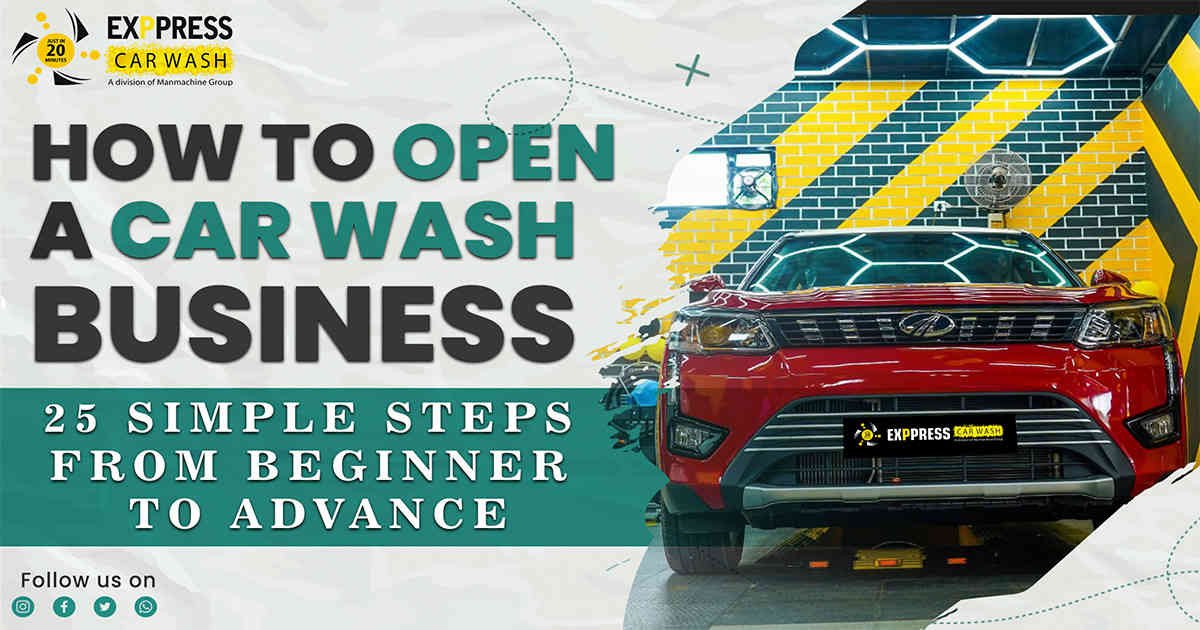
Credit: www.exppresscarwash.com

Credit: www.carwash.com
13. Run a Controlled Soft Opening
Do not make the first day your first test of every system. Run a soft opening with limited hours or controlled traffic.
Test:
- Payment terminals.
- Membership enrollment and cancellation.
- Pumps, hoses, brushes, dryers, and vacuums.
- Chemical dilution and pressure.
- Water-reclaim equipment.
- Drainage during heavy water flow.
- Queue signage.
- Emergency stops.
- Cameras and intercoms.
- Staff handoffs.
- Refunds and service recovery.
Use real vehicles with different sizes and conditions. Measure the time from entry to exit, identify bottlenecks, and confirm that employees can safely manage peak flow. Correct defects before a large promotional launch.
14. Manage Daily Operations With Measurable Standards
Track performance from the first week. Revenue alone does not show whether the business is healthy.
Useful metrics include:
- Cars washed per day and per labor hour.
- Average transaction value.
- Revenue by service.
- Membership count and churn.
- Fleet revenue and payment delays.
- Chemical cost per vehicle.
- Water and energy use per vehicle.
- Equipment downtime.
- Refunds and rewash rates.
- Customer complaints.
- Review volume and rating trends.
- Conversion rate from first visit to membership.
- Queue time during peak periods.
Create opening, shift-change, maintenance, and closing checklists. Inspect high-wear parts before failure. Preventive maintenance is usually less expensive than emergency repair, lost revenue, and disappointed customers.
Keep a spare-parts inventory appropriate to your equipment. Ask the supplier which components commonly fail and how long replacements take to arrive. Record every repair, its cause, downtime, and cost so you can identify recurring problems.
15. Plan for Weather, Seasonality, and Competition
Weather affects demand, staffing, chemical performance, traffic safety, and equipment reliability. Build a seasonal plan for rain, snow, freezing temperatures, extreme heat, pollen, dust, and drought restrictions.
Possible actions include:
- Adjusting labor by forecast and historical demand.
- Using weather-triggered promotions carefully.
- Protecting exposed pipes and equipment.
- Posting wet-floor and slip warnings.
- Offering interior-focused services during poor exterior-wash conditions.
- Monitoring local water restrictions.
- Maintaining a cash reserve for slow periods.
Competition may respond to your opening with lower prices, new memberships, or longer hours. Compete through reliability, convenience, transparent service, clean facilities, fast problem resolution, and consistent quality—not price alone.
Benefits and Challenges of Opening a Car Wash
Potential benefits
- Repeat demand from vehicle owners.
- Membership and subscription opportunities.
- Additional revenue from detailing, vacuums, and fleet accounts.
- Multiple possible business models.
- Opportunities to automate payment and routine operations.
- Potential to expand after proving demand at one site.
Common challenges
- High property and infrastructure costs.
- Complex water and wastewater requirements.
- Equipment breakdowns and long repair delays.
- Weather-related revenue swings.
- Labor turnover and inconsistent quality.
- Customer claims involving pre-existing vehicle damage.
- Traffic, noise, drainage, and neighborhood concerns.
- Price competition and discount dependence.
- Utility costs that rise with volume.
- Environmental or water restrictions.
The best response is preparation: verify the site, document procedures, maintain equipment, insure the operation properly, and keep enough working capital to handle a slow month or major repair.
Frequently Asked Questions
How much does it cost to open a car wash?
The amount depends on the model, land or lease terms, construction, equipment, utility connections, permits, labor, and working capital. A mobile detailing business may require far less capital than a new automatic or conveyor facility. Obtain a site-specific construction budget and equipment quotes before relying on any generic cost range.
Is a car wash profitable?
A car wash can be profitable when it achieves sufficient volume, controls labor and utility costs, prices services correctly, and minimizes downtime. Profitability is not guaranteed. Build a break-even model using realistic wash volume, seasonal demand, rent, debt payments, repairs, payroll, chemicals, and taxes.
What permits are needed for a car wash?
Requirements commonly include business registration, zoning approval, building and plumbing permits, signage approval, water-service authorization, wastewater or stormwater approvals, and safety inspections. The exact list depends on your location, property, discharge method, and equipment.
Which car wash model is best for a beginner?
There is no universally best model. Mobile detailing can reduce property exposure but introduces travel and wastewater challenges. Self-service may reduce labor but still requires equipment maintenance and site security. Automatic and conveyor systems can increase capacity but require more capital and technical planning. Choose the model that matches your capital, skills, market, and risk tolerance.
How long does it take to open a car wash?
A mobile operation may open relatively quickly if licensing and equipment are straightforward. A fixed-site facility can take much longer because of property due diligence, zoning, design, construction, utility work, environmental approvals, and equipment installation. Do not announce an opening date until the permitting and construction schedule has realistic contingencies.
Can I operate a car wash from my home?
Usually, a home-based operation faces restrictions involving zoning, customer traffic, commercial vehicles, water use, chemical storage, noise, parking, and wastewater. Check with your local planning department before operating from a residential property.
How can I reduce water use?
Use properly maintained equipment, automatic chemical dosing, efficient nozzles, leak inspections, controlled spray times, and water-reclaim systems where appropriate. Confirm that any reclaim system meets equipment and local regulatory requirements. Water savings should not create poor cleaning results or unsafe wastewater handling.
What is the most common mistake new owners make?
Many new owners focus on equipment and overlook site access, drainage, permits, maintenance response, and working capital. A technically impressive wash can still fail if customers cannot enter safely, queues block the road, or one broken component stops the operation during peak demand.
Final Checklist Before Opening
Confirm that you have:
- A tested business model and target customer.
- A realistic site and traffic-flow plan.
- Written zoning and permit requirements.
- Utility and wastewater approvals.
- Itemized equipment and construction quotes.
- Insurance appropriate for customer vehicles and employees.
- Chemical and workplace-safety procedures.
- Trained staff and written operating checklists.
- Tested payment and membership systems.
- A maintenance and spare-parts plan.
- A launch marketing schedule.
- Enough working capital for slow periods and repairs.
- A system for tracking revenue, costs, complaints, and downtime.
Conclusion
Learning how to open a car wash business is only the first step. The durable advantage comes from choosing a viable site, complying with water and safety rules, designing efficient vehicle flow, pricing services from real costs, and delivering the same quality on every visit.
Start with due diligence rather than equipment purchases. Validate demand, obtain written approval for the intended use, build conservative financial projections, and test the operation before scaling marketing. If your numbers still work after realistic labor, utility, repair, seasonal, and compliance costs, you will have a much stronger foundation for a reliable car wash business.








