Black Friday deals are live on Amazon · limited-time discounts, grab them before they’re gone
Grab the deals


ByMax Lee
How to Use a Touchless Car Wash: Ultimate Guide for a Sparkling Clean
A touchless car wash is one of the quickest ways to remove road film, dust, salt, and loose grime without brushes or spinning cloth strips contacting your paint. Instead, the system uses detergent, high-pressure water, and air dryers.
That does not make every touchless wash completely risk-free or perfectly effective. Strong chemicals can reduce wax protection, high-pressure water can expose loose trim, and baked-on contamination may remain. Used correctly, however, a touchless wash is a practical maintenance option—especially when you want to avoid the dirt transfer and fine marring that can occur with poorly maintained brushes. You can also read our guide on best soap for touchless car wash top picks for sparkling clean cars.
This guide explains how to use a touchless car wash, which wash options are worth choosing, how to prepare your vehicle, and what to do after you leave the bay.
What Is a Touchless Car Wash?
A touchless car wash cleans the vehicle without physical contact from brushes, mitts, or cloth strips. A typical automatic system uses several stages:
- Pre-rinse: High-pressure water loosens dust and surface grit.
- Detergent application: A car-wash chemical is sprayed over the vehicle.
- Pressure wash: Water removes loosened contamination.
- Optional treatments: These may include a wheel cleaner, underbody rinse, sealant, or wax.
- Final rinse: Cleaner and remaining residue are flushed away.
- Drying: High-powered air blowers remove much of the water.
The lack of contact is the main attraction. No wash brush can pick up grit from another vehicle and drag it across your paint. However, touchless systems depend heavily on chemical strength and water pressure, so cleaning results vary by machine maintenance, detergent quality, and how dirty the vehicle is. You can also read our guide on can i use touchless car wash to wash black car.
Is a Touchless Car Wash Safe for Your Paint?
For routine cleaning, a touchless wash is generally a lower-contact option than an automatic wash with shared brushes. It can help reduce the risk of swirl marks caused by contaminated wash media.
It is not completely risk-free:
- High-pressure water may worsen loose trim, damaged weather stripping, or lifting decals.
- Strong alkaline or acidic chemicals can shorten the life of wax or some sealants.
- A touchless wash may leave behind bonded grime, road tar, tree sap, or bug residue.
- Driving a visibly muddy vehicle through any wash can move abrasive particles across the surface, even without brushes.
- Air blowers can expose loose badges, mirror caps, or damaged paint edges.
The safest approach is to inspect the vehicle first. If a bumper cover is loose, paint is peeling, or a roof rack is not firmly secured, fix the problem before entering the wash. You can also read our guide on are brush car washes bad for your car.
Touchless Car Wash Benefits and Limitations
Main benefits
- No shared brushes or cloth strips touch the paint.
- Convenient when you need a fast maintenance wash.
- Useful for removing dust, road salt, and fresh mud.
- Usually suitable for vehicles with factory paint, vinyl graphics, or properly installed clear protection.
- Less hands-on effort than washing at home.
- Often includes underbody rinsing, which is useful after driving on salted roads.
Important limitations
- It may not remove heavy mud or stuck-on road film completely.
- Chemical cleaners can reduce existing wax protection.
- It does not replace paint decontamination or careful hand washing.
- Drying may be incomplete around mirrors, grilles, emblems, and door handles.
- Automatic packages can include extras that provide little benefit for a lightly dirty vehicle.
A touchless wash is best viewed as efficient maintenance, not paint correction or a full detailing service.
Before You Enter: Prepare Your Vehicle
A few minutes of preparation can prevent damage and improve the result.
1. Inspect for loose or damaged parts
Check the following areas:
- Loose bumpers, trim, or body cladding
- Cracked or lifting windshield glass
- Peeling paint or vinyl
- Loose license plates
- Damaged side mirrors
- Unsecured hood or roof accessories
- Exposed wiring or aftermarket equipment
If a part could move under strong water pressure, use a different cleaning method until it is secured.
2. Close and secure the vehicle
Before joining the queue:
- Close every window and sunroof.
- Lock the doors if the wash instructions recommend it.
- Retract or remove a removable antenna.
- Fold the mirrors only if the facility permits it and the machine is designed for that position.
- Remove flags, magnetic signs, loose ornaments, and temporary exterior accessories.
- Make sure the fuel door and trunk are fully closed.
Do not remove factory-installed emblems or fixed parts simply because they look delicate. Follow the vehicle manufacturer’s instructions instead.
3. Remove loose debris when practical
Large clumps of mud, packed snow, or gravel should be removed before the wash. A touchless system is more effective when it is not being asked to dissolve an entire layer of compacted contamination. You can also read our guide on best car wash detergent for pressure washer top picks for sparkling clean.
Avoid brushing dry, gritty dirt across the paint. If you are cleaning at home before visiting the wash, rinse first and use appropriate wash media rather than a dry towel.
4. Check the weather and temperature
A wash is less useful if water will immediately freeze on the vehicle. In cold weather, pay particular attention to:
- Door seals
- Door handles
- Mirrors
- Trunk and liftgate seams
- Fuel-door hinges
- Brake components
If temperatures are below freezing, choose a facility with strong drying equipment and drive long enough afterward to circulate heat and evaporate remaining water. Do not force frozen doors or mirrors. You can also read our guide on are touchless car washes safe for ceramic coating.
How to Use a Touchless Car Wash: Step-by-Step
Step 1: Choose the correct facility
Look for a clearly marked touchless automatic bay rather than a soft-cloth or brush tunnel. Signs may use terms such as:
- Touch-free
- Touchless
- No-contact
- High-pressure wash
If the wash has rails, a conveyor, or an attendant, read the operating instructions before entering. Different systems use different gear settings and positioning procedures.
Step 2: Select a wash package
For a normally dirty vehicle, a package that includes the following is usually sufficient:
- Pre-rinse
- Detergent wash
- High-pressure rinse
- Drying
Consider adding an underbody rinse after winter driving or exposure to heavily salted roads. A spray-on sealant or wax can add temporary water beading, but it should not be treated as a replacement for a durable paint sealant or ceramic coating. You can also read our guide on are car washes tax deductible.
A wheel-cleaning option may help with brake dust, although deeply baked-on deposits often require separate wheel care. Avoid automatically choosing the most expensive package unless you understand what each upgrade does.
Step 3: Pay and read the bay instructions
Payment may be handled at a kiosk, through an attendant, or in a mobile application. After paying, check for instructions about:
- Whether to stop before the tracks
- Whether to put the vehicle in neutral
- Whether to keep the engine running
- Whether to release the steering wheel
- Whether to keep the brakes off
- When to advance or exit
The facility’s instructions take priority because the conveyor and positioning system may differ from another wash you have used.
Step 4: Position the vehicle carefully
Drive slowly into the bay and align the vehicle with the marked centerline. Stop where the signal, attendant, or wheel guide indicates.
Do not roll forward while the wash equipment is moving. If the vehicle is placed on a conveyor, follow the posted instructions precisely. In many systems, the driver must remain in neutral and keep the foot off the brake, but never assume—confirm from the signs.
Step 5: Let the pre-rinse loosen contamination
The first spray is designed to remove loose grit and soften road film. Keep the vehicle stationary and do not open the doors or windows.
The pre-rinse is important because detergent works more effectively when the surface has already been wetted. It also reduces the amount of abrasive material left on the paint before the main cleaning stage.
Step 6: Allow the detergent to dwell
The wash chemical needs time to work. Do not interrupt the cycle or drive away while foam or detergent remains on the vehicle.
Touchless detergents are formulated to break down oily road film and loosen dirt without scrubbing. Their effectiveness depends on concentration, temperature, spray coverage, and dwell time. A neglected or heavily contaminated vehicle may still need a hand wash afterward.
Step 7: Stay in position during the pressure rinse
The high-pressure rinse removes the detergent and loosened grime. Remain inside the vehicle unless the facility specifically tells you otherwise.
Do not use the windshield wipers during the wash. Wiper blades can trap grit and drag it across the glass. Keep your hands away from windows and mirrors until the cycle ends.
Step 8: Let the dryer finish
Air blowers remove water from broad panels and push it out of seams. Let the full drying cycle run before exiting.
No automatic dryer removes every drop. Water commonly remains around:
- Side mirrors
- Door handles
- Grilles
- Badges and emblems
- License plates
- Window trim
- Hatchback and trunk seams
If the facility provides a clean, dedicated drying towel, you may wipe these areas after leaving the bay. Do not use a towel that is visibly dirty or has fallen on the ground.
Step 9: Exit slowly and inspect the result
Follow the exit signal and drive away carefully. In a safe parking area, inspect:
- Lower doors and rocker panels
- Rear bumper
- License plate area
- Mirrors
- Wheels
- Windshield and side glass
If a small amount of grime remains, do not immediately scrub it with a dry towel. Rinse or clean the affected area with suitable lubrication first.
Which Touchless Wash Add-Ons Are Worth It?
| Add-on | When it can help | What to expect |
|---|---|---|
| Undercarriage rinse | After road salt, mud, or winter driving | Flushes exposed underside areas but is not a full underbody detail |
| Wheel cleaner | Light to moderate brake dust | May not remove baked-on deposits |
| Spray wax or sealant | You want short-term water beading | Temporary protection; durability varies |
| Spot-free rinse | Hard-water areas or dark paint | Helps reduce mineral spotting |
| Extra drying time | Mirrors, seams, and cold weather | Reduces leftover water but may not eliminate it |
| Tire dressing | Appearance-focused cleaning | Can sling onto paint if applied poorly |
A common mistake is paying for “wax” while expecting it to repair faded paint or provide long-term protection. These products are generally brief, surface-level treatments.
How Often Should You Use a Touchless Car Wash?
Use a touchless wash whenever the vehicle has enough surface contamination to justify cleaning, particularly after:
- Rain followed by road dust
- Winter salt exposure
- Long highway trips
- Fresh mud or construction-zone dust
- Bird droppings or insect buildup
Frequency depends on climate, parking conditions, mileage, and paint protection. Regular light cleaning is usually easier on the vehicle than allowing grime and salt to accumulate for a long period.
Bird droppings, bug residue, tree sap, and fuel spills should be removed promptly because they can etch or stain clear coat. A touchless automatic cycle may not remove them fully, so targeted cleaning may be necessary.
Touchless Washes and Ceramic Coatings, Wax, and Paint Protection Film
A touchless wash is commonly compatible with ceramic coatings, paint protection film, and factory clear coat, but compatibility depends on the products used by the facility and the condition of the protection.
Keep these points in mind:
- Strong detergents can reduce the slick feel of wax or a spray sealant.
- A coating may still look less hydrophobic because of road film, not because it has failed.
- High-pressure spray should not be directed unnecessarily at lifted film edges or damaged coating.
- Do not use a facility’s “wax” option as a substitute for the maintenance product recommended by your coating manufacturer.
- Heavily contaminated coated vehicles may still require a careful contact wash.
For paint-protection maintenance, use the wash as a rinse-and-clean step, then follow the product manufacturer’s care instructions.
How to Deal With Stubborn Dirt Afterward
Touchless systems are strongest at removing loose and moderately bonded contamination. They are less reliable against:
- Tree sap
- Road tar
- Dried insects
- Brake dust
- Water spots
- Industrial fallout
- Thick mud
- Greasy fingerprints
Do not attack these spots with a dry paper towel. Use a clean microfiber towel and an appropriate, paint-safe cleaner after the surface has been rinsed. For more complete home care, follow a controlled low-risk wash routine that keeps dirty wash media away from clean paint.
If contamination remains after several normal washes, the vehicle may need chemical decontamination, clay treatment, or professional detailing rather than more aggressive automatic-wash chemicals.
Touchless vs. Brush Wash vs. Hand Wash
| Method | Paint contact | Cleaning ability | Main advantage | Main drawback |
|---|---|---|---|---|
| Touchless automatic | None from brushes or cloth | Good for loose and moderate dirt | Fast, low-contact cleaning | May leave bonded grime |
| Brush or soft-cloth tunnel | Yes | Often stronger on heavy film | Convenient and thorough in some facilities | Shared media may create marring |
| Careful hand wash | Yes | Highest control | Best for detailed cleaning | Requires time, technique, and clean equipment |
| Self-service pressure bay | Usually no automatic contact | Depends on operator | More control over rinsing | Brush wands may be contaminated |
No method is perfect for every situation. Touchless is often a sensible maintenance choice when avoiding shared contact is your priority. A properly performed hand wash generally offers more control when the vehicle needs a deeper clean.
Water, Chemicals, and Responsible Washing
Automatic wash systems can capture or manage wastewater differently from washing a vehicle in a driveway. Driveway runoff may carry detergent, oil, brake dust, and road contaminants into storm drains or waterways. The U.S. Environmental Protection Agency provides general information about stormwater pollution and responsible water management.
Follow local rules and facility instructions. Never pour used automotive chemicals onto soil or into a storm drain, and do not assume that a “green” package means every environmental impact has been eliminated.
Common Mistakes to Avoid
- Entering with loose trim, a damaged antenna, or unsecured accessories
- Choosing a brush tunnel when you intended to use a no-contact wash
- Selecting every add-on without knowing its purpose
- Driving away before the dryer finishes
- Wiping gritty paint with a dry towel
- Using a dirty towel on glass or body panels
- Expecting touchless cleaning to remove tar and tree sap
- Using a high-pressure spray directly against a lifted decal or loose seal
- Washing immediately before a hard freeze without drying door seams
- Assuming a spray wax provides long-term paint protection
Frequently Asked Questions
Does a touchless car wash scratch paint?
Because no brush or cloth contacts the vehicle, a touchless wash removes one common source of wash-induced marring. It cannot guarantee zero damage. Existing loose paint, damaged trim, abrasive contamination, or excessive pressure can still create problems.
Is a touchless wash better than a brush wash?
It depends on your priority. Touchless washing generally offers less physical contact, while a brush or cloth wash may remove heavy road film more effectively. A well-maintained hand wash provides the greatest control, but it requires more time and proper technique.
Can I use a touchless wash on a ceramic-coated vehicle?
Usually, yes, provided the vehicle is in good condition and the wash chemicals are compatible with the coating manufacturer’s care guidance. Strong detergents may reduce temporary water behavior or shorten the life of topper products.
Will a touchless car wash remove all dirt?
No. It usually removes loose dirt, dust, salt, and ordinary road film. Tar, sap, dried insects, mineral spots, and heavy brake dust may need separate treatment.
Should I choose the wax option?
Choose it if you want temporary water beading and understand that it is not a durable coating. If your vehicle already has a wax, sealant, or ceramic coating, use the maintenance products recommended for that protection system.
How long does a touchless car wash take?
The active wash commonly takes only a few minutes, but the total visit depends on the queue, payment process, and drying cycle. Follow the bay’s signals rather than leaving based on a fixed time estimate.
Can I use a touchless wash in winter?
Yes, but use extra care in freezing conditions. Select strong drying when available, remove water from door and trunk seams, and avoid forcing frozen handles or mirrors.
Can I use a touchless wash on a black car?
Yes. Black paint shows water spots, dust, and minor marring more clearly than lighter colors, so a touchless wash can be useful for reducing contact. Inspect the finish after drying and address remaining mineral spots with a suitable product rather than dry-wiping them.
Images
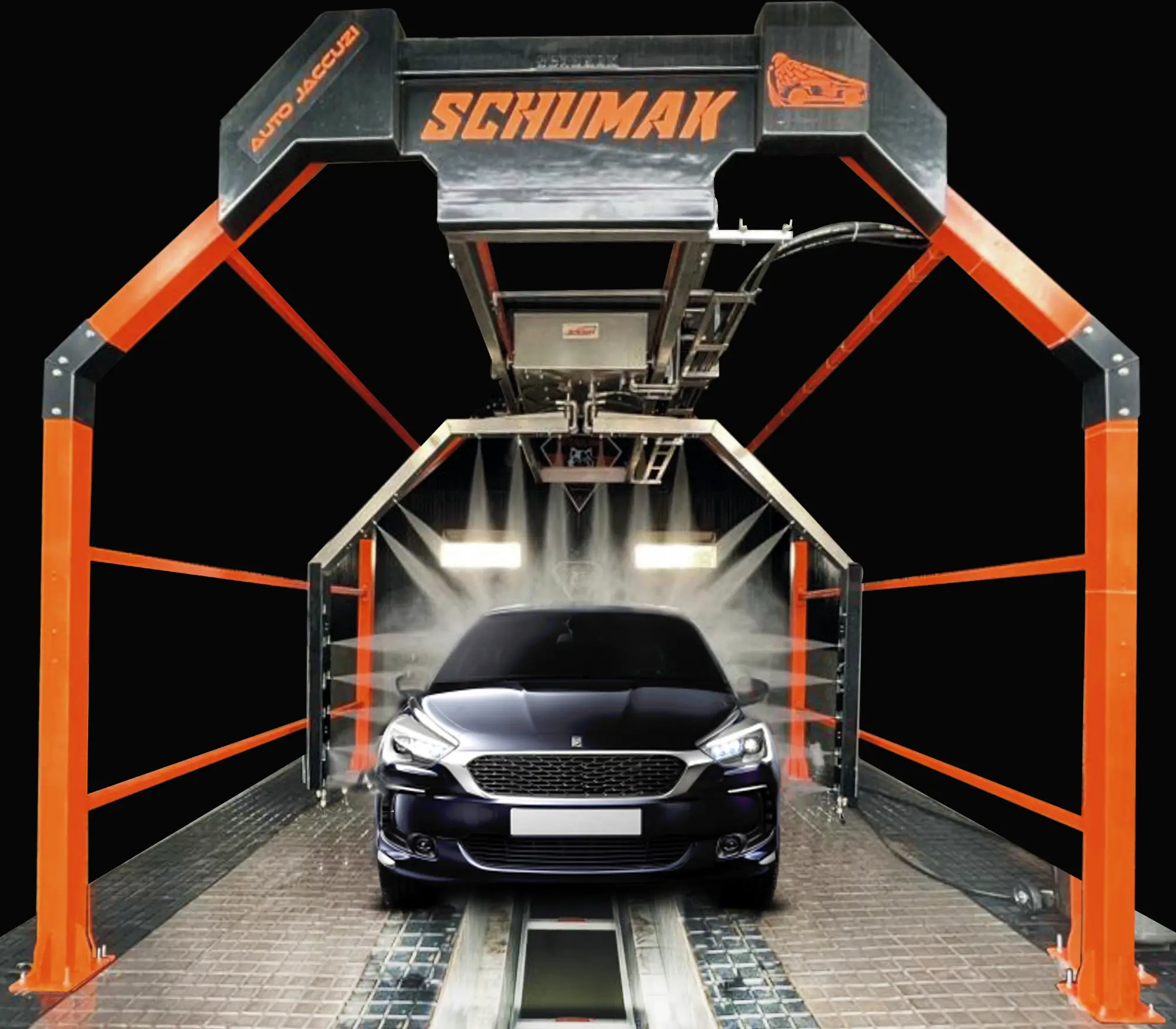
Air blowers remove water after the no-contact wash cycle.
Credit: rollerreiner.org

The vehicle should be centered and stationary while the system operates.
Credit: www.nxtmotors.com
Final Takeaway
Using a touchless car wash is straightforward: secure the vehicle, remove loose accessories, select a suitable package, follow the bay’s positioning instructions, remain stationary through the entire cycle, and allow the dryer to finish.
The method is especially useful for routine removal of dust, road salt, and light grime without shared brushes touching the paint. For the best result, recognize its limits. Stubborn contamination, paint protection maintenance, and damaged trim may require a careful hand wash or professional attention.
Choose the no-contact option when low physical contact matters most, inspect the vehicle before entering, and handle any remaining spots with clean, paint-safe methods.








