Black Friday deals are live on Amazon · limited-time discounts, grab them before they’re gone
Grab the deals

ByMax Lee
How to Wash a Black Car Without Water Spots: Expert Tips Revealed
Black paint can look spectacular when it is clean—and show every mineral ring, smear, and towel mark when it is not. The key to washing a black car without water spots is controlling three things: heat, contamination, and drying time.
Use clean washing tools, work in the shade, rinse thoroughly, and dry before water evaporates on the paint. The process below also explains how to handle hard water, rain spots, waterless washing, and stains that a normal wash cannot remove. For more on this, see our guide on oklahoma antique car registration guide for 25 year.
Why Black Cars Show Water Spots So Easily
Water spots form when droplets dry on the paint and leave behind dissolved minerals. Tap water may contain calcium, magnesium, silica, and other mineral content. As the water evaporates, those solids remain as pale rings or irregular marks.
As USGS water guidance explains, water hardness is associated primarily with dissolved calcium and magnesium. The harder your local water, the more carefully you need to manage the final rinse and drying stages.
Black paint does not necessarily create more water spots than lighter paint. It simply provides more contrast, so marks that are nearly invisible on a white car can be obvious on a black one. Dark paint also makes:
- Dust and pollen easier to see
- Microfiber streaks more noticeable
- Wash-induced swirl marks more apparent
- Dried soap residue look like cloudy patches
- Grease and fingerprints stand out against the gloss
There are two broad types of water spots:
- Mineral deposits: A raised or chalky residue sitting on top of the clear coat.
- Etching: A spot that has chemically or physically marked the clear coat after remaining on the surface, often in heat.
Fresh deposits can often be removed safely with a proper wash or water-spot remover. Etching may require light machine polishing, so prevention is much easier than correction.

Shade, controlled rinsing, and immediate drying are the foundations of spot-free washing.
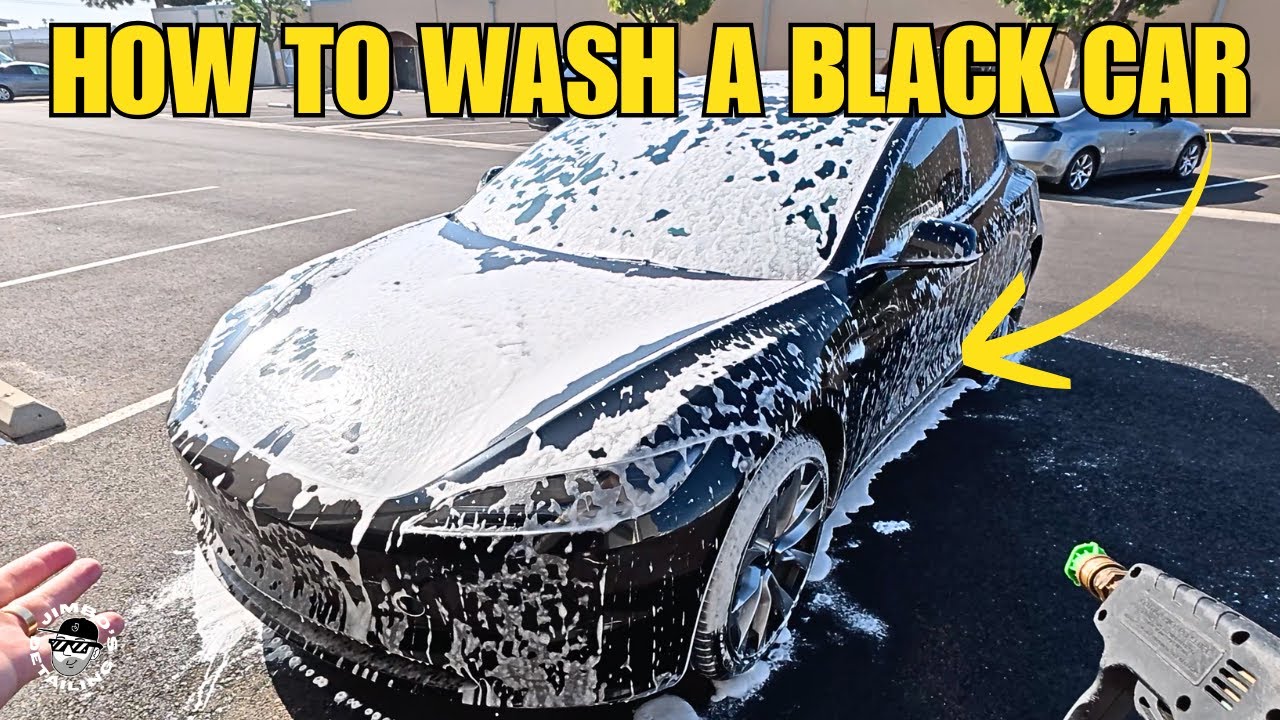
Credit: www.youtube.com
What You Need Before Washing
Good results depend as much on preparation as technique. Gather everything before spraying the car so you are not searching for towels while water is drying on the panels.
Recommended supplies
- pH-balanced automotive shampoo
- Two clean wash buckets
- Grit guards, if available
- A microfiber wash mitt
- A separate mitt or brush for wheels and tires
- A hose with a gentle spray nozzle
- A plush drying towel or automotive air dryer
- Several clean, edgeless microfiber towels
- A drying aid, quick detailer, or spray sealant
- A dedicated glass towel
- Wheel cleaner suitable for your wheel finish
- Optional: deionized-water filter or spot-free rinse system
A microfiber mitt is generally safer than a household sponge because its fibers can hold loose grit away from the paint. However, microfiber is not automatically paint-safe. A mitt contaminated with sand or brake dust can still scratch a black finish.
Wash microfiber separately from household laundry. Avoid fabric softener and dryer sheets because they can reduce absorbency and leave residues. Retire any towel that feels stiff, contains trapped grit, or has been used on wheels or the engine bay.
For a more detailed paint-safe bucket arrangement, use this paint-friendly wash setup as a reference.
Choose the Right Location and Water
Wash in shade, not direct sun
The ideal location is a cool, shaded area with good airflow. Avoid washing hot panels, even if the air temperature feels comfortable. Black paint absorbs heat quickly, and water can evaporate before you have time to rinse or dry it.
Early morning or late afternoon can work well, but shade is more important than the clock. Do not wash immediately after driving if the hood, roof, wheels, or brakes are still hot.
Consider your water quality
If your water leaves white residue on faucets or glass, it may also leave spots on your car. You have several options:
- Use a deionized or filtered final rinse.
- Fit a spot-free rinse system to the hose.
- Use softened water where appropriate.
- Keep a clean drying towel ready and remove water immediately.
- Wash one section at a time if the water dries quickly.
Bottled water is usually impractical for a full vehicle and does not automatically guarantee a mineral-free rinse. A properly maintained filtration system is more consistent.
Water quality matters, but it is not the only factor. Even relatively clean water can leave spots if it dries on hot paint, mixes with soap, or picks up dust from the panel.
The Correct Way to Wash a Black Car
1. Rinse loose dirt first
Start at the roof and work downward with a gentle but thorough rinse. The goal is to remove loose grit before the wash mitt touches the paint.
Pay particular attention to:
- The lower doors
- Rear bumper
- Wheel arches
- Rocker panels
- License-plate area
- Areas behind the wheels
Do not use a strong pressure stream so close that it drives grit across the clear coat. A pressure washer can be useful, but distance and nozzle choice matter. Keep the nozzle moving and avoid forcing water into damaged trim, door seals, sensors, or loose badges.
2. Clean the wheels separately
Wheels and tires contain some of the dirtiest material on the vehicle, including brake dust, road film, and oily residue. Clean them before the body, using separate tools and buckets.
Never take a wheel brush or wheel mitt back to the paint. If the wheels are hot, let them cool before applying cleaner.
3. Wash from top to bottom
Fill one bucket with the recommended amount of car shampoo and another with plain rinse water. Soak the mitt in the shampoo solution, wash a small section, then rinse the mitt thoroughly before collecting more soap.
Use straight, overlapping passes rather than aggressive circles. Start with the roof, glass, and upper pillars, then move to the hood, trunk, upper doors, and lower panels.
A sensible order is:
- Roof
- Windows and pillars
- Hood and trunk
- Upper side panels
- Front and rear ends
- Lower doors and rocker panels
Use a separate tool for the dirtiest lower sections. If the mitt falls on the ground, set it aside immediately; do not rinse it and continue using it on black paint.
4. Rinse before soap dries
Do not wait until the entire car is soaped before rinsing if the weather is warm or windy. Rinse completed sections as needed, keeping the surface wet until the final rinse.
For the final rinse, remove the spray nozzle and allow water to flow gently over the paint. This “sheeting” action can carry much of the remaining water off the panels, leaving fewer droplets to dry.
Drying: The Most Important Water-Spot Step
A perfect wash can still produce spots if the car is left wet. Drying should begin immediately after the final rinse.
Use a large, clean drying towel
Place a plush microfiber drying towel flat on the panel and gently pull it across the surface. You can also pat or blot, particularly on delicate trim. Avoid pressing hard or repeatedly rubbing a nearly dry panel.
For large vehicles, use more than one towel. A towel that becomes saturated or picks up visible dirt should be replaced rather than dragged across the next panel.
Use a drying aid correctly
A compatible quick detailer or drying aid can add lubrication and help the towel glide. Lightly mist the product onto a wet panel or onto the towel according to its label. Do not flood the paint with product; excess detailer can create streaks, especially on black finishes.
A spray sealant can provide additional protection, but it does not make the paint immune to mineral deposits. It may help water release more easily, yet you still need to dry the vehicle promptly.
Blow water out of crevices
Water hidden in mirrors, grilles, emblems, door handles, window trim, and fuel doors can run back onto clean paint later. Use a dedicated car dryer or a clean, filtered source of compressed air.
If you use a compressor, moisture in the airline can defeat the purpose. Review air-system maintenance basics before using compressed air around paint, and never direct dirty or oily exhaust air at the vehicle.
Dry these areas before the final towel pass:
- Side mirrors
- Door and trunk gaps
- Badges and grilles
- Roof rails
- Tail-light seams
- Fuel-door edges
- Wheel spokes and lug areas
How to Wash a Black Car With Minimal Water
A waterless wash can be appropriate when the vehicle has light dust or fingerprints but no heavy mud, sand, or road grit. It is not a safer substitute for a traditional wash when the paint is visibly dirty.
Use a waterless wash only for light contamination
Work in a shaded location. Spray plenty of waterless-wash solution onto a small section, allow it to soften the contamination, and wipe in one direction with a clean microfiber towel. Turn the towel to a fresh side for each pass.
Use several towels rather than trying to clean the entire car with one. If the surface feels gritty, stop and perform a conventional rinse wash instead.
Do not use a waterless method on:
- Mud-caked panels
- Sand-covered paint
- Heavy winter salt
- Thick road film
- Fresh bird droppings without pre-soaking
- A vehicle that has been driven through construction dust
The less water approach reduces runoff, but it does not eliminate the need for lubrication or safe towel technique. The environmental benefit also depends on the product and how you dispose of contaminated towels and rinse water; general EPA water-conservation information provides useful context for responsible water use.
What to Do About Existing Water Spots
First, wash and dry the vehicle normally. You need to remove loose dirt before treating a deposit.
If the spots are fresh
Try the least aggressive option first:
- Wash and dry the affected panel.
- Apply a dedicated automotive water-spot remover to a cool surface.
- Follow the product’s dwell time and dilution instructions.
- Rinse or wipe it away as directed.
- Inspect the panel under good lighting.
- Protect the area with wax, sealant, or another compatible product.
Do not leave an acidic spot remover on the paint longer than the label allows. Test it on an inconspicuous area first, especially on repainted panels, matte finishes, plastic trim, or aftermarket coatings.
If the spots are etched
If the surface feels smooth but the marks remain after chemical treatment, the clear coat may be etched. At that point, repeated scrubbing usually creates more risk than benefit.
A fine finishing polish may remove light etching, but deeper marks can require machine polishing by an experienced detailer. Wet sanding or aggressive compounding should not be a first attempt on a valuable black vehicle because clear-coat thickness is limited.
Common Mistakes That Create Spots and Swirls
Washing in direct sun
Heat accelerates evaporation and gives minerals more opportunity to bond to the paint. Move the vehicle into shade or wash one small section at a time.
Using dish soap or household cleaners
Dish detergent is not formulated for automotive paint protection, and household cleaners may contain solvents or ingredients unsuitable for clear coat, trim, or coatings. Use a dedicated automotive shampoo.
Letting the car air-dry
Air drying is only reliably spot-free when the rinse water is essentially mineral-free and the surface is uncontaminated. For ordinary tap water, drying is essential.
Reusing dirty towels
A towel that looks clean can still hold fine grit. Keep separate, clearly identified towels for paint, glass, wheels, tires, and interior surfaces. This is especially important when cleaning glass; products and techniques used for vehicle glass care should not be transferred to painted panels.
Applying too much product
Excess soap, detailer, wax, or sealant can leave a hazy film that resembles water spots. Measure shampoo according to the label and use thin, even applications.
Pressure-washing sensitive areas
Avoid blasting badges, loose trim, damaged paint, convertible-top seams, weather stripping, cameras, and sensors. Underbody cleaning also deserves caution; keep high-pressure water away from vulnerable components and review these underbody cleaning precautions before directing a powerful stream beneath the vehicle.
A Practical Spot-Free Wash Routine
| Stage | Best practice | Main purpose |
|---|---|---|
| Set up | Gather clean mitts, towels, shampoo, and drying aid | Prevents delays while water evaporates |
| Cool the vehicle | Work in shade with cool panels | Slows premature drying |
| Pre-rinse | Start high and rinse downward | Removes loose grit |
| Wheels | Use dedicated tools | Keeps brake dust off paint |
| Contact wash | Use two buckets and light pressure | Reduces wash marks |
| Final rinse | Rinse thoroughly and sheet water | Leaves fewer droplets |
| Dry | Use clean microfiber immediately | Prevents mineral deposits |
| Crevices | Blow out trapped water | Stops later drips |
| Protect | Apply a compatible sealant or coating | Makes future cleaning easier |
How Often Should You Wash a Black Car?
Wash when contamination is present rather than waiting for a thick layer of dirt. A lightly dusty car may only need a careful maintenance wash, while a vehicle exposed to road salt, bird droppings, tree sap, or industrial fallout needs attention sooner.
Remove bird droppings and insect residue promptly. Their chemistry can stain or etch clear coat, particularly when the panel is hot. Soak the material with a lubricating cleaner instead of scraping it dry.
A ceramic coating, paint sealant, or wax can make maintenance easier by reducing how strongly dirt adheres. None is a substitute for safe washing, and none can prevent all water spots if mineral-rich water is allowed to dry repeatedly on the surface.

The towel should glide lightly over the panel rather than being pressed and dragged through moisture and grit.
Credit: www.reddit.com
Frequently Asked Questions
Can I wash a black car in the sun?
It is possible, but it is much harder to prevent spots because water and shampoo dry quickly on hot paint. Shade is the safer choice. If shade is unavailable, cool the vehicle first, wash small sections, and rinse and dry each section immediately.
Is filtered water enough to prevent water spots?
Filtered or deionized water can reduce mineral residue, but results depend on the system’s condition and the water’s starting quality. You still need to remove water from the vehicle before it evaporates, especially on black paint.
Should I dry a black car with a chamois?
A modern microfiber drying towel is generally easier to inspect, wash, and replace. Whatever material you use, it must be clean, soft, and free of trapped grit. Do not drag a towel across visibly dirty paint.
Can I use a leaf blower to dry the car?
Yes, provided the blower is clean and does not blow dust, leaves, or debris onto the paint. A filtered car dryer or clean compressed-air system is preferable. Blow water from crevices before the final towel pass.
How do I remove white spots without scratching?
Wash the panel first, then use a purpose-made water-spot remover with a clean microfiber towel. Avoid dry scrubbing, abrasive household powders, and aggressive compound. If chemical treatment does not work, the marks may be etched and require polishing.
Is a ceramic coating a permanent solution?
No. A ceramic coating can improve water behavior and simplify maintenance, but it can still collect mineral deposits and become contaminated. Use the coating manufacturer’s shampoo and maintenance instructions, and dry the car after every wash.
Can I wash a black car without water?
Yes, but only when the vehicle has light dust or fingerprints and you use a properly lubricated waterless-wash product with multiple clean towels. Heavy dirt should be rinsed away first. Wiping gritty paint with too little product can create scratches and swirl marks.
Conclusion
The most reliable way to wash a black car without water spots is to prevent water from drying on the paint. Work in the shade, use a clean two-bucket method, rinse thoroughly, and begin drying immediately. Use separate tools for wheels and paint, blow water from crevices, and treat existing deposits with the least aggressive method that works.
If your local water is hard, invest in a spot-free final rinse or plan to dry each panel as soon as it is rinsed. That small change, combined with clean microfiber towels and gentle washing pressure, will keep black paint clearer, glossier, and far less prone to mineral spotting.








