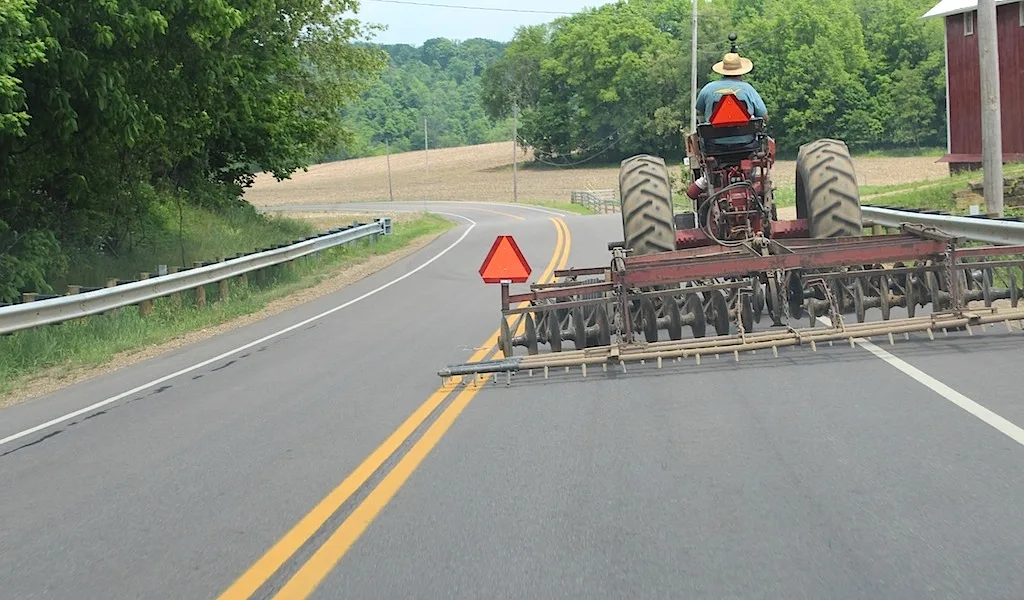
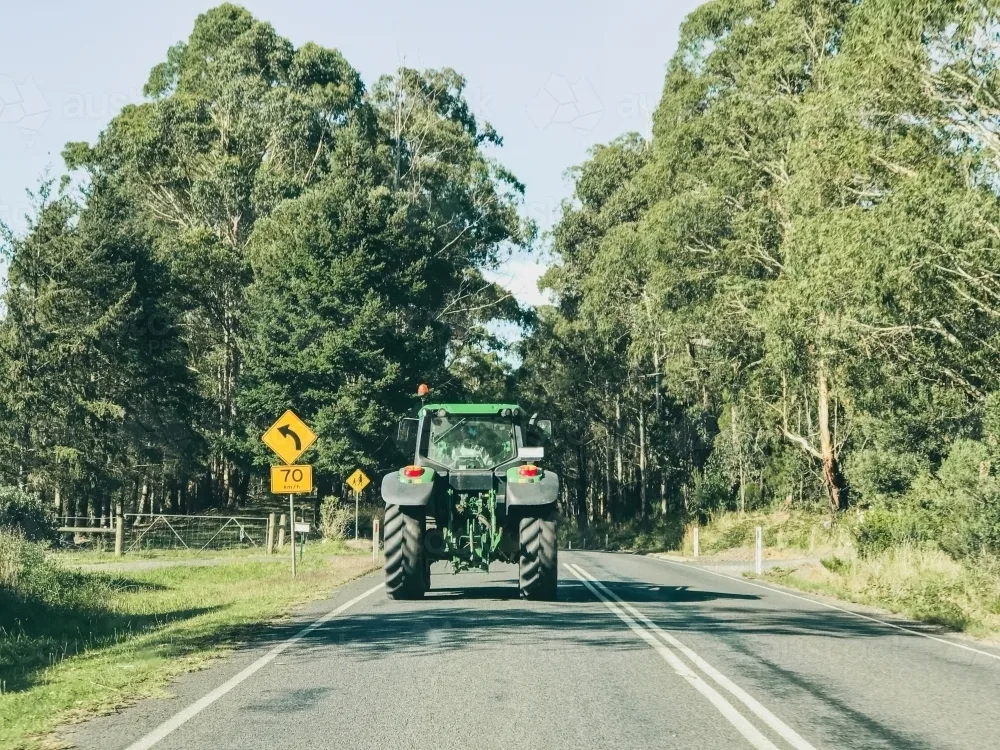
Idaho slow moving vehicle emblem requirements for farm equipment are straightforward but non-negotiable. If you're moving tractors or other agricultural machinery on public roads, the law requires a visible SMV emblem to warn other drivers. Get this wrong, and you risk fines or worse, an accident.
Per Idaho Code and the ASAE S276.5 standard, the emblem must be a reflective orange triangle with a red border, mounted correctly. Here’s what you need to know to stay compliant and safe.
Quick Answer
Idaho slow moving vehicle emblem requirements for farm equipment apply to any implement of husbandry traveling under 25 mph. The emblem must be ASAE S276.5 compliant. It must be mounted 3, 5 feet high at the rear.
Fines apply if it’s missing or improperly displayed.
Why Idaho's SMV Emblem Rules Carry Real Consequences
Farm equipment on public roads creates a genuine safety hazard. Without proper warning, motorists may not realize a tractor is moving at 15 mph until it’s too late. Idaho enforces these rules to prevent collisions and keep everyone safe.
Non-compliance isn’t just a safety issue, it’s a legal one. Law enforcement can cite operators for missing or incorrectly displayed emblems, leading to fines. As of 2026, Idaho State Police continue to prioritize these checks during agricultural seasons.
The Legal Baseline: Idaho Code § 49-944 and What It Actually Requires
Idaho Code § 49-944 mandates that any vehicle or equipment traveling under 25 mph must display a slow moving vehicle emblem. This includes tractors, combines, and other farm machinery classified as "implements of husbandry."
The law doesn’t stop at the emblem. It also specifies that the emblem must be visible from at least 500 feet away in daylight. This ensures motorists have enough time to react.
The Idaho Transportation Department provides full details on these requirements.
Which Equipment Counts: "Implements of Husbandry" Under Idaho Law
Not all farm equipment needs an SMV emblem. Idaho defines "implements of husbandry" as vehicles designed primarily for agricultural purposes. This includes tractors, harvesters, and other machinery used in farming.
Equipment that travels faster than 25 mph may be exempt. However, most traditional farm machinery falls under this category. When in doubt, assume you need the emblem.
Emblem Specifications: ASAE S276.5 Standards You Can't Ignore
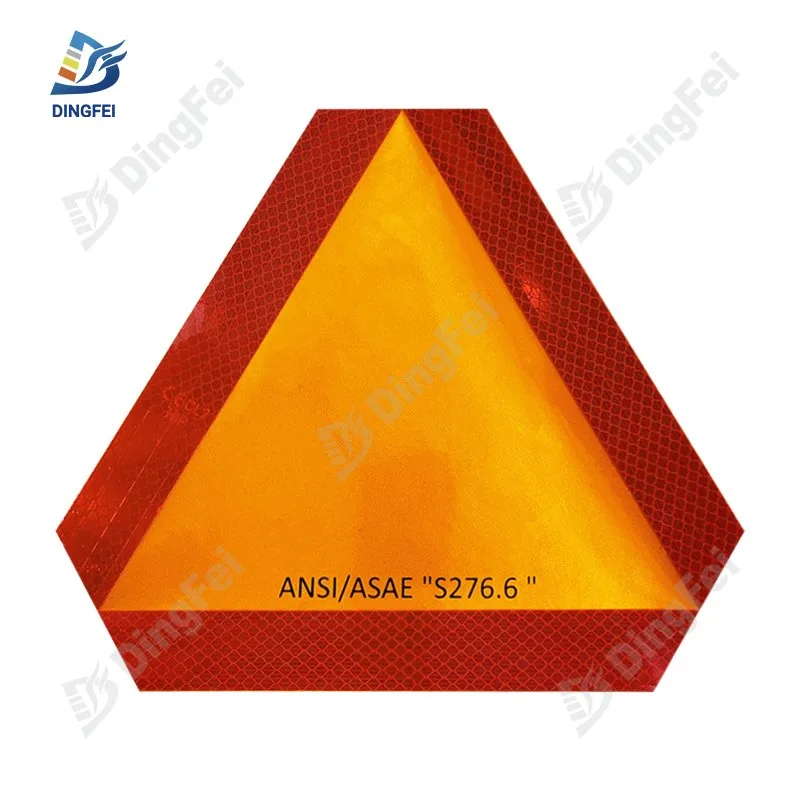
The emblem must meet the ASAE S276.5 standard. This means it’s a fluorescent orange triangle with a red reflective border. The minimum height is 14.6 inches, ensuring visibility.
Manufacturer specifications confirm that the emblem must be retroreflective. This allows it to be seen at night when headlights shine on it. Non-compliant emblems won’t pass inspection.
Mounting Rules: Height, Angle, and Placement That Pass Inspection
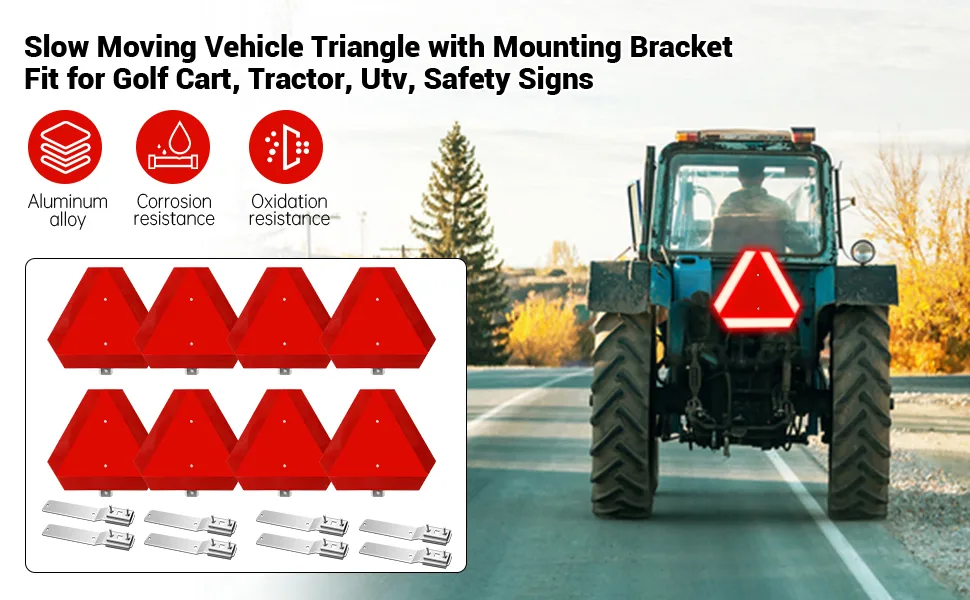
The emblem must be mounted at the rear of the vehicle. Idaho requires a height between 3 and 5 feet above the ground. This ensures visibility for drivers approaching from behind.
The triangle should face rearward and remain unobstructed. Dirt, equipment, or poor placement can block visibility, which defeats the purpose.
When the Emblem Isn't Enough: Nighttime Lighting Requirements
An SMV emblem alone doesn’t cover nighttime operation. If you’re moving equipment after dark, Idaho requires additional lighting. This typically means at least two white headlights and two red taillights.
Some farmers add amber rotating beacons for extra visibility. While not always required, these can improve safety on poorly lit rural roads.
Common Violations That Draw Citations on Idaho Roads
Missing the emblem entirely is the most obvious violation. But improper mounting height or a faded emblem can also get you cited. Officers check for visibility and compliance with ASAE standards.
Another common issue is using non-reflective or homemade signs. Only ASAE S276.5 compliant emblems meet Idaho’s legal requirements.
Penalties, Fines, and What a Traffic Stop Looks Like
Fines for non-compliance start around $75. The exact amount can vary by jurisdiction, but the cost is minor compared to the risk of an accident. Law enforcement may also require you to correct the issue before continuing.
During a traffic stop, officers will inspect the emblem’s condition and placement. If it doesn’t meet standards, you’ll likely receive a citation and instructions to fix it.
Buying Compliant Emblems: What to Look For and Where to Get Them
Look for emblems labeled as ASAE S276.5 compliant. These are widely available at farm supply stores, auto parts retailers, and online. Avoid generic reflective triangles that don’t meet the standard.
Price typically ranges from $10 to $20. The investment is small compared to the cost of a citation or the safety risk of non-compliance.
Quick Compliance Checklist Before You Hit the Road
Check that your emblem is ASAE S276.5 compliant. Verify it’s mounted between 3 and 5 feet high at the rear. Ensure it’s clean and fully visible.
Confirm your equipment qualifies as an implement of husbandry. If traveling under 25 mph, the emblem is mandatory. Double check at night, additional lighting may be required.
Check that your emblem is ASAE S276.5 compliant. Verify it’s mounted between 3 and 5 feet high at the rear. Ensure it’s clean and fully visible.
Confirm your equipment qualifies as an implement of husbandry. If traveling under 25 mph, the emblem is mandatory. Double check at night, additional lighting may be required.
Frequently Asked Questions
Do all farm vehicles need an SMV emblem in Idaho?
Yes, any implement of husbandry traveling under 25 mph must display one. This includes tractors, combines, and other agricultural machinery. Faster equipment may be exempt.
What happens if my emblem is faded or dirty?
A faded or dirty emblem may not meet visibility requirements. Officers can cite you for non-compliance. Keep it clean and replace it if the reflectivity is compromised.
Can I make my own SMV emblem?
No. Homemade signs don’t meet ASAE S276.5 standards. Only purchase compliant emblems from reputable suppliers.
Is the emblem required on private roads?
No. The requirement applies only to public roads. However, if you cross or use any public roadway, the emblem is mandatory.
Are there exemptions for certain farm equipment?
Some self-propelled equipment traveling over 25 mph may be exempt. Always check Idaho Code § 49-944 for specifics. When in doubt, display the emblem.