ByMax Lee
Guide to Washing Cars
If you're washing cars in Colorado, you're dealing with a whole set of problems that drivers in other states just don't have. The intense UV at altitude bakes water spots into your clear coat within minutes. The hard water from the Front Range leaves mineral deposits that look like white dust.
And in winter, mag chloride turns your undercarriage into a rust magnet if you don't rinse it off properly.
Denver's water supply typically runs between 7 and 10 grains per gallon of hardness. That's enough to cause spotting before you even finish drying. Our research shows that most Colorado car owners either adapt their routine or end up with permanent paint damage within two years.
Let's walk through what actually works here.
Bing (Web (fair-use with source credit))
Why Colorado Makes Car Washing Tricky — The Real Problem
The short answer is that Colorado has three enemies of clean paint: hard water, intense sun, and winter chemicals.
Hard water is the sneakiest one. When you rinse your car with typical Front Range tap water, the dissolved calcium and magnesium don't just evaporate. They leave behind tiny white crystals that etch into the clear coat if the sun hits them.
If you've ever seen a car with permanent white speckles on the hood and roof, that's the culprit.
Then there's the altitude. Denver sits at 5,280 feet. That means the sun's UV rays are about 30 percent stronger than at sea level.
That heat dries water droplets faster, which means you have less time to wipe them off. It also degrades wax and sealants faster. A coat of wax that lasts three months in Georgia might only last six weeks here.
And in winter, the state spreads mag chloride (magnesium chloride) on roads. It's more aggressive than regular rock salt. It sticks to your undercarriage, brake lines, and suspension components.
If you don't wash it off within a week, it starts corroding metal. That's not a minor problem. That's a "replace your brake lines in three years" problem.
So if you live in Colorado, a generic car washing guide from the internet won't cut it. You need a routine built for this specific environment. That's what we're going to build here.
The Shortest Safe Routine for a Colorado Daily Driver (Quick Answer)
If you only have ten minutes and you just want to protect your paint without overthinking it, here's the minimal viable routine.
In winter (November through March), skip the bucket wash entirely. Go to a touchless automatic wash that includes an undercarriage spray. Run it once every two weeks.
The undercarriage rinse is non-negotiable. If you don't have one in your area, find a self-serve bay with a high-pressure wand and spray the underside yourself for two minutes.
In summer (April through October), use a rinseless wash product like Optimum No Rinse or Wolfgang Uber. You mix a small amount into a bucket of water, wipe down one panel at a time with a microfiber towel, and dry immediately. That's it.
No hose, no pressure washer, no water spots. As of 2026, this is the single best method for Colorado because you control when the water dries.
If you have heavy dirt or mud from a trail run, do a quick pre-rinse at a self-serve bay first. Then use the rinseless method at home.
That routine takes about 15 minutes in summer and 8 minutes in winter. It's not a full detail. But it keeps your clear coat safe and your undercarriage rust-free.
Washing Is Just Physics — Paint, Water, and Friction
You don't need to be a chemist to wash a car well. You just need to understand three things: friction, mineral content, and UV exposure.
Friction is what causes scratches. Every time you rub a dirty mitt across a panel, you're dragging grit across the clear coat. The two-bucket method exists to trap that grit in the rinse bucket so you don't grind it back into the paint.
That's not a detailer's gimmick. That's basic abrasion physics. Swirl marks happen because people use a single bucket or a dirty towel.
Mineral content is what causes water spots. Hard water has dissolved solids. When the water evaporates, those solids get left behind.
If the water sits on a hot panel and bakes in the sun, those solids etch into the clear coat. Once that happens, you can't just wipe them off. You need a chemical spot remover or a light polish.
Prevention is way easier than correction.
UV exposure is what destroys wax and sealants. Colorado's intense sun breaks down the polymer chains in wax faster than in lower altitudes. That's why a ceramic coating or a synthetic sealant is a better investment here than a natural carnauba wax.
The synthetic options handle UV degradation much better.
So when you pick a washing method, you're really managing these three risks. The right routine reduces friction, controls mineral deposits, and protects against UV.
Before You Pick a Method: The Four Variables That Change Everything
There isn't one best way to wash a car in Colorado. The right method depends on four specific conditions. Let's check each one.
What's Your Paint and Protection?
If you have a factory clear coat with no additional protection, you need a two-bucket hand wash with a pH-neutral shampoo. That's the gentlest method and it won't strip what little wax the factory applied.
If you have a ceramic coating, you can use a rinseless wash or a touchless automatic. Just avoid any soap that contains high-alkaline ingredients or wax sealants. Those can cloud the coating over time.
You want a dedicated ceramic-safe shampoo.
If you have a matte paint or a vinyl wrap, you cannot use a brush at all. Any abrasive contact will leave a permanent shiny spot. Stick to a rinseless wash or a hand wash with a very soft microfiber mit.
What Season Is It?
Winter calls for undercarriage focus. Summer calls for water spot prevention. Spring and fall are your opportunities for a deep clean and wax or sealant application.
If it's below freezing, your bucket turns into a block of ice. Don't do a driveway hand wash. Use a self-serve bay or a touchless automatic.
What's Your Water Situation?
If you have a whole-house water softener, you can do a traditional hose wash with minimal spotting. If you're on city water without a softener, you need to blow dry the car or use a rinseless wash to avoid mineral deposits.
If you're on well water in the foothills, the mineral content can be even higher. Test your water hardness. If it's above 10 grains per gallon, skip the hose altogether.
Use a rinseless method or a water deionizer.
What Tools and Space Do You Have?
If you have a driveway with a hose and a shaded parking spot, the two-bucket method is your best option.
If you're in an apartment or a condo with no outdoor water access, a rinseless wash or a self-serve bay is your only choice.
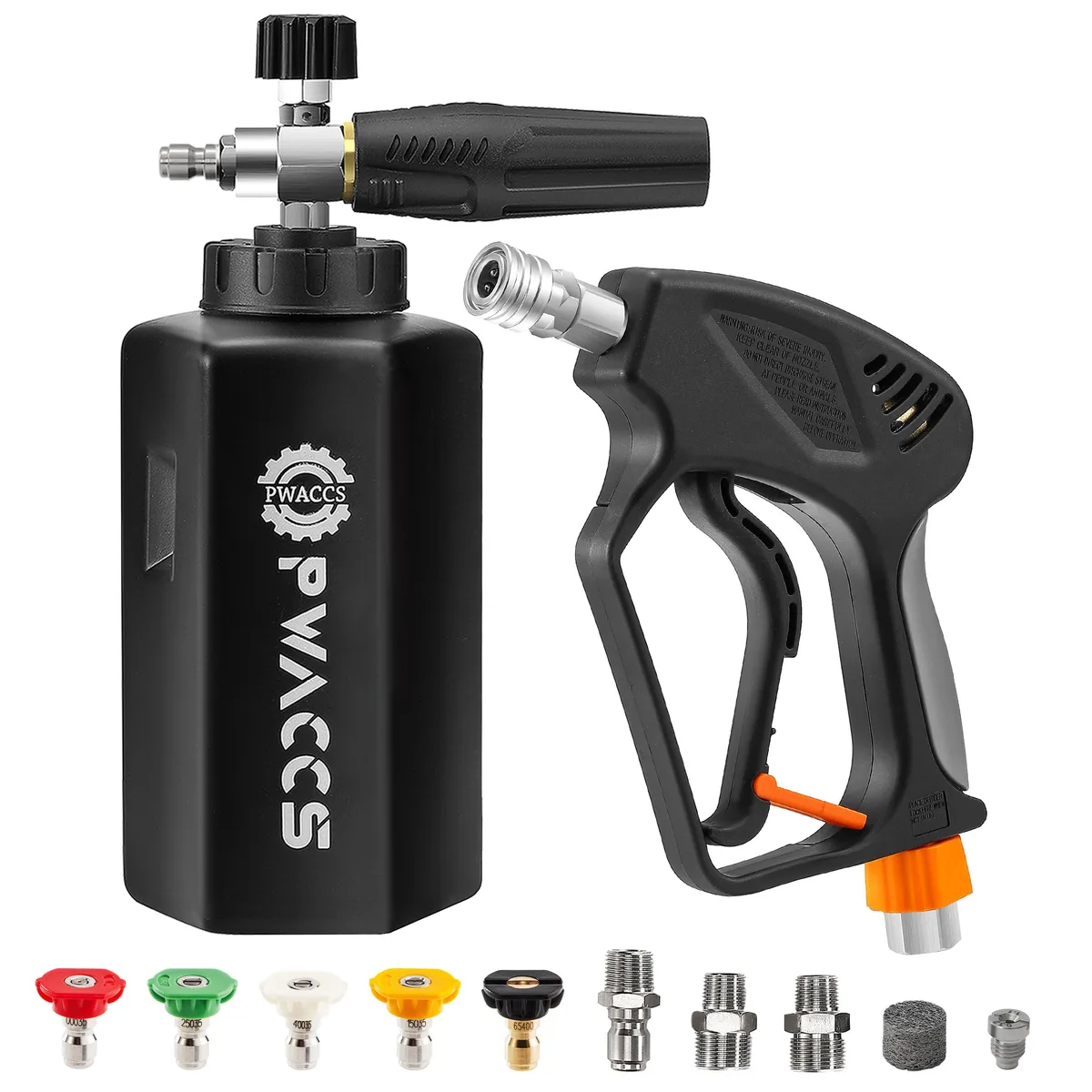
If you have a pressure washer, you can use a foam cannon for pre-soaking. That helps loosen dirt before contact. But keep the pressure below 1,200 PSI at the nozzle to avoid damaging the clear coat.
You can find more details on the right pressure in our guide to recommended PSI for washing cars.
These four variables narrow your options to one or two best methods. Let's compare them directly.
Hand Wash vs. Self-Serve vs. Touchless vs. Waterless — The Colorado Comparison
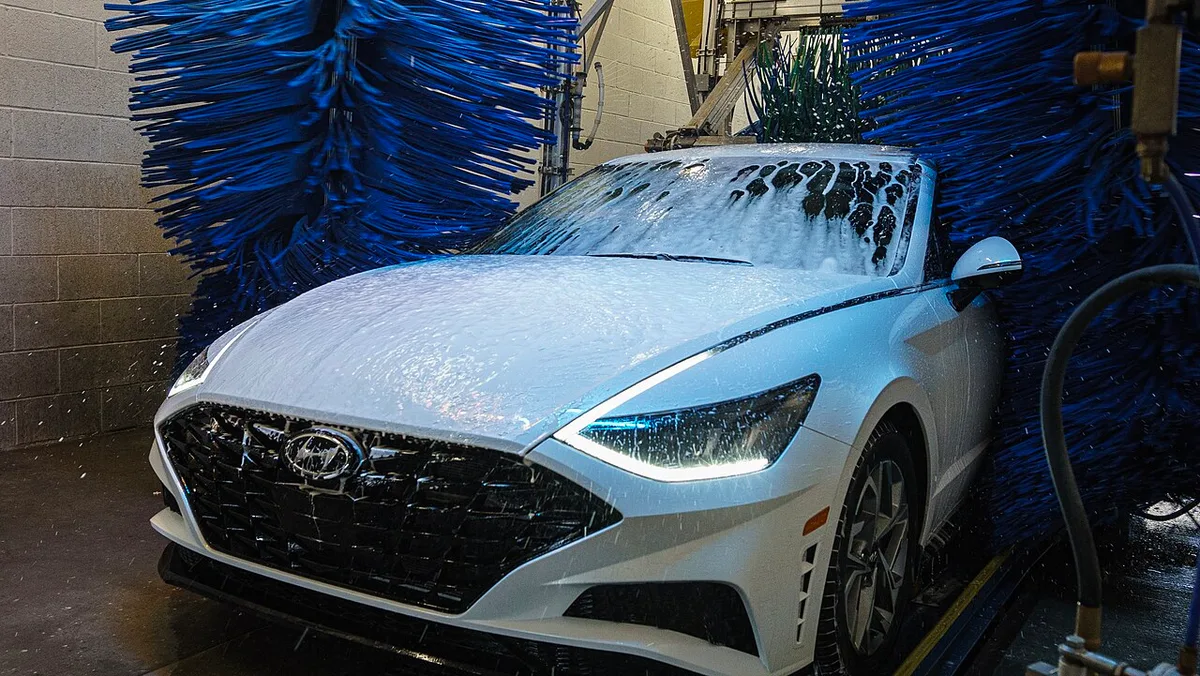
Here's how each method stacks up for Colorado conditions.
Wikimedia Commons / USDAgov
| Method | Best for | Cost per wash | Time | Paint safety | Winter OK? | Water spots risk |
|---|---|---|---|---|---|---|
| Hand wash (two-bucket) | Garage-kept cars, ceramic coatings | $2–$5 (supplies) | 30–40 min | Highest control | No (bucket freezes) | Low if dried fast |
| Self-serve bay | Winter washes, undercarriage spray | $1.50–$3.00 | 10–15 min | Medium (no brush contact) | Yes | Medium (hard water) |
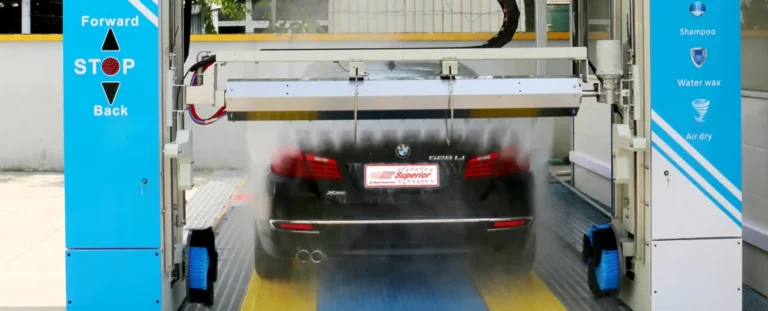
| Touchless automatic | Quick weekly maintenance | $10–$18 | 4–8 min | Good (no brushes) | Yes | Medium to high (residual water) |
| Rinseless wash | Apartments, hot weather, coated cars | $0.50–$1.00 | 15–20 min | Very good | No (needs above freezing) | Very low |
The winner for most Colorado daily drivers is the rinseless wash. It gives you the best combination of paint safety, speed, and water spot prevention. It works in all seasons except deep winter.
In winter, the self-serve bay with an undercarriage rinse is the practical choice. It's cheap, it's fast, and it removes the mag chloride before it can do damage.
The traditional two-bucket hand wash is still the gold standard for paint safety. But it's only practical when temperatures are above 40°F and you have time and shade.
Touchless automatics are fine for a quick clean between proper washes. But they rarely get the wheels and wheel wells fully clean. And many use strong chemicals that can strip wax.
If you want to keep things simple, grab a bottle of rinseless wash and a pack of good microfiber towels. That covers 80 percent of your year. Then hit a self-serve bay twice a month in winter.
That's a realistic Colorado routine that protects your car without turning it into a second job.
The Colorado Hand Wash Workflow (Step-by-Step, Adapted for Altitude and Hard Water)
If you decide to do a traditional hand wash, you need to adjust the sequence for our specific conditions. The standard internet routine doesn't account for how fast water evaporates here.
Start by parking in the shade. Not indirect light. Full shade.
If you don't have shade, wash early morning or late evening when the panels are cool. A hot panel in Colorado sun can dry a water droplet in under 90 seconds.
Fill two buckets. One with soap and water, one with plain water. Use a grit guard in both.
This traps the dirt at the bottom so you're not rubbing it back onto the paint. Use a dedicated car wash shampoo. Per manufacturer specifications, dish soap strips wax and can dull clear coat over time.
We have a full breakdown on why dish soap is a bad idea if you want the details on that.
Work from the top down. Start with the roof, then the glass, then the upper panels, then the lower panels. Do wheels last with a separate mitt.
If you use the wheel mitt on the paint, you're grinding brake dust into the clear coat.
Here's the critical Colorado adjustment. Rinse each panel after you wash it. Don't let soap sit on a hot panel.
It dries into a film that's hard to remove. Then dry immediately with a clean microfiber waffle weave towel. Do not let the car air dry.
Air drying in Colorado equals water spots.
One panel at a time. Wash. Rinse.
Dry. Move to the next panel. That's the rhythm.
For the drying step, use a blotting motion rather than wiping. Blot absorbs the water without dragging any remaining grit across the paint. Then follow with a quick detailer or spray wax as a drying aid.
That adds a thin protective layer and helps prevent spotting.
If you're using a pressure washer and foam cannon, keep the nozzle at least 12 inches from the paint and use a 40- or 60-degree tip. Our guide on recommended PSI for washing cars covers the exact settings so you don't damage the clear coat.
Two-Bucket vs. Rinseless Wash — When to Pick Each
These are the two best methods for Colorado. But they serve different situations.
Use the two-bucket method when:
- The car is heavily soiled with mud, road grime, or bug splatter after a mountain drive.
- You have a shaded driveway and temperatures above 45°F.
- You want to apply a wax or sealant during the wash.
- You have a water softener or a spot-free rinse system.
Use the rinseless wash when:
- It's summer and you need to beat water spots.
- You live in an apartment or condo without hose access.
- It's a quick maintenance wash between deeper cleans.
- You have a ceramic coating or paint protection film.
If your car is only moderately dusty from a week of city driving, the rinseless method is faster and safer. You mix two gallons of water with the rinseless solution, dip a microfiber towel, wipe a panel, flip to a dry side to buff, and move on. No hose.
No drying race. No water spots.
If your car is caked with dirt from a trail on Rampart Range Road or a muddy commute on a gravel county road, use the two-bucket method. You need the volume of water to flush the heavy grit away before it touches the mitt.
The decision really comes down to dirt level and temperature. If it's above 75°F and sunny, skip the hose. Go rinseless.
If it's cool and overcast, or if the car is genuinely dirty, do the two-bucket wash.
For the rinseless method, you'll want a good sprayer to wet the panels first. Our article on water guns for car cleaning covers the options that work well for this technique.
Winter Survival: The Mag Chloride Wash Routine
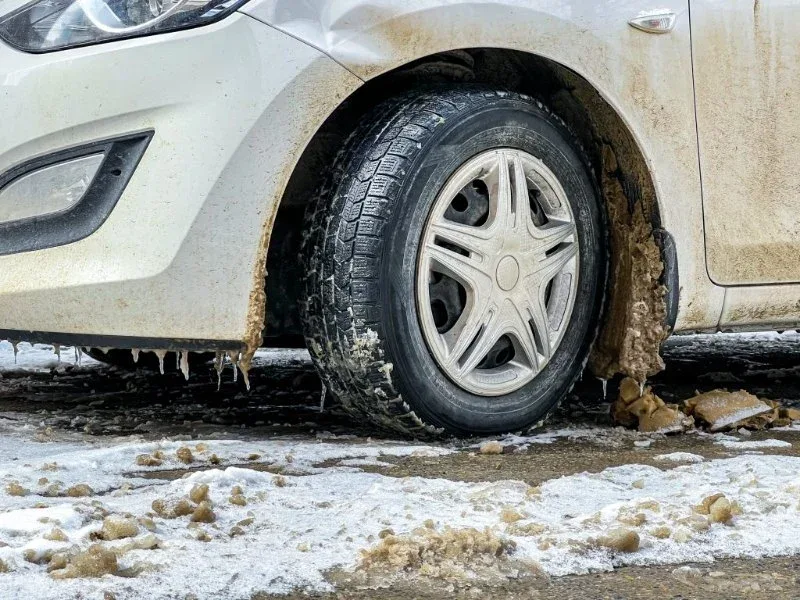
Mag chloride is the biggest threat to your car's underside in Colorado winters. It's hygroscopic, meaning it attracts moisture. That keeps the chemical active on metal surfaces long after the road looks dry.
Bing (Web (fair-use with source credit))
Here's the winter routine. Wash the undercarriage every two weeks minimum. If you drive on treated roads daily, do it weekly.
The easiest way is a touchless automatic wash with an undercarriage spray package. Most chains in Colorado offer this for $12 to $18 per wash. It's worth the money from November through March.
If you prefer the self-serve bay, here's the sequence. Spray the underbody first while the rest of the car is dry. Use the high-pressure wand at close range on the frame, suspension, brake lines, and wheel wells.
Then wash the body panels. Then dry.
Do not drive home with wet undercarriage in freezing temperatures. The water can freeze inside brake calipers or door seals. Either use the bay's blower on the door jambs and mirrors, or bring a towel.
If you have a garage, you can extend the protection by applying a fluid film or wool wax to the undercarriage in early November. That gives you a sacrificial layer that the mag chloride eats instead of your metal. One application lasts the whole winter.
Avoid automatic washes that use rotating brushes in winter. The brushes trap salt and grit from previous cars and grind it into your paint. Touchless only.
Summer Problem: Beating Water Spots and UV Damage
Summer in Colorado is brutal on paint. The combination of hard water, intense UV, and high evaporation rates creates perfect conditions for permanent water spots.
Wikimedia Commons / Dave Hitchborne (CC BY-SA)
The fix is to control when and how the water dries on your paint. There are three ways to do this.
One, use a rinseless wash. You wipe the panel dry immediately after cleaning it. No standing water to evaporate.
This is the single most effective prevention method.
Two, use a spot-free rinse system. A portable deionizer or an RV water filter connects to your garden hose and removes the minerals before the water hits the paint. It won't eliminate spotting entirely, but it reduces it by roughly 80 percent.
Our deep dive on hard water softeners for car washing explains the different options and what actually works.
Three, use a drying aid. Spray a quick detailer or a diluted ceramic spray onto the wet panel before you dry it. This lubricates the surface, prevents micro-scratches, and pushes water off faster.
It also leaves a hydrophobic layer that makes the next wash easier.
If you already have water spots, don't try to buff them out with a towel. That just scratches the clear coat. Use a dedicated water spot remover with a mild acid like citric acid.
Apply it to a cool panel in the shade, let it dwell for 30 seconds, then rinse. If the spots are etched deep, you need a professional polish.
For UV protection, use a synthetic sealant or a spray ceramic coating every three months. Natural waxes don't hold up well here. They break down too fast in the high-altitude sun.
Colorado-Specific Washing Mistakes (And How to Avoid Them)
Here are the most common errors we see from Colorado car owners, and how to avoid each one.
Washing in direct sunlight. This is the biggest mistake. The sun bakes soap and water onto the panel before you can dry it. Always find shade or wash at dawn or dusk.
Using dish soap. Dish soap is designed to cut grease on plates. It strips wax aggressively and can dry out rubber seals. Use a pH-neutral car shampoo instead.
Neglecting the undercarriage in winter. People focus on the paint and forget the frame. Mag chloride eats metal fast. If you skip the undercarriage rinse, you lose years of your car's life.
Using a single bucket. A single bucket means you're dipping a dirty mitt back into clean soap. You're grinding grit into the paint with every pass. The two-bucket system or a rinseless method is non-negotiable.
Drying with a dirty towel. If you drop a microfiber towel on the ground, do not use it on paint. It picks up sand and gravel. Use it for wheels or door jambs instead.
Our guide on what to wash car rags in will help you keep your towels clean and lint-free.
Using automatic brush washes in summer. The brushes leave micro-scratches in the clear coat, especially on dark colored cars. Those scratches fill with wax and dirt over time, creating a haze. Touchless is safer.
Waiting too long to dry. In Colorado, you have about two minutes to dry a panel before water spots set in. Work panel by panel. Don't wash the whole car and then start drying.
Forgetting the wheels. Brake dust is corrosive. It bonds to the wheel finish and causes pitting if left for weeks. Clean wheels at least every other wash with a dedicated wheel cleaner.
What It Costs Per Wash: Driveway vs. Self-Serve vs. Automatic
A driveway hand wash costs about $2 to $5 in supplies per wash once you own the buckets, mitts, and towels. A self-serve bay runs $1.50 to $3.00 if you keep it under 10 minutes. A touchless automatic with undercarriage spray averages $12 to $18.
Over a full year of weekly washes, the driveway method saves roughly $500 compared to automatics. But that's only if you have the space and the weather cooperates.
HOA Rules, Stormwater Runoff, and Water Restrictions — What You Need to Know
Some Colorado HOAs restrict driveway car washing or require you to use a containment mat. Check your covenants before you buy supplies.
Stormwater runoff is regulated in many Front Range counties. You cannot let soapy water flow into the street or storm drain. Wash on gravel, grass, or a contained surface.
If you're on a municipal water system, use biodegradable soap.
During drought conditions, some cities limit residential car washing. Self-serve and commercial car washes are typically exempt because they recycle water.
Long-Term Paint Care Between Washes (Quick Maintenance)
A quick detailer spray and a clean microfiber towel can handle light dust between washes. Spray a panel, wipe gently, flip the towel, buff dry.
Keep a waterless wash spray in your trunk for bird droppings or tree sap. The longer those sit on the paint, the more likely they etch the clear coat.
Check your sealant or wax every six to eight weeks. If water stops beading on the hood and roof, reapply. For ceramic coatings, a spray ceramic booster after each wash extends the lifespan.
Your Colorado Washing Workflow Cheat Sheet — By Season and Situation
- Winter (Nov, Mar): Touchless automatic with undercarriage every two weeks. Skip bucket washes. Spray undercarriage at self-serve bay if no touchless is available.
- Spring (Apr, May): Deep hand wash. Clay bar if paint feels rough. Apply synthetic sealant or spray ceramic coating.
- Summer (Jun, Sep): Rinseless wash every week. Dry immediately. Avoid direct sun. Reapply sealant every three months.
- Fall (Oct): Another deep wash and sealant before winter. Apply undercarriage protection if you use it.
If you drive on gravel roads or mountain trails, double the winter undercarriage frequency. If you park in a garage, you can stretch wash intervals by a week or two. If you park outside, stay on schedule.