Black Friday deals are live on Amazon · limited-time discounts, grab them before they’re gone
Grab the deals

ByMax Lee
What Car Wash Can You Use on Ceramic Coating: Top Safe Picks
A ceramic coating makes vehicle paint more resistant to contamination, easier to clean, and more water-repellent—but it is not scratch-proof or maintenance-free. The wrong wash process can add swirl marks, leave mineral deposits, or reduce the performance of a coating’s hydrophobic top layer.
The safest choice is a careful hand wash using a lubricating, coating-safe car shampoo. A touchless wash is a practical backup when hand washing is not possible, while brush-style automatic washes are best avoided. This guide explains which car washes work, which products to choose, and how to clean ceramic-coated paint without shortening its service life. For more on this, see our guide on do you pay az sales tax on an.

Gentle pre-washing helps remove abrasive grit before contact washing.
Credit: roxauto.com.au
What Ceramic Coating Does—and Does Not Do
Ceramic coating is a cured, transparent layer that bonds to a vehicle’s paint or other approved surfaces. Depending on the formula and installation, it can provide:
- Improved water behavior and easier rinsing
- Resistance to many common contaminants
- Added gloss and surface slickness
- Some protection from chemical staining
- Easier removal of road film, dust, and bird droppings
It does not make paint immune to scratches, stone chips, water spots, or swirl marks. A dirty wash mitt can still drag abrasive particles across the surface, and dried bird droppings can still etch paint if left for too long.
A coating also does not last indefinitely. Its maintenance needs depend on the coating type, preparation quality, weather exposure, storage, washing technique, and whether a compatible maintenance product is used. Always give the installer’s or coating manufacturer’s instructions priority; official product guidance, such as the information available from coating-care manufacturers, may specify approved shampoos or toppers for a particular system. For more on this, see our guide on do you pay az sales tax on an.
The Best Car Wash for Ceramic Coating
1. Careful hand washing
A two-bucket hand wash is usually the safest and most thorough option. It gives you control over the soap, water pressure, wash media, and drying process.
Use:
- A pH-balanced automotive shampoo
- A clean microfiber wash mitt
- One bucket for shampoo solution
- One bucket for rinsing the mitt
- A soft wheel brush used only on wheels
- A large, clean drying towel or a filtered air dryer
The goal is to remove contamination with lubrication and minimal pressure. Do not scrub aggressively simply because the coating is present. For a more detailed bucket order and grit-control setup, follow this safer wash routine.
2. Touchless car washes
A touchless wash is generally safer than a brush tunnel because nothing physically contacts the paint. It can be a good option when the vehicle is heavily soiled, the weather is poor, or you cannot perform a full hand wash.
However, “touchless” does not automatically mean coating-safe. Some facilities use strong alkaline pre-soaks or acidic cleaners to remove traffic film. These may reduce the slickness or water behavior of a maintenance topper and can be harsh on trim, seals, and unprotected surfaces.
Choose a touchless wash when:
- The vehicle needs a quick removal of loose road grime
- There are no brushes, curtains, or spinning cloth strips
- The chemicals are described as gentle or suitable for coated vehicles
- You can rinse thoroughly afterward
- You accept that it may not remove bonded contamination completely
A touchless wash is a compromise: it minimizes wash-induced scratching but may not clean as thoroughly as a properly performed hand wash.
3. Self-service pressure-wash bays
Self-service bays can work if used carefully. Select the rinse or gentle wash setting, keep the nozzle moving, and maintain a sensible distance from the surface. Never hold a high-pressure nozzle close to an edge, badge, sensor, window seal, or damaged area.
Avoid using:
- The shared brush, which may contain grit
- A concentrated spray at close range
- Harsh degreasers on the entire vehicle
- A drying cycle that leaves mineral-heavy water behind
Pressure washing itself does not normally harm a properly cured coating when used responsibly. The risk comes from excessive pressure, poor technique, damaged paint, or forcing water beneath loose trim and film.
4. Waterless wash products for light dust
A waterless wash can be appropriate for light dust or a lightly soiled car when the product is specifically designed for that use. It is not a substitute for rinsing when the vehicle has sand, mud, salt, or gritty road film.
Use it only when:
- The surface has light contamination rather than visible grit.
- The product provides substantial lubrication.
- You work on a small panel at a time.
- You use several clean microfiber towels.
- You turn to a fresh towel side after each few passes.
- You stop if the towel begins dragging or the paint feels gritty.
For heavy contamination, rinsing first is safer. Wiping a muddy or sandy surface with a spray and towel can create fine scratches even when the product is labeled ceramic-safe.
5. Snow-foam pre-washing
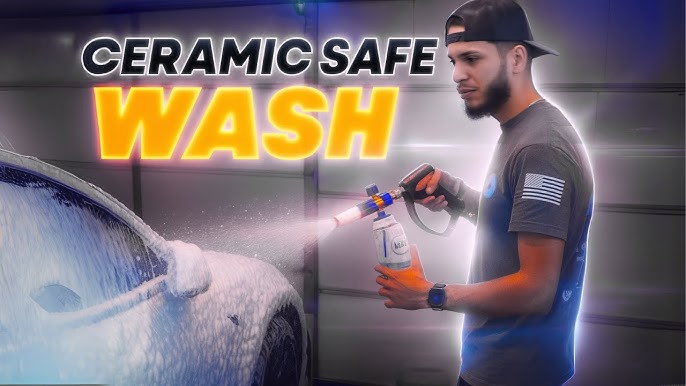
Snow foam is a pre-wash, not a replacement for contact washing. Its main benefit is loosening and carrying away some loose dirt before a mitt touches the paint.
Apply it to a cool, shaded vehicle, allow the recommended dwell time, and rinse before the foam dries. A pH-neutral or coating-compatible foam is a conservative choice, but product strength varies. Some alkaline foams are useful for heavily soiled vehicles yet may affect waxes, sealants, or toppers.
Car Washes and Methods to Avoid
Automatic washes with brushes or cloth strips
Avoid tunnel washes that use rotating brushes, cloth strips, or shared contact materials. These components can retain grit from previous vehicles and distribute it across your paint.
A common mistake is assuming that soft-looking cloth is harmless. The problem is not only the material; it is the contamination trapped in the equipment and the speed at which it is dragged over the surface.
Household dish soap and strong degreasers
Dish soap is formulated to remove cooking oils, not to provide the lubrication and surface compatibility expected from automotive shampoo. Occasional use is unlikely to destroy a cured coating immediately, but it is not a good maintenance routine.
Likewise, concentrated engine degreasers, wheel acids, and industrial cleaners should not be applied broadly to coated paint unless the coating manufacturer specifically permits them.
Shared wash brushes
The brush at a self-service bay is one of the highest-risk tools for paint. Even if the bristles look clean, they may carry sand, brake dust, and road grit from many vehicles.
Dry wiping a dusty vehicle
Do not use a dry towel to “quickly remove” dust from paint. Dry wiping creates friction without sufficient lubrication and can produce micro-marring.
Automatic wax and sealant packages
Wax programs at automatic washes are not always harmful, but their ingredients and application methods are often unclear. Some leave residue, create streaks, or interfere with the water behavior you are trying to evaluate.
If you use a topper, select one confirmed to be compatible with your coating rather than accepting an unknown tunnel-wash add-on.
How to Hand Wash a Ceramic-Coated Car
Step 1: Choose the right conditions
Wash in the shade, preferably when the panels are cool. Avoid washing during strong wind, because airborne grit can settle on wet paint. If possible, wash soon after the vehicle becomes dirty rather than allowing contamination to bake onto the surface.
Step 2: Clean the wheels first
Wheels and tires carry the heaviest contamination. Use separate tools and buckets for them, and never bring a wheel brush back to the paint.
A pressure rinse can remove loose brake dust before you use a dedicated wheel cleaner. Check the wheel manufacturer’s finish requirements before using an acidic or alkaline product.
Step 3: Rinse the vehicle thoroughly
Start at the roof and work downward. Rinsing removes loose particles and softens dried contamination. Pay particular attention to lower doors, rocker panels, wheel arches, and the rear of the vehicle.
Step 4: Apply pre-wash foam if needed
For road film or heavier grime, cover the vehicle with a suitable pre-wash. Let it work without drying, then rinse thoroughly. This reduces the amount of grit that must be removed during contact washing.
Step 5: Wash from top to bottom
Use a clean mitt and plenty of shampoo solution. Clean one small section at a time, beginning with the least dirty panels:
- Roof
- Glass
- Upper doors and fenders
- Lower doors
- Rear bumper and rocker panels
Use straight, overlapping passes with light pressure. Rinse the mitt frequently in the plain-water bucket before collecting more shampoo.
Step 6: Rinse completely
Do not allow shampoo to dry on the coating. Rinse panel gaps, mirrors, badges, grilles, and trim, where soap can collect and later run onto clean paint.
Step 7: Dry without dragging contamination
Use a clean, absorbent microfiber drying towel. Lay it flat and gently pull it across the surface, or use filtered compressed air to blow water from mirrors, badges, grilles, and panel gaps.
If you use an air compressor for drying or detailing, make sure the air is clean and moisture-free. A properly sized air system can be useful for blowing water from crevices, but never direct oily or contaminated compressed air at the paint.
Do not let a towel fall on the ground and then continue using it. Replace it immediately.

Touchless rinsing removes loose contamination without brush contact.
Credit: www.youtube.com
Choosing a Safe Car Shampoo
Look beyond the words “ceramic-safe” on the label. A suitable maintenance shampoo should generally offer:
| Product characteristic | Why it matters |
|---|---|
| Automotive formulation | Designed for painted and clear-coated surfaces |
| Good lubrication | Helps reduce friction during contact washing |
| No abrasive cleaners | Prevents unnecessary mechanical wear |
| No heavy polish | Avoids residue and surface alteration |
| Balanced cleaning strength | Removes road film without being unnecessarily aggressive |
| Easy rinsing | Reduces streaks and soap residue |
pH-neutral is a useful starting point, but it is not the only measure of safety. A poorly lubricated pH-neutral soap can still contribute to marring if the wash technique is careless. Conversely, a stronger cleaner may be appropriate occasionally for severe contamination, provided the coating manufacturer allows it.
Avoid shampoos that contain abrasives, polishing compounds, or large amounts of gloss-enhancing residue unless you deliberately want that type of finish.
Can You Use Wax on Ceramic Coating?
You do not need traditional wax to maintain a ceramic coating. Many owners choose a compatible ceramic spray sealant or silica-based topper instead because it is designed to work with the coating’s surface characteristics.
Wax is not automatically guaranteed to damage every coating, but an incompatible product may:
- Leave a hazy or greasy film
- Reduce the coating’s characteristic water behavior
- Make the surface harder to clean
- Hide whether the coating is still performing normally
If you want to use a wax, check the coating maker’s recommendations first. Avoid abrasive cleaner waxes unless you are intentionally correcting the surface and understand that the process may remove or alter the coating.
How Often Should You Wash a Ceramic-Coated Car?
There is no single schedule for every vehicle. A car parked outdoors near trees, salt, industrial fallout, or construction dust needs more frequent cleaning than a covered weekend vehicle.
As a practical starting point:
- Wash about every one to two weeks under normal use.
- Rinse sooner after driving through road salt, mud, or heavy rain runoff.
- Remove bird droppings, insects, and tree sap as soon as safely possible.
- Do not wait for visible dirt to become thick and bonded.
- Perform a more thorough decontamination only when the surface feels rough after washing.
Frequent gentle washing is safer than infrequent aggressive cleaning. If water no longer beads, do not immediately assume the coating has failed. Contamination, mineral deposits, or a spent topper can mask the coating’s behavior. Clean the surface properly first, then reassess.
Special Considerations for Winter and Road Salt
Road salt and de-icing residue should be rinsed away regularly. Use a touchless rinse or careful hand wash to remove salt from paint, wheel wells, brake components, and underbody areas.
Do not use hot water on a frozen vehicle or force water into frozen door seals. Allow ice to release naturally, and avoid scraping coated paint with a hard tool. Ceramic coating can help with cleanup, but it does not replace ordinary corrosion prevention.
When checking your vehicle before a long trip, coating maintenance is only one part of ownership. Review relevant equipment and regional rules, such as the vehicle requirements discussed in this road-trip equipment guide.
What to Do When the Coating Seems to Stop Beading
Reduced beading can result from:
- Road film
- Mineral scale
- Iron contamination
- Tree sap or industrial fallout
- Residue from an automatic wash
- A worn maintenance topper
- Actual coating degradation
Start with a normal wash. If the surface still feels rough, use a coating-approved chemical decontamination product or have a qualified detailer assess it. Do not immediately clay, polish, or compound the paint; aggressive mechanical decontamination can remove or alter the coating.
If the coating was professionally installed, ask the installer about its maintenance schedule and warranty conditions before using a strong cleaner or polishing machine.
Quick Decision Guide
| Situation | Best option |
|---|---|
| Light dust only | Coating-safe waterless wash with many clean towels |
| Normal weekly dirt | Two-bucket hand wash |
| Heavy road grime | Pre-rinse or snow foam, then hand wash |
| No time for hand washing | Touchless wash without brushes |
| Mud, sand, or salt | Thorough rinse before any contact wash |
| Dirty self-service brush | Do not use it on painted surfaces |
| Water spotting after washing | Dry promptly and address mineral deposits |
| Reduced water behavior | Clean and decontaminate before judging coating condition |
Frequently Asked Questions
What type of car wash is safest for ceramic coating?
A careful hand wash with a lubricating automotive shampoo, clean microfiber mitt, separate rinse bucket, and gentle drying method is usually safest. It gives you the most control and minimizes contact with trapped grit.
Can I take a ceramic-coated car through an automatic car wash?
You can use a touchless automatic wash as a compromise, but avoid washes with rotating brushes, cloth strips, or shared contact equipment. Check the cleaning chemicals when possible because aggressive pre-soaks may affect toppers and trim.
Is a pressure washer safe for ceramic coating?
Yes, when used responsibly. Keep the nozzle moving, avoid extremely close spray distances, and do not concentrate pressure on chipped paint, loose trim, seals, badges, or damaged areas.
Can I use pH-neutral soap on ceramic coating?
Yes. A lubricating, pH-balanced automotive shampoo is a sensible choice for routine washing. However, pH alone does not guarantee quality; avoid abrasive products and use careful technique.
Can I use dish soap on a ceramic-coated car?
It is better to use automotive shampoo. Dish soap may remove protective residues and does not provide the same purpose-built lubrication or finish compatibility.
Can I use a waterless wash on ceramic coating?
Yes, but only for light contamination and only with sufficient product and clean microfiber towels. Do not use a waterless method on mud, sand, heavy salt, or gritty road film.
Does ceramic coating prevent scratches?
No. It can improve chemical resistance and make cleaning easier, but it does not prevent stone chips, deep scratches, or swirl marks caused by dirty tools and poor washing technique.
How often should a ceramic-coated car be washed?
Many vehicles do well with washing every one to two weeks, but outdoor storage, weather, driving conditions, and contamination should determine the actual schedule. Remove bird droppings, sap, and salt promptly.
Should I apply wax after ceramic coating?
Wax is optional, not required. If you want additional protection or gloss, use a topper confirmed as compatible with your specific coating. Avoid abrasive cleaner waxes unless you intentionally plan to correct the surface.
Final Recommendation
The best car wash for ceramic coating is a controlled hand wash with a clean microfiber mitt, lubricating automotive shampoo, thorough rinsing, and gentle drying. Use snow foam or a pre-rinse to reduce grit before contact, and use a touchless wash when convenience matters more than deep cleaning.
Avoid brush tunnels, shared wash brushes, dry wiping, household cleaners, and aggressive scrubbing. With consistent maintenance and prompt removal of damaging contaminants, your ceramic coating can continue providing easier cleaning, strong gloss, and useful chemical resistance for much longer. Start with a gentle wash process and follow the product-specific instructions supplied by your coating manufacturer or installer.








