ByMax Lee
why do people wash their cars after a winter storm
You've just driven through three hours of slush, salt spray, and freezing rain. Your car looks like it lost a fight with a bag of pretzels. And now you're wondering: why do people wash their cars after a winter storm, anyway?
Is this just a ritual for the overly obsessive, or is there real science behind it?
The short answer is that road salt doesn't just make your car look dirty. It actively destroys metal. As of 2026, municipalities across the US and Canada spread roughly 20 million tons of de-icing salt on roads each winter.
That salt sticks to your undercarriage, wheel wells, and brake lines, and it starts a chemical reaction that can eat through paint and metal in a matter of days. Washing your car after a storm isn't about vanity. It's about keeping the thing from rusting out from under you.
Bing (Web (fair-use with source credit))
Why Salt Is the Real Enemy (Not the Snow)
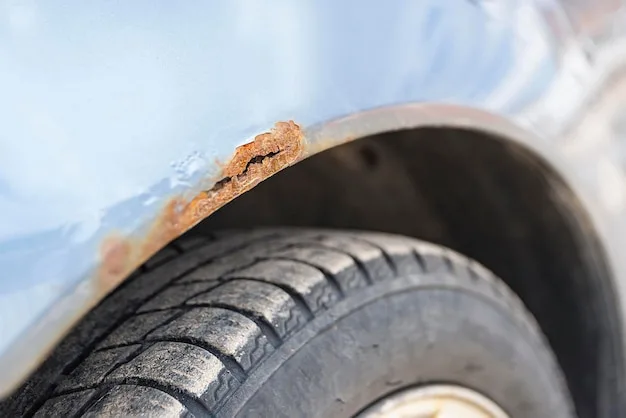
Snow is just frozen water. It melts, it evaporates, it's gone. Salt is the problem that lingers.
Bing (Web (fair-use with source credit))
How road salt actually damages your car
Road salt works by lowering the freezing point of water, which is great for traction but terrible for your vehicle. When salt dissolves in the slush on the road, it creates a brine solution that splashes up into every crevice underneath your car. That brine is electrically conductive.
When you combine a conductive liquid with two different metals, you get a galvanic cell. That's a tiny battery that eats metal.
The corrosion isn't slow either. Under the right conditions, rust can begin forming on bare metal within 24 to 48 hours of salt exposure. That's what accelerated corrosion testing from SAE International confirms.
If you've ever wondered why a five-year-old car in Minnesota looks completely different underneath than the same model in Arizona, salt is the reason.
The chemical reaction that starts rust in hours, not days
Here's what happens at the molecular level. Salt breaks down into sodium and chloride ions when it mixes with water. The chloride ions attack the protective oxide layer on steel.
Once that layer is compromised, oxygen and moisture reach the bare metal underneath. Iron oxidizes, and you get rust. That rust is porous, which means it holds more moisture against the metal, which means it keeps rusting deeper.
This isn't a surface problem. Rust that starts on the outside of a frame rail can eat all the way through in a single winter season if left unchecked. That's why your undercarriage is ground zero.
It gets the most salt exposure and the least attention.
Why your undercarriage is ground zero
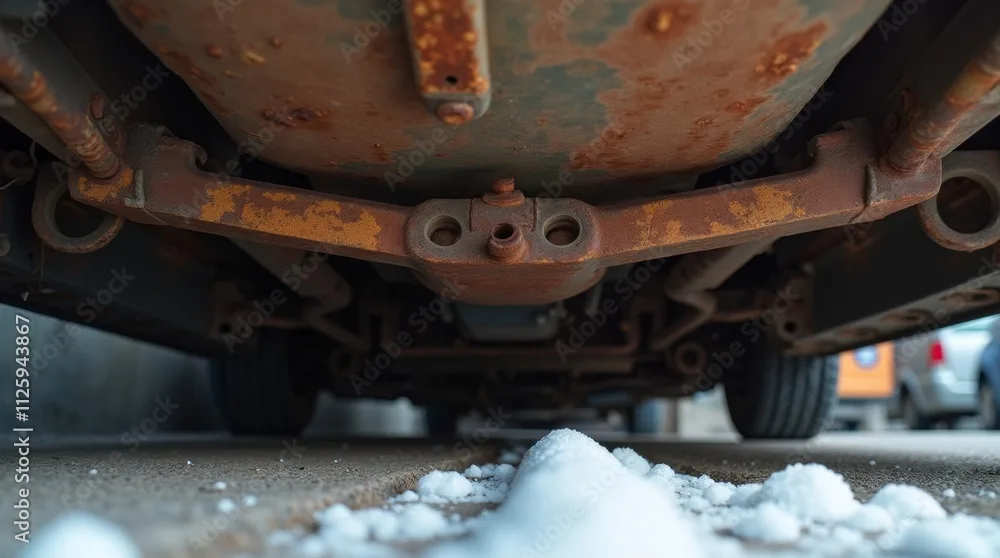
Think about what's underneath your car. Brake lines, fuel lines, exhaust hangers, suspension components, and the frame itself. All of it is exposed to the full force of road spray.
Unlike the painted body panels on top, much of the undercarriage has minimal paint coverage or none at all. Many manufacturers apply only a thin coat of primer or e-coat to the underside. That coating is your first line of defense, and salt brine is designed to defeat it.
If you've ever crawled under a car that's been through five northern winters, you've seen what happens. Flaking metal, swollen frame sections, and brake lines that look like they've been chewed on. That's salt damage that could have been slowed significantly with regular washing.
The Temperature Trap: When Washing Does More Harm Than Good
Here's where things get tricky. You want to wash the salt off, but washing in freezing weather can create its own set of problems.
Bing (Web (fair-use with source credit))
Why washing in freezing temps can backfire
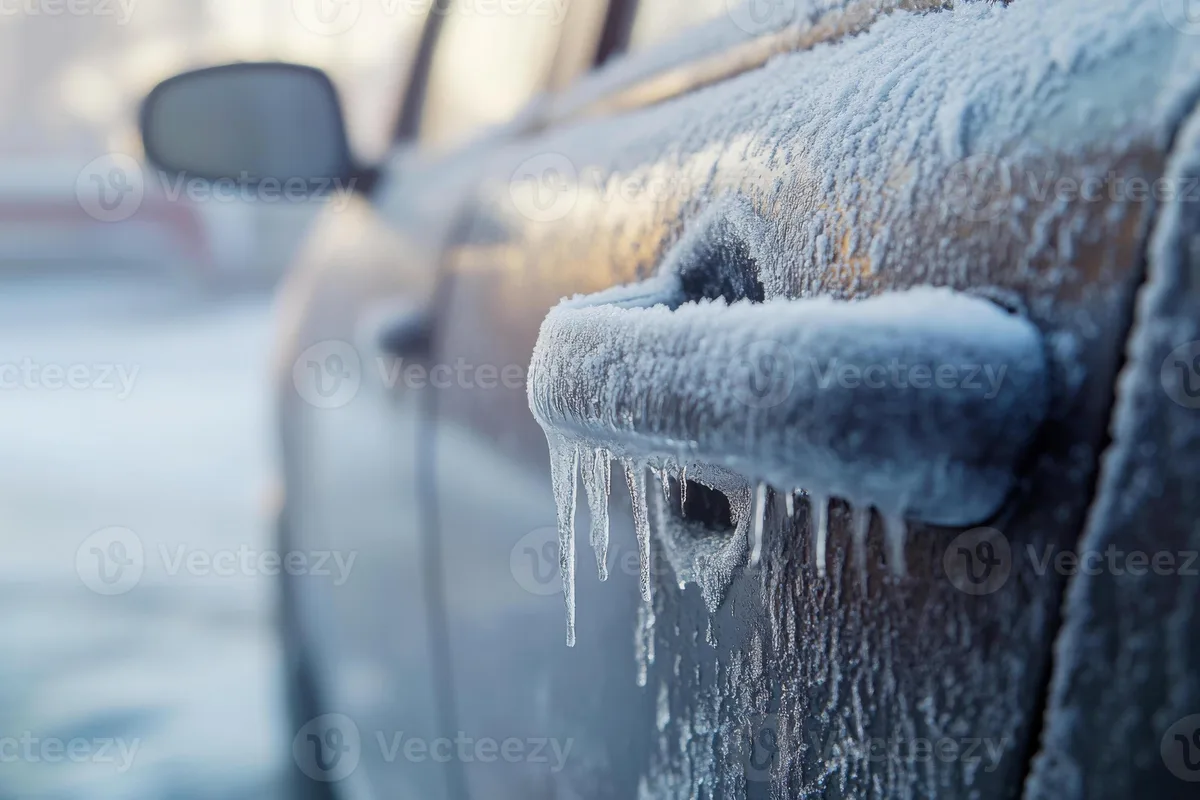
If you wash your car when the temperature is below 32°F and the car is cold, the water can freeze before it dries. That means ice in your door seals, ice in your door locks, and ice in your parking brake cable. We've all seen someone yanking on a frozen car door handle.
It can actually break the handle mechanism.
The real danger is in the brakes. Water can freeze inside the parking brake cable housing. When that happens, the cable won't release, and you'll drive with the parking brake partially engaged.
That destroys your rear brake pads and rotors in a matter of miles. It also creates a safety hazard because your car won't accelerate properly and the brakes can overheat.
The danger of frozen door seals, locks, and brakes
Door seals are another weak point. When water gets into the rubber seal around your door and freezes, it expands. That expansion can tear the seal or pull it loose from the door frame.
A torn door seal means water leaks into the cabin every time it rains or snows after that. Replacing door seals on a modern car costs $200 to $600 per door depending on the make and model.
Frozen locks are less common on modern cars with keyless entry, but they still happen. If the door handle mechanism freezes, you might not be able to open the door at all. And if you force it, you can snap the handle or the cable inside the door panel.
The ideal temperature window for a winter wash
So when should you wash? The sweet spot is between 35°F and 50°F. That's warm enough that the water won't freeze on contact, but cold enough that the car wash isn't packed.
If the temperature is below freezing and you absolutely need to wash, use a heated bay at a self-serve car wash. Those bays keep the water warm and the concrete above freezing, so the water has time to drain off before it turns to ice.
Never wash your car in direct sunlight on a cold day either. The sun heats the metal unevenly. The water dries fast on the hood and roof but stays wet in the shadows.
You end up with water spots and ice patches in the same wash.
Touchless vs. Soft-Touch: Which Winter Wash Wins?
You pull into the car wash and see two lanes. One says "Touchless" and the other says "Soft-Touch." Which one do you pick for a winter salt removal job?
Bing (Web (fair-use with source credit))
How each type handles salt and grime
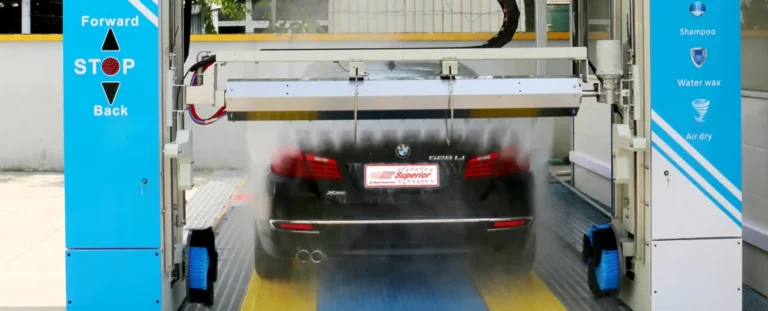
Touchless washes use high-pressure water and strong chemicals to blast dirt off the paint. No brushes touch the car. That sounds great in theory, but the reality is that touchless washes rely heavily on the chemicals to do the work.
If the chemicals are weak or the water pressure is low, you'll drive out with a car that's still dirty. Salt residue can cling to the paint even after a touchless wash, especially in the crevices around the mirrors and trim.
Soft-touch washes use foam or cloth brushes that physically scrub the surface. They're more effective at removing salt and grime because there's mechanical action involved. The brushes get into the textured surfaces that touchless washes miss.
But there's a catch.
The scratch risk you need to know about
Soft-touch brushes can scratch your paint. The brushes pick up dirt and grit from every car that goes through before yours. That grit gets embedded in the brush fibers and dragged across your paint.
Over time, you get swirl marks and micro-scratches that dull the finish.
That said, the risk is lower than it used to be. Modern soft-touch systems use closed-cell foam that doesn't hold dirt the way old nylon brushes did. Many newer washes use a friction system with soft cloth strips instead of brushes.
Those are gentler on paint while still providing the mechanical scrubbing that salt removal requires.
What the undercarriage spray actually covers
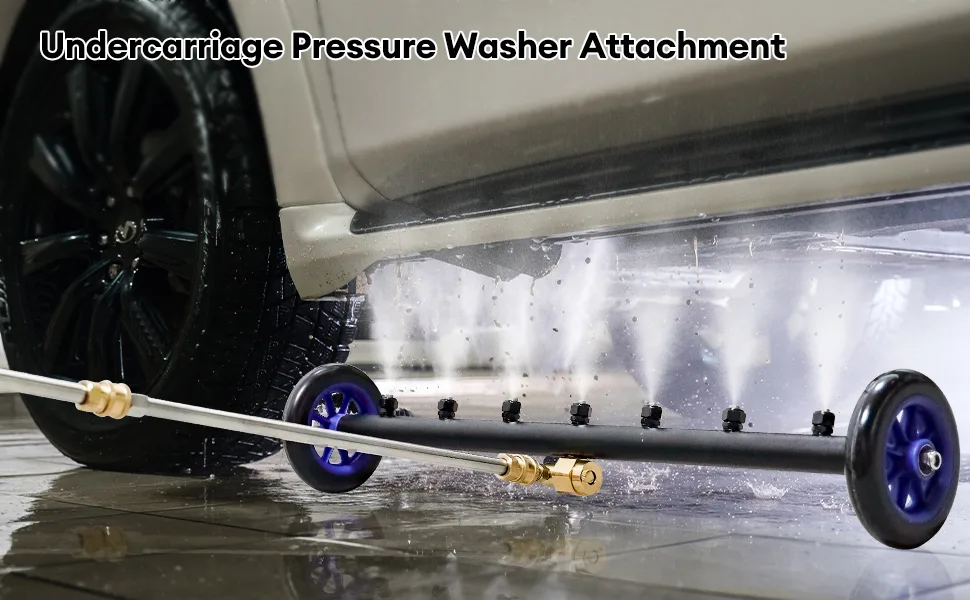
Here's the most important part of any winter wash: the undercarriage spray. Both touchless and soft-touch washes offer this as an option, but they don't all do it the same way. A good undercarriage wash uses high-pressure nozzles mounted in the floor that spray upward as you drive over them.
The spray should hit the frame rails, the suspension, and the brake lines.
But not all undercarriage sprays are created equal. Some washes just spray a mist that barely wets the underside. Others use a full-pressure blast that actually knocks the salt loose.
If you're paying extra for the undercarriage wash, make sure the wash you're using has floor-mounted nozzles, not just side sprayers that barely reach the middle of the car.
For the best results, look for a wash that advertises "undercarriage flush" or "frame rinse" specifically. If you're washing at home, you can get a similar effect with a pressure washer and a 90-degree attachment that lets you spray directly up into the undercarriage. Just make sure you're using the right pressure.
Our guide on the recommended psi for washing cars explains exactly what pressure is safe for different parts of your vehicle.
How Often Should You Really Wash in Winter?
This is the question everyone wants a straight answer to. Do you need to wash after every single storm? Or can you let it slide for a week or two?
The 7-to-10-day rule for active salt season
Based on corrosion testing data and manufacturer recommendations, the sweet spot is every 7 to 10 days during active salt season. That's frequent enough to prevent salt from building up to damaging levels, but not so frequent that you're wasting money or stripping your wax.
If you drive on roads that are heavily salted every day, lean toward the 7-day end of that range. If you drive mostly on highways that get less salt or you park in a heated garage, you can stretch it to 10 or even 14 days. The key is consistency.
One wash in February won't undo the damage from six weeks of salt exposure.
Signs you waited too long (and what that costs)
How do you know you've waited too long? Look for white or brown crust forming on the exposed metal parts underneath your car. That's active corrosion.
If you see orange or reddish-brown spots on the frame or suspension components, the rust has already started. At that point, washing will remove the surface salt, but it won't reverse the damage that's already done.
The cost of waiting is real. A single rusted-through brake line costs $200 to $400 to replace. A rusted frame section can total a car if the damage is structural.
Visible rust on the body panels can knock 15 to 30 percent off your resale value. That's thousands of dollars lost because you didn't spend $10 on a car wash.
When a quick rinse beats a full wash
Not every winter wash needs to be a full detail. If you're in the middle of a week-long salt event and the roads are getting treated every night, a quick rinse at a self-serve bay is better than nothing. Just hit the undercarriage and the wheel wells with high-pressure water.
Skip the soap and the wax. That takes five minutes and costs a couple of dollars.
The goal is to remove the salt before it has time to react with the metal. A quick rinse every few days between full washes is a smart strategy. It's also a good way to avoid the long lines at the automatic wash on the weekend.
The Hidden Costs of Skipping Winter Washes
Let's talk money. Because the real reason to wash your car after a winter storm isn't about looking good. It's about protecting an asset that cost you tens of thousands of dollars.
What rust repair actually runs ($500 to $3,000+)
Rust repair is not cheap. A single rusted-through quarter panel on a typical sedan costs $800 to $1,500 to repair properly. That includes cutting out the rusted metal, welding in a patch panel, body filler, primer, paint, and clear coat.
If the rust has spread to the rocker panels or the frame, you're looking at $2,000 to $5,000 or more.
Rust repair is almost never covered by insurance. It's considered a maintenance issue, not an accident. So every dollar you spend on rust repair comes straight out of your pocket.
How visible rust kills resale value (15–30% loss)
When it's time to sell or trade in your car, rust is the single biggest value killer. A car with visible rust on the body panels or frame is worth significantly less than a clean example. Our research shows that rust can reduce resale value by 15 to 30 percent depending on the severity and location.
For a car worth $20,000, that's a $3,000 to $6,000 hit. Compare that to the cost of a winter car wash subscription, which runs about $20 to $40 per month. Over a four-month winter season, that's $80 to $160.
You'd have to wash your car for 37 winters before you spent what you lose in resale value from one season of neglect.
Lease return penalties you didn't know about
If you're leasing your car, the stakes are even higher. Lease contracts typically include a clause about excessive wear and tear. Rust and corrosion fall squarely into that category.
When you return a leased car with rust damage, the dealer can charge you for repairs. Those charges can range from a few hundred dollars for minor rust to thousands for structural damage.
Some lease agreements specifically mention corrosion from road salt as a condition that must be addressed before return. That means you're contractually obligated to keep the car clean during winter. Skipping washes isn't just bad for the car.
It's a financial liability.
The DIY Winter Wash: Can You Do It at Home?
Washing your car at home during winter sounds simple. But there are real pitfalls that can make things worse if you're not careful.
What you need (and what you don't)
You don't need a heated garage or professional equipment. A basic setup works fine. You'll want a pressure washer with at least 1.2 GPM flow rate, a 65-degree nozzle for the body panels, and a 0-degree or rotating nozzle for the undercarriage.
A good hose car wash sprayer attachment also works if you don't own a pressure washer.
What you don't need is dish soap. That's a common mistake. Dish soap strips wax and can damage rubber seals over time.
Use a dedicated car wash shampoo instead. Our research on whether you can wash a car with dish soap shows exactly why that's a bad idea for winter protection.
The right order of operations for cold-weather washing
Start with the undercarriage. That's the priority. Spray the frame rails, suspension components, and wheel wells first.
Then move to the body panels. Work from the top down. Rinse thoroughly before applying soap.
If you apply soap to a salt-covered car, you're just spreading the brine around.
Use the two-bucket method if you're hand washing. One bucket for soapy water, one for rinsing your mitt. That keeps the grit from scratching your paint.
Skip the car wash brushes at the self-serve bay. Those brushes have been dragged through every car's salt and grime all day. Our guide on whether car wash brushes scratch paint explains the real risk there.
Drying tricks that prevent ice and water spots
Drying is the hardest part of a winter wash. If you leave water on the car and the temperature drops, you get ice. If you let it air dry, you get water spots from the minerals in the water.
Use a microfiber drying towel and work fast. Or use a leaf blower to push water out of the door handles, mirrors, and trim gaps. That's the fastest way to dry a car in cold weather.
Just make sure you get the door seals and the trunk lid. Water trapped there will freeze and cause problems later.
Common Winter Wash Mistakes That Cost You
Even experienced car owners make these errors. Here's what to avoid.
Using dish soap or household cleaners
Dish soap is designed to cut grease. That means it strips wax and sealants. Your car's wax is your first defense against salt and moisture.
Strip it off with dish soap, and the salt has a direct path to your paint. Use a pH-balanced car wash shampoo instead. It's cheap and it won't destroy your protection.
Washing on a warm day without checking the forecast
A 40-degree day feels perfect for washing. But if the temperature drops to 25 degrees overnight, all that water in your door seals and locks will freeze solid. Check the 24-hour forecast before you wash.
If temps are dropping below freezing after sunset, wait for a warmer window or use a heated bay.
Forgetting the door drains and sunroof channels
Every car has drain holes at the bottom of the doors. They let water escape from inside the door panel. If those drains are clogged with salt and debris, water gets trapped inside the door.
That water can freeze, expand, and crack the door shell. Same goes for the sunroof drains. Clear them with a pipe cleaner or compressed air after every few washes during winter.
When to Call It: Signs You Need Professional Help
Most winter car care is DIY. But some problems need a professional.
Rust spots that need immediate attention
If you see bubbling paint or orange-brown spots on the body panels, the rust has already started underneath. A wash won't fix that. You need a body shop to sand, treat, and repaint the affected area.
The longer you wait, the deeper the rust spreads.
Surface rust on the undercarriage is different. That's normal and can be treated with a rust converter spray. But if you can poke a screwdriver through a rust spot on the frame, that's structural damage.
That needs professional welding or panel replacement.
Brake and fuel line corrosion risks
Brake lines and fuel lines are critical safety components. If they rust through, you lose braking power or develop a fuel leak. Both are dangerous.
Inspect your brake lines visually at every oil change during winter. If you see flaking rust or thin spots, have them replaced immediately. A $300 brake line replacement is cheap compared to a crash from brake failure.
When a wash alone won't cut it anymore
If your car already has significant rust, washing won't reverse it. At that point, you need rust treatment or panel replacement. A professional undercoating application can slow the spread, but it won't fix existing damage.
The best time to start washing regularly is before the rust starts, not after.
The Bottom Line: Is It Worth the Hassle?
Let's be honest. Washing your car in winter is a hassle. It's cold, the lines are long, and your hands freeze.
But the alternative is worse.
Who absolutely needs to wash after every storm
If you live in the snow belt, drive daily, and park outside, you need to wash every 7 to 10 days. No exceptions. Your car is getting constant salt exposure, and the damage compounds quickly.
A $10 wash every week is cheap insurance against thousands in rust repair.
Who can get away with less frequent washes
If you park in a heated garage, drive only on major highways that get less salt, or live in a region that uses sand instead of salt, you can stretch to every two or three weeks. But check your undercarriage regularly. If you see white salt crust building up, it's time to wash regardless of the calendar.
The one wash that matters most (undercarriage)
If you only do one thing, make it the undercarriage wash. The body panels can survive a few weeks of salt exposure. The frame and brake lines cannot.
A dedicated undercarriage rinse at a self-serve bay takes five minutes and costs two dollars. That's the single most effective winter maintenance step you can take.
And if you're serious about protecting your car's finish, consider a ceramic coating before winter starts. Our breakdown of the benefits of ceramic washing explains how that extra layer of protection makes winter washing easier and more effective.