ByMax Lee
New Mexico Farm Truck Registration Rules & Eligibility
YouTube / BFM Overland (YouTube thumbnail (fair-use with source credit))
Figuring out your New Mexico farm truck registration eligibility and usage rules can save you from steep fines or worse, having your vehicle impounded. The state draws a hard line between farm use and commercial hauling, and crossing that line without proper paperwork is a fast way to lose time and money.
Per New Mexico Statute § 66-3-4, a farm vehicle must be used primarily for agricultural purposes and cannot exceed a gross vehicle weight of 26,000 pounds to qualify for agricultural plates. That weight cap and the primary-use test are the two pillars everything else builds on.
Quick Answer
New Mexico farm truck registration eligibility and usage rules require primary agricultural use and a GVWR under 26,000 pounds. You must operate the vehicle on farms, roads near farms, or between farm locations. Commercial hauling disqualifies you from farm plates.
Visit your local New Mexico Motor Vehicle Division office to apply with proof of farm ownership or lease.
Do You Even Qualify? The First Check for NM Farm Truck Registration
Before you fill out any forms, run through this quick eligibility screen. Most confusion comes from assuming a truck that occasionally goes to the fields still qualifies as farm use.
Your truck qualifies for farm plates if it meets both of these conditions:
- It is used primarily for agricultural purposes on your farm or ranch
- Its gross vehicle weight rating sits at or below 26,000 pounds
"Primarily" is the word that trips people up. The New Mexico MVD looks at where the vehicle spends most of its miles and what it hauls most of the time. If your truck spends more time delivering equipment to job sites or hauling goods for other businesses, it does not qualify.
Farm use means the truck moves crops, livestock, feed, or farm equipment between farm properties or to and from the farm.
You also need to prove agricultural ownership or lease. That means a current property tax statement, a farm lease agreement, or documentation showing the land is actively used for agricultural production.
One edge case worth noting: custom harvesters and contract livestock haulers may qualify under different rules. They fall under commercial farm vehicle registration rather than standard farm plates.
What Counts as a Farm Truck in New Mexico
Not every truck that visits a pasture earns farm plates. The state defines a farm truck by what it does, not by what it looks like.
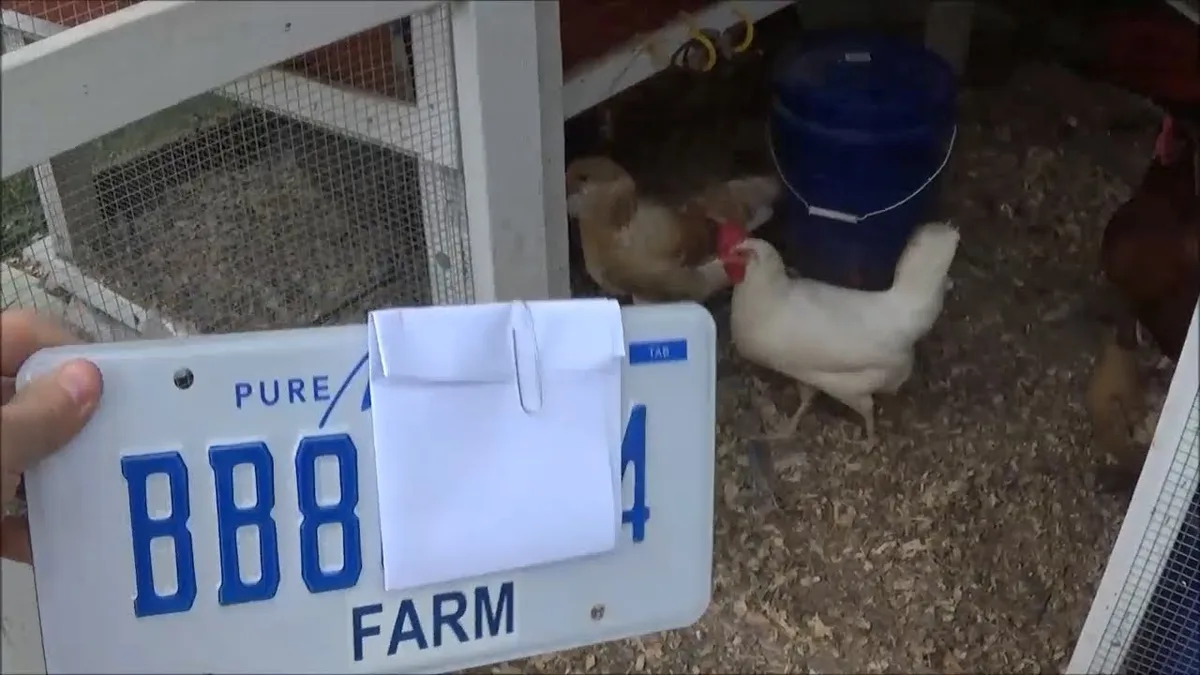
YouTube / striker1211 (YouTube thumbnail (fair-use with source credit))
Under New Mexico law, a farm truck is any motor vehicle registered for agricultural use that transports farm products, livestock, or equipment. The vehicle must carry farm-specific license plates.
Common vehicles that qualify include:
- Pickup trucks used to move hay bales, feed, and livestock
- Medium-duty trucks hauling crops from field to storage
- Chassis cabs fitted with farm-specific bodies like stock trailers
- Older work trucks dedicated to property maintenance and crop transport
Vehicles that do not qualify even if they occasionally touch farm work:
- Personal pickups used mostly for commuting or weekend chores
- Trucks that split time equally between farm and non-farm hauling
- Commercial box trucks operating under a separate business license
The state does not require the truck to be modified in any special way. What matters is the registration category and where the miles are actually driven.
You can register a farm truck under your name as an individual farmer or under a business entity like an LLC or partnership. The documentation differs slightly between the two.
Farm Truck vs. Commercial Truck: The Key Differences
Getting this distinction wrong is the single biggest source of fines in New Mexico farm vehicle registration.
YouTube / Thomas Troyer (YouTube thumbnail (fair-use with source credit))
The core difference comes down to who benefits from the haul and how often the truck leaves the farm. Farm trucks move goods for the farmer who owns them. Commercial trucks move goods for a business transaction with another party.
| Feature | Farm Truck | Commercial Truck |
|---|---|---|
| Primary use | Farmer's own agricultural operation | Hauling for hire or business exchange |
| License plates | Agricultural farm plates | Commercial plates or interstate credentials |
| Weight limit for plates | Up to 26,000 lbs GVWR | Beyond 26,000 lbs or commercial classification |
| Road access | Farms, roads adjacent to farms, between farm properties | All public roads, interstate highways with proper endorsements |
| Registration fees | Reduced agricultural rates | Full commercial rates plus possible excise taxes |
| CDL requirement | Generally not required under farm exemption | May require CDL depending on weight and cargo |
Farm trucks also enjoy a narrower road-use radius. You can drive on public roads that connect farm properties or run alongside farmland. You cannot use a farm-registered truck to make commercial deliveries to grocery stores, feed mills owned by other companies, or construction sites unrelated to your farm.
If you currently run a farm truck and want to take on hauling contracts for other operators, you need to reclassify the vehicle. Switching from farm to commercial registration is possible. The reverse is harder because the MVD will review your recent trip logs and mileage breakdowns before granting farm status again.
Weight and Use: The Two Rules That Decide Your Registration
Everything in New Mexico farm truck registration funnels through two questions: how heavy is the truck, and what is it actually doing?
YouTube / DIY SEMI (YouTube thumbnail (fair-use with source credit))
The weight rule sets a hard ceiling at 26,000 pounds gross vehicle weight rating. This is the manufacturer-rated maximum loaded weight, not the actual scale weight on a given day.
Check your GVWR on the driver side door jamb sticker or in the owner's manual. That number is what the MVD uses.
The use rule is where most disagreement happens. The MVD evaluates primary use by looking at your trip patterns, cargo type, and where the truck spends its time.
Here is how the two rules combine in practice:
- Under 26,000 lbs GVWR plus primarily farm use equals standard farm registration
- Under 26,000 lbs GVWR plus commercial farming operations equals commercial farm registration
- Over 26,000 lbs GVWR plus any farm work equals commercial truck registration
Special weight exemptions exist for certain farm equipment trailers and livestock carriers. These do not change the truck's own registration category.
Seasonal use does not weaken the primary-use requirement. A truck that only runs during planting and harvest still must be primarily devoted to your farm operation year-round in the MVD's view.
Step-by-Step: How to Register a Farm Truck in NM
Getting your farm truck properly registered takes a handful of documents and a trip to your county clerk or MVD office.

YouTube / MVD Express (YouTube thumbnail (fair-use with source credit))
Follow these steps in order to avoid wasted trips and returned applications:
Step 1: Confirm your truck meets the weight and use requirements
Check the GVWR sticker on your truck. Review your typical annual mileage and cargo to confirm primary agricultural use.
Step 2: Collect proof of agricultural operation
You need one of the following documents to prove your farm status:
- Current year property tax statement showing agricultural land use
- Signed farm lease agreement covering at least one season
- Federal Farm Service Agency production number tied to the operation
- County agricultural assessment documentation
Step 3: Gather your vehicle documents
Bring the title or current registration for the truck. If the truck is financed, the lienholder information must match the title.
Step 4: Complete the application at your county motor vehicle office
Fill out the Motor Vehicle Division application form for farm vehicle registration. Submit it with your proof documents, title, and payment.
Step 5: Install plates and update your insurance
Attach the new agricultural plates to your truck. Confirm with your insurance provider that your policy covers farm vehicle use.
The entire process typically takes one business day at the office. Renewal happens annually and follows the same documentation path each time.
Required Documents You Can’t Skip
You will get turned away without these. The MVD does not accept partial applications.
Bring the truck title or current registration. If the truck is leased, bring the lease agreement showing agricultural use. You also need proof of New Mexico insurance that covers farm operations.
The farm verification document is non-negotiable. Acceptable forms include:
- Property tax bill showing agricultural classification
- Farm Service Agency form 578 or similar federal documentation
- County agricultural assessment letter
If you operate under a business name, bring your EIN confirmation or business registration papers.
Fees and Costs Based on Weight and Type
Farm registration is cheaper than commercial, but the price still scales with weight. As of 2026, the base fee starts at $27 for vehicles under 6,000 lbs and tops out at $120 for the heaviest farm trucks under 26,000 lbs.
| GVWR Range | Annual Fee |
|---|---|
| Under 6,000 lbs | $27 |
| 6,001–10,000 lbs | $42 |
| 10,001–16,000 lbs | $67 |
| 16,001–26,000 lbs | $120 |
Additional fees apply for specialty plates or expedited processing. Late renewals add a $10 penalty after the 30-day grace period.
Where and How to Use Your Farm Truck Legally
Farm plates come with road-use restrictions. You can drive on any public road that connects farm properties or runs adjacent to farmland. You cannot use farm plates for general commuting or non-farm errands.
The MVD allows travel between farm properties, to feed stores, to equipment dealers, and to livestock auctions. It does not allow travel to non-farm job sites, commercial deliveries, or personal trips unrelated to agriculture.
If you need to haul farm products to a processor or market, that is allowed. The moment you start hauling for another business or for hire, you cross into commercial territory.
Common Mistakes That Get Farmers Fined
YouTube / KIMT News 3 (YouTube thumbnail (fair-use with source credit))
The most frequent violation is using farm plates for non-farm work. Law enforcement looks for trucks with farm plates making deliveries to construction sites or hauling equipment for other businesses.
Another common error is exceeding the 26,000 lb GVWR limit. Some farmers assume that as long as the truck is used for farm work, the weight does not matter. The MVD does not see it that way.
Misrepresenting primary use is a third pitfall. If your truck spends more time on non-farm tasks than farm tasks, it does not qualify.
Special Cases: Out-of-State, Seasonal, and Custom Harvesters
Out-of-state farmers can register in New Mexico if they own or lease land here. You must provide the same agricultural proof as in-state applicants.
Seasonal workers and custom harvesters have a separate path. These operations often qualify for commercial farm vehicle registration. This allows them to haul for multiple farmers while maintaining proper credentials.
The application requires a business license and proof of agricultural contracts.
If you operate in multiple states, check reciprocity agreements. New Mexico honors farm vehicle registrations from states with similar agricultural exemptions. You still need to comply with New Mexico’s weight and use rules while driving here.
Renewing, Transferring, or Updating Your Farm Registration
Renewals happen annually and arrive in the mail about 60 days before expiration. Pay on time to avoid the late fee. If you move, update your address within 30 days through the MVD website or in person.
Transferring plates between your own farm trucks is straightforward. You can move a farm plate from an old truck to a new one if both qualify under the weight and use rules.
Changing your registration category requires a new application. Switching from farm to commercial means submitting business paperwork and paying commercial fees.
If you sell the truck, the farm plates stay with the registration, not the vehicle. The buyer must re-register the truck under their own name and qualifications.
FAQs About NM Farm Truck Rules
Can I use my farm truck for personal driving?
No. Farm plates are restricted to agricultural use. Personal commuting, weekend trips, or non-farm errands violate the registration terms.
Do I need a CDL for a farm truck?
Most farm trucks under 26,000 lbs GVWR do not require a CDL. However, if you haul hazardous materials or the vehicle exceeds certain weight thresholds, a commercial license may apply.
What happens if I get pulled over with farm plates?
Bring your registration, proof of agricultural use, and valid insurance. Law enforcement may ask where you are going and what you are hauling.
Can I register a farm truck if I rent my land?
Yes. A signed farm lease agreement counts as proof of agricultural use. The lease should cover the current season and show your name along with the property address.
How long does renewal take?
Renewal takes about 15 minutes at the MVD office if you have all your documents. Online renewal is faster but requires prior in-person verification.
Do farm trucks need annual inspections?
New Mexico does not require annual vehicle inspections for farm registration. However, your truck must remain roadworthy and meet basic safety standards.
Final Checklist: Are You Doing This Right?
Before you drive, run through this quick verification list.
- Your truck GVWR is 26,000 lbs or below
- Primary use is agricultural transport on your farm
- You carry current farm registration in the vehicle
- Insurance covers farm vehicle operation
- Plates are mounted clearly and legibly
- You are traveling between farm properties or to agricultural suppliers
- You have proof of agricultural land use or lease on hand