ByMax Lee
New Mexico Window Tint Laws Explained
New Mexico window tinting legal limits can make or break your vehicle setup. Get it wrong and you risk fines, failed inspections, or being pulled over. The state has clear rules about how dark your tint can be on different windows.
As of 2026, New Mexico requires at least 20% visible light transmission on front side windows. Rear windows and the back windshield can go any darkness you want.
YouTube / Window tint laws (YouTube thumbnail (fair-use with source credit))
Quick Answer
New Mexico window tinting legal limits require 20% VLT on front side windows. Rear side windows and rear windshields allow any darkness. Windshields can only have non-reflective tint above the AS-1 line.
Reflective or metallic tint is not permitted. Medical exemptions exist for lower VLT levels with proper documentation.
Why These Laws Exist (And Why You Should Care)
Window tint laws exist for safety. Dark tint can reduce driver visibility, especially at night. It also makes it harder for law enforcement to see inside vehicles during stops.
New Mexico faces intense sun exposure year-round. The state sits at high altitude in many areas, where UV rays hit harder. Proper tint helps block those harmful rays while staying legal.
You should care because illegal tint can result in fines up to $500. You might fail your vehicle inspection. Police can pull you over just for tint violations.
New Mexico’s Exact Tint Rules by Window
Each window on your vehicle has different legal requirements. Here’s what you need to know:
Front Side Windows
Front side windows must allow at least 20% of light through. This means you can’t go darker than 20% VLT. Anything darker than 20% is illegal unless you have a medical exemption.
Rear Side Windows
Rear side windows have no darkness restriction in New Mexico. You can tint these any level you want.

Wikimedia Commons / Merikanto (CC BY-SA)
Rear Window
The rear windshield can also be any darkness level. This pairs with the rear side window flexibility.
Windshield
Windshield rules are the strictest. You can only apply non-reflective tint above the AS-1 line, typically the top 5 inches. Some vehicles come with a factory-tinted strip at the top.
That counts toward your allowed tint area.
Reflective tint is never allowed on windshields. Even non-reflective tint below the AS-1 line violates state law.
Factory Tint
Many vehicles come with light factory tint from the dealer. This usually provides around 25% to 35% VLT. Factory tint often meets New Mexico requirements on its own.
Medical Exemptions
If you have a medical condition that causes light sensitivity, you may qualify for a lower VLT exemption. Conditions like photophobia, lupus, or certain eye disorders can qualify. You’ll need documentation from a licensed physician.
The exemption must be carried in your vehicle at all times.
New Mexico accepts medical exemptions for tint darker than 20% VLT on front windows.
How Tint Darkness (VLT %) Works
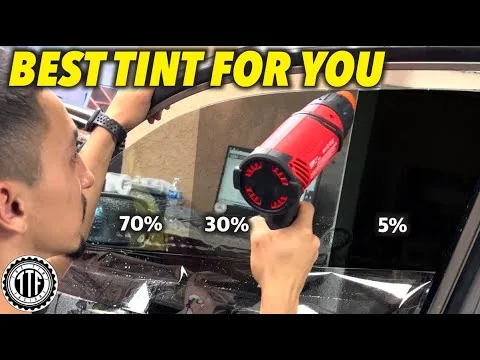
Tint darkness is measured in Visible Light Transmission, or VLT. This percentage tells you how much light passes through the window. A 20% VLT tint allows 20% of light through.
The remaining 80% is blocked.
YouTube / Window tint training (YouTube thumbnail (fair-use with source credit))
Lower VLT numbers mean darker tint. Higher VLT numbers mean lighter tint.
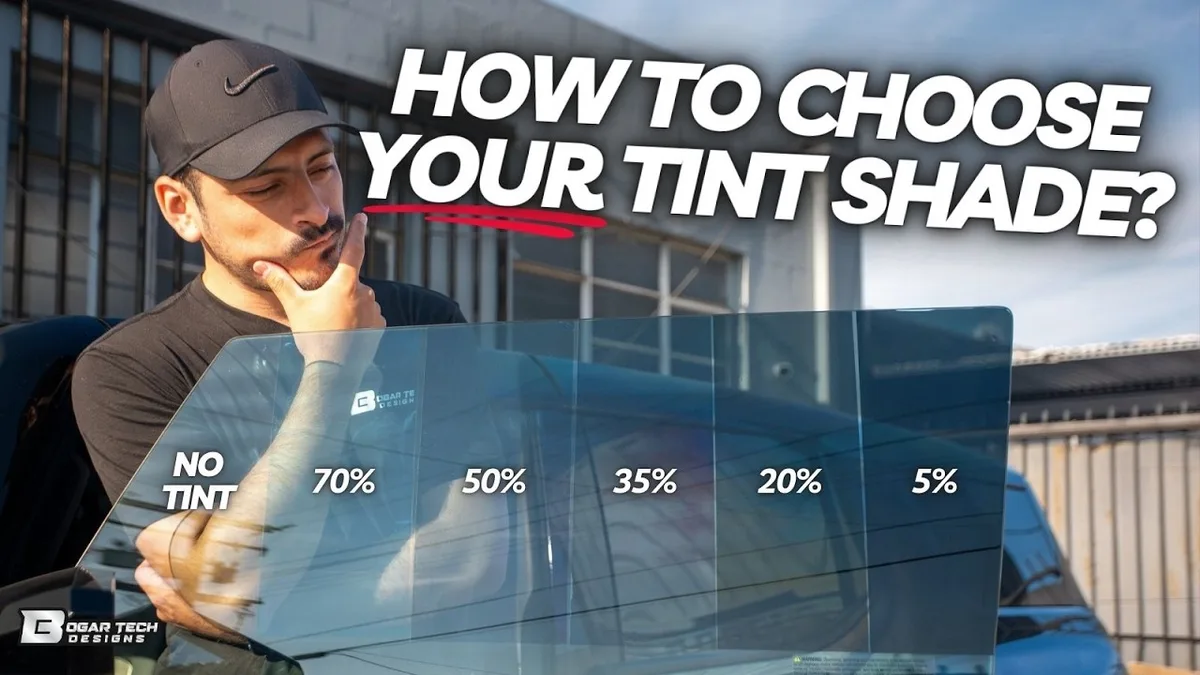
Common VLT Levels Explained
- 5% VLT: Very dark, limousine style
- 20% VLT: Legal minimum for front windows in NM
- 35% VLT: Medium darkness, popular choice
- 50% VLT: Light tint, barely noticeable
New Mexico’s 20% requirement sits in the darker range. Many drivers choose 20% to 35% for front windows.
How to Measure Your Tint
You can check your tint darkness with a VLT meter. These handheld devices snap onto your window and give a readout. Many tint shops offer free measurements.
Law enforcement uses similar meters during traffic stops.
VLT vs. Performance Ratings
VLT measures light transmission only. It doesn’t tell you about heat rejection or UV protection. Look for additional specs beyond VLT.
Heat rejection percentages show how much solar energy the film blocks. UV rejection ratings indicate protection against ultraviolet rays.
Reflective and Colored Tint Restrictions
New Mexico restricts reflective and colored tints. Highly reflective tint creates glare for other drivers. Colored tints, especially red or amber, can confuse drivers and first responders.
Mirror and Metallic Tint
Mirror or metallic tint reflects light back outward. New Mexico bans this type of tint entirely.
YouTube / Bogar Tech Designs (YouTube thumbnail (fair-use with source credit))
Red, Amber, and Yellow Tint
Some tint colors are illegal on all windows. Red, amber, and yellow tint mimics emergency vehicle lights. New Mexico prohibits these colors specifically.
Stick to neutral colors like black, gray, or charcoal.
Non-Reflective Tint Is Required
All tint applied in New Mexico must be non-reflective. This applies to every window, including rear windows. Even though rear windows allow any darkness, the tint can’t create a mirror effect.
When shopping for tint, ask about reflectivity. Reputable brands like 3M, Llumar, and XPEL offer non-reflective options.
What Happens If Your Tint Is Illegal?
Facing an illegal tint violation isn’t fun. New Mexico treats tint violations as infraction offenses. You’ll receive a citation and must pay a fine.
The fine amount varies by county but typically ranges from $100 to $500.
YouTube / James Madison Audits (YouTube thumbnail (fair-use with source credit))
Fines and Penalties
A first-time tint violation usually costs around $150 to $250. Repeat offenses can push fines higher. Some counties allow you to fix the violation and dismiss the ticket.
Traffic Stop Consequences
Law enforcement can pull you over solely for tint violations. If an officer believes your tint is too dark or reflective, that’s reasonable suspicion. The officer will likely measure your tint with a VLT meter.
Fixing Illegal Tint
The fastest solution is removing the illegal tint. You can have it stripped professionally or attempt DIY removal. If you want to keep tint, you’ll need to replace it with legal film.
How to Check If Your Tint Is Compliant
The easiest way is to use a VLT meter. These devices measure the exact percentage of light passing through your windows. Many tint shops offer free checks.
If you don’t have a meter, compare your tint to a known legal vehicle. Park next to a car with factory tint in a well-lit area. Factory tint usually meets the 20% VLT requirement.
Visual Cues for Compliance
Legal front side tint in New Mexico should still allow you to see inside the vehicle during daylight. For windshields, check the AS-1 line. Tint above this line is allowed.
Tint below it is not, unless you have a medical exemption.
Professional Inspection
If you’re unsure, visit a professional tint shop. They have the tools and expertise to verify compliance. Some shops will even provide a compliance certificate.
Common Mistakes That Get Drivers in Trouble
Assuming factory tint is always legal is a common mistake. Some factory tints can be darker than 20% VLT. Always verify the exact percentage.
Applying aftermarket tint over factory tint is another issue. This can push the combined darkness below the legal limit.
Ignoring the AS-1 Line
Many drivers tint their entire windshield. This is illegal in New Mexico. Only the area above the AS-1 line can have tint.
Using Reflective or Colored Tint
Reflective tint might look stylish, but it’s illegal. New Mexico bans metallic or mirror-like finishes. Colored tints, especially red or amber, are also prohibited.
Forgetting Medical Exemption Paperwork
If you have a medical exemption, always carry the documentation. Without it, you’re treated like any other driver.
Out-of-State Drivers: Does NM Recognize Other States’ Tint Laws?
New Mexico does not recognize other states’ tint laws. If you’re driving through or moving to New Mexico, your tint must comply with NM standards.
If you’re just passing through, you’re expected to follow New Mexico’s rules. Law enforcement can pull you over for illegal tint regardless of your license plate.
Moving to New Mexico
If you’re moving to New Mexico, update your tint to meet local laws. You’ll need to register your vehicle in the state. During registration, your tint will be checked for compliance.
Traveling Through New Mexico
If you’re road-tripping through New Mexico, be aware of the tint laws. If your home state allows darker tint, you’ll need to adjust for the duration of your stay.
Best Tint Types for New Mexico’s Climate
New Mexico’s climate demands high-performance tint. The state’s high altitude and intense sun exposure require strong UV and heat rejection. Ceramic tint is the top choice for these conditions.
Ceramic tint blocks up to 99% of UV rays. It also rejects a significant amount of heat. This keeps your vehicle cooler and protects your skin.
YouTube / ⚡️Vik&Tina Reviews Studio⚡️ (YouTube thumbnail (fair-use with source credit))
Dyed Tint
Dyed tint is a budget-friendly option. It provides basic UV protection and glare reduction. However, it doesn’t reject heat as effectively as ceramic tint.
Metallic Tint
Metallic tint offers good heat rejection. However, it’s reflective and illegal in New Mexico.
Hybrid Tint
Hybrid tint combines dyed and metallic layers. It offers better heat rejection than dyed tint alone. However, it can still be reflective.
Carbon Tint
Carbon tint provides good heat rejection and UV protection. It’s non-reflective and durable. This makes it a solid middle-ground option between dyed and ceramic tint.
Tint Performance Comparison
| Tint Type | UV Rejection | Heat Rejection | Reflectivity | Cost |
|---|---|---|---|---|
| Ceramic | 99% | High | Non-reflective | $$$ |
| Carbon | 99% | High | Non-reflective | $$ |
| Dyed | 90% | Low | Non-reflective | $ |
| Hybrid | 95% | Medium | Varies | $$ |
Ceramic tint is the best overall choice for New Mexico. Carbon tint is a strong alternative if you’re on a tighter budget.
Step-by-Step: Getting Legal Tint Installed
Start by choosing a reputable tint shop. Look for businesses with good reviews and proper licensing. Ask if they’re familiar with New Mexico’s tint laws.
Schedule a consultation. Bring your vehicle in for an assessment. The shop will measure your windows and discuss your options.
Selecting Your Tint
Decide on the type and darkness of your tint. For front side windows, stick to 20% VLT or higher. Consider ceramic or carbon tint for the best performance in New Mexico’s climate.
Ask about warranties. Quality tint shops offer warranties against bubbling, peeling, or fading.
Installation Process
The installation usually takes 2 to 4 hours. The shop will clean your windows thoroughly. They’ll then apply the tint film and trim it to fit perfectly.
After installation, you’ll need to wait before rolling down your windows. Most shops recommend waiting 3 to 5 days.
Post-Installation Care
Avoid cleaning your windows for at least a week. Use a soft cloth and mild soap when you do clean them. Inspect your tint regularly for signs of peeling or bubbling.
FAQs
How dark can my tint be in New Mexico?
Front side windows require 20% VLT minimum. Rear side and rear windows allow any darkness. Windshields only permit non-reflective tint above the AS-1 line.
Can I get pulled over for tint in New Mexico?
Yes. Law enforcement can stop you for suspected tint violations. Officers often use VLT meters during traffic stops.
Does New Mexico have an annual inspection for tint?
No. However, law enforcement can still cite you for illegal tint at any time.
How do I get a medical exemption for darker tint?
You need a letter from a licensed physician documenting your condition. The letter should specify the required VLT level. Keep this paperwork in your vehicle.
Final Checklist Before You Tint
Verify your vehicle’s current window darkness. Check factory tint percentages and plan your aftermarket tint accordingly.
Choose a reputable, licensed installer familiar with state laws. Select ceramic or carbon tint for best performance in New Mexico’s climate. Get a compliance certificate after installation.
Keep all documentation in your glove compartment.