ByMax Lee
New Mexico School Bus Stop Law on Divided Highways
New Mexico school bus stop law on divided highways can be confusing for drivers. You might not know when you’re required to stop and when you can keep going. This matters because children are crossing the road near bus stops every day.
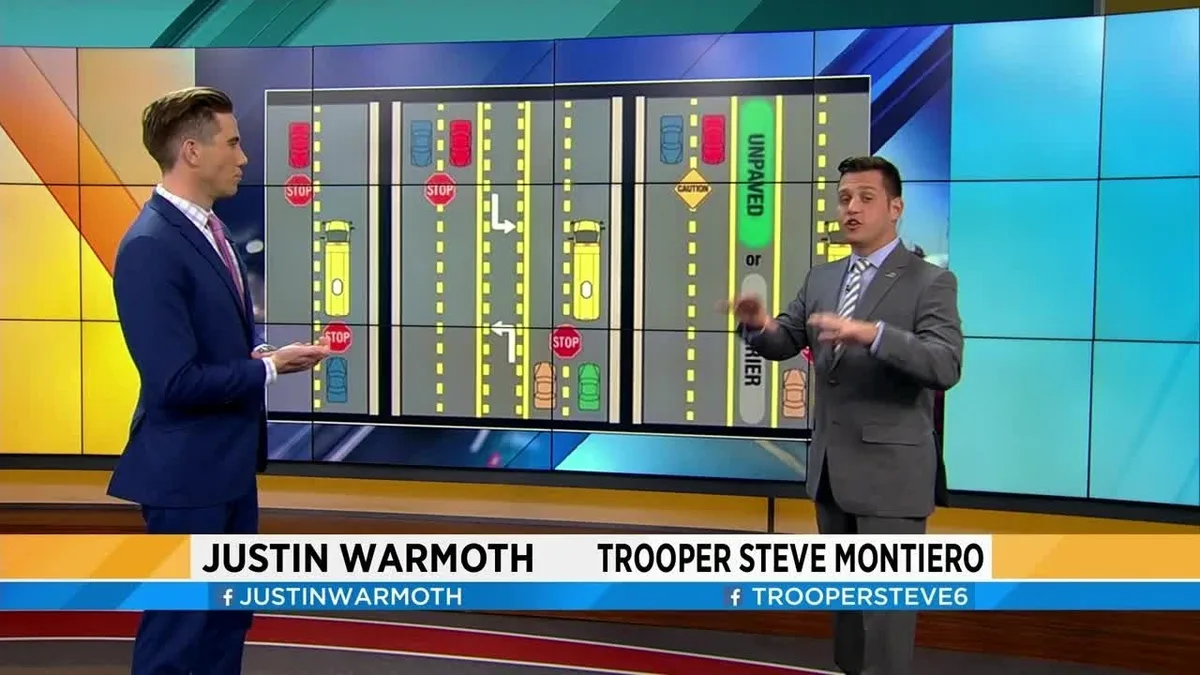
According to the New Mexico Motor Vehicle Code, traffic traveling in the same direction on a divided highway must stop for a school bus displaying flashing red lights and an extended stop arm. However, vehicles on the opposite side of a physical median are generally allowed to proceed.
YouTube / WKMG News 6 ClickOrlando (YouTube thumbnail (fair-use with source credit))
Quick Answer
New Mexico school bus stop law on divided highways requires same-direction traffic to stop. This happens when the bus flashes red lights and extends its stop arm. Vehicles on the opposite side of a physical median may continue driving.
The median must be at least 5 feet wide or have a concrete barrier. Failure to stop can result in a fine and points on your license.
Why New Mexico’s School Bus Stop Law on Divided Highways Matters
School bus stop laws exist for one reason: protecting children. Every year, thousands of kids walk to and from school buses. They often cross roads without looking.
When a bus stops, the stop arm and flashing red lights are its way of saying “children are crossing. Stop.”
On divided highways, those same signals apply only to traffic moving in the same direction. The physical divider acts as a safety barrier. It keeps children from having to walk into oncoming lanes.
That’s why drivers on the opposite side don’t have to stop.
The National Highway Traffic Safety Administration reports that most school bus pedestrian fatalities involve children crossing in front of or behind the bus. Knowing when to stop and when to proceed isn’t just about avoiding a ticket. It’s about keeping kids alive.
How Divided Highways Change the Rules
The key difference between a divided and undivided highway changes everything. On a two-lane road with no median, traffic in both directions must stop for a school bus with flashing red lights. On a divided highway, only traffic traveling in the same direction as the bus must stop.
What counts as a divided highway? Think of a road split by a grassy strip, a dirt median, a concrete barrier, or a raised island. The New Mexico law specifies that the median must be at least five feet wide.
If it’s wider than five feet and unpaved, or if it has a permanent physical barrier, traffic on the opposite side can keep moving.
Below is a simple breakdown of how the rules differ.
| Road Type | Traffic Stopping Required | Traffic Allowed to Proceed |
|---|---|---|
| Undivided two-lane road | Both directions | Neither |
| Divided highway with ≥5-ft unpaved median | Same direction only | Opposite direction |
| Divided highway with concrete/steel barrier | Same direction only | Opposite direction |
| One-way road with multiple lanes | All lanes | None |
A diagram like the one below illustrates how a divided highway separates traffic flows. When a bus stops on one side, cars on the other side continue without stopping.
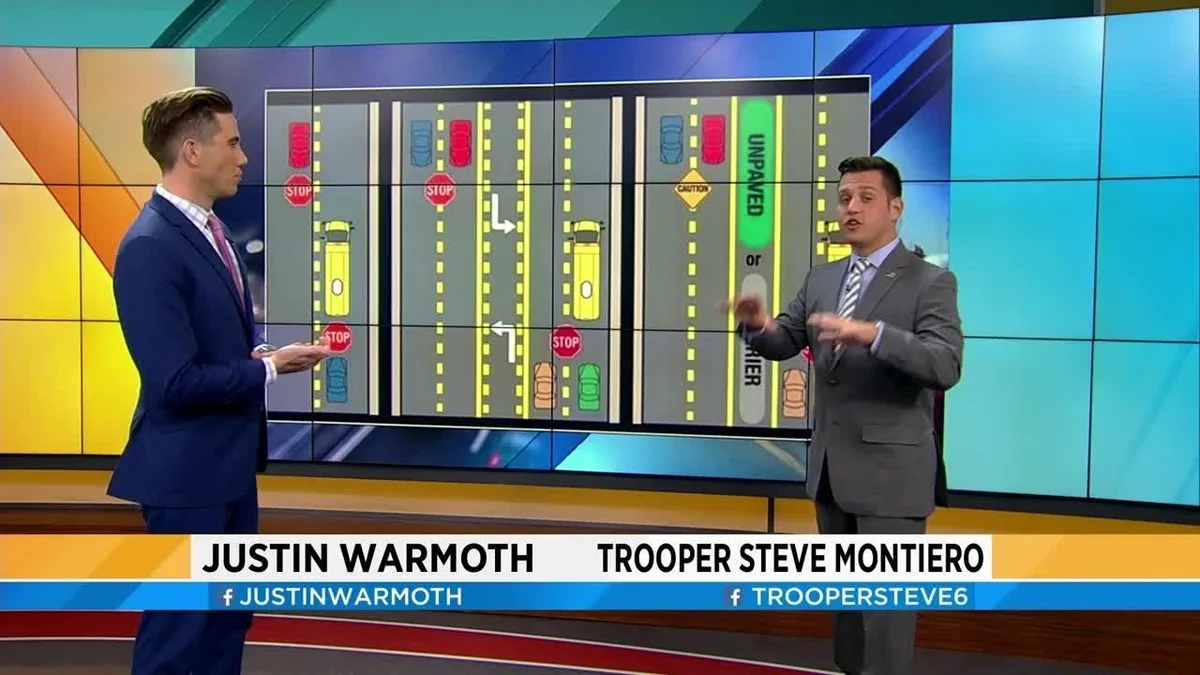
YouTube / WKMG News 6 ClickOrlando (YouTube thumbnail (fair-use with source credit))
The takeaway is straightforward. If you see a physical divider, you can likely keep going, but only after you’ve confirmed the bus is on the other side and the divider meets the legal width. When in doubt, stop.
It’s the safest choice.
What the Flashing Lights Actually Mean
School buses use two sets of lights to communicate with drivers. First come the amber lights. They flash to warn you that the bus is about to stop.
When the amber lights are on, slow down and prepare to stop. You’re not legally required to halt yet, but you should be ready.
Then the red lights kick in. Along with a stop arm extending from the side of the bus, the flashing red lights mean “stop now.” Traffic in the same direction must come to a complete stop at least 20 feet from the bus. Children will likely cross the road in front of or behind the bus.
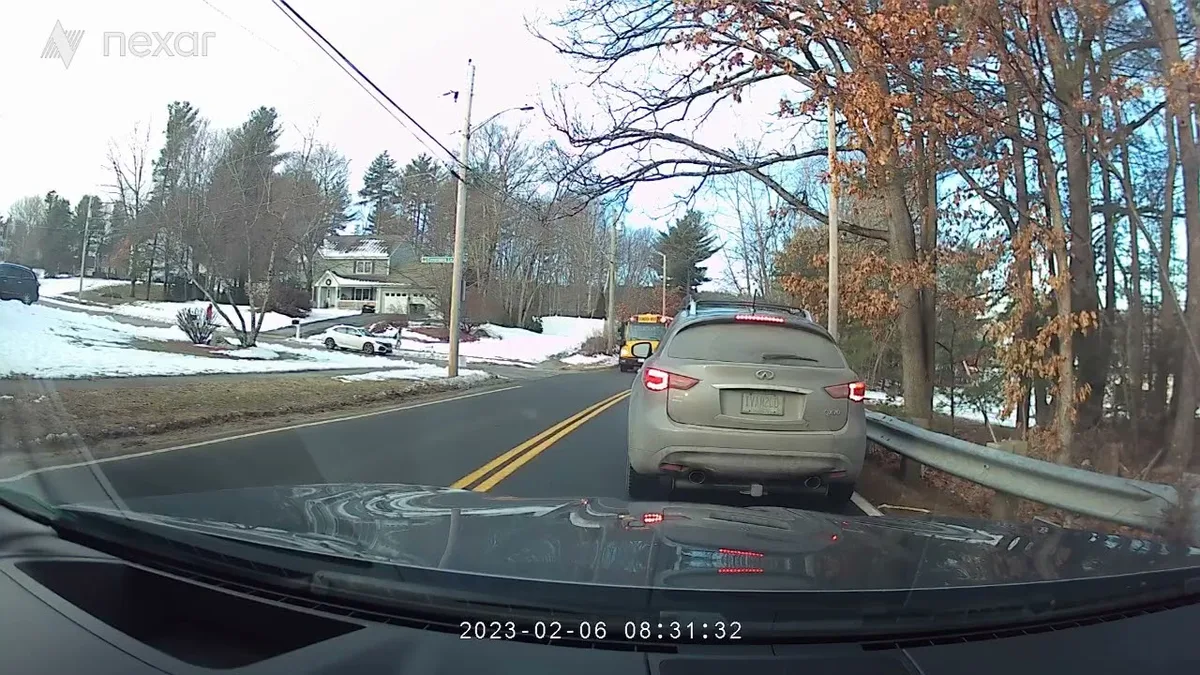
YouTube / Tom Young (YouTube thumbnail (fair-use with source credit))
The sequence is designed to give drivers a clear warning before the full stop. Ignoring the amber lights and speeding up is dangerous. Even if you think you have time, a child could step into the road unexpectedly.
The stop arm is the final signal, it’s illegal to pass a bus with its arm extended.
Some drivers also wonder about the steady red light that appears on newer buses. That’s not a turn signal. It’s part of the stop-light system and carries the same legal weight.
Treat every red flash as a command to stop.
The Exact Legal Definition of a Divided Highway in New Mexico
New Mexico defines a divided highway in the Motor Vehicle Code. Section 66-7-411 states that a divided highway is a roadway where traffic travels in opposite directions separated by a physical barrier or an unpaved median at least five feet wide. The barrier can be a concrete jersey barrier, a steel guardrail, or a landscaped island.
The unpaved median must be wide enough that children cannot easily step or run across it.
This definition matters because it determines whether you must stop. If the road you’re on has a divider that meets the five-foot rule, traffic on the opposite side does not have to stop. If the divider is narrower or nonexistent, you must stop regardless of which direction you’re traveling.
YouTube / KRQE (YouTube thumbnail (fair-use with source credit))
Look for these common features that qualify as a divided highway:
- A wide grassy or dirt median between lanes
- A concrete or brick barrier separating directions
- A raised median with curbing or plantings
If you’re unsure whether a median meets the legal standard, assume it doesn’t and stop. Courts and law enforcement will interpret the width and physical nature of the divider based on the statute. When a child’s safety is involved, the benefit of the doubt goes to stopping.
Step-by-Step: What to Do When You See a School Bus
1. See the Amber Lights
Amber lights flashing ahead means the bus is preparing to stop. Ease off the accelerator. Move over if there’s a lane to your left and you’re on a two-lane road.
Stay alert.
2. Prepare for Red Lights
When the red lights start flashing and the stop arm extends, come to a complete stop. Stop at least 20 feet away from the bus. Do not pass the bus.
Do not creep forward. Wait.
3. Check for Children
Look carefully. Children may be crossing in front of the bus, behind the bus, or even from between parked cars. Make sure you see them safely reach the sidewalk or school zone before you move.
4. Know When to Go
On a divided highway, if you’re on the opposite side of the median and the bus is displaying red lights, you may proceed with caution. On an undivided road, you must remain stopped until the red lights turn off and the stop arm retracts.
5. Watch for the Driver’s Signal
Some bus drivers make eye contact or wave you on when it’s safe. That’s a courtesy, not a legal requirement. The law says you may go only when the lights stop flashing and the arm is back in place.
A visual guide like the illustration below can help you remember the sequence.
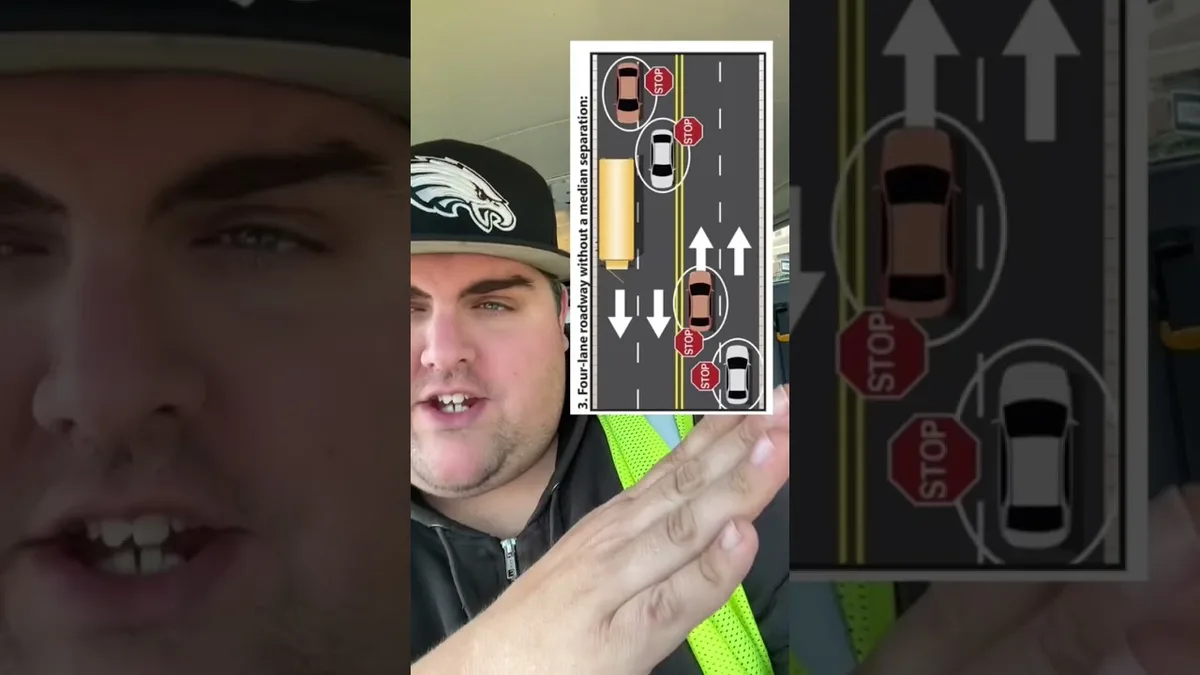
YouTube / ClawBoss (YouTube thumbnail (fair-use with source credit))
Practice makes perfect. The next time you’re driving, scan for school buses and mentally walk through these steps. It takes just a few seconds, but it can prevent a lifetime of regret.
Penalties for Breaking the Law (Fines, Points, and Worse)
New Mexico takes school bus violations seriously. Passing a stopped school bus with flashing red lights is a misdemeanor. The fine starts at $300 for a first offense.
You’ll also get 3 points on your driving record.
A second offense within 3 years jumps to $500 and 4 points. A third offense can mean a $1,000 fine and 6 points. Accumulating too many points can lead to license suspension.
If your violation causes injury or death, you could face criminal charges.
These penalties exist because the stakes are high. A child hit by a car at 25 mph has a 10% chance of survival. At 40 mph, that drops to 1%.
The law isn’t just about tickets. It’s about saving lives.
Common Mistakes Drivers Make (And How to Avoid Them)
Many drivers assume they must stop for a school bus no matter what. That’s not true on divided highways. The opposite mistake is just as dangerous: assuming you can always keep going.
Some drivers speed up when they see amber lights, trying to pass before the bus stops.
Here are the most common errors:
Stopping when you don’t have to. If you’re on the opposite side of a qualifying median, you can proceed. Stopping unnecessarily can cause confusion and traffic jams.
Not stopping when you should. On undivided roads or when you’re behind the bus, you must stop. Passing a stopped bus is illegal and deadly.
Ignoring the stop arm. The arm extends for a reason. Even if you don’t see children, you must stop. They may be hidden from view.
Misjudging the median. A painted line doesn’t count. Neither does a narrow strip of grass. If the median is less than 5 feet wide, you must stop.
YouTube / CTV News (YouTube thumbnail (fair-use with source credit))
The best rule of thumb is simple. When in doubt, stop. It’s better to be cautious than to risk a child’s life.
If you’re unsure about the median, err on the side of stopping. The few extra seconds are worth it.
Rural vs. Urban Roads: Does the Rule Change
The law doesn’t change between rural and urban areas. What changes is how often you’ll encounter school buses and divided highways. Rural roads are more likely to have wide medians or unpaved dividers.
Urban roads often have concrete barriers or narrow painted lines.
In cities, you’ll see more buses making frequent stops. The same rules apply. If the road is divided by a qualifying median, opposite-direction traffic doesn’t stop.
If it’s undivided, everyone stops.
Watch for school zones in urban areas. Speed limits drop, and children are more likely to be walking. Rural roads may have higher speed limits, but the stopping rules remain identical.
What School Bus Drivers Wish You Knew
Bus drivers see the same mistakes over and over. They wish drivers understood that the stop arm isn’t just a suggestion. It’s a legal requirement.
When the arm is out and lights are flashing, children are either boarding or exiting.
They also wish drivers would slow down near buses, even when the lights aren’t flashing. Kids can be unpredictable. A child might drop something and run back into the road.
The few seconds it takes to slow down can prevent a tragedy.
Bus drivers report that the most dangerous moments are when they’re picking up or dropping off at intersections. Drivers from side streets sometimes don’t see the bus or the children. Always check for buses when approaching an intersection.
Real-Life Scenarios: Divided Highway Examples
Here are three common situations and how to handle them.
Example 1: Four-lane road with a concrete median
You’re driving in the left lane, and a school bus stops on the right side of the road with its red lights flashing. The concrete median is 6 feet wide. You’re on the opposite side of the median.
You may proceed with caution.
Example 2: Two-lane road with a painted center line
A school bus stops ahead with flashing red lights. There’s no physical median. You must stop, regardless of which direction you’re traveling.
Example 3: Six-lane road with a grassy median
You’re in the far-left lane, and a bus stops on the far-right side. The grassy median is 8 feet wide. You’re on the opposite side of the median.
You may continue driving.
FAQs About New Mexico’s School Bus Stop Law
Do I have to stop if the bus is on the other side of a divided highway?
No. If you’re on the opposite side of a qualifying median, you don’t have to stop. The median must be at least 5 feet wide or have a physical barrier.
What if the median is only 4 feet wide?
Then it doesn’t qualify as a divided highway. You must stop for the bus, even if you’re on the opposite side.
Can I pass a school bus with flashing amber lights?
No. Amber lights mean the bus is about to stop. Slow down and prepare to stop.
Passing is illegal and dangerous.
What’s the fine for passing a stopped school bus in New Mexico?
The first offense is a $300 fine and 3 points on your license. A second offense within 3 years is $500 and 4 points.
Do these rules apply to private school buses?
Yes. The law applies to all school buses, whether public or private. The same stopping rules and penalties are in effect.
What should I do if I’m unsure about the median?
Stop. It’s the safest choice. If you’re unsure whether the median qualifies, err on the side of caution.
Final Checklist: Are You Following the Law Correctly?
Here’s a quick way to confirm you’re doing the right thing.
- See amber lights? Slow down and prepare to stop.
- See red lights and stop arm? Stop completely if you’re behind the bus or on an undivided road.
- On a divided highway? Check the median. If it’s at least 5 feet wide or has a barrier, opposite-direction traffic may proceed.
- Unsure about the median? Stop anyway.
- Children crossing? Wait until they’re safely on the sidewalk or in the bus.
Following these steps keeps kids safe and keeps you out of legal trouble. When in doubt, stop. It’s always the right call.