ByMax Lee
New Mexico Move Over Law: What Drivers Must Know
YouTube / Mileage Mike Travels (YouTube thumbnail (fair-use with source credit))
New Mexico's move over law for emergency vehicles exists to protect first responders and roadside workers. If you've ever wondered what to do when you see flashing lights ahead, this law spells it out clearly. As of 2026, it's not just a courtesy, it's the law, and breaking it can mean fines or worse.
The rule is simple: slow down or move over when you see emergency vehicles with flashing lights. Per New Mexico Statutes Annotated § 66-7-324, failing to comply puts lives at risk and can cost you up to $125 in fines.
Quick Answer
New Mexico move over law for emergency vehicles requires you to change lanes or slow down. It applies to police, fire, ambulance, tow, and maintenance vehicles with flashing lights. You must move over if safe.
Otherwise, reduce speed by at least 5 mph below the limit. The law is enforced statewide.
Why This Law Exists and Who It Protects
First responders face real danger every time they stop on the roadside. Between 2016 and 2020, the NHTSA reported over 150 law enforcement officers killed in traffic-related incidents nationwide. New Mexico's law directly addresses this risk.
The law protects more than just police. It covers firefighters, EMTs, tow truck operators, and highway workers. These professionals often work just feet from fast-moving traffic.
The Exact Rules: When and How to Move Over
The rule is triggered by flashing red, blue, or amber lights. You must either move to a non-adjacent lane or slow down by at least 5 mph below the posted limit. This applies whether the vehicle is moving or stationary.
On a four-lane highway, move to the far lane. On a two-lane road, slow down. The law doesn't require you to break other traffic laws to comply.

YouTube / keeprightusa (YouTube thumbnail (fair-use with source credit))
Here's the breakdown:
| Situation | Required Action |
|---|---|
| Multi-lane road, safe to move over | Change to the farthest lane from the emergency vehicle |
| Single-lane or unsafe to move over | Slow down to 5 mph below the speed limit |
| Emergency vehicle approaching from behind | Pull over to the right and stop if it's safe |
What Counts as an Emergency Vehicle in New Mexico
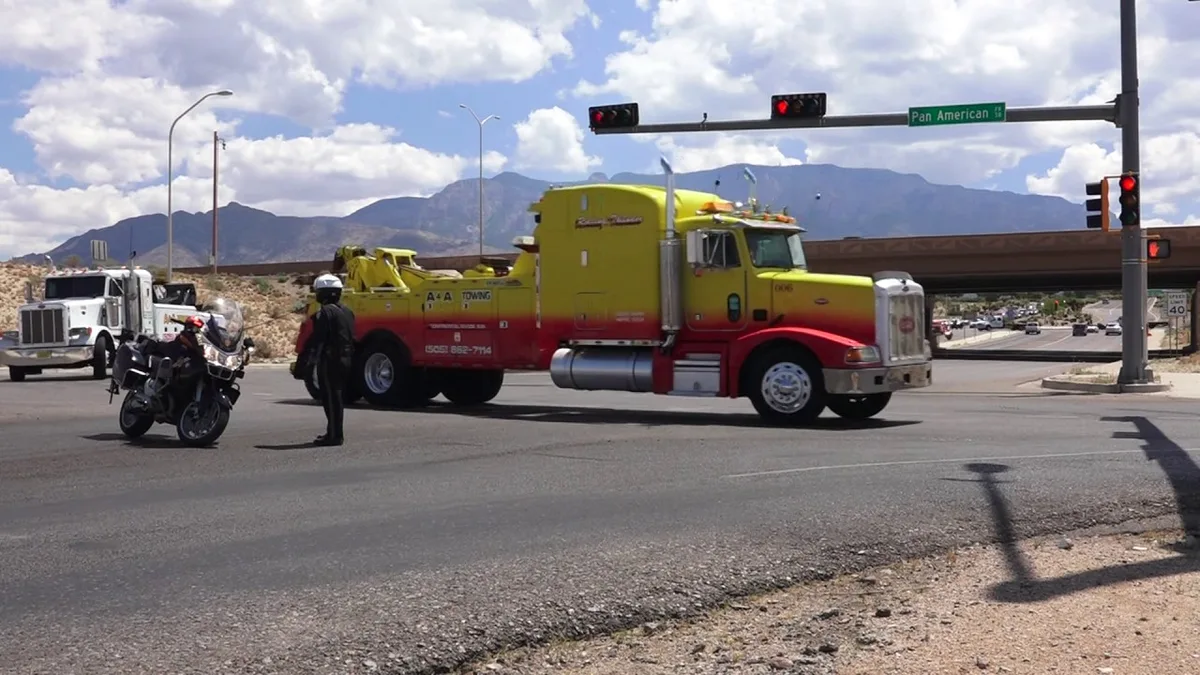
Police cars, fire trucks, and ambulances are obvious. But the law also includes tow trucks, highway maintenance vehicles, and utility service vehicles with amber lights. If it's flashing, it counts.
Some drivers overlook utility vehicles. But these workers face the same dangers as police and firefighters. Treat all flashing lights the same way.
YouTube / New Mexico Trucking Association (YouTube thumbnail (fair-use with source credit))
How to React in Different Road Situations
Highways and rural roads require different responses. On a multi-lane highway, you have more options to move over safely. On a two-lane road, slowing down is often your only choice.
| Road Type | Best Action |
|---|---|
| Multi-lane highway | Move to the far lane |
| Two-lane rural road | Slow down by 5 mph minimum |
| City streets | Slow down, watch for pedestrians |
If you're unsure what to do, err on the side of caution. Slowing down is always better than doing nothing.
YouTube / Wayalife (YouTube thumbnail (fair-use with source credit))
Never assume other drivers will react correctly. Always check your mirrors and blind spots before changing lanes. Even a small speed reduction can make a big difference in preventing accidents.
Common Mistakes Drivers Make (And How to Avoid Them)
Many drivers don't realize the law applies to all emergency vehicles, not just police cars. Tow trucks and maintenance vehicles are often overlooked, but they're just as protected.
Another common error is failing to slow down when you can't move over. Some drivers maintain their speed, putting workers at risk. Remember, the law requires you to slow down by at least 5 mph below the limit if changing lanes isn't safe.
YouTube / Driver Defense Team (YouTube thumbnail (fair-use with source credit))
Distracted driving is a major factor in violations. Put your phone down and stay alert, especially near roadside activity. Even a moment of inattention can lead to a dangerous situation.
Some drivers also misjudge the distance needed to move over safely. Start slowing down or changing lanes as soon as you see flashing lights, not when you're right next to the vehicle.
Always signal before changing lanes. This gives other drivers time to react and helps prevent collisions.
Penalties for Breaking the Move Over Law
Fines start at $125 in New Mexico. But the real cost is the risk to human life. A moment of inattention can have permanent consequences.
Courts may also add points to your license. Repeat offenses can lead to higher fines and insurance premiums. The law is strictly enforced.
Real-Life Scenarios: What to Do in Tight Spots
What if you're boxed in by traffic? Slow down to at least 5 mph below the limit and be prepared to stop if necessary. Every bit of caution helps.
What if the emergency vehicle is on the other side of a divided highway? The law still applies. You must slow down or move over if it's safe to do so.
What if you're on a motorcycle? The same rules apply. Move over or slow down just like you would in a car.
What if visibility is poor due to weather? Reduce your speed even further and increase your following distance. Flashing lights may be harder to see in rain, fog, or at night.
Quick Reference: Do's and Don'ts
Here's a simple checklist to keep in mind:
- Do: Move over one lane if it's safe to do so
- Do: Slow down by at least 5 mph below the speed limit if you can't move over
- Do: Stay alert and scan the road for flashing lights
- Don't: Assume the law only applies to police cars
- Don't: Maintain your speed when passing emergency vehicles
- Don't: Use your phone or other distractions near roadside activity
YouTube / Chola MS (YouTube thumbnail (fair-use with source credit))
Frequently Asked Questions
Does the move over law apply to funeral processions?
No. The law specifically covers emergency vehicles with flashing lights. Funeral processions are not included, though it's still courteous to yield when possible.
What if I can't see the emergency vehicle until the last second?
You're still required to react. The law expects drivers to be aware of their surroundings. If you miss the lights, slow down immediately when you notice them.
Are there any exceptions to the move over law?
No. The law applies in all situations where emergency vehicles have flashing lights. There are no exceptions for traffic, weather, or road conditions.
How is the move over law enforced in New Mexico?
Police officers can issue citations if they observe violations. In some cases, automated cameras may also be used to catch drivers who fail to comply.
What's the best way to remember the move over law?
Think of it as a simple rule: see flashing lights, move over or slow down. It's that straightforward.
Does this law apply to out-of-state drivers?
Yes. All drivers on New Mexico roads must follow the move over law, regardless of where their license was issued.