Black Friday deals are live on Amazon · limited-time discounts, grab them before they’re gone
Grab the deals

ByMax Lee
Can You Use Regular Car Wash After Ceramic Coating? Expert Tips!
Yes, you can use a regular car wash after ceramic coating—but the type of wash matters.
A ceramic coating is a durable, bonded layer that helps your paint shed water, resist contamination, and stay easier to clean. It does not make the surface scratch-proof or immune to harsh chemicals. The wrong brushes, dirty wash mitts, aggressive detergents, or poor drying practices can still create swirl marks, water spots, and premature loss of performance.
For the safest results, wash by hand with clean microfiber tools. When convenience matters, choose a touchless or brushless automatic wash and understand its limitations. For more on this, see our guide on do you pay az sales tax on an.
Quick answer: Which car wash is safest?
| Wash type | Suitability for ceramic coating | Main concern |
|---|---|---|
| Hand wash with clean microfiber mitt | Best option | Requires correct technique |
| Touchless automatic wash | Generally acceptable | Strong detergents and poor rinsing |
| Self-service wash bay | Acceptable with care | Shared brushes may contain grit |
| Automatic wash with soft brushes | Use only as a last resort | Contact and contamination can cause marring |
| Tunnel wash with spinning brushes | Least desirable | High risk of swirls and coating wear |
| Wax or sealant package at an automatic wash | Usually unnecessary | May leave residue or conflict with the coating |
Your coating manufacturer’s care instructions should take priority, particularly during the initial curing period.
What ceramic coating does—and does not—protect against
Ceramic coating is typically made from a silicon-based chemistry that bonds to the vehicle’s clear coat. Once properly cured, it creates a slick, hydrophobic surface that can make road film and grime easier to remove.
It can help with:
- Water and dirt repellency
- Easier removal of insects and road film
- Resistance to some chemical contaminants
- Gloss retention
- Protection from light environmental contamination
It does not guarantee protection from:
- Rock chips
- Deep scratches
- Scrubbing with contaminated tools
- Automatic-wash brushes
- Water spots left to bake in the sun
- Bird droppings or bug residue left for extended periods
- Every solvent, acid, alkaline cleaner, or degreaser
In practice, the coating protects the paint from many routine contaminants, but it cannot overcome poor washing technique. A common mistake is treating a coated vehicle as if it never needs maintenance. For more on this, see our guide on do you pay az sales tax on an.
How long should you wait before washing after installation?
Follow the installer’s or coating manufacturer’s instructions. Many professional coatings require an initial period without normal washing while the product finishes curing. The exact time depends on the formula, temperature, humidity, and whether the coating was applied in a controlled facility.
During the initial curing period:
- Keep the vehicle dry whenever the installer requires it.
- Avoid automatic washes, pressure washing, and heavy rain exposure if instructed.
- Do not apply wax, polish, or detailing sprays unless approved.
- Contact the installer if the vehicle becomes heavily contaminated.
- Do not assume that a coating is fully cured simply because it feels dry.
After the prescribed cure period, routine washing is not only allowed—it is necessary. Removing grit and contamination helps preserve the coating’s hydrophobic behavior and reduces the need for aggressive cleaning later. For more on this, see our guide on do you pay az sales tax on an.
Is a touchless car wash safe for ceramic coating?
A touchless wash is usually safer than a brush-based wash because nothing physically scrubs the paint. It reduces the risk of swirl marks caused by shared brushes, rotating cloth, or trapped grit.
However, “touchless” does not mean completely risk-free. These systems often rely on stronger pre-soak chemicals and high-pressure rinsing to compensate for the lack of physical agitation. Frequent exposure to aggressive alkaline or acidic products can reduce the coating’s water behavior over time, especially on lower-quality or aging coatings. For more on this, see our guide on do you pay az sales tax on an.
To make a touchless wash safer:
- Select the basic wash rather than the most aggressive package.
- Avoid unnecessary wax, polish, or “hot wax” options.
- Choose a bay with effective rinsing and drying.
- Do not allow chemical residue to dry on the vehicle.
- Inspect the car afterward for remaining traffic film.
- Use a clean drying towel if the automatic dryer leaves water behind.
A touchless wash is a practical maintenance option when you cannot hand wash, but it may not remove heavy road film as thoroughly as careful hand washing.
Are automatic car washes with brushes safe?
They are not the preferred choice for a ceramic-coated vehicle.
Automatic brushes and rotating cloth strips contact thousands of cars. Even when they look clean, they can hold sand, brake dust, and road grit from earlier vehicles. That contamination may be dragged across the paint and coating, creating fine marring or swirl marks.
The problem is not usually that one wash instantly strips a professional coating. The greater concern is repeated mechanical abrasion and the appearance of scratches in the clear coat beneath or around the coating. A ceramic coating is not a substitute for paint protection film and cannot absorb unlimited contact damage.
If an automatic wash is your only realistic option, choose a touchless system. If none is available, select the cleanest, lowest-contact option and avoid using the wash’s shared brushes on painted surfaces.
The safest method: a careful hand wash
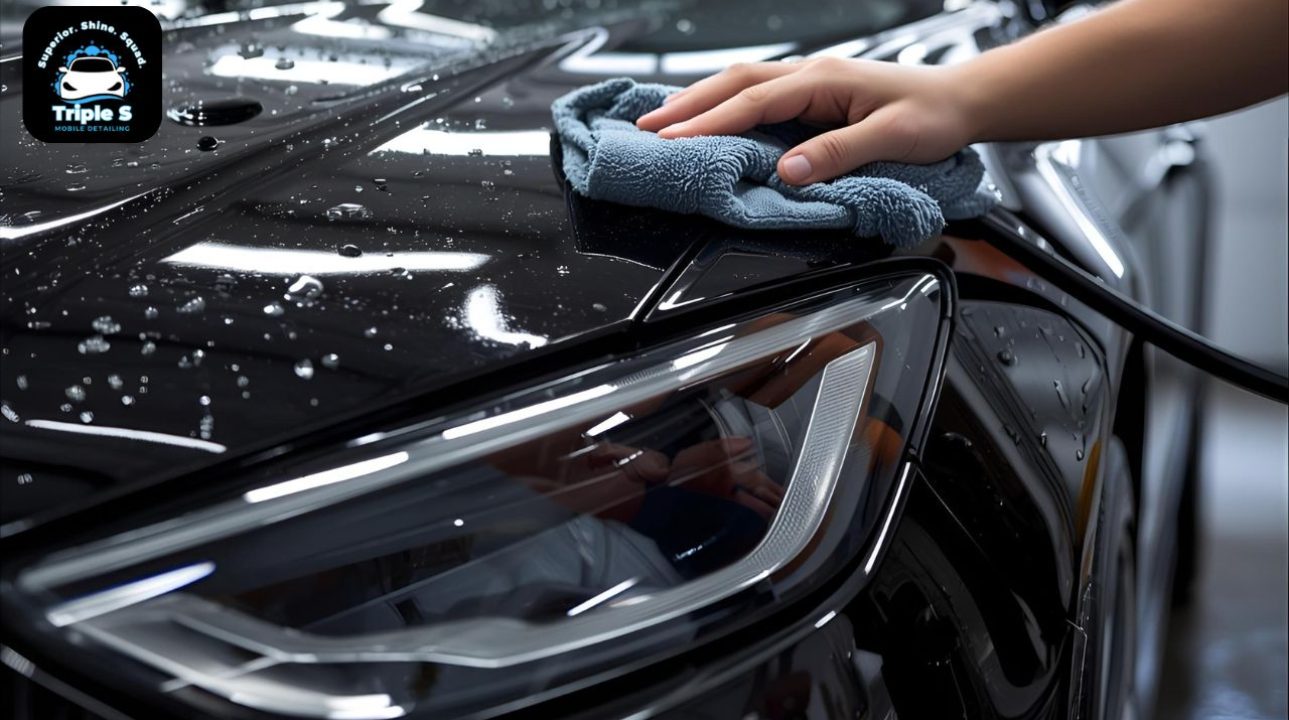
A two-bucket setup separates dirty rinse water from your shampoo solution and helps reduce the amount of grit returned to the paint. This paint-safe washing setup is especially useful for vehicles with high-gloss dark paint, where wash marks are easy to see.
What you need
- A pH-balanced car shampoo approved for coated vehicles
- Two clean buckets with grit guards if available
- A high-quality microfiber wash mitt
- A separate wheel and tire mitt
- A soft wheel brush
- A hose or pressure washer used responsibly
- Several clean, plush drying towels
- A dedicated glass towel
- Optional: a coating-compatible maintenance spray
Do not use household dish soap as a routine car shampoo. It is formulated to remove grease and may unnecessarily strip waxes, toppers, or other maintenance products. A coating-safe automotive shampoo is a better choice.
Step-by-step washing process
1. Wash in the shade
Work on a cool surface, preferably out of direct sunlight. Hot panels cause shampoo and rinse water to dry quickly, increasing the chance of mineral deposits and streaks.
2. Rinse loose grit away first
Thoroughly rinse the vehicle from top to bottom. Pay attention to lower doors, wheel arches, rocker panels, and the rear bumper, where heavier dirt collects.
This pre-rinse does not make the car clean by itself. It simply removes loose contamination before the wash mitt touches the surface.
3. Clean the wheels separately
Wheels and tires carry brake dust and oily contamination that should not be transferred to painted panels. Use separate tools and wash them before or after the body, depending on your preferred workflow—but never reuse wheel tools on the paint.
4. Wash from the top down
Start with the roof, glass, hood, and upper doors. Move toward the dirtier lower panels last. Use straight, light passes rather than vigorous circular scrubbing.
Rinse the mitt frequently. If it falls on the ground, replace it or clean it thoroughly before continuing.
5. Rinse each section
Do not let shampoo dry on the surface. Rinse panels as you complete them, especially in warm weather.
6. Dry without dragging contamination
Use a clean microfiber drying towel or a filtered air blower. Lay the towel over the panel and gently pull it across the surface rather than applying heavy pressure.
A water-repellent coating often allows much of the rinse water to sheet or bead away, but air drying is not always safe. Mineral-rich water can leave spots, particularly on black or dark-colored paint.
7. Inspect the finish
After drying, check the lower panels, mirrors, trim, emblems, and gaps around the grille. Remove any remaining droplets or soap residue before parking the vehicle in the sun.
Can you use a pressure washer on ceramic coating?
Yes, a pressure washer can be used carefully on a coated vehicle. The coating itself is not a reason to avoid pressure rinsing. The risk comes from excessive pressure, an unsuitable nozzle, holding the spray too close, or forcing water into seals and electrical areas.
Use these precautions:
- Follow the pressure washer manufacturer’s safety instructions.
- Keep the nozzle moving.
- Maintain a sensible distance from the paint.
- Avoid concentrating the spray on damaged clear coat, loose trim, seals, badges, and sensors.
- Use a wide spray pattern for general rinsing.
- Never use the pressure washer to replace proper washing agitation when bonded grime remains.
Pressure rinsing is most valuable before contact washing, because it removes loose grit that could otherwise be pushed across the finish.
What soap is safe after ceramic coating?
Choose a dedicated automotive shampoo described as pH-balanced, coating-safe, or suitable for ceramic-coated vehicles. The label should clearly explain its intended use.
Avoid making routine washing unnecessarily aggressive with:
- Household detergents
- Strong degreasers
- Solvent-based cleaners
- Abrasive powders
- Undiluted all-purpose cleaner
- Tar removers used over the entire vehicle
- Products that leave heavy silicone or wax residue
A strong cleaner may be appropriate for a specific contamination problem, but it should be diluted and used according to its instructions. Do not assume that a product advertised as “powerful” is better for regular maintenance.
The U.S. Environmental Protection Agency also emphasizes responsible handling and disposal of cleaning chemicals. Avoid allowing concentrated wash chemicals to run directly into storm drains, particularly when washing with degreasers or other specialty products.
How often should a ceramic-coated car be washed?
There is no universal schedule because driving conditions vary. A vehicle parked outdoors in a dusty region or driven on salted winter roads needs more frequent cleaning than a garage-kept weekend car.
A practical routine is:
- Wash when the vehicle is visibly contaminated.
- Clean bird droppings, bug remains, tree sap, and road salt promptly.
- Wash more often during winter, pollen season, or long-distance travel.
- Do not wait until dirt forms a thick, bonded layer.
- Use a quick rinse only when the vehicle has light, loose dust; use a proper wash for oily road film.
Washing every couple of weeks may work for many lightly used vehicles, but it is not a rule. Contamination, weather, storage, and mileage matter more than a fixed calendar interval.
How do you prevent water spots?
Water spots form when water evaporates and leaves dissolved minerals behind. Ceramic coating can make water bead more tightly, which sometimes increases the number of small droplets left on a panel if the vehicle is not dried.
To reduce spotting:
- Wash out of direct sun.
- Rinse thoroughly.
- Dry immediately with clean microfiber towels.
- Use filtered or deionized water if available.
- Do not let sprinklers hit the vehicle.
- Remove fresh spots before they bake onto the surface.
- Use a coating-approved water-spot remover for stubborn deposits.
If spots remain after a normal wash, do not immediately reach for an abrasive polish. Mineral deposits may need a dedicated chemical treatment, while etched spots may require professional correction. Polishing can remove coating material and should be considered only when necessary.
Can you use wax, polish, or a ceramic spray topper?
You usually do not need traditional wax on a ceramic-coated vehicle. Some waxes can mute the coating’s intended water behavior, leave residue, or make the finish feel less clean.
A coating-compatible spray sealant or topper may be useful, but only if:
- The coating manufacturer approves it.
- The surface is clean and dry.
- You follow the stated dilution and application instructions.
- You apply a thin layer and remove residue promptly.
Avoid abrasive polish unless you are intentionally correcting the paint and understand that it may remove or thin the ceramic coating. Do not use a clay bar casually, either. Claying can introduce light marring and should be reserved for bonded contamination that ordinary washing cannot remove.
If the coating stops beading, first check whether the surface is contaminated. Reduced hydrophobic behavior does not always mean the coating has failed; traffic film, mineral deposits, and product residue can mask its performance.
Signs your coating needs more than a normal wash
Contact a professional detailer or installer when you notice:
- Persistent water spotting that does not respond to safe chemical treatment
- Rough paint after washing and decontamination
- New stains from bird droppings, sap, or industrial fallout
- Uneven patches or visible coating high spots
- Peeling, hazing, or unusual discoloration
- A major drop in water behavior after proper maintenance
- Scratches or marring that are visible through the coating
Do not try increasingly harsh chemicals to force a result. An inspection can determine whether the problem is contamination, coating degradation, or damage to the clear coat.
Common mistakes to avoid
Using the automatic wash’s shared brush
This is one of the fastest ways to introduce wash marks. Shared tools are difficult to keep free from abrasive grit.
Washing with a dirty mitt
A clean bucket cannot compensate for a contaminated wash mitt. Keep separate tools for wheels, tires, lower panels, and the upper paintwork.
Letting chemicals dry
Pre-soaks and shampoos become more difficult to remove when they dry on hot paint. Work in small sections and rinse promptly.
Relying only on water beading
Beading is a useful observation, not a complete coating health test. A contaminated coating may bead poorly even when the underlying protection remains present.
Drying with an old bath towel
Cotton towels can be rough, trap grit, and leave lint. Use clean automotive microfiber towels reserved for paint.
Applying too many products
Layering waxes, spray sealants, ceramic toppers, and quick detailers can create residue and make diagnosis difficult. A simple, compatible maintenance routine is usually more reliable.
Frequently asked questions
Can I use a regular car wash after ceramic coating?
Yes. Choose a hand wash or touchless wash whenever possible. Avoid automatic systems with shared brushes, and follow the coating manufacturer’s instructions after installation.
Will a regular car wash remove ceramic coating?
A single normal wash should not remove a properly installed professional coating. However, repeated use of abrasive brushes, aggressive chemicals, or unsuitable solvents can reduce performance and may damage the paint around it.
Is a touchless wash better than a brush car wash?
Generally, yes, because it avoids direct contact with contaminated brushes and cloth. Its main drawback is that strong detergents may be used, and it may leave some road film behind.
Can I use an automatic car wash during the coating’s curing period?
Usually, no. Wait for the period specified by the installer or product manufacturer. If the vehicle is accidentally exposed to rain or contamination during curing, ask the installer what to do rather than washing it with an unapproved product.
What pH should car soap be after ceramic coating?
Use a balanced automotive shampoo intended for coated vehicles. A product’s overall formulation, dilution, and use instructions matter more than selecting a number based only on its advertised pH.
Can I use a pressure washer on a ceramic-coated car?
Yes, when used responsibly. Keep the nozzle moving, avoid close-range spraying around trim and seals, and use pressure rinsing as part of a careful wash rather than blasting the surface aggressively.
How often should I wash my coated vehicle?
Wash it whenever contamination builds up. Many vehicles can follow a roughly biweekly routine, but outdoor storage, winter salt, dust, insects, and long trips may require more frequent washing.
Does ceramic coating prevent scratches?
No. It can reduce some chemical and environmental contamination, but it does not prevent rock chips, deep scratches, or marring from dirty brushes and towels.
Can I use wax after ceramic coating?
Only if the coating manufacturer permits it. A compatible maintenance topper may be appropriate, but traditional wax is usually unnecessary and can interfere with the coating’s intended finish or water behavior.
Final verdict
You can use a regular car wash after ceramic coating, but choose the wash method carefully. Hand washing with clean microfiber tools remains the safest approach. A touchless automatic wash is a reasonable convenience option, while brush-based tunnel washes should be avoided whenever possible.
Keep the coating clean, dry the vehicle promptly, remove bird droppings and road salt early, and use only compatible maintenance products. The coating does much of the protective work, but correct washing technique is what helps it continue performing well.








