Black Friday deals are live on Amazon · limited-time discounts, grab them before they’re gone
Grab the deals

ByMax Lee
How to Drive Through Car Wash: Ultimate Guide for a Spotless Shine
A drive-through car wash can clean your vehicle in minutes, but the best results depend on what you do before, during, and immediately after the wash. Correct lane positioning, the right gear selection, secured exterior accessories, and careful drying all help protect your vehicle and prevent avoidable damage.
This guide explains how to drive through a car wash safely, including conveyor washes, touchless systems, car-wash mode for electric vehicles, common mistakes, and ways to achieve a cleaner, more spotless finish. You can also read our guide on are car washes tax deductible.
Choose the Right Type of Automatic Car Wash
“Drive-through car wash” can describe several different systems. Knowing which one you are entering helps you follow the correct instructions.
Conveyor or tunnel wash
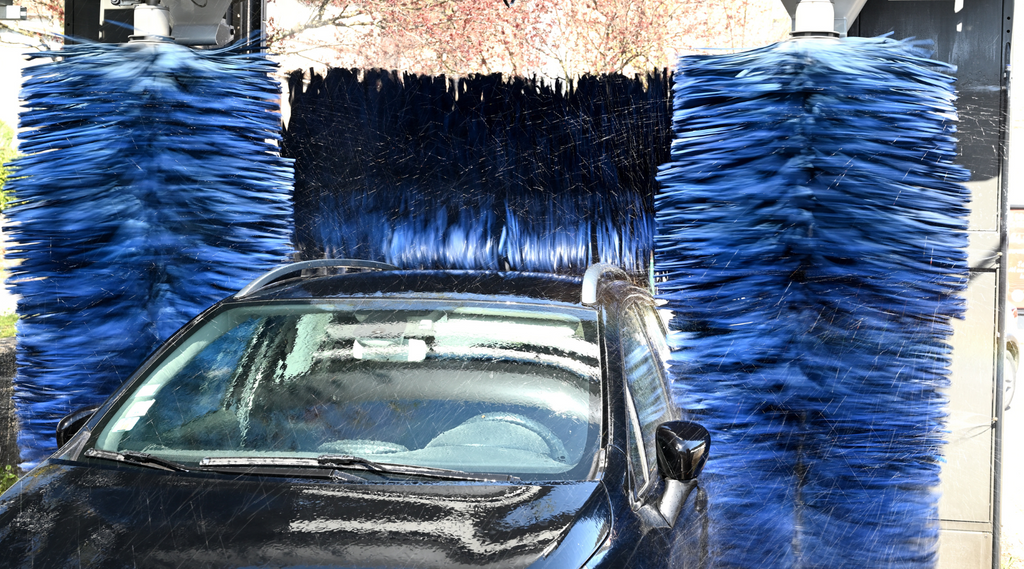
In a conveyor wash, your vehicle is pulled through the building by a track, belt, or rollers. The equipment may include:
- Pre-rinse and soap arches
- Spinning brushes or soft cloth strips
- Wheel and tire cleaners
- Undercarriage sprays
- Wax or sealant applicators
- Forced-air dryers
Some conveyor systems require you to place the vehicle in neutral and keep your feet off the pedals. Others use a conveyor belt that accommodates a vehicle in park. Always follow the signs and attendant’s instructions because systems differ. You can also read our guide on are brushless car washes better.
Touchless automatic wash
A touchless wash uses high-pressure water and cleaning chemicals instead of brushes or cloth. It reduces the risk of brush contact with paint, but it may not remove heavy road film, dried bugs, tree sap, or greasy contamination as thoroughly as a friction wash.
For vehicles with delicate paint, aftermarket graphics, or a large amount of loose dirt, touchless can be a sensible option. However, “touchless” does not mean risk-free: strong spray can affect loose trim, damaged paint, or poorly secured accessories. You can also read our guide on best car wash for undercarriage.
In-bay automatic wash
In an in-bay wash, you drive into a stationary bay and stop. The vehicle remains in place while the wash equipment moves around it. These washes commonly require you to select park, shut off the engine, or follow a displayed sequence.
Do not assume that instructions from a conveyor wash apply to an in-bay system. Read the sign at the entrance.
Is a Drive-Through Wash Safe for Your Vehicle?
For a sound, standard vehicle with no loose exterior parts, an automatic wash is generally convenient and suitable for routine cleaning. The main trade-off is between speed and control. You can also read our guide on how to fix car key after washing machine.
A friction wash can clean more aggressively, but repeated contact with contaminated brushes or cloth may contribute to fine swirl marks over time. A touchless wash avoids that contact but may leave more dirt behind. A hand wash or carefully performed two-bucket cleaning method offers more control but requires more time and equipment.
Avoid an automatic wash if your vehicle has:
- Loose trim, badges, body panels, or molding
- A damaged windshield or side glass
- A soft-top convertible that is not fully sealed
- An unsecured roof box, bike rack, cargo carrier, or antenna
- Freshly repaired or uncured paint
- A cracked mirror housing or damaged wiper
- A visibly loose license plate
- A height, width, or ground-clearance issue
When in doubt, ask the attendant whether the equipment is compatible with your vehicle.
Prepare Your Vehicle Before Entering
Preparation takes less than a minute and prevents many of the most common problems.
Exterior checklist
Before joining the wash lane:
- Close every window. Check the sunroof or moonroof as well as the main windows.
- Fully close the convertible roof. Do not use an automatic wash if the roof does not seal correctly.
- Fold in power mirrors if the wash permits it. Some facilities instruct drivers to leave mirrors extended, so follow the posted directions.
- Remove or secure the antenna. A flexible roof antenna may be acceptable, but a long, loose, or aftermarket antenna can catch on equipment.
- Remove exterior accessories. Take off magnetic signs, suction-cup decorations, loose flags, temporary plates, and poorly secured decals.
- Remove roof and rear carriers when required. Bike racks, ski racks, cargo boxes, and hitch-mounted accessories often do not fit tunnel equipment.
- Check the license plate. Tighten a loose plate before entering.
- Inspect for loose body parts. Do not rely on the wash to reveal a problem safely.
If you are uncertain about pressure-washing technique or pre-rinsing, review this practical guide to safe spray pressure before using a self-service bay. You can also read our guide on are self service car washes profitable.
Interior and driver checklist
- Turn off automatic windshield wipers and rain-sensing wipers.
- Close the fuel door if it does not lock automatically.
- Secure pets and loose items inside the cabin.
- Remove valuables from the dashboard and open storage areas.
- Keep your seat belt fastened while the vehicle is moving.
- Turn off accessories that could distract you.
- Have your payment method ready before reaching the terminal.
Automatic wipers are a common mistake. Water or vibration can trigger them while the vehicle is near brushes, arches, or dryers.
Credit: lucidowners.com
Check windows, mirrors, wipers, and exterior accessories before joining the wash lane.
Select the Wash Package Carefully
Car washes often offer a basic wash, premium wash, wax, tire treatment, underbody rinse, or drying upgrade. The most expensive package is not automatically the best choice.
Choose based on the vehicle’s condition:
| Wash feature | Most useful when | Important limitation |
|---|---|---|
| Basic wash | The vehicle has light dust and road grime | May not include strong drying or wheel cleaning |
| Wheel and tire cleaning | Brake dust and road dirt are visible | Very dirty wheels may still need hand cleaning |
| Undercarriage rinse | After salted roads, mud, or construction dust | Avoid directing aggressive spray at known damage |
| Wax or sealant option | You want short-term added gloss and water beading | It is not a replacement for durable paint protection |
| Touchless wash | You want to avoid brush contact | May leave bonded dirt and dried insects |
| Premium drying | You want fewer remaining droplets | A final towel dry may still be needed |
If your vehicle has ceramic coating, follow the coating manufacturer’s maintenance guidance; a compatible wash routine for coated paint is usually more important than purchasing every add-on.
The phrase “wax” at an automatic wash may refer to a spray-applied product designed for temporary gloss and water behavior. It should not be treated as a professional wax application or ceramic coating.
How to Enter a Conveyor Car Wash
The entrance is where precise positioning matters most.
1. Wait for the vehicle ahead
Do not enter until the attendant, signal, or traffic light indicates that the lane is clear. Leave enough space to avoid stopping on the conveyor or approaching equipment prematurely.
2. Align your tires with the guide
Drive straight and slowly. Follow painted arrows, wheel guides, or the attendant’s hand signals. Keep the vehicle centered rather than approaching at an angle.
If the wash uses a conveyor track, position the driver-side tire or the specified wheel exactly where instructed. An incorrect position can prevent the rollers from contacting the tire properly.
3. Stop at the marked point
Stop when the sign, light, attendant, or wheel guide tells you to stop. Do not keep creeping forward while trying to locate the track.
4. Select the required gear
The instructions may say:
- Put the transmission in neutral.
- Keep the engine running.
- Remove your foot from the brake.
- Release the parking brake.
- Turn off automatic hold.
- Select park in an in-bay system.
Follow the facility’s exact directions. On many conveyor systems, leaving the vehicle in drive, applying the parking brake, or holding the brake pedal can interfere with the pulling mechanism.
5. Keep the steering wheel straight
Once the vehicle is aligned, do not steer unless an attendant tells you to correct your position. Keep your hands relaxed on the wheel and your feet away from the pedals when the conveyor is moving the vehicle.
Never shift into reverse or try to drive out while the conveyor is engaged.
How to Drive Through the Wash While It Is Running
Once the wash begins, the vehicle may shake, slide, or make loud mechanical sounds. Those sensations are usually normal, but you should remain alert.
- Keep all windows and the sunroof closed.
- Keep the transmission in the instructed position.
- Do not open doors or reach outside.
- Do not steer into brushes or guide rails.
- Do not use the windshield wipers.
- Do not brake unless the system or attendant tells you to.
- Watch for the exit signal rather than guessing when the cycle is finished.
In practice, the safest approach is to make as few inputs as possible. The equipment is designed to control the vehicle’s movement in a specific sequence; unnecessary steering, braking, or shifting can interrupt that sequence.
If the vehicle stops unexpectedly, the conveyor loses contact, or an alarm sounds, remain in the vehicle and follow the emergency instructions. Use the intercom or alert an attendant rather than attempting to exit between moving components.
Car-Wash Mode, Neutral, and Automatic Hold
Modern vehicles may include a car-wash mode, especially electric vehicles and vehicles with electronic parking systems. This mode may:
- Close windows and vents
- Disable automatic wipers
- Keep the vehicle in neutral
- Prevent the parking brake from engaging
- Disable certain proximity alerts
- Keep the charging port closed
- Maintain a setting suitable for conveyor movement
The exact behavior varies by manufacturer and model. Consult the owner’s manual rather than assuming that every vehicle uses the same procedure. Tesla owners, for example, should review the procedure for ending car-wash mode after the vehicle clears the conveyor.
If your vehicle has automatic brake hold, hill-start assist, or an electronic parking brake, pay particular attention to the wash instructions. These systems can apply the brakes when you do not expect them to.
What to Do at the Exit
Do not accelerate as soon as the dryer stops. Wait for the exit light, open gate, attendant, or clear lane.
Then:
- Confirm that the conveyor or rollers have released the vehicle.
- Shift into drive only when instructed or when the lane is clearly free.
- Move forward slowly.
- Check for pedestrians, attendants, and vehicles leaving adjacent bays.
- Pull into a designated drying or inspection area if one is available.
- Re-enable normal vehicle settings if car-wash mode does not do so automatically.
This is also the time to check that the mirrors are extended, the wipers are off, and no exterior item has shifted.
How to Get a More Spotless Finish
An automatic wash removes loose dirt, but it may not deliver a completely spot-free finish by itself. A few finishing steps make a noticeable difference.
Dry remaining water promptly
Water droplets can leave mineral spots as they evaporate, especially in direct sunlight or in areas with hard water. Use a clean, soft microfiber drying towel if the facility permits hand drying. Do not use a towel that has touched dirty wheels or the ground.
For persistent spotting, avoid rubbing aggressively over dry paint. A suitable detailing product or professional inspection may be safer than repeated scrubbing. These water-spot prevention steps can help after the automatic cycle.
Inspect the wheels and lower panels
The front bumper, rocker panels, rear hatch, mirrors, and wheels often retain dirt after a fast wash. If these areas remain dirty, they may need targeted hand cleaning rather than another immediate wash.
Avoid washing in extreme conditions
Follow the product and facility guidance for temperature. In freezing weather, water can refreeze around door seals, handles, mirrors, locks, and charging-port doors. Before a cold-weather wash, review this guidance on washing during freezing temperatures.
In hot, sunny conditions, drying becomes more important because water and detergent can evaporate quickly and leave visible residue.
Consider the environmental impact
A commercial facility may collect and treat wash water differently from a driveway wash. Runoff from home washing can carry detergents, oil, brake dust, and road residue into storm drains. The U.S. Environmental Protection Agency provides broader guidance on preventing polluted runoff and protecting local waterways.
Common Mistakes and Better Alternatives
| Mistake | Why it causes trouble | Better practice |
|---|---|---|
| Entering with windows open | Water and detergent can enter the cabin | Check every window and roof opening |
| Leaving automatic wipers on | Wipers may activate near equipment | Disable automatic and rain-sensing operation |
| Keeping a bike rack installed | It can catch on arches or brushes | Remove it unless the facility specifically permits it |
| Steering on the conveyor | Tires may move off the intended track | Keep the wheel straight |
| Holding the brake pedal | The conveyor may not pull the vehicle correctly | Release the brake when instructed |
| Leaving the transmission in drive | The vehicle may fight the conveyor | Select the required gear or car-wash mode |
| Using a dirty towel afterward | Grit can create fine scratches | Use a clean microfiber towel |
| Choosing the strongest wash for damaged paint | Pressure or brushes can worsen loose areas | Repair or secure the damage first |
| Accelerating at the exit | Another vehicle or person may be ahead | Wait for a clear signal and lane |
When a Hand Wash Is the Better Choice
An automatic wash is convenient for routine maintenance, but a controlled hand wash is preferable when you need to preserve a delicate finish or remove contamination carefully.
Choose hand cleaning when:
- The vehicle has fresh paint or bodywork
- The paint is heavily contaminated with tar or sap
- You have a show-quality or highly corrected finish
- The vehicle has fragile aftermarket accessories
- You need to clean door jambs, emblems, seams, or intricate wheels
- The wash facility cannot confirm compatibility with your vehicle
A drive-through wash also cannot replace regular inspection. Check the paint, trim, wipers, tires, and glass periodically so a small defect does not become a larger repair.
Frequently Asked Questions
How fast should I drive into a car wash?
Approach at walking speed and follow the attendant, signs, traffic lights, and floor markings. Do not use a fixed speed as a rule because the correct approach differs between a conveyor tunnel and an in-bay system. Once the conveyor engages, stop controlling the vehicle unless the instructions require otherwise.
Should I put my car in neutral in a car wash?
Only when the wash specifically instructs you to do so. Conveyor systems commonly use neutral so the rollers or belt can move the vehicle, but some systems require park or a particular car-wash mode. Never guess, especially if the vehicle has an electronic parking brake or automatic hold.
Can I leave the engine running?
Many conveyor washes require the engine to remain running so the steering, transmission, or vehicle systems operate normally. Some in-bay washes instruct you to turn the engine off. Follow the posted procedure and never leave the vehicle unattended while it is running.
Should I fold in my side mirrors?
Follow the wash’s instructions. Folding mirrors can protect them from brushes in some systems, while other systems are designed for mirrors to remain extended. If a mirror is loose, damaged, or unable to fold securely, use a different wash or ask an attendant before entering.
Can electric vehicles go through an automatic car wash?
Most electric vehicles can use compatible automatic washes, but their procedures may differ from gasoline vehicles. Use the manufacturer’s car-wash mode when available, disable automatic wipers, secure the charging port, and follow the wash’s gear and parking-brake instructions.
Can a convertible use a drive-through car wash?
A convertible can use an automatic wash only if the roof is fully closed, properly latched, and designed to resist the water and equipment involved. A soft top with damaged seams, leaks, or weakened fabric should be washed using a safer method recommended by the vehicle manufacturer.
Will a drive-through wash remove all dirt?
No. Automatic washes are effective at removing loose road film and everyday grime, but they may not remove dried insects, tree sap, tar, embedded brake dust, or heavy mud completely. A second cleaning method may be necessary for bonded contamination.
How often should I use an automatic car wash?
Use one when road grime, salt, mud, or other contamination accumulates. Regular cleaning helps keep abrasive dirt from remaining on the paint, but frequency should reflect driving conditions, weather, and the vehicle’s protection system rather than a rigid schedule.
Final Checklist for a Safe, Cleaner Wash
Before entering:
- Windows and sunroof closed
- Convertible roof fully latched
- Automatic wipers disabled
- Loose exterior items removed
- Racks and carriers checked for compatibility
- Mirrors positioned as instructed
- Vehicle height and width confirmed
During the wash:
- Follow the signs and attendant
- Use the required gear or car-wash mode
- Keep the steering wheel straight
- Avoid braking, shifting, or steering unnecessarily
- Stay inside with doors closed
After the wash:
- Wait for a clear exit
- Drive out slowly
- Restore normal vehicle settings
- Dry remaining water with a clean microfiber towel
- Inspect wheels, trim, glass, and lower panels
Conclusion
Driving through a car wash is straightforward when you prepare the vehicle, choose a compatible wash type, and follow the equipment’s instructions exactly. Close and secure the vehicle, disable automatic wipers, remove vulnerable accessories, align carefully, and use the required gear or car-wash mode.
For the cleanest result, dry remaining droplets promptly and inspect areas that automatic equipment often misses. A drive-through wash is an efficient part of routine vehicle care—provided you understand its limitations and avoid sending a damaged or improperly equipped vehicle into the tunnel.








