ByMax Lee
Guide to Cleaning Smoke Odor From a Car With Ozone Generator
So you’ve got that stale smoke smell locked into your car’s upholstery, headliner, and vents, and you’re wondering if an ozone generator is the answer. Cleaning smoke odor from a car with an ozone generator is one of the most effective methods out there, but it’s also one that can seriously damage your interior or even harm your lungs if you cut corners.
Here’s the thing: ozone (O₃) is a powerful oxidizer. According to OSHA and EPA guidelines, exposure above 0.1 parts per million is unsafe for humans. A typical ozone machine for cars puts out 200, 500 mg/h, which can push concentrations well above that threshold inside a closed space.
The smell of smoke is gone, but you can’t just hop back in and drive off. There’s a correct process. Let’s walk through it step by step.
Bing (Web (fair-use with source credit))
Quick Answer
Ozone removes smoke odor by breaking down odor molecules through oxidation. Run a generator inside the sealed car for 30 minutes to 2 hours. Then wait at least 2 hours with doors open before entry.
Always pre-clean surfaces first. Replace the cabin air filter after treatment. Never stay inside the vehicle during operation.
Why This Topic Needs Expert Handling – Safety and Damage Risks Are Real
Ozone doesn’t discriminate. It attacks smoke particles, but it also attacks rubber seals, vinyl dashboards, leather seats, and sensitive electronics. A single over-treatment can turn your door seals brittle or corrode wiring connectors deep inside the dash.
The biggest risk, though, is to you. Breathing ozone irritates the lungs, triggers asthma attacks, and can cause permanent respiratory damage with prolonged exposure. That’s not a warning to ignore.
We also see people skip the pre-cleaning step. They run the generator on a car that still has ash, tar residue, and dirty upholstery. The ozone works less effectively, and the smell lingers because the source is still there.
A proper approach means cleaning first, treating second.
Another common mistake: running the generator with the car’s HVAC system on recirculate but not removing the cabin air filter. The ozone saturates the filter, and later when you turn on the fan, it blows ozone residue straight into your face. Not good.
Bottom line: this method works, but it demands respect for the chemical process and the materials inside your car. As of 2026, there are no shortcuts that are safe.
How Ozone Actually Removes Smoke Odor (And What It Can’t Do)
Ozone is a molecule made of three oxygen atoms. That extra atom is unstable and wants to break off and bond with other molecules. When it hits smoke odor compounds, it oxidizes them, essentially burning them up into harmless byproducts like carbon dioxide and water vapor.
That’s how it eliminates the smell rather than just covering it up. Unlike air fresheners or charcoal bags, ozone actually destroys the odor source at a molecular level. It penetrates foam, fabric, and tiny crevices in the HVAC system.
What it can’t do: remove sticky tar residue, clean dirt and grime, or fix physical damage from smoke (yellowed plastics, burned fabric). Ozone doesn’t scrub surfaces. It only neutralizes airborne and some surface-bound odorants.
It’s also limited by air circulation. If you run the generator for 30 minutes but the car has dead spots behind seats or in the trunk, smoke molecules in those areas might not get treated. That’s why some people need a second round or a different method.
And here’s something many guides don’t mention: ozone works best at moderate humidity (40-60%). Dry air reduces its effectiveness. Very high humidity can create nitric acid byproducts (bad for your car and your nose).
If you live in a dry climate, you can lightly mist the interior with water before sealing the car.
Before You Even Turn It On – Pre-Cleaning Steps That Make or Break Results
This is where most DIY attempts fail. You cannot ozone your way out of a deep smoke smell without scrubbing the car first. The ozone will treat the air and soft surfaces, but if there’s a layer of tar on the windows or ash ground into the carpet, the smell will return within days.
Here’s the pre-cleaning checklist. Skip nothing.
- Vacuum everything. Seats, carpets, floor mats, trunk. Use a crevice tool along seat tracks and under the trim. Smoke particles settle everywhere.
- Wipe down hard surfaces. Dash, door panels, center console, window glass. Use a mild cleaner or a dedicated ammonia free glass cleaner for cars on windows. Ammonia can react with ozone. Stick with neutral pH cleaners.
- Shampoo fabric upholstery and carpets. If the smoke is heavy, you need to extract the oils and tars embedded in the fibers. A steam cleaner or upholstery extractor works well. Let everything dry completely before ozone treatment. Wet surfaces reduce ozone effectiveness and can trap moisture.
- Check the cabin air filter. Remove it. Do not treat it with ozone. It will hold onto odor and re-release it later. Replace it with a new one after the ozone process.
- Empty the car. Remove floor mats, trash, personal items. Leave the interior as bare as possible. Anything soft (jackets, blankets) will absorb ozone but also trap odor. Wash or air them separately.
Pre-cleaning isn’t optional. It’s the foundation. If you skip it, you’re just wasting ozone and time.
Bing (Web (fair-use with source credit))
Step-by-Step Ozone Treatment for a Car – The Safe, Effective Process
Bing (Web (fair-use with source credit))
Now that the interior is clean and dry, you’re ready to run the ozone generator. Follow these steps exactly. Deviation can cause damage or residual smoke smell.
Step 1: Remove the cabin air filter. I said it twice because it’s that important. Set it aside. You’ll put a new one in after the treatment.
Step 2: Seal the car. Close all doors, windows, and sunroof. If your car has a recirculate button, set the HVAC to recirculate so the ozone circulates through the ductwork. Do not turn on the fan while the generator is running unless the generator is designed for that (most aren’t).
Better to just let the ozone drift naturally.
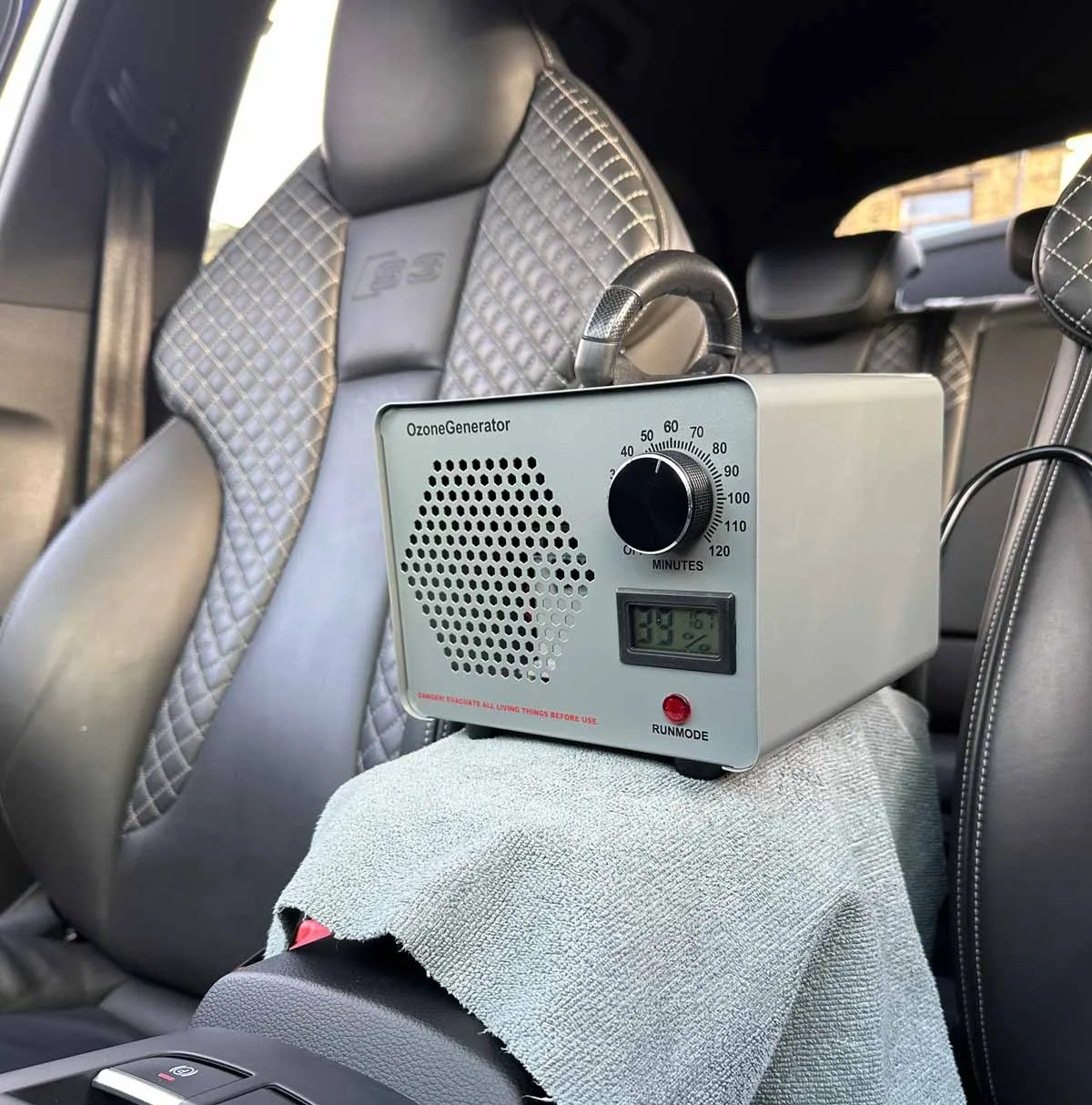
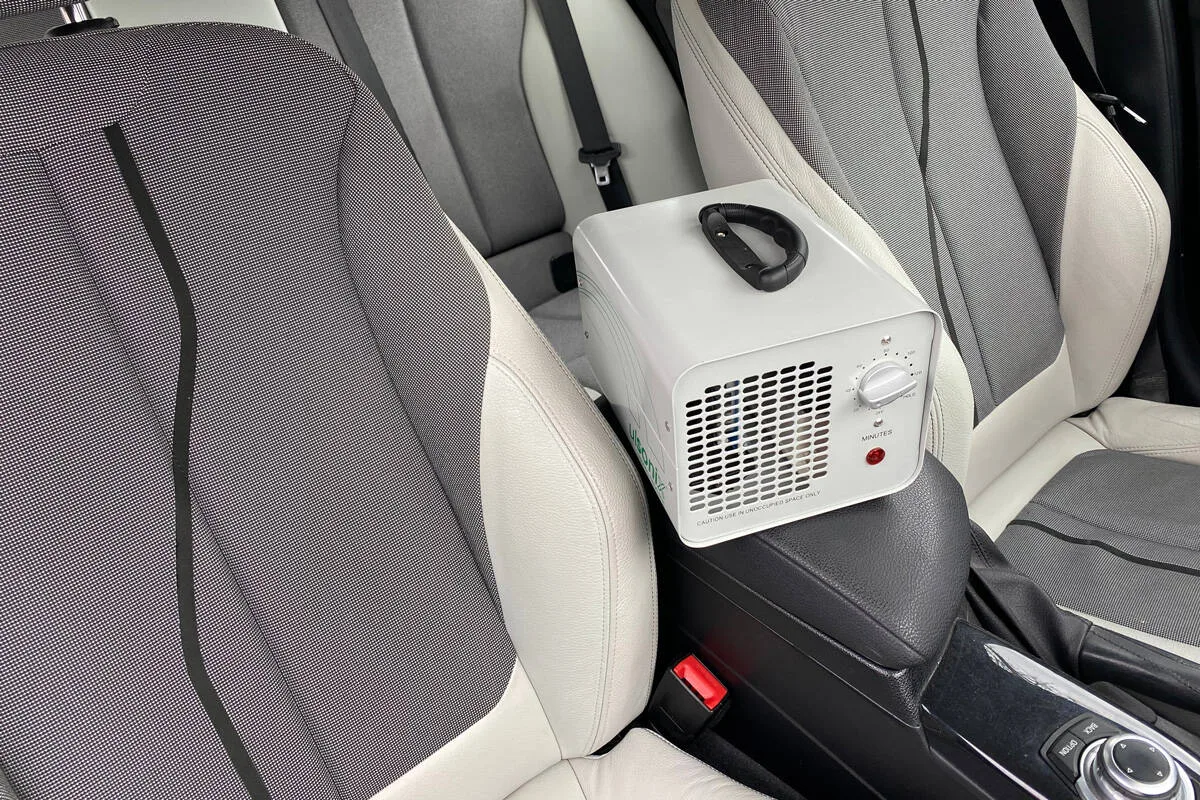
Step 3: Place the generator inside. Put it on the rear seat floor or center console, pointing upward. Make sure nothing is blocking the fan intake. Keep it away from leather seats and electronics.
Some detailers place it on a towel to protect surfaces.
Step 4: Set the timer. Refer to the next section for duration. Start with the minimum recommended time for your car size and smoke level. You can always run a second cycle if needed.
Step 5: Leave the area. Do not stay inside the garage or near the car. Set up the generator and walk away. Ozone can cause throat irritation, coughing, and chest tightness within minutes.
Step 6: Wait after the timer stops. When the machine shuts off, do not open the doors yet. Let the ozone settle and break down naturally for 30, 60 minutes. This allows it to continue working on hidden pockets.
Step 7: Ventilate thoroughly. Open all doors and let the car air out for at least 1, 2 hours. Use a fan pointing into the cabin to speed up air exchange. The car should smell clean (like after a thunderstorm) but not chemically.
If you smell anything harsh, it’s still too strong. Wait longer.
Step 8: Install a new cabin air filter. Before you drive, install a fresh filter. The old one absorbed ozone and may also contain residual smoke particles.
If you need to clean stubborn tar or bug residue from the exterior before starting (since you’re detailing anyway), check out best bug and tar remover for vehicles to keep the whole car fresh.
How Long to Run the Ozone Generator? (Based on Smoke Severity and Car Size)
There’s no single answer because every car and smoke situation is different. But we can give you clear guidelines based on manufacturer specifications and aggregate detailer feedback.
| Smoke Level | Car Size | Recommended Runtime | Notes |
|---|---|---|---|
| Light (occasional cigarette, stale air) | Compact sedan | 15–30 minutes | Usually one cycle is enough |
| Moderate (daily smoking, heavy odor) | Mid-size sedan | 45–60 minutes | May need a second cycle after 24 hours |
| Heavy (years of smoking, wildfire soot) | SUV or minivan | 60–90 minutes | Break into two cycles: 45 min each with ventilation in between |
| Extreme (rental car, smoker’s car) | Full-size or van | 90–120 minutes | Consider professional hydroxyl treatment instead |
Runtime also depends on the ozone generator’s output. A 200 mg/h unit will need longer than a 500 mg/h unit. Always start lower and add time if needed.
Overdoing it is worse than underdoing it because you can damage materials.
Pro tip: after the first treatment and ventilation, close the car up for a day. If you smell smoke when you open it the next morning, run a second cycle. This “bake out” method simulates heat building up inside, which can release trapped odor.
The Critical Wait Time and Ventilation Routine (Don’t Skip This)
This is where most people mess up. The generator finishes, and they’re eager to jump in and smell the results. Bad idea.
Ozone doesn’t vanish the second the machine clicks off. It lingers in the air and soaked into porous materials.
You need to wait at least 30 minutes after the timer stops before cracking a door. This lets the ozone finish reacting with trapped odor molecules. Then open everything.
Doors, windows, trunk, sunroof. Let the air move freely for one to two hours minimum.
If the weather cooperates, leave the car open all day. Use a box fan pointing into the cabin to push fresh air through. You’ll know it’s ready when the interior smells neutral or like clean air after a thunderstorm.
If your eyes water or you feel a tickle in your throat, it’s still too strong. Close it back up and wait longer.
Wikimedia Commons / CZmarlin, Christopher Ziemnowicz, releases all rights. A photo credit would be appreciated if this image is used anywhere other than Wikipedia. Please leave a note at Wikipedia here. Thank you!
After ventilation, wipe down all hard surfaces with a damp microfiber cloth. Ozone can leave a fine residue on dashboards and glass. A quick pass with an anti streak window cleaner keeps glass clear.
Then install the new cabin air filter. Done right, that first drive will smell clean for the first time in ages.
Common Mistakes That Wreck Your Interior (Or Leave the Smell Behind)
Let’s talk about the errors that turn a $60 ozone treatment into a $600 repair bill. Avoid these.
Running ozone on leather without protection. Ozone is harsh on natural materials. It dries out leather and causes cracking. If you have leather seats, cover them with a cotton sheet or a tarp.
Remove them if possible for heavy treatments. The same goes for vinyl dash trim.
Forgetting about the HVAC ducts. Smoke loves ductwork. If you don’t run the ozone through the ventilation system, you’ll smell smoke every time you turn on the heat or AC. Set the car to recirculate and crack the HVAC fan on low if your generator manual allows it.
Some machines can handle fan airflow. Check yours.
Using too small a generator for an SUV. A tiny 100 mg/h unit might work for a compact car. In a minivan, it’s undersized. You’ll run it for hours with weak results.
Match the machine to the vehicle volume. Many detailers recommend 300, 500 mg/h for SUVs and 200, 300 mg/h for sedans.
Ignoring the trunk. Smoke gets in the carpet, spare tire well, and trim. Open the trunk and run the generator with the rear seats folded down if possible. Some people place a second small unit in the trunk for heavy cases.
Not testing with heat. After treatment and ventilation, park the car in the sun for a day with windows slightly down. Heat bakes out hidden odor. If the smell returns, you need another cycle or a different method.
Skipping the pre-cleaning. This one again because it’s the root of most failures. Ozone cannot remove tar or grime. Clean first, then treat.
When Ozone Isn’t Enough – Alternatives and When to Use Them
Ozone is powerful but not a cure-all. Some smoke damage requires different approaches. Here’s when to pivot.
| Scenario | Why Ozone Fails | Better Option |
|---|---|---|
| Heavy tar and nicotine residue on windows and dash | Ozone doesn’t dissolve sticky deposits | Wipe with a strong degreaser or tar remover first, then ozone |
| Smoke soaked into foam seat cushions for years | Ozone struggles with deep, embedded oils | Steam extraction or professional upholstery shampooing, then ozone |
| Mold or mildew mixed with smoke odor | Ozone kills mold but can’t remove dead spores | Clean with a biocide or hydrogen peroxide solution, then ozone |
| Wildfire smoke (ash and fine particles) | Particles must be physically removed | Vacuum with HEPA, wipe all surfaces, replace cabin filter, then ozone |
| Electrical smoke (burned wires, melted plastic) | Odor bonds to wiring and plastics inside dash | Full interior disassembly or replacement of affected components |
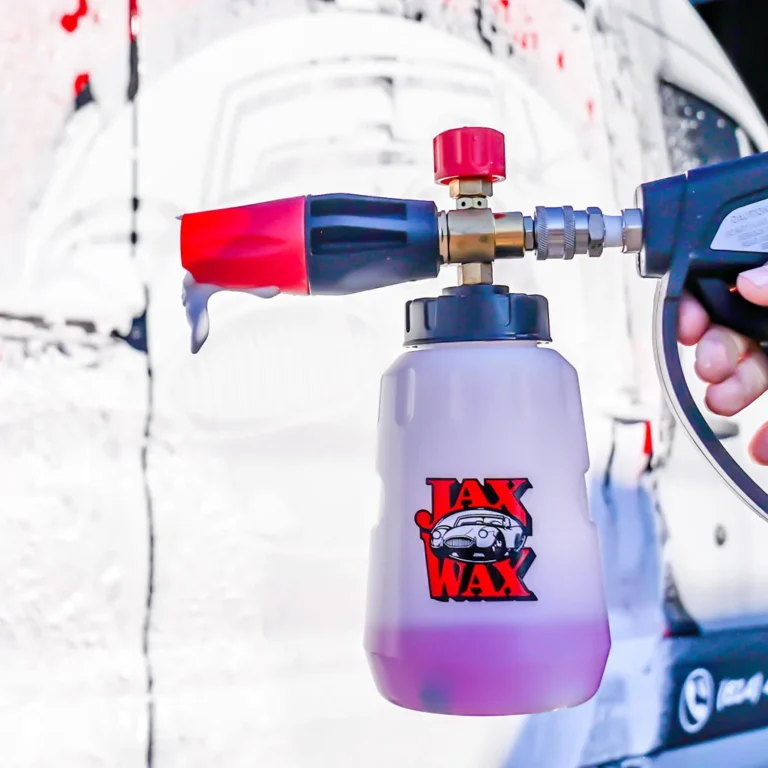
For lighter cases, you can try a combination approach. Use a foaming sprayer to apply an enzyme-based odor eliminator to fabric surfaces before ozone. The ozone finishes what the enzymes start.
If you’ve tried ozone twice and the smell still lingers, it’s time to consider professional hydroxyl or chlorine dioxide fogging. Those methods work differently and can penetrate where ozone fails.
Who Should Use an Ozone Generator vs. Who Should Hire a Pro
Ozone generators are cheap and easy to rent or buy. Many car owners can handle light to moderate smoke successfully. But not everyone should DIY.
You can probably do it yourself if:
- The smoke is from cigarettes or a single incident (not years of accumulation).
- You have a garage or outdoor space with privacy.
- You’re comfortable following safety protocols exactly.
- The interior is fabric (harder to damage than leather).
- You have time to pre-clean, treat, and ventilate properly.
You should hire a professional detailer if:
- The smoke damage is heavy or comes from a fire or flood.
- The car has leather seats and a complex electronics system.
- You live in an apartment without secure outdoor space.
- You’ve tried ozone once and the smell came back.
- You’re worried about damaging the car’s resale value.
Professional detailers use commercial-grade generators with precise timers and often combine ozone with other treatments. They also carry liability insurance if something goes wrong.
Cost comparison: DIY ozone generator rental costs about $40, $80 per day. Buying one runs $60, $150. Professional smoke odor removal starts around $200 and can exceed $800 for severe cases.
For the average car with moderate cigarette smoke, the DIY route works fine.
Safety Warnings – Ozone Exposure Limits, Fire Risk, and Material Damage
Let’s get serious for a moment. Ozone is not a toy. It’s a lung irritant classified by OSHA with a permissible exposure limit of 0.1 ppm averaged over eight hours.
A car ozone generator can spike concentrations to 10, 50 ppm inside the cabin. That’s dangerous.
Do not enter the car while the generator is running. Do not stand next to it. Do not open the door to “check on it.” Set the timer, close the doors, and leave the area. If you have asthma or respiratory issues, have someone else set it up.
Fire risk. Ozone is a strong oxidizer. It can make certain materials more flammable. Keep the generator away from gasoline, oil, cleaning solvents, and paper.
Never place it on a stack of rags or near a fuel source. Some units can overheat if the fan intake is blocked. Place it on a flat, non-flammable surface.
Material damage. Ozone attacks rubber, neoprene, and some plastics. Door seals, window trim, and weatherstripping can become brittle after repeated treatments. Vinyl dashboards may fade or crack.
Limit ozone treatments to no more than two or three per year. Leather seats should never be directly exposed for extended periods.
Children and pets. Never let kids or animals near a car that’s been ozoned until it’s fully ventilated. Ozone is heavier than air and can pool in the footwells. Even low levels can cause coughing, eye irritation, and headaches.
Legal compliance. Some states, including California, restrict ozone-generating devices for indoor use. Check local regulations. Professional detailers in California must use CARB-compliant equipment or alternative methods.
As a home user, you’re usually fine, but be aware of the rules.
If you accidentally inhale ozone and feel chest tightness or difficulty breathing, move to fresh air immediately. Symptoms usually resolve in 15, 30 minutes. Seek medical attention if they persist.
Better safe than sorry.
Frequently Asked Questions (From Real Owners and Detailers)
Can I run an ozone generator while sitting in the car?
No. Never occupy the vehicle during treatment. Ozone causes lung irritation, coughing, and chest tightness at levels far below what these machines produce.
Set the timer and leave.
Will ozone damage my car’s electronics?
Extended exposure can corrode connectors and degrade wiring insulation. Limit treatments to 60, 90 minutes. Cover sensitive components like aftermarket stereos or amplifiers with a towel if possible.
How many times can I ozone the same car?
Two to three treatments per year is the safe limit. More than that risks brittle weatherstripping, cracked dashboards, and faded leather. If the smell returns after two cycles, try a professional method.
Do I need to replace the cabin air filter after ozone?
Yes. Ozone residue stays on the filter. When you turn on the fan, it blows back into the cabin.
Install a fresh filter after you’ve finished ventilating.
Can I use an ozone generator in a car with fabric seats? What about leather?
Fabric handles ozone well. Leather needs protection. Cover seats with a cotton sheet.
Remove leather-wrapped steering wheel covers if possible. Ozone accelerates drying and cracking.
Final Takeaway – What Works, What Doesn’t, and When to Walk Away
Ozone is the most effective DIY method for smoke odor when done right. Pre-clean thoroughly. Match runtime to car size and smoke severity.
Ventilate fully. Replace the cabin air filter. That sequence works for most cigarette, cigar, and wildfire smoke cases.
What doesn’t work: skipping the pre-cleaning, running the generator for too long, and entering the car too early. Those mistakes waste time and sometimes ruin interiors.
When to walk away: if the smoke is from a fire, flood, or years of heavy use, ozone alone won’t cut it. Call a professional detailer who uses hydroxyl or chlorine dioxide fogging. Your health and your car’s value are worth the investment.