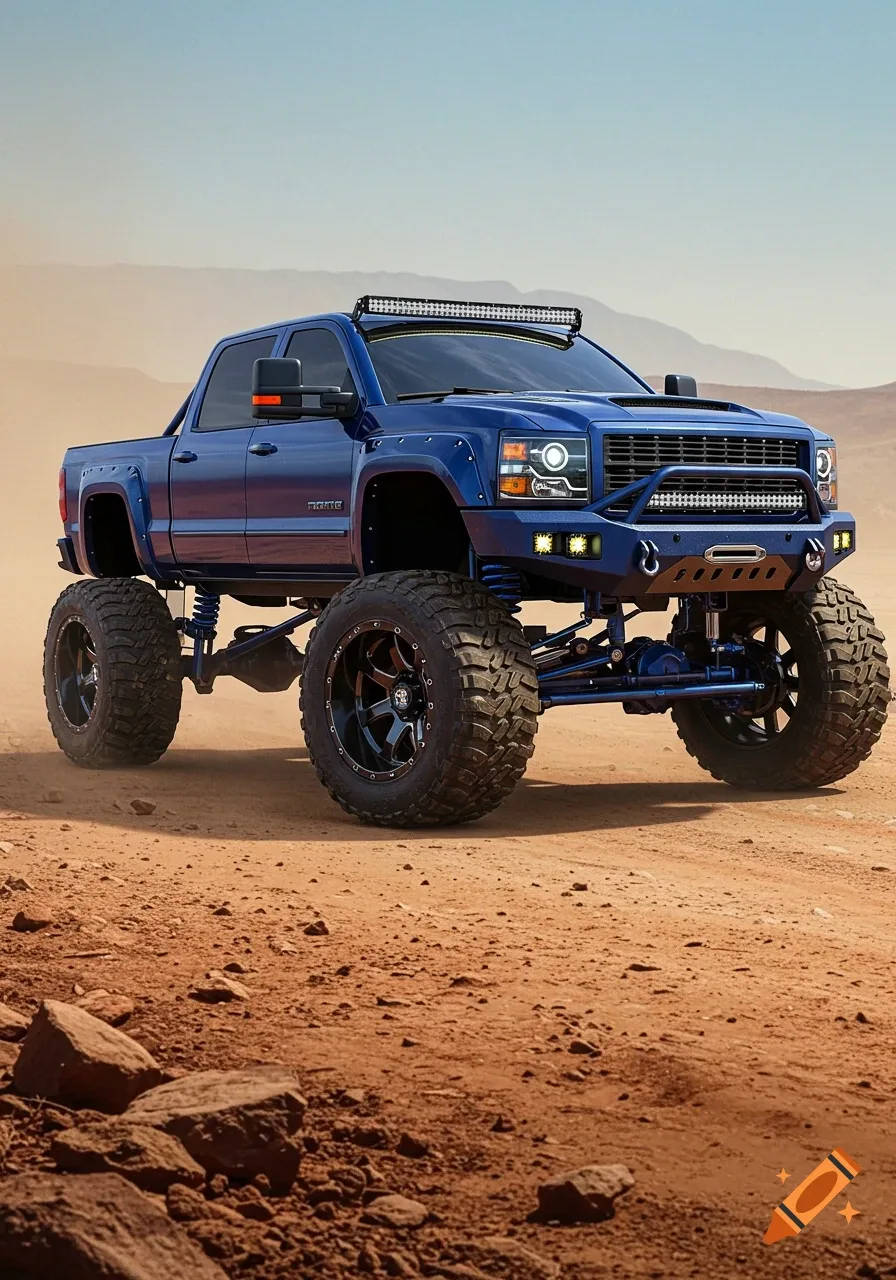
If you've lifted your truck in Arizona, you need to know the rules around mud flaps. Ignoring them can cost you hundreds of dollars. We've seen too many drivers get tickets simply because their flaps were too high off the ground.
Let's fix that.
Per Arizona Revised Statute 28-957.01, any vehicle with four or more tires needs mud flaps behind the rear tires. Common enforcement across the state puts the maximum height from the ground at 8 inches. As of 2026, this remains the standard that officers and inspection stations use.
Knowing your exact height is the first step to staying legal.
Quick Answer
Arizona law requires mud flaps on vehicles with four or more tires. The bottom edge of each flap must be no more than 8 inches from the ground. Measure with the truck unloaded on a level surface.
The flap must also cover the full tread width of the tire. This applies to lifted trucks, SUVs, and trailers.
What Arizona Law Actually Says About Mud Flap Height
Arizona Revised Statute 28-957.01 governs mud flap requirements. The law applies to vehicles with four or more tires. Your truck qualifies unless it falls under a specific exemption.
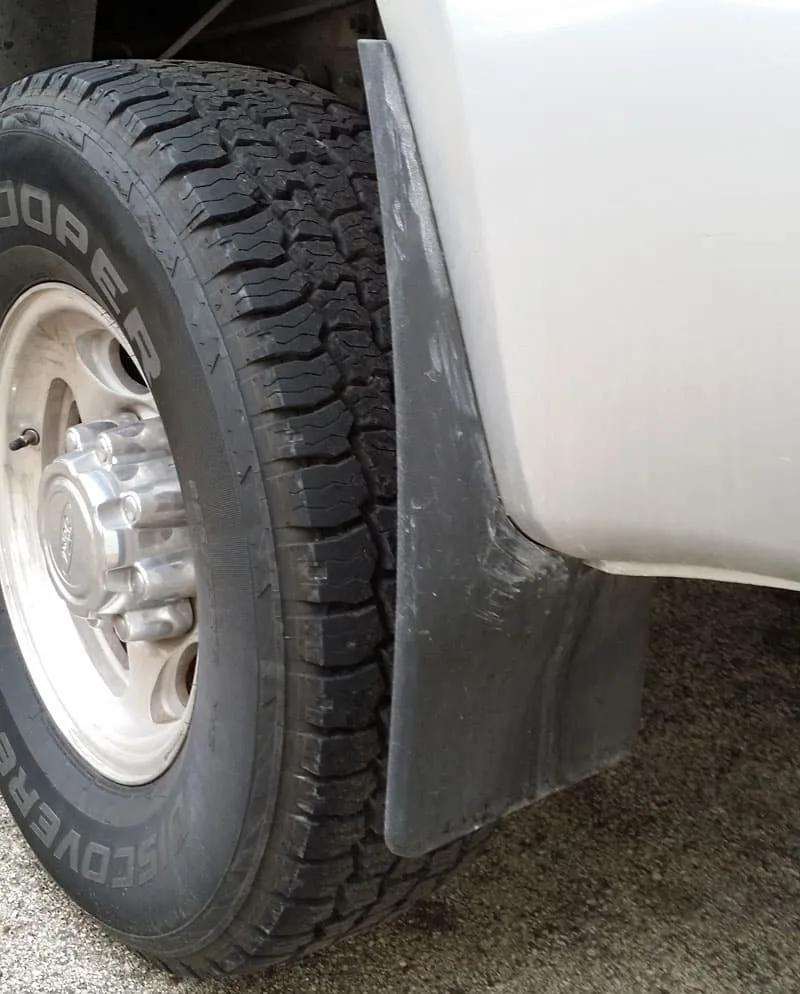
The statute says flaps must be mounted directly behind the rear tires. They have to extend downward to a height no more than 8 inches from the ground. They also must be wide enough to cover the full tread width of each tire.
This 8-inch measurement is critical. It is measured from the bottom edge of the flap to the pavement. The truck must be unloaded and on a level surface for a correct reading.
Lifted trucks commonly exceed this height if the flaps aren't matched to the lift and tire change.
The law also requires flaps to be made of flexible material. Rubber or a flexible composite works best. This way they don't crack or break when the suspension flexes off-road.
What about width?
The flap must be at least as wide as the tire it sits behind. If you've swapped to oversized tires, the stock flaps won't cut it. You need flaps wide enough to catch anything thrown backward from the tire.
Does This Law Apply to Your Truck? Exemptions and Covered Vehicles
Not every lifted truck falls under the same rules. Here is how it breaks down.
Personal pickup trucks and SUVs. If you drive a lifted truck for daily use, the law applies. You must have flaps. No exceptions for personal use.
Commercial vehicles. Trucks registered for commercial use follow the same height rule. Arizona law does not differ between personal and commercial for mud flaps.
Farm vehicles. There is an exemption for certain farm vehicles. If your truck is registered as a farm vehicle with ADOT, you might not need flaps. Check your registration classification.
But once you hit public pavement, the law expects flaps.
Out-of-state trucks. If you drive into Arizona from another state, you still need to comply. Arizona law applies to all vehicles on its roads. No grace period exists.
Trailers. If your trailer has four or more tires, it needs flaps. This includes boat trailers, utility trailers, and campers. Measure the flap height on the trailer separately.
The bottom line is simple. If your truck has four wheels and you drive it on public roads in Arizona, you need compliant mud flaps.
The Real Cost of Non-Compliance: Fines, Tickets, and Insurance Risks
Getting pulled over for missing or too-high mud flaps isn't a small thing. Here is what you risk.
Fix-it tickets. A standard equipment violation in Arizona costs $100 to $250 depending on the county. You get a fix-it ticket requiring proof of correction.
Failed safety inspections. Pima County requires annual safety inspections. Maricopa County requires them for certain vehicle classes. Your truck fails if the flaps are too high or missing.
Insurance complications. If you get into an accident with non-compliant flaps, your insurer could deny a claim. They may argue the vehicle was illegally modified. That leaves you paying out of pocket.
Liability for debris damage. Arizona monsoon season brings heavy rain. Mud flaps stop rocks and water from hitting cars behind you. Without them, you are liable for chipped windshields and damaged paint.
Registration holds. Some counties place a registration hold on vehicles with unresolved equipment violations. You cannot renew your plates until you show the flaps are fixed.
The cost of a good set of flaps is between $40 and $150. The cost of ignoring the rules is easily ten times that.
How to Measure Mud Flap Height Correctly on a Lifted Truck

Measuring is straightforward. Follow these steps to get a correct reading.
What you need
| Item | Why |
|---|---|
| Tape measure or ruler | For the vertical measurement |
| Level surface | Parking lot or garage floor |
| Truck unloaded | No cargo, no passengers |
| Tire pressure at spec | Incorrect pressure changes ride height |
Step-by-step measurement
Park on a flat, level surface. Your driveway might not be level. Use a parking lot or garage floor.
Let the suspension settle. If you just drove, park and wait 5 minutes. The suspension needs to find its resting height.
Measure from the pavement to the bottom edge of the flap. Hold your tape measure vertically next to the flap. Let the flap hang naturally. Don't pull it down.
Check both rear tires. The height can vary side to side. Use the higher measurement for compliance.
Measure with the truck empty. The law expects the measurement with the vehicle in normal operating condition.
Write down the number. If it is 8 inches or less, you are legal. If it is 8.5 inches or more, you need longer flaps or a different mounting position.
Common mistakes
- Measuring on an incline
- Measuring with a load in the bed
- Using worn or sagging springs that give a false low reading
If your measurement is borderline, set your flaps to 7 inches from the ground. That way suspension flex or tire wear won't push you over.
Choosing the Right Mud Flaps for Your Lift Kit and Tire Size
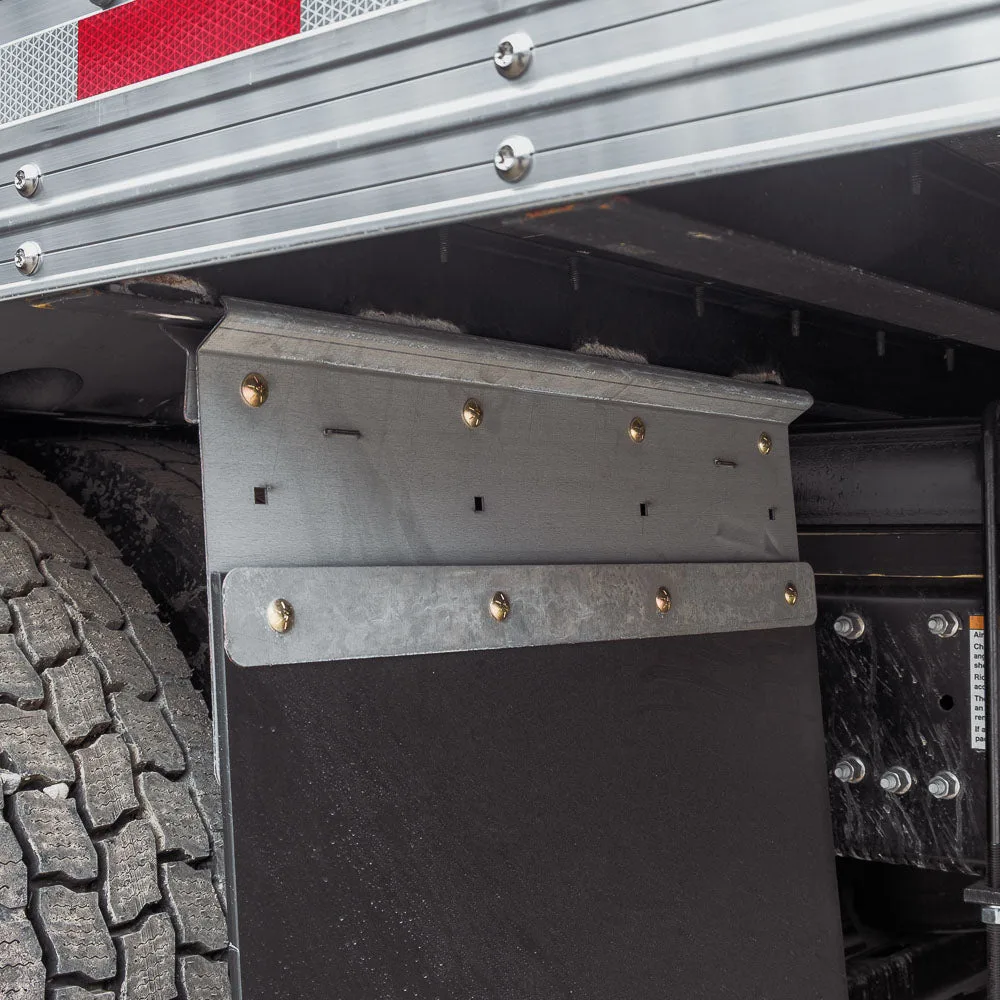
Selecting the wrong flaps is a common mistake. Here is how to pick correctly.
Measure your tire diameter
A 35-inch tire needs a longer flap than a 33-inch tire. The flap must hang low enough to catch debris from the full tire circumference.
Choose flap length
| Tire size | Recommended flap length |
|---|---|
| 33 inches | 8 to 10 inches |
| 35 inches | 10 to 12 inches |
| 37 inches | 12 to 14 inches |
| 40 inches | 14 inches or more |
These are starting points. The final measurement at the ground must be 8 inches or less.
Flap material matters
Stiff plastic flaps break on off-road trails. Flexible rubber or polyurethane flaps last longer. Arizona heat is hard on plastic.
UV breaks it down in a few years. Rubber lasts longer.
Mounting bracket options
- Bolt-on brackets. Strong but require drilling.
- Quick-release brackets. Let you remove flaps before hitting the trail.
- Bumper-mounted flaps. Some aftermarket bumpers have built-in mounts.
Width requirements
The flap must cover the tire's tread width. Oversized tires can be 12.5 to 14 inches wide. Measure your tire width when choosing flaps.
Universal fit vs. truck-specific
Universal flaps work for most setups. They are flat sheets you cut to length. Truck-specific flaps look cleaner but cost more.
For a lifted truck, universal flaps give you more flexibility.
Adjusting for suspension travel
If your truck has significant suspension travel, the flap might hit the ground under compression. Choose a flap length that allows for full compression plus 2 inches of clearance.
Budget
| Flap type | Price range |
|---|---|
| Universal rubber pair | $30 to $60 |
| Truck-specific molded pair | $80 to $150 |
| Quick-release bracket kit | $20 to $50 |
Spending a bit more on quality materials saves you from replacing flaps in a year.
Installation Tips for a Legal and Functional Setup
Getting the flaps bolted on is straightforward. But a few details matter.
Mount the brackets to a solid point. The frame works best. Loose brackets cause flap sag over time.
Drill carefully. Use a center punch so the drill bit doesn't walk.
Use lock washers or thread locker. Vibration from the road loosens standard bolts.
Check height after mounting. Install the flap, then measure from the ground. Adjust the bracket height before tightening.
Leave room for flex. Aim for 7 inches at rest to leave 1 inch of flex clearance.
Trim carefully. Use a straightedge and a sharp utility knife. A ragged edge collects mud.
Test the range of motion. Jack up the rear axle to simulate full compression. If the flap touches the ground, trim it or raise the mount.
Common Mistakes That Get Lifted Truck Owners Pulled Over in Arizona
Even with good intentions, drivers make errors. Here are the most common ones.
Flaps too short for the tire size. The flap might measure 8 inches from the ground, but it doesn't cover the full tire arc. Mud and rocks fly past the sides.
Flaps mounted too high on the bracket. The flap hangs down only a few inches. It barely catches any debris. Officers look for functional coverage, not just height.
Missing flaps on one side. Arizona law requires flaps behind each rear tire. One missing flap is still a violation.
Broken or cracked flaps. Arizona sun cracks cheap plastic in two years. A cracked flap is not a functional flap.
Flaps on trucks with aftermarket bumpers. Some bumpers push the flap mount too far inward. The tire throws debris past the flap.
Ignoring monsoon enforcement. July through September, officers actively look for vehicles without proper flaps.
Assuming inspection stations don't check. Pima County stations check them. Maricopa County commercial inspections check them. A failed inspection means no registration.
County Safety Inspections: What Maricopa and Pima Counties Check
Arizona does not have a statewide annual safety inspection. Some counties do.
Pima County. All vehicles must pass a safety inspection every year. The station checks height, width, and condition. If your flap is torn or too high, you fail.
Maricopa County. No annual safety inspection for standard passenger vehicles. But commercial vehicles and vehicles with equipment violations do need one. If an officer writes a fix-it ticket, you must get inspected after repairs.
What the station looks for. The inspector measures flap height. They check that both rear tires have flaps. They look for cracks, tears, or missing pieces.
Cost of inspection. Most stations charge $10 to $30. Failing costs you time. You must repair, return, and pay for a reinspection in some cases.
Other counties. Rural counties rarely inspect vehicles. But law enforcement still writes tickets.
Out-of-State Lifted Trucks: What You Need to Know in Arizona
You drove into Arizona from another state. Your truck has no flaps. Or your flaps don't match Arizona rules.
Arizona law applies to you immediately. There is no grace period. Officers write the same ticket for out-of-state drivers.
California trucks. Most California-legal flaps are fine in Arizona. The height rule is similar.
Nevada trucks. Nevada's law is close to Arizona's. The same 8-inch rule applies.
Utah and New Mexico trucks. Both have mud flap requirements similar to Arizona. Your flaps should be fine.
No exemptions for temporary visitors. The law applies the moment you cross the border.
Arizona safety checkpoints. Border checkpoints near Interstate 10 and Interstate 8 sometimes include equipment checks. Missing mud flaps are obvious.
If you get a ticket. Fix the flaps before driving back through Arizona. The second ticket costs more.
Frequently Asked Questions About Arizona Mud Flap Rules
What is the exact legal height for mud flaps on a lifted truck in Arizona?
The bottom edge of the flap must be no more than 8 inches from the ground. Measure on a level surface with the truck unloaded. That 8-inch limit is the standard officers and inspection stations use.
Do all lifted trucks in Arizona need mud flaps?
Yes, unless the truck is registered as a farm vehicle. Personal trucks, commercial trucks, SUVs, and RVs all need flaps. The only exemption is farm-registered vehicles that do not regularly use public roads.
Can I remove mud flaps for off-roading and put them back later?
Yes. Use quick-release brackets. Remove the flaps on the trail and reinstall them before driving on public roads.
If you get pulled over without flaps, you get a ticket.
How much does a mud flap ticket cost in Arizona?
Equipment violation fines range from $100 to $250 depending on the county. Maricopa and Pima counties tend toward the higher end. You also face a fix-it requirement.
Do I need mud flaps on my trailer too?
Yes. Arizona law applies to trailers with four or more tires. Same 8-inch rule applies.
Measure the trailer flaps separately.
What happens if I fail a county safety inspection for mud flaps?
You get a failure notice. You must install or repair the flaps and return for a reinspection. Until you pass, you cannot renew your registration.
Final Verdict: How to Keep Your Lifted Truck Street-Legal in Arizona
Staying legal comes down to three things. Measure your flap height from the ground. Keep it at 8 inches or less.
Make sure each rear tire has a flap wide enough to cover the tread.
Choose flexible flaps that match your tire size. Install them with solid brackets and lock washers. Check them after every off-road trip.
If you tow a trailer, measure that separately. If you drive in from another state, know that Arizona law applies immediately. And if you live in Pima County, your annual inspection will catch any issues.
A $40 set of flaps beats a $250 ticket every time. Take 20 minutes to measure and install. Your wallet and your fellow drivers will thank you.