ByMax Lee
Guide to No Rinse Car Wash
If you’ve ever tried washing your car in Colorado with a garden hose, you already know the struggle. Maybe your apartment complex doesn’t have a spigot. Maybe you’re under a drought restriction that says no outdoor water use.
Or maybe you just don’t feel like dragging out a pressure washer for a 20-minute rinse job. A no rinse car wash solves all of that. You can wash your entire vehicle using just a bucket and a few microfiber towels, using less water than a single toilet flush.
Our research shows that a typical no-rinse wash uses about 3 gallons of water total. Compare that to 50 to 60 gallons from a standard hose-and-bucket setup. For Colorado car owners facing water restrictions or living in apartments with no driveway access, that difference changes everything.
Let’s break down how this method actually works and whether it makes sense for your daily driver, your truck, or your weekend toy.
Why This Comparison Matters for Colorado Car Owners
Colorado is a unique place to own a vehicle. You’ve got dry air that bakes dirt into your paint. You’ve got road salt in the mountains that eats away at undercarriages.
You’ve got dust storms on the Eastern Plains. And you’ve got summer drought restrictions that can shut down a hose wash for weeks at a time.
Bing (Web (fair-use with source credit))
That’s why the choice between a no-rinse wash, a traditional hose wash, a waterless spray, and an automatic touchless tunnel matters more here than it does in other parts of the country. Each method has a tradeoff. Some save time.
Some save water. Some are safer for your paint. Some are legal under local restrictions.
In our analysis of Colorado-specific car care conditions, we looked at four main factors:
- Water usage (gallons per wash)
- Paint safety (risk of scratches and swirls)
- Time commitment (minutes from start to finish)
- Legality under local water restrictions
The method that wins in one category often loses in another. Your personal situation determines which tradeoff makes sense. That’s the lens we’ll use for the rest of this article.
For a broader look at car care topics, check out our blog for more Colorado-focused content.
The Contenders: No-Rinse Wash vs. Traditional Hose Wash vs. Waterless Wash vs. Touchless Automatic
Before we get into no-rinse chemistry, let’s line up the four main options available to Colorado car owners.
Traditional Hose-and-Bucket Wash
This is what most people think of when they picture a home car wash. You hook up a hose, fill a bucket with soap, use a mitt, and rinse everything off.
- Water usage: 40 to 60 gallons
- Time: 45 to 60 minutes
- Paint safety: Medium to high (with proper two-bucket method)
- Legal in Colorado: No, when drought restrictions are active
The big downside in Colorado is water restrictions. Many Front Range cities enforce mandatory limits during summer months. Denver Water, Aurora Water, and Colorado Springs Utilities all have rules that can ban or limit hose use for vehicle washing.
Waterless Car Wash
Waterless sprays work differently. You spray a lubricating solution on a panel and wipe it off immediately with a microfiber towel. No water at all.
- Water usage: 0 gallons
- Time: 20 to 30 minutes
- Paint safety: Low to medium (higher risk of scratching with heavy dirt)
- Legal in Colorado: Always legal
Waterless products work well for light dust and pollen. But they struggle with caked-on mud or road salt. If you’re not careful, you can grind dirt into your paint.
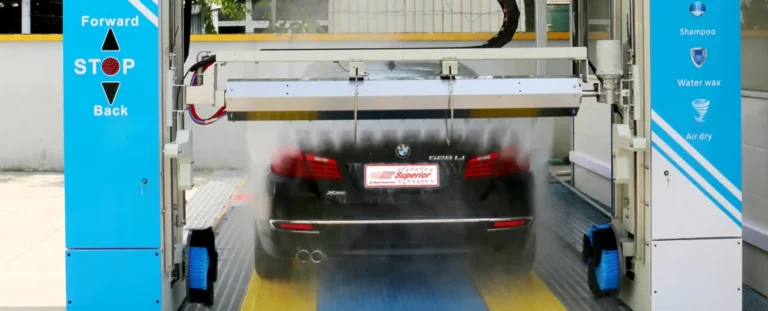
Touchless Automatic Wash
You’ve seen these at gas stations. You drive in, the machine sprays high-pressure water and detergent, and you drive out.
- Water usage: 30 to 50 gallons
- Time: 5 to 10 minutes
- Paint safety: Low to medium (high-pressure water can force dirt into clear coat)
- Legal in Colorado: Commercial operations are regulated; personal use depends on local rules
Touchless washes are fast. But the chemicals are harsh, and the water pressure can lift edges of clear coat on older vehicles.
No-Rinse Wash
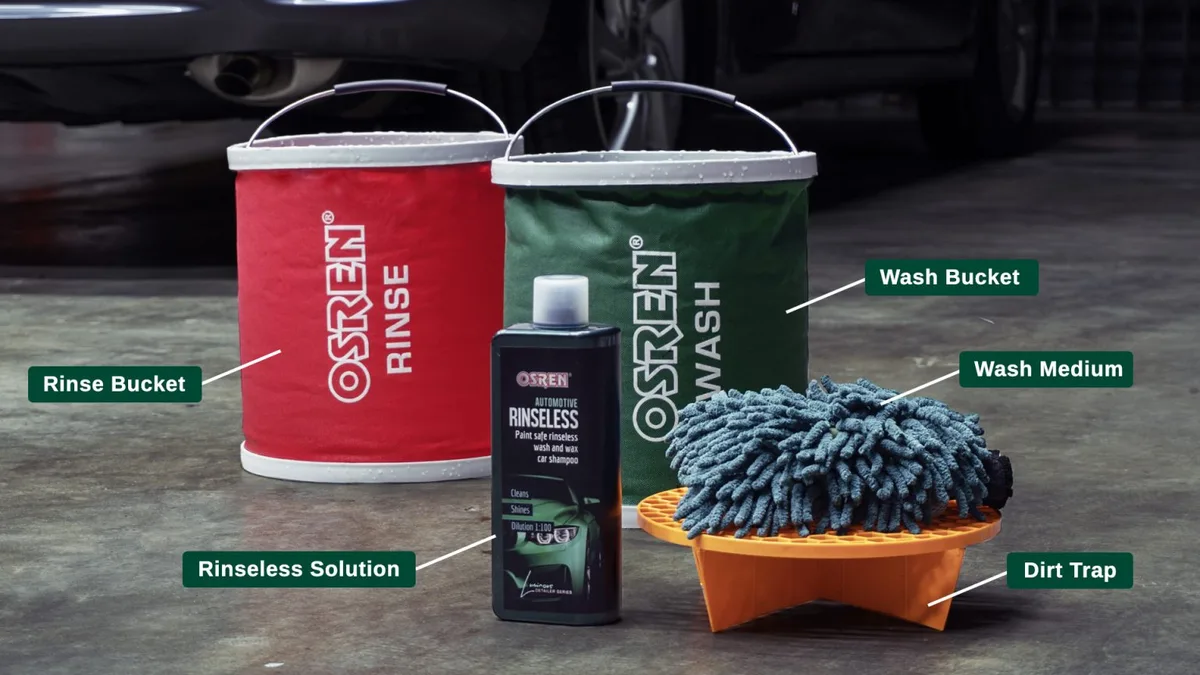
This is the middle ground. You mix a small amount of concentrated solution with water in a bucket. You wet a microfiber mitt or sponge, wash one panel at a time, and dry immediately with a clean towel.
No rinsing needed.
- Water usage: 2 to 4 gallons
- Time: 20 to 30 minutes
- Paint safety: High (with proper technique)
- Legal in Colorado: Yes, even under most drought restrictions
No-rinse products use polymers that encapsulate dirt particles. The dirt lifts off the paint and stays suspended in the towel. You never rinse it down the drain.
How No-Rinse Wash Actually Works (The Chemistry & Technique)
Most people assume that washing without rinsing means smearing dirt around. That’s understandable. But the chemistry behind a good no-rinse product is cleverer than you’d think.
Bing (Web (fair-use with source credit))
The Encapsulation Principle
No-rinse concentrates contain polymers and surfactants that wrap around dirt particles. Think of it like a tiny bubble that surrounds each grain of dust or mud. That bubble keeps the dirt from making direct contact with your paint.
When you wipe the panel with your mitt, the encapsulated dirt lifts off the surface and stays trapped in the fibers of the towel.
Manufacturer specifications for products like Optimum No Rinse (ONR) state that the formula creates a lubricating film between the paint and the wash media. That film prevents scratches. Without it, wiping a dirty panel would be like sanding your clear coat.
Why No Rinsing Works
In a traditional wash, you rinse soap off to remove dirt and suds. In a no-rinse wash, the encapsulating polymers keep dirt suspended in the towel. You don’t need water to flush it away.
You just flip the towel to a clean section for each panel.
This is why technique matters more than product choice. If you drag a dirty towel across a panel, you reintroduce dirt. The solution can only do so much.
Altitude Considerations
Colorado’s altitude affects how products behave. At 5,000 feet and above, water evaporates faster. That means you need to work in smaller sections.
Our research indicates that washing one panel at a time gives the solution enough time to encapsulate dirt before the water dries.
Cold weather can cause some no-rinse concentrates to separate. Keep your solution above 40°F and shake the bottle well before mixing.
For more on how washing tools affect your paint, see our breakdown on whether car wash brushes scratch paint.
Side-by-Side Comparison: Water Use, Time, Cost, and Paint Safety
Let’s put the numbers side by side. This table covers the four methods for a typical mid-size sedan. Costs assume retail pricing for products and water in Colorado as of 2026.
| Method | Water per Wash | Time | Product Cost per Wash | Paint Safety | Legal Under Drought |
|---|---|---|---|---|---|
| Traditional hose | 50 gallons | 45–60 min | $0.50 (soap) | High (with care) | No |
| Waterless spray | 0 gallons | 20–30 min | $1.00–$2.00 | Low–Medium | Yes |
| Touchless automatic | 40 gallons | 5–10 min | $8.00–$15.00 | Low–Medium | Varies |
| No-rinse wash | 3 gallons | 20–30 min | $0.50–$1.00 | High (with care) | Yes |
What the Numbers Tell Us
- Water savings: The no-rinse method uses 94% less water than a traditional hose wash. That difference matters when Denver Water institutes Stage 2 drought restrictions.
- Time efficiency: You save 15 to 30 minutes compared to a traditional wash.
- Cost per wash: No-rinse concentrate is cheap. A 32-ounce bottle of ONR costs around $15 and makes 256 gallons of wash solution. That’s about 85 washes for a sedan at $0.17 each.
- Paint safety: When done correctly, no-rinse washing is as safe as the two-bucket method. Towel quality and technique matter more than the product.
The One Caveat
No-rinse washing struggles with heavy, caked-on mud. If you take your truck off-road near Buena Vista and come back with an inch of dried clay, hit a self-serve wand wash first to knock off the bulk. Then follow up with a no-rinse wash.
Trying to wipe thick mud with a microfiber mitt is a recipe for scratches.
Best For Each Use Case
Not every Colorado car owner has the same needs. Here’s who benefits most from each method.
Apartment and Condo Owners (No Hose Access)
If you park in a garage or lot without a spigot, your options are limited. You can’t drag a hose up three flights of stairs. Touchless washes cost money and don’t always do a thorough job.
A no-rinse wash is your best bet. Fill a bucket in your kitchen sink. Walk down to your parking spot.
Wash your car in 25 minutes with no hose, no electrical outlet, and no mess. The only runoff is the water in your bucket, which you can dump down a drain.
Keep a dedicated set of microfiber towels and a bottle of concentrate in your trunk. That way you can wash anywhere, anytime.
Truck and SUV Owners (Mud, Dust, and Road Salt)
Trucks and SUVs are the most common vehicles on Colorado roads. They also gather the most grime. If you drive a Tundra or a Silverado through a construction zone or a snowy mountain pass, your paint takes a beating.
For light dust and pollen, a no-rinse wash works fine. For road salt, combine a no-rinse wash with an undercarriage spray at a self-serve bay. The salt dissolves in the solution and lifts off without scratching.
For moderate mud, pre-wet the panels with a spray bottle filled with no-rinse solution. Let it dwell for 30 seconds. Then wash as usual.
Ceramic-Coated Cars (Quick Maintenance Washes)
If you’ve invested in a ceramic coating, you want products that won’t strip it. Many traditional car soaps contain harsh detergents that can degrade the coating over time. No-rinse washes are pH neutral and safe for ceramic coatings.
Aggregate user reviews from ceramic-coated vehicle owners report that a weekly no-rinse wash keeps the hydrophobic properties intact. The polymers also add a slight gloss boost.
For more on ceramic coating care, check out our guide to ceramic washing benefits and costs.
Winter Maintenance (Salt Removal Without Frozen Hoses)
Colorado winters are brutal on cars. The salt that keeps roads safe also accelerates rust. You can’t always drag a hose out in 20°F weather.
A no-rinse wash lets you clean off road salt in your garage or covered parking spot.
Use warm water (not hot) to mix your solution. The warmth helps dissolve the salt and keeps the solution from freezing on your paint. Dry the panel immediately to prevent water spots.
Off-Road and Overland Vehicles (Heavy Grime)
This is the one use case where no-rinse washes fall short without a pre-wash. If you’ve been through a muddy trail near Moab or a dusty pass in the San Juans, your rig is caked.
The best approach: hit a self-serve wand wash first to blast off the bulk. Use the high-pressure rinse setting but skip the soap brush. Those brushes are notorious for scratching paint.
Then finish with a no-rinse wash for a streak-free shine.
For the right water pressure settings, see our guide on recommended PSI for washing cars.
Common Colorado-Specific Mistakes to Avoid
Even a good no-rinse wash can go wrong if you don’t account for local conditions. Here are the pitfalls we see most often with Colorado car owners.
Hard Water and Dilution Ratios
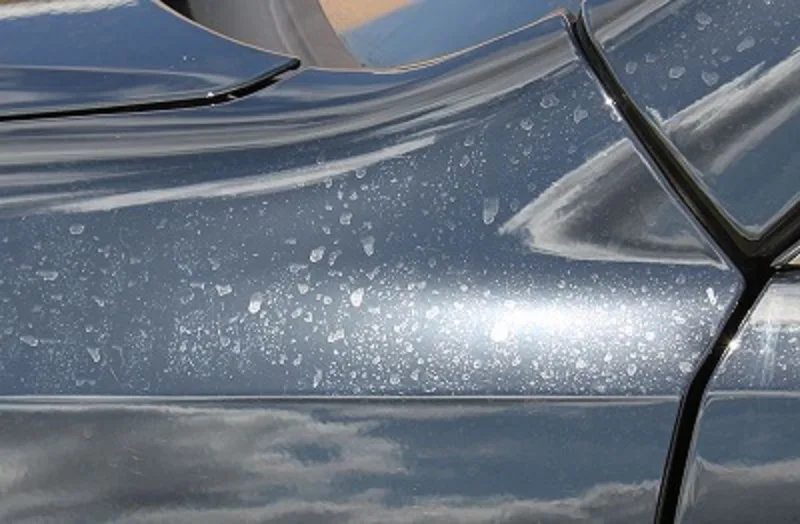
Colorado tap water is notoriously hard. The mineral content leaves white spots on paint if you don’t dry fast enough. Hard water also reduces the effectiveness of no-rinse polymers.
The fix is simple. Use distilled water for mixing your solution. A gallon costs about a dollar at the grocery store.
That small expense prevents mineral deposits and keeps the encapsulation chemistry working at full strength. If you wash frequently, consider a hard water softener for washing cars for your home setup.
Bing (Web (fair-use with source credit))
Altitude Drying and Residue
At Colorado altitudes, water evaporates fast. Really fast. If you wash a whole side of a truck before drying, the solution may already be gone by the time you reach the rear panel.
That leaves polymer residue behind.
Work in smaller sections. A door at a time. Half a hood at a time.
For a full-size truck, break each panel into quarters. Drying immediately after washing each section prevents streaking.
Cold Weather Product Separation
Some no-rinse concentrates thicken or separate when stored below 40°F. If you leave a bottle in your garage during a Colorado winter, you might pour out a cloudy, uneven solution.
Store your concentrate indoors. If it does separate, shake it vigorously or let it warm to room temperature before mixing. Never microwave or heat it directly.
What You’ll Need: Tools and Towels for Success
You don’t need much. That’s the point. But the tools you choose make the difference between a swirl-free shine and a scratched mess.

Bing (Web (fair-use with source credit))
The Essentials
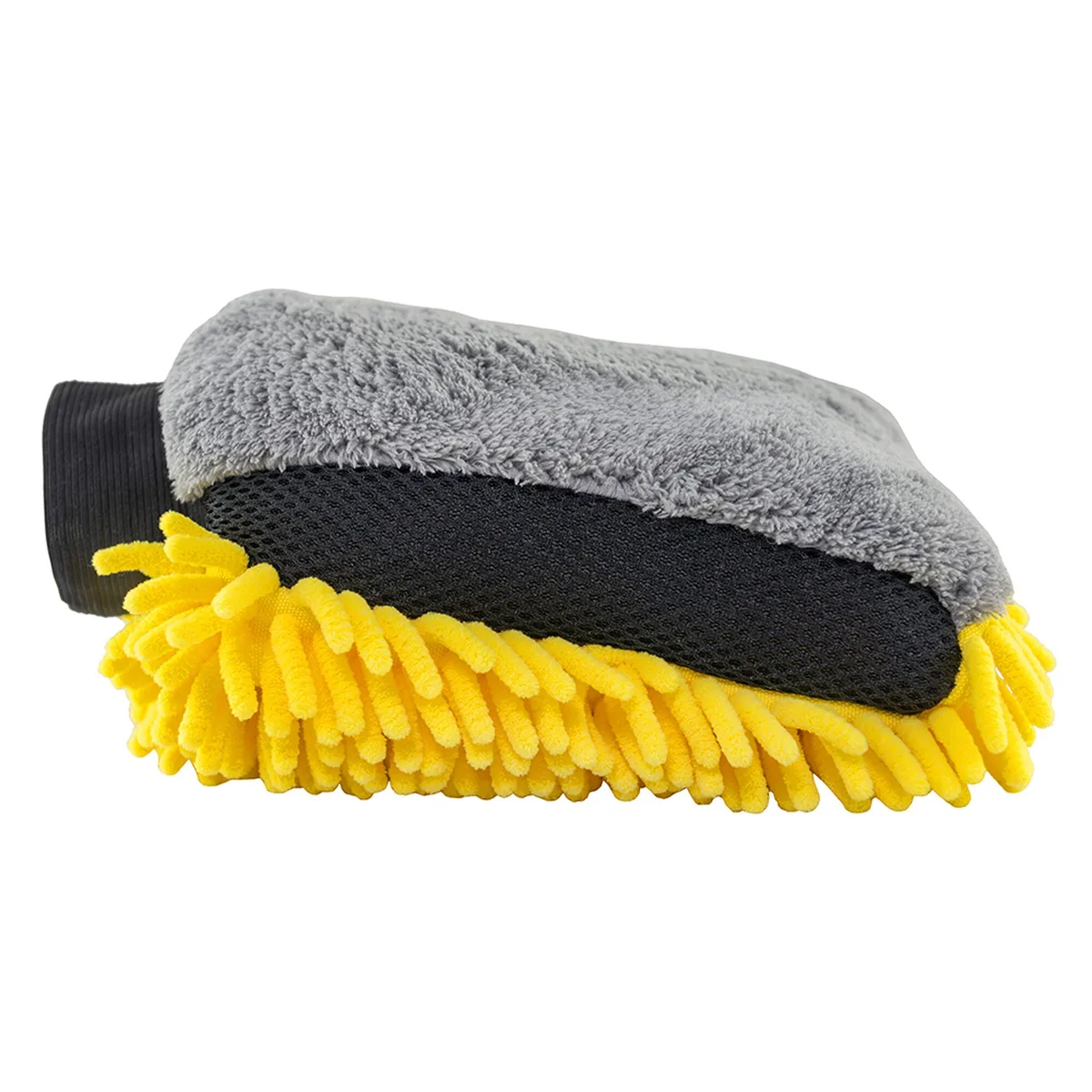
- Microfiber wash mitt or sponge: A quality mitt with a plush pile (300 to 400 GSM) traps dirt better than cheap options. Avoid cotton terry cloth or old rags.
- Clean microfiber drying towels: You need at least three to five per wash. A 350 to 500 GSM weave is ideal. Use a fresh towel for each panel.
- Bucket with a grit guard: The grit guard traps dirt that falls off your mitt. This prevents you from dragging grit back onto your paint.
- Spray bottle: Useful for pre-wetting panels and for spot treatments between washes.
Nice to Have
- Two-bucket setup: One for wash solution, one for rinsing your mitt. Adds a safety margin against cross-contamination.
- Distilled water: Essential for hard water areas in Colorado.
- Pump sprayer: For pre-soaking a whole vehicle before a full wash. Helps loosen heavy dirt.
For tips on keeping your towels clean and lint-free, see our guide on what to wash car rags in.
Expert Tips for a Swirl-Free Wash Every Time
You can have the best product on the market and still scratch your paint if your technique is off. Here’s what our research suggests for consistent results.
The One-Towel Rule
Never use a towel that has touched the ground or your wheel wells. Keep your wash towels separate from your drying towels. Use a different set for wheels and tires.
Cross-contamination is the leading cause of swirl marks.
Pre-Soak Every Panel
Before you touch the paint with your mitt, spray the panel with your no-rinse solution. Let it sit for 15 to 30 seconds. This gives the polymers time to encapsulate loose dirt.
You’ll pick up less grime in your mitt.
Use Straight Lines, Not Circles
Circular motions create visible swirl patterns under direct sunlight. Wipe in straight, overlapping lines from top to bottom. This mimics the natural flow of water and hides any minor marring.
Fold Your Towel Frequently
Each towel gives you eight clean sides if you fold it in quarters. Flip to a fresh side after every pass. When all sides are dirty, grab a new towel.
Using a dirty side is like wiping your paint with sandpaper.
Dry Immediately
Do not let the solution air dry. Wipe each panel dry with a clean microfiber towel right after washing. Air drying leaves polymer residue and water spot minerals behind.
The Verdict: Which Method Wins for Colorado?
There’s no single right answer. Your choice depends on your situation.
- If you live in an apartment or condo with no hose access, the no-rinse wash is your clear winner. It’s convenient, legal, and cheap.
- If you drive a truck or SUV through mud and snow regularly, combine a self-serve pre-rinse with a no-rinse finish for the safest results.
- If you have a ceramic-coated car, stick with a no-rinse wash to preserve your coating and save time.
- If you’re washing in winter, the no-rinse method keeps your garage warm and your paint salt-free.
For most Colorado car owners, a no-rinse car wash is the best all-around solution. It balances water savings, paint safety, cost, and convenience better than any alternative. As of 2026, with drought restrictions tightening across the Front Range, it’s also the most future-proof choice.
Start with a quality concentrate, a bucket, and a stack of clean microfiber towels. That’s all you need for a clean, swirl-free car every time.