ByMax Lee
Tutorial: Wash Sprayer Gor Vehicals
You've probably searched for a "wash sprayer for vehicles" and ended up more confused than when you started. That's because the term covers everything from a $15 hose attachment to a $500 pressure washer setup. Most advice online assumes you already know the difference.
Let's fix that.
The right sprayer depends entirely on your situation. Where you wash. How often.
What you're driving. As of 2026, the market breaks cleanly into four categories. Each has real trade-offs in pressure, portability, and cost.
We've dug through manufacturer specs and thousands of verified buyer reviews. Here's the straight answer on which one actually fits your life.
Why This Comparison Matters
A "wash sprayer" is not a single product. It's a category that includes four completely different tools. Each one is designed for a different kind of car washing.
If you grab the wrong one, you'll either spend too much for features you don't need, or end up with something that can't do the job. We've seen people buy a battery-powered sprayer thinking it works like a pressure washer. They find out the hard way it barely rinses mud off a truck.
We've also seen folks drop $300 on a pressure washer when a $30 hose-end sprayer would have been perfect for their small sedan.
The goal is simple: match the tool to your actual washing routine. Not your dream routine. Not what the guy on YouTube uses.
Your real life.
Bing (Web (fair-use with source credit))
The 4 Main Types of Vehicle Wash Sprayers
Let's break down each option so you can see what you're actually getting. We'll cover how they work, what they cost, and where they fall short.
Pressure Washers with Foam Cannons
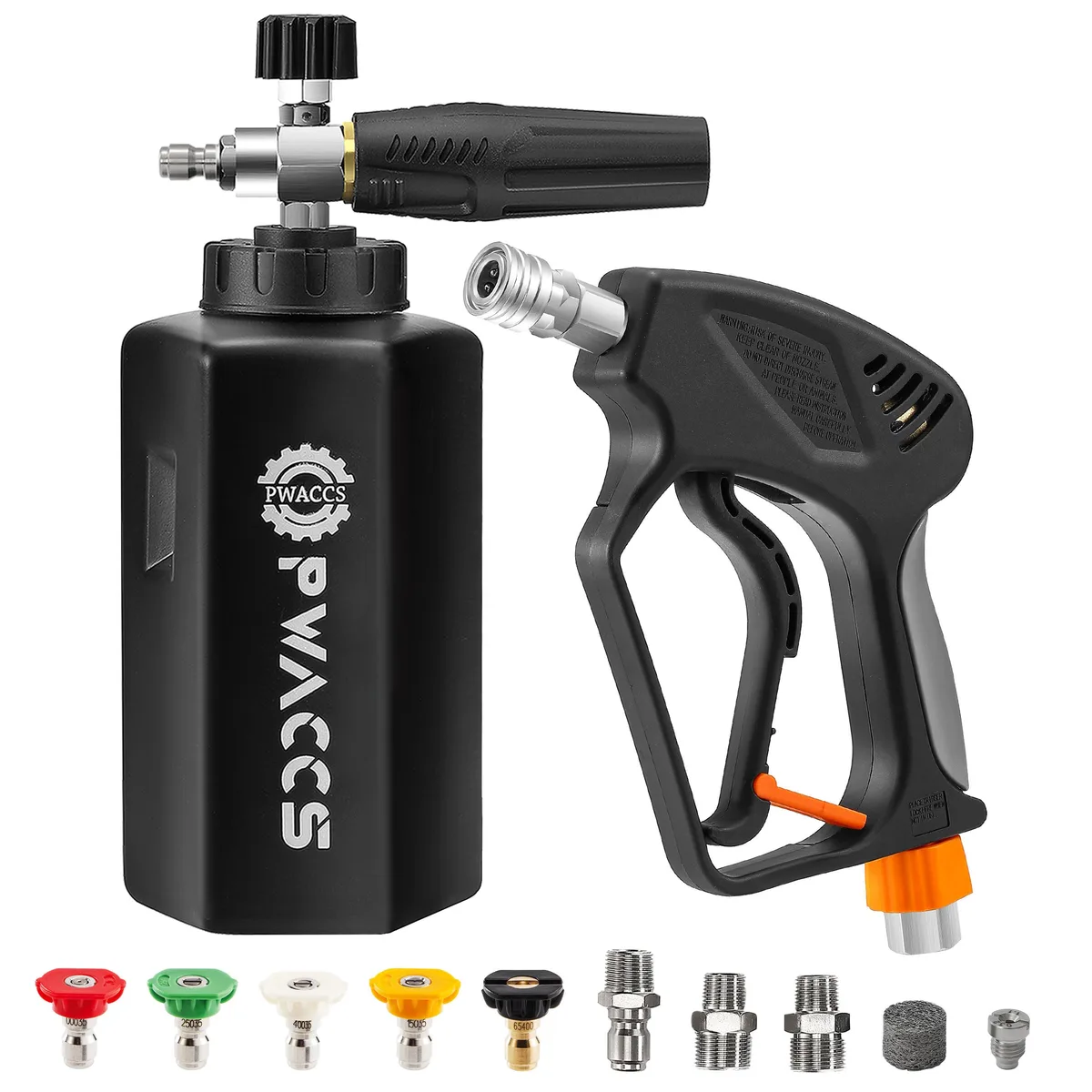
This is the gold standard for serious car care. A pressure washer delivers high-pressure water through a wand. You attach a foam cannon to spray thick, clinging soap before you rinse.
What you get:
- PSI range: 1,200, 2,000 (electric), 2,000, 4,000 (gas)
- GPM range: 1.2, 1.8 (electric), 2.0, 4.0 (gas)
- Price: $100, $500 for the pressure washer, plus $20, $50 for a foam cannon
- Best for: Homeowners with driveway access, dedicated detailing enthusiasts
The foam cannon is the real star. It mixes soap with water and air to create a thick foam that sticks to the paint. That foam loosens dirt before you ever touch the surface.
That's the whole point of a touchless wash. You spray it on, let it dwell for a few minutes, then rinse it off.
But there's a catch. You need a pressure washer to use a foam cannon. If you don't already own one, you're looking at a $150 minimum investment.
And if you live in an apartment or have no outdoor spigot, a pressure washer is basically useless.
Battery-Powered Handheld Sprayers
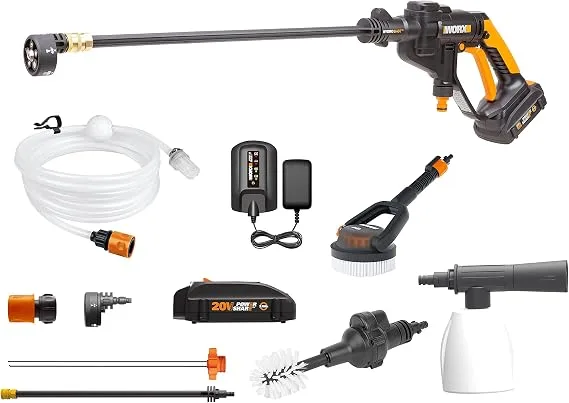
These have gotten surprisingly good in the last few years. Brands like Worx, Ryobi, and Kärcher make cordless sprayers that draw water from a bucket, a hose, or even a lake.
What you get:
- PSI range: 300, 600 (much lower than pressure washers)
- Tank capacity: 0.5, 2 gallons
- Battery runtime: 15, 45 minutes
- Price: $50, $150
The big advantage is portability. You can wash your car anywhere there's a bucket of water. No hose.
No outlet. No problem. That makes them perfect for apartment dwellers, people with long driveways, or anyone who wants to wash at a self-serve bay without using their equipment.
The downside is pressure. At 300, 600 PSI, these sprayers can rinse off loose dirt and apply soap. But they won't blast off caked-on mud or road grime.
You'll need to do more manual scrubbing. And the battery life is real. Most models give you about 20 minutes of continuous use.
That's enough for a quick wash but tight for a full detail.
Bing (Web (fair-use with source credit))
Hose-End Sprayers (Foam Guns)
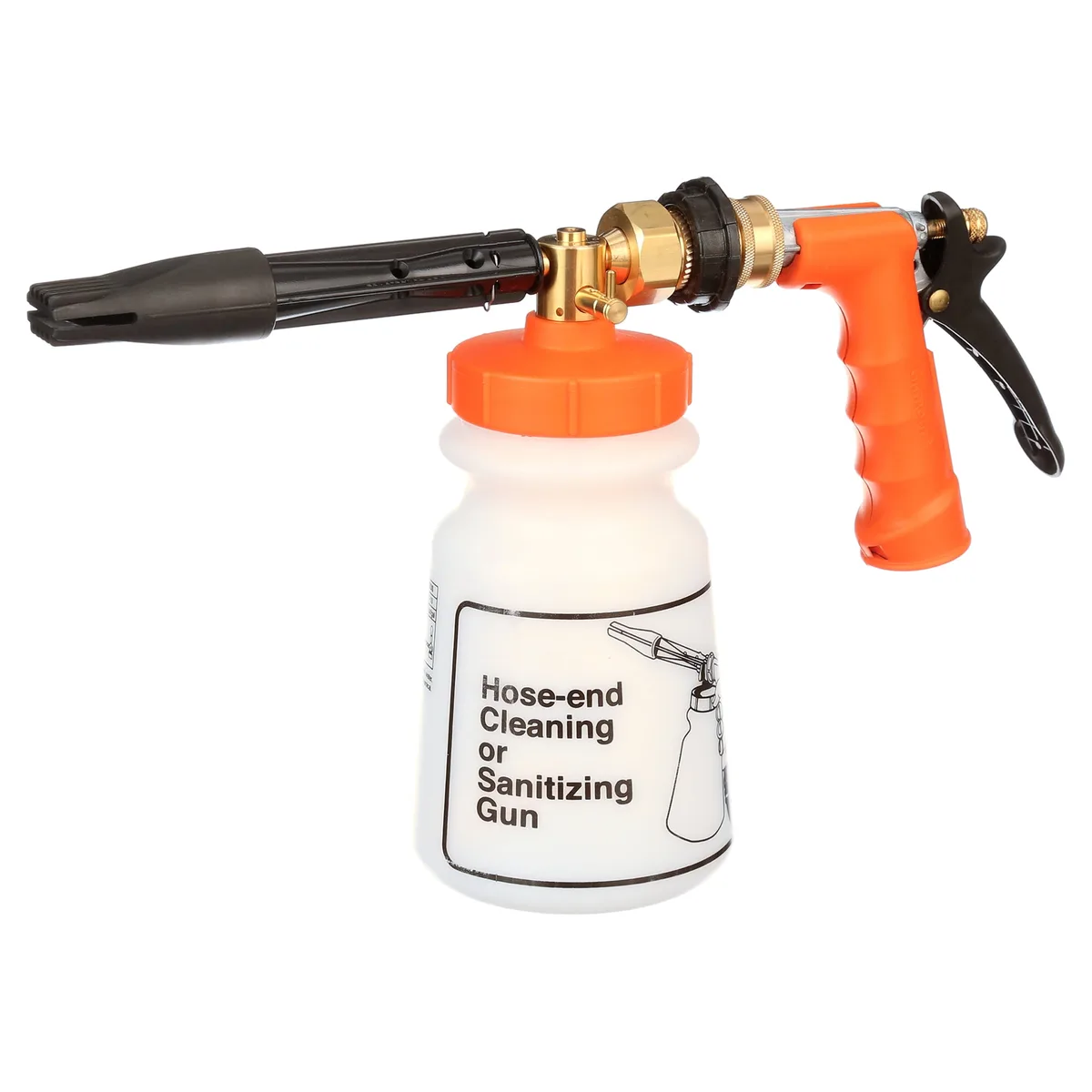
This is the budget-friendly option that's been around for decades. A hose-end sprayer attaches directly to your garden hose and uses the water flow to mix and dispense soap. The better ones, like the Gilmour Foamaster, have a built-in chamber that creates a decent foam.
What you get:
- PSI: Whatever your home water pressure is (typically 40, 80 PSI)
- Dilution control: Adjustable dial (usually 1:1 to 1:10)
- Price: $15, $40
- Best for: Casual washers, people on a budget, small vehicles
The appeal is obvious. It's cheap. It's simple.
You already own the hose. No batteries to charge. No pump to maintain.
No expensive equipment to store.
The trade-off is foam quality. A hose-end sprayer will never produce the thick, shaving-cream foam you see in detailing videos. That requires a pressure washer and a proper foam cannon.
What you get instead is a soapy water spray that's better than a bucket and sponge but not by a huge margin.
Still, for a quick weekly wash on a sedan or crossover, it gets the job done. And at $20, it's hard to argue with the value.
Bing (Web (fair-use with source credit))
Pump-Up Garden Sprayers
This one surprises people, but it works. A pump-up sprayer is the same tool you'd use for weed killer or pest control. You fill it with soapy water, pump the handle to pressurize it, and spray.
What you get:
- Tank capacity: 1, 2 gallons
- Pressure: Manual, typically 30, 60 PSI after pumping
- Price: $15, $30
- Best for: Emergency washes, small vehicles, spot cleaning
The advantage is that it's completely self-contained. No electricity. No batteries.
No hose. You can take it anywhere. It's also cheap enough that you can keep one in your trunk for bird droppings or tree sap.
The disadvantage is that you have to keep pumping. Every few minutes, the pressure drops and you're back to pumping the handle. It's fine for a motorcycle or a quick spot clean.
Washing a full-size SUV with one is an arm workout you didn't sign up for.
Side-by-Side Comparison: Key Specs at a Glance
Here's the quick reference table. Bookmark this if you're comparing options later.
| Feature | Pressure Washer + Foam Cannon | Battery Sprayer | Hose-End Sprayer | Pump-Up Sprayer |
|---|---|---|---|---|
| PSI | 1,200–2,000 (electric) | 300–600 | 40–80 (house pressure) | 30–60 (manual) |
| GPM | 1.2–1.8 | 0.5–1.0 | 2.0–5.0 (hose dependent) | 0.3–0.5 |
| Foam Quality | Excellent (thick, clingy) | Moderate (thin foam) | Fair (soapy water) | Poor (thin spray) |
| Portability | Low (needs power + hose) | High (battery + bucket) | Medium (needs hose) | Very high (self-contained) |
| Price | $120–$550 | $50–$150 | $15–$40 | $15–$30 |
| Best For | Serious detailers, home garages | Apartment dwellers, mobile use | Budget washers, casual use | Spot cleaning, emergencies |
A few things jump out from this table. First, the pressure gap between a battery sprayer and a pressure washer is enormous. That 300 PSI difference isn't just a number.
It's the difference between rinsing off dust and blasting away dried mud.
Second, notice the GPM on hose-end sprayers. Because they use your full hose flow, they actually move more water than a pressure washer. That sounds good, but it means you'll use a lot more water per wash.
If you're on a well or in a drought-prone area, that matters.
Third, the price spread is huge. You can spend $20 or $500. The right choice depends entirely on what you're willing to put up with in terms of setup, cleanup, and physical effort.
Best for Each Use Case
Let's get specific. Here's who each option actually works for.
Best for the Weekend Warrior (Home Driveway Washer)
If you have a garage or driveway with access to a garden hose and an electrical outlet, and you wash your car at least twice a month, get a pressure washer with a foam cannon. It's the most effective tool for the job. It makes washing genuinely faster.
You'll spend around $150 to $250 for a solid electric pressure washer like a Sun Joe SPX3000 or a Kärcher K2. Add a $30 foam cannon, and you're set. The foam cannon lets you pre-soak the car with thick soap that lifts dirt away from the paint.
That means less scrubbing and fewer swirl marks.
If you're worried about damaging your paint, check our guide on the recommended PSI for washing cars. The short version: stay under 2,000 PSI and keep the nozzle at least 12 inches from the paint.
Best for the Mobile Detailer (On-the-Go Pro)
If you're washing cars at clients' houses or in parking lots, you need portability. A battery-powered sprayer is your best bet. It's light.
It fits in a trunk. It doesn't require the client to have a hose or outlet.
The Worx Hydroshot is the most popular option here. It runs off an 18V or 20V battery, draws water from a bucket or a hose, and puts out about 320 PSI. That's enough for a maintenance wash but not for heavy dirt.
You'll want to pair it with a good car wash shampoo. Avoid dish soap, which strips wax. We've covered why in our article on whether dish soap is good for cars.
Stick with a pH-neutral car shampoo for best results.
Best for the Apartment Dweller (No Hose Access)
This is the toughest situation. You have no outdoor spigot. No garage.
Probably no electrical outlet near your parking spot. Your options are limited.
A battery-powered sprayer is your best bet. Fill it with water from your kitchen sink. Carry it down to the car.
Wash. It's not as convenient as a pressure washer, but it works. The key is to use a rinseless wash product.
It requires very little water and leaves no spots.
If you're on a tight budget, a pump-up sprayer works too. It's more work, but it's $20 and fits in a backpack.
Best for the Budget-Conscious Owner
If you just want to keep your car clean without spending a lot of money or time, get a hose-end sprayer. The Gilmour Foamaster II is the gold standard here. It costs about $25.
It won't give you Instagram-worthy foam. But it will apply soap evenly and let you rinse with the same tool. For a quick 15-minute wash on a small car, it's hard to beat.
Just be aware that you'll use more water than with a pressure washer. If you're paying for water or dealing with restrictions, that's a real cost.
What Nobody Tells You About Foam Cannons
A foam cannon looks simple. You screw it on. You add soap.
You pull the trigger. But the difference between thick, clinging foam and a watery mess comes down to one small part: the orifice size.
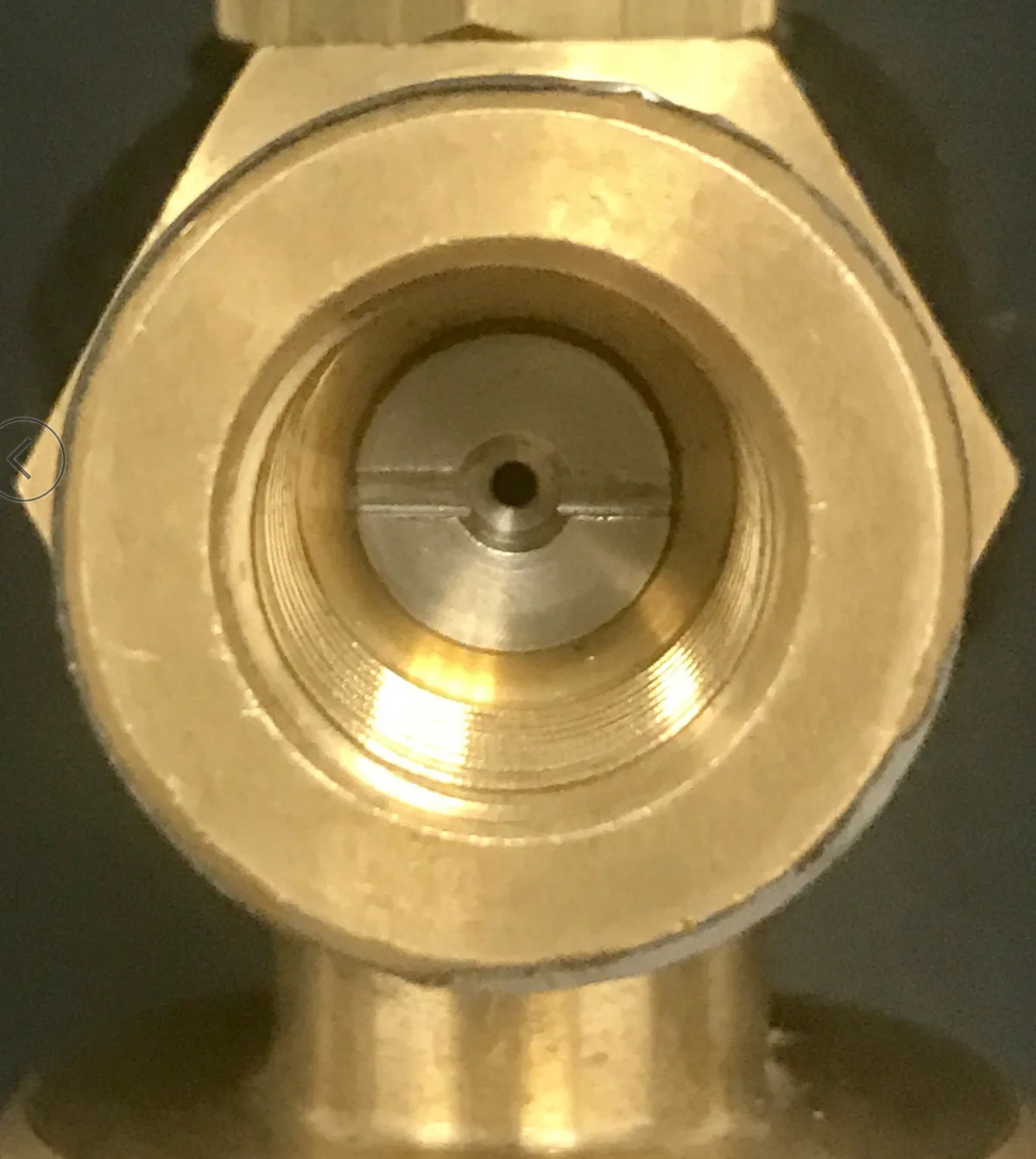
The orifice is the brass fitting inside the cannon where soap and water mix. Most foam cannons ship with a 1.25mm orifice. That works fine for thin soaps.
But if you're using a thick car shampoo, you might need a 1.4mm orifice. The larger hole lets more soap flow through. The result is thicker foam.
Bing (Web (fair-use with source credit))
Your pressure washer's PSI and GPM also matter. A foam cannon needs at least 1,200 PSI to agitate the soap properly. Below that, you'll get runny foam that slides off the paint.
Our guide on the max pressure washer PSI for car use covers the safe range.
Another hidden detail is the soap-to-water ratio. Most people guess. Manufacturer specs recommend a 1:5 to 1:10 ratio.
That means one part soap to five parts water. Start with a 1:5 mix and adjust from there.
One last tip: pre-wet the foam cannon before adding soap. A dry cannon creates air pockets that ruin the foam consistency. Run clean water through it for a few seconds first.
Then add your soap mix.
Battery Sprayers: The Hidden Trade-Offs
Battery sprayers solve the portability problem. But they introduce new frustrations you need to know about before you buy.
The biggest issue is battery life. Most 18V sprayers give you 15 to 20 minutes of continuous runtime. That's enough for a quick wash on a compact car.
But for an SUV or a truck, you'll likely need a second battery. Manufacturer specs list runtime at low flow settings. In real use, you get less.
Then there's pressure degradation. As the battery drains, the pump slows down. Your first minute of spraying is at full 450 PSI.
Minute 15 might be at 200 PSI. That's a real problem if you're trying to rinse off dried bugs or road salt.
Tank size is another factor. A one-gallon tank sounds decent. But that gallon has to last for both soap application and rinsing.
Aggregate user reviews report that a one-gallon battery sprayer often runs out of water before the car is fully rinsed. You'll need to refill mid-job.
On the plus side, these sprayers use a fraction of the water a hose uses. You'll get through a whole wash on three to four gallons. That's a real advantage in drought-prone areas or if you pay for water by the gallon.
Hose-End Sprayers: Cheap but Limited
A hose-end sprayer costs less than a dinner out. That makes it tempting. But the limitations are real.
The biggest limitation is foam quality. A hose-end sprayer relies on water pressure from your home supply. That's typically 40 to 80 PSI.
Not enough to create thick foam. What you get is soapy water with some bubbles. It works for a maintenance wash.
But it won't lift heavy dirt the way a foam cannon does.
Then there's dilution control. Most hose-end sprayers have a dial that adjusts the soap-to-water ratio. But the dial is imprecise.
You'll often end up with either too much soap or too little. The Gilmour Foamaster II is the most consistent model we've seen. Even it requires trial and error.
Water usage is another drawback. A hose-end sprayer uses your full hose flow. You're moving 2 to 5 gallons per minute.
A typical wash uses 30 to 50 gallons. Compare that to a pressure washer. It uses 1.2 to 1.8 GPM and finishes the same job with 10 to 15 gallons.
If you're on a well or under water restrictions, that difference adds up fast.
Still, for a casual washer who just wants to spray some soap on a small sedan and rinse it off, a hose-end sprayer is fine. It's simple. It's cheap.
It does the job. Just don't expect Instagram foam. If you're looking for a dedicated hose attachment, check our guide on hose car wash sprayer options.
Common Mistakes That Ruin Your Paint (and Your Sprayer)
Most people damage their paint long before they realize it. The mistakes are simple. They're easy to avoid once you know what to look for.
Using too much pressure. A pressure washer set above 2,000 PSI can strip clear coat, especially on older cars. Hold the nozzle at least 12 inches from the paint. Never use a 0-degree nozzle on a vehicle.
That jet is designed for concrete, not car panels.
Letting soap dry on the paint. This is the number one cause of water spots and etching. Foam or soap should never sit for more than five minutes. If the weather is hot and sunny, cut that to two minutes.
Work in the shade if you can.
Using dish soap as car shampoo. Dish soap is designed to cut grease. It strips wax. It dries out rubber seals.
It leaves paint unprotected. Stick with a pH-neutral car wash shampoo.
Not cleaning the sprayer after use. Soap residue left inside a foam cannon or hose-end sprayer will harden and clog the orifice. Next time you use it, you'll get weak foam or no foam at all. Flush the system with clean water after every wash.
Scrubbing with a dirty mitt or brush. Even the best foam cannon won't protect your paint if you grind dirt into it with a contaminated wash mitt. Use the two-bucket method. Change your mitt regularly.
If you're concerned about brush marks, check our analysis of whether car wash brushes scratch paint.
Real-World Costs: What You'll Actually Spend
The sticker price is just the start. Here's what the full ownership picture looks like for each option.
Pressure washer and foam cannon. Initial cost: $150 to $300 for a decent electric unit plus a $30 foam cannon. Car shampoo runs $10 to $20 per bottle. A bottle lasts 10 to 15 washes.
Electricity cost is negligible, maybe $0.50 per wash. Replacement nozzles and hoses add $20 to $50 over a few years. Total per wash: roughly $2 to $3.
Battery sprayer. Initial cost: $60 to $120. Extra battery: $40 to $60. Car shampoo: same as above.
Battery wear: lithium-ion batteries lose capacity after about 300 charge cycles. Expect to replace the battery every two to three years. Total per wash: about $1.50 to $2.50.
Hose-end sprayer. Initial cost: $15 to $40. Car shampoo: same. Water cost: higher than other options.
If you're on city water, that extra 30 gallons per wash adds $0.50 to $1.00. Total per wash: about $1.00 to $1.50.
Pump-up sprayer. Initial cost: $15 to $30. Car shampoo: same. No electricity or batteries.
The sprayer itself may need a new seal after a year or two. That costs about $5. Total per wash: under $1.00.
The cheap options save you money upfront. They cost you time and effort. The expensive option costs more now but saves time and does a better job protecting your paint.
That's the trade-off.
If you wash your car weekly, the pressure washer pays for itself in convenience within a year. If you wash once a month, a hose-end sprayer is probably all you need.
Maintenance Tips to Make Your Sprayer Last
A wash sprayer is a simple machine. Neglect it, and it will fail mid-wash every time.
Flush the system after every use. Run clean water through the foam cannon or sprayer until the water runs clear. Soap residue hardens inside the orifice and clogs the nozzle.
That clog is the number one reason people think their sprayer is broken.
Store the sprayer in a dry place. Freezing water inside a pump or hose will crack the seals. If you live in a cold climate, drain all water before winter storage.
Lubricate O-rings and seals every few months. A thin coat of silicone grease keeps them from drying out and leaking. You can find it at any hardware store for a few dollars.
For battery sprayers, remove the battery after each use. Store it at room temperature, not in a hot garage. Lithium-ion batteries degrade faster in heat.
The Verdict: Which Wash Sprayer Should You Buy?
Here's the short answer.
If you have a driveway and wash monthly, get a pressure washer with a foam cannon. It's the best investment for paint protection and washing speed.
If you live in an apartment or wash on the go, get a battery-powered sprayer with an extra battery.
If you just want to keep your car clean on a budget, a hose-end sprayer gets the job done for under $30.
If you need an emergency option for spot cleaning, a pump-up sprayer works in a pinch.
Pick the tool that fits your real washing routine. Not the one that looks best in a video. That's the sprayer you'll actually use.