ByMax Lee
Guide to Max Pressure Washer Psi for Car: Pro Tips & Tricks
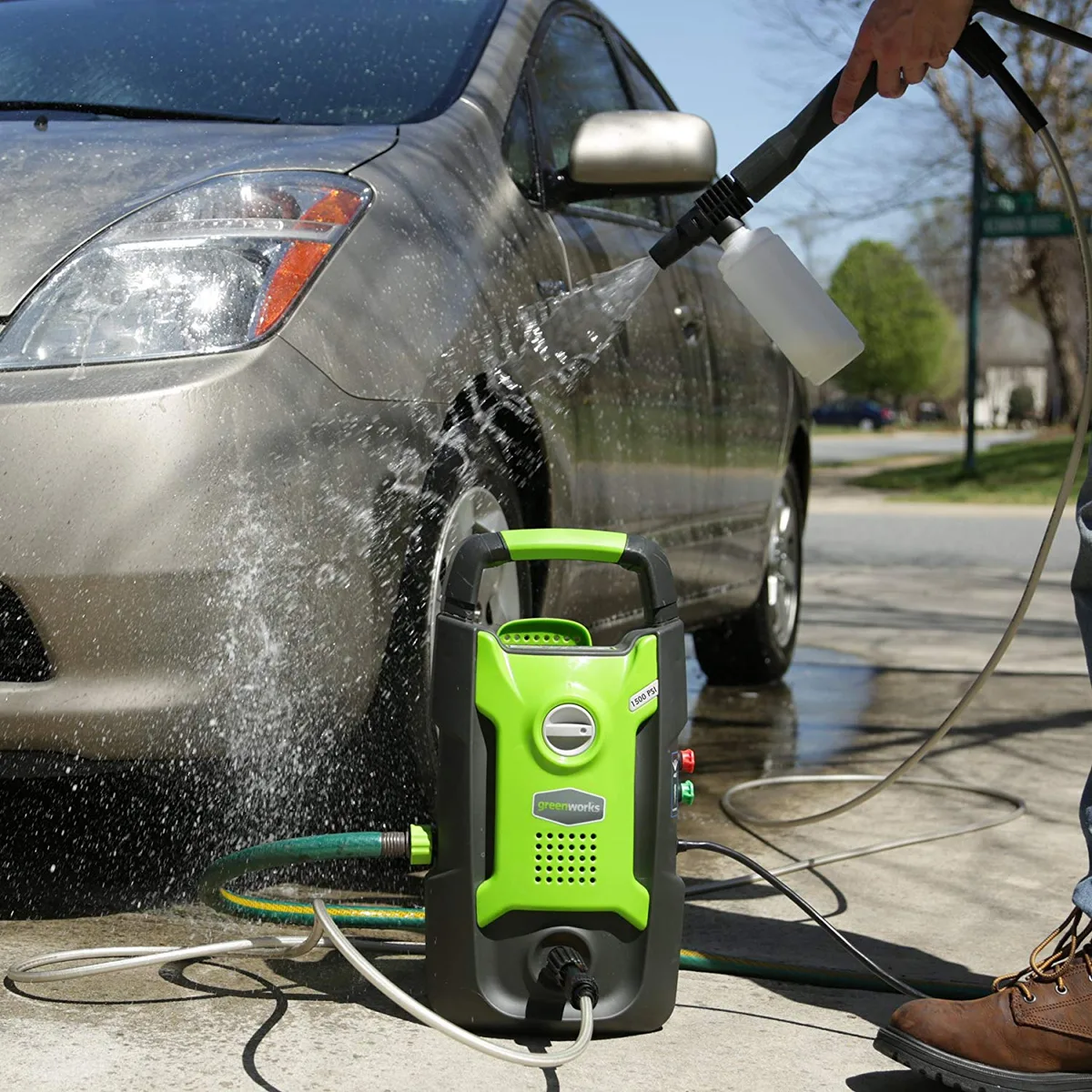
For most car owners, the question of max pressure washer psi for car paint is a loaded one. You want a clean finish, but you also don’t want to blast your clear coat straight off the hood. The short answer is that the safe upper limit is around 1900 PSI at the nozzle, but the real answer depends on three things: your paint condition, your nozzle choice, and your distance.
Manufacturer specifications for electric pressure washers typically cap out between 1800 and 2000 PSI for consumer units. Aggregate reviews and detailing industry guidelines confirm that using a 40-degree nozzle at 12 to 18 inches with those pressure levels keeps modern clear coats intact. But there’s more to it than a single number.
Let’s walk through what you actually need to know, decision by decision.
Quick Answer
The maximum safe pressure washer PSI for a car is 1900 PSI at the nozzle exit. Use a 40-degree (white) nozzle. Keep the wand 12 to 18 inches from the paint.
Never use a 0-degree or 15-degree tip on body panels. If your machine exceeds 1900 PSI, install an inline pressure regulator or switch to a variable trigger.
Problem / Pain Point – Why Max PSI Matters for Your Car
You see a pressure washer with 3000 PSI on the box. It looks powerful. It sounds impressive.
And it will absolutely damage your car’s paint if you aim it wrong. The problem isn’t the machine itself. It’s the lack of understanding about how pressure, nozzle pattern, and distance interact.
Many people buy a gas-powered washer thinking more pressure means a cleaner car. Instead, they end up with etching, peeled clear coat along panel edges, or water forced under trim. We’ve seen forum posts from owners who used a red tip (0 degrees) on a 2700 PSI machine and stripped paint down to the primer.
That’s the kind of mistake you only make once.
The deeper issue is that most pressure washer manuals don’t tell you what’s safe for automotive paint. They list PSI ratings and nozzle colors but skip the real-world guidelines. That’s why you’re here, and that’s what we’re going to fix.
Bing (Web (fair-use with source credit))
Core Explanation – How PSI, GPM, Nozzle Tip, and Distance Work Together
PSI stands for pounds per square inch. That’s the force of the water stream when it hits a surface. For a car, you don’t need brute force.
You need a controlled flow that lifts dirt without scouring the clear coat.
GPM (gallons per minute) matters too. A machine with 1.2 GPM at 1500 PSI cleans differently than one with 1.6 GPM at the same PSI. More water flow helps rinse dirt away faster, but it also increases the total force at any given distance.
For car washing, a GPM between 1.2 and 1.8 is ideal.
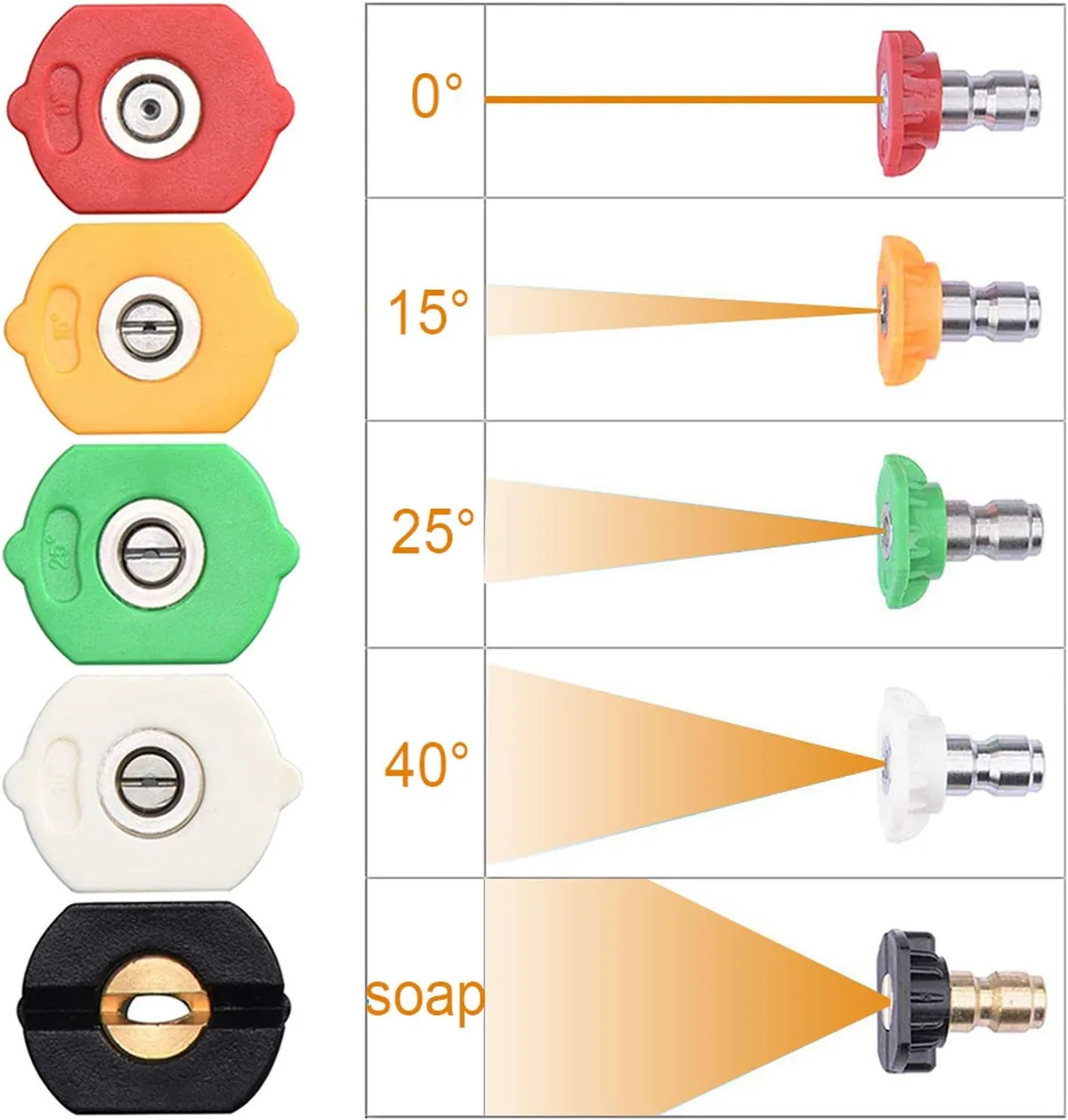
Nozzle tip is probably the single most overlooked variable. The standard color system works like this:
| Nozzle Color | Degree | Use | Safe for car paint? |
|---|---|---|---|
| Red | 0° | Concentrated stream | Never |
| Yellow | 15° | Stubborn grime | Only for wheels/tires |
| Green | 25° | General cleaning | Use with caution, keep far away |
| White | 40° | Wide fan spray | Safest for body panels |
| Black | Low pressure (soap) | Applying detergent | Safe, no risk |
Distance is the third lever. If you double the distance from the paint, you roughly quarter the pressure at the surface. At 6 inches, even a 40-degree nozzle from a 2000 PSI machine can damage clear coat over time.
At 18 inches, the same setup is safe.
So the real equation is: PSI × nozzle pattern × distance = effective force on paint. You control all three. That’s why a 1800 PSI machine with a white nozzle held 15 inches away is safer than a 1500 PSI machine with a yellow nozzle held 8 inches away.
Bing (Web (fair-use with source credit))
Features & Components – What to Look for in a Car-Safe Pressure Washer
Not all pressure washers are equal when it comes to paint safety. Here are the key features that make a unit suitable for car washing.
Variable pressure trigger. This is a game changer. Instead of swapping nozzles, you squeeze the trigger less to reduce pressure. It gives you fine control mid-spray.
Look for models that advertise “adjustable pressure” or “variable trigger” on the handle.
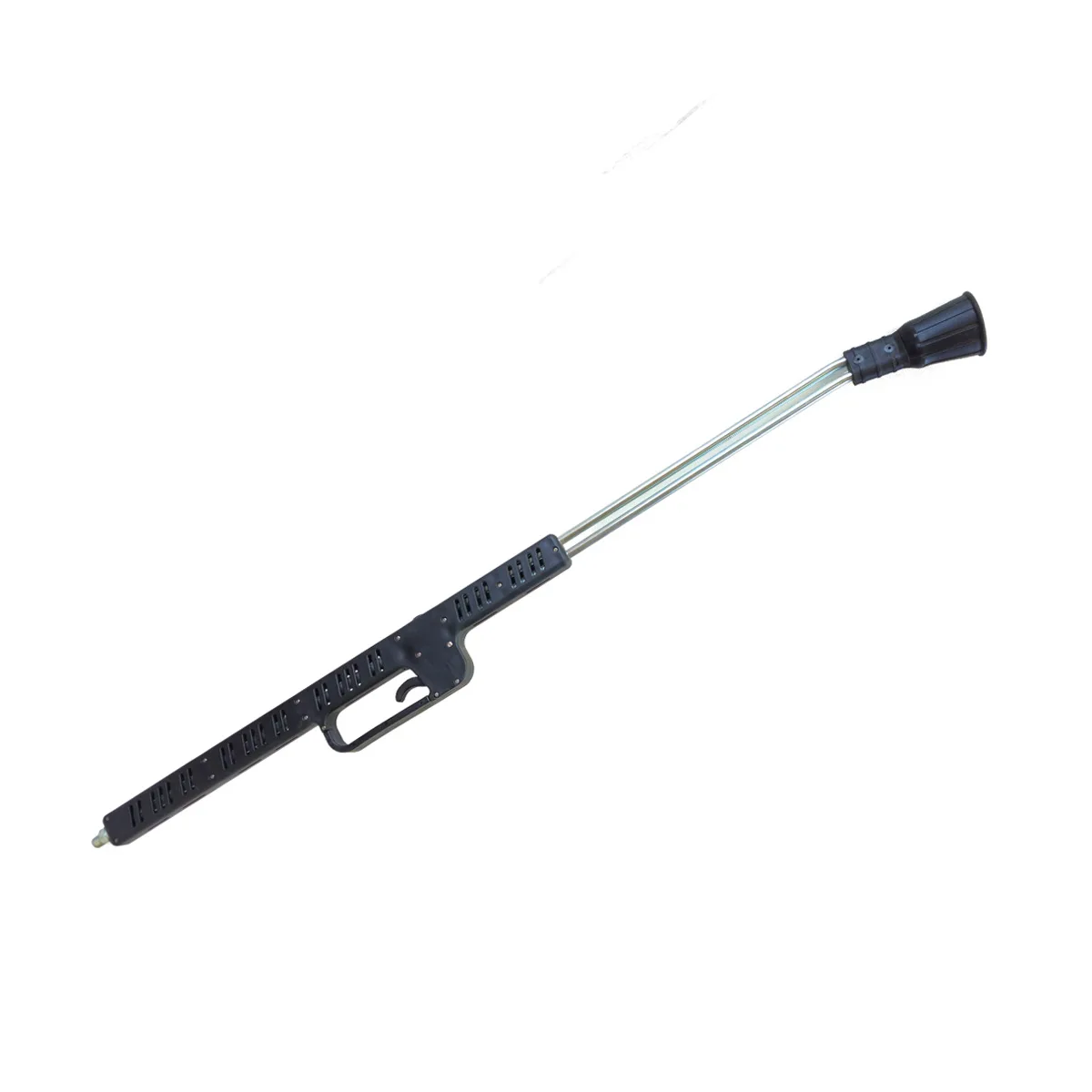
Adjustable wand. Some wands let you twist the end to change the spray pattern continuously. That’s useful, but the nozzle color system is more precise. If you have an adjustable wand, set it to the widest fan for paint.
Brushed vs. brushless motor. Brushless motors run cooler and quieter. They also tend to have more consistent pressure output. Our research shows that brushless electric models in the 1800-1900 PSI range are the most recommended by detailers for home use.
Hose length. A 25-foot or longer hose makes it easier to move around the car without dragging the machine. Shorter hoses tempt you to get too close to the paint to reach the far side.
GPM rating. Aim for at least 1.2 GPM. Anything under 1.0 GPM will struggle to rinse soap off effectively. That means you’ll have to spend more time spraying, which increases the risk of damage from proximity.
Foam cannon compatibility. Not strictly a safety feature, but a foam cannon lets you apply a thick soap layer before any pressure touches the paint. That chemical pre-soak lifts dirt so the pressure washer has less work to do. It’s a safer overall process.
We cover this in more detail on our How Does A Foaming Sprayer Work post.
Pressure regulator. Some gas-powered machines come with an adjustable unloader valve that lets you turn down the pressure. If you already own a gas unit above 2000 PSI, this is mandatory for car use. If your gas washer lacks that feature, buy an inline pressure gauge and regulator kit.
Step-by-Step Process – Finding Your Safe Max PSI (Decision Tree)
This is the practical part. Instead of guessing, you’ll work through a simple decision tree based on your situation. Each branch leads to a specific safe limit.
Branch 1: What’s Your Paint Condition?
Factory clear coat in good shape (no peeling, fading, or chips). Your safe maximum is 1900 PSI with a white (40°) nozzle at 12 to 18 inches. You can go up to 2000 PSI if you increase distance to 18 inches or use a variable trigger to ease off the trigger pull.
Repainted panels or single-stage paint (older cars before the mid-1980s). Maximum safe pressure drops to 1200 PSI. Many repainted panels have thinner clear coats. If you don’t know the history, treat it as repainted.
Use the black (soap) nozzle for the body and only light rinsing with a wide fan.
Ceramic coating present. Good news, ceramic coatings are harder than clear coat but still vulnerable to high pressure. You can use up to 1900 PSI but avoid blasting edges where the coating may have thin spots. Stick with 40-degree nozzle.
Peeling or failing clear coat. Do not pressure wash these areas directly. Use a foam cannon and gentle hose rinse. The pressure will lift more clear coat and make the damage worse.
Branch 2: What Type of Pressure Washer Do You Have?
Electric pressure washer (120V, common models). Most electric units max out between 1600 and 2000 PSI. That’s in the safe zone. If your model is rated at 1900 PSI or less, you’re fine with proper technique.
If it’s 2000 PSI, keep your distance at 18 inches and never use anything tighter than a 40-degree tip.
Gas pressure washer (2700 to 4000 PSI typical). You need to turn the pressure down. If your unit has an adjustable unloader valve, set it to deliver no more than 1900 PSI at the nozzle. Measure with a pressure gauge.
If no adjustment is possible, install an inline regulator. Some gas units are simply not suitable for cars without modification. Consider trading for an electric model if you wash your car more than once a month.
Battery-powered portable washer. These usually output 600 to 1000 PSI. Very safe for paint, but low GPM (often 0.5 to 1.0) means they take longer to rinse. Still, you can get the job done with patience.
Branch 3: What Nozzle and Distance Are You Using?
This is the final check. Even with a high PSI machine, proper technique protects your paint.
- Always start at 18 inches. Move closer only if the dirt isn’t lifting, and never closer than 12 inches.
- Use the white (40°) nozzle for body panels. Switch to green (25°) for tires and wheel wells only.
- Never use red (0°) or yellow (15°) on any painted surface. Period.
- If you have a variable trigger, practice squeezing lightly to reduce pressure. Some triggers let you go from full pressure down to a trickle.
Here’s a quick reference table for your safe settings:
| Machine PSI | Nozzle | Distance | Safe for modern paint? |
|---|---|---|---|
| 1200-1500 | White (40°) | 12-18 inches | Yes |
| 1500-1900 | White (40°) | 15-18 inches | Yes |
| 1900-2000 | White (40°) | 18 inches | Yes with caution |
| 2000+ | White (40°), plus regulator | 18+ inches | Only with pressure reduction |
Bing (Web (fair-use with source credit))
We’ve covered the core logic. Now let’s look at the common mistakes that trip people up, even when they think they’re being careful.
Mistakes to Avoid – Common Errors That Damage Paint
Even after reading the safe PSI guidelines, people still make the same mistakes. Let’s walk through the ones that cause the most damage.
Using a 0-degree or 15-degree nozzle. This is the number one cause of paint etching. A 0-degree tip concentrates all the pressure into a tiny stream. At 1800 PSI, that stream can cut through clear coat in seconds.
Aggregate buyer reviews and detailing forums are full of photos from owners who did this just once.
Holding the nozzle too close. Distance is your safety net. At 6 inches, the water force is roughly four times higher than at 18 inches. Even with a white nozzle, getting close increases risk.
Keep a measuring tape or a floor tile reference. When in doubt, step back.
Blasting directly at panel edges and trim. Clear coat is thinnest at hood edges, door seams, and around window seals. A direct stream at close range can lift the coating or force water behind the trim. Use a wider angle and lower pressure for these areas.
Using too much pressure on bug and tar spots. It’s tempting to crank up the machine to blast off stuck-on bugs. But that focused pressure can damage the paint underneath. Instead, use a dedicated product like a best bug and tar remover for vehicles.
Let it dwell, then rinse gently.
Skipping the foam cannon pre-soak. Pressure washing dry dirt is like sandblasting. The dirt particles get pushed across the paint, causing micro-scratches. A foam cannon soaks the grime so it lifts off rather than dragging.
Our How Does A Foaming Sprayer Work article explains the prep step in detail.
Bing (Web (fair-use with source credit))
Benefits & Drawbacks – Electric vs. Gas Pressure Washers for Car Use
If you’re choosing a pressure washer specifically for car washing, the decision between electric and gas matters a lot. Here’s a clear breakdown.
Electric pressure washers. Most models fall in the 1600-2000 PSI range. That’s exactly the sweet spot for automotive paint. They’re lighter, quieter, and require no fuel mixing.
Plug it in and go. The downside is lower GPM (typically 1.2 to 1.6). Rinsing takes a little longer compared to gas, but it’s safe.
Gas pressure washers. These deliver 2700-4000 PSI out of the box. That’s way too high for paint without pressure reduction. Some gas units have adjustable unloader valves, but many don’t.
You’ll need an inline regulator or a variable pressure wand. Gas models also vibrate more and are louder. They’re better for large concrete areas or heavy equipment, not for your daily driver.
Our recommendation. For 95% of car owners, an electric pressure washer is the right choice. It’s safer, simpler, and cheaper. If you already own a gas unit, don’t panic.
Just use the decision tree from earlier to set your pressure correctly. But if you’re buying new, go electric.
Use Cases – Who Needs What PSI Range
Not every car owner needs the same pressure level. Your situation determines the safe upper limit.
Weekly maintenance washing (modern car, good paint). You’re safe at 1800 to 1900 PSI with a white nozzle. That’s enough to lift light road grime and pollen. You don’t need more.
Heavy dirt and mud (off-road vehicles or daily commuters in rural areas). Stick with 1800 PSI but use a green (25°) nozzle for wheel wells and undercarriage only. Keep the white nozzle for body panels. The extra dirt needs more coaxing, not more pressure on paint.
Classic cars or single-stage paint (pre-1985). Drop to 1200 PSI maximum. Use the black soap nozzle for washing and only a light rinse with a white nozzle at 18 inches. These paints are thinner and more vulnerable.
Fleet vehicles or high-volume washing. You need speed. An electric unit with 1.5 GPM or higher at 1800 PSI works well. Pair it with a foam cannon and a consistent technique.
Avoid gas machines unless you have dedicated pressure regulation.
Delicate finishes (ceramic coating or PPF). You can use up to 1900 PSI but avoid direct impingement on edges. Ceramic coatings are hard but not indestructible. A 40-degree nozzle at 18 inches is your standard.
Expert Tips – Pro Techniques for Consistent, Safe Washing
These tips come from detailing professionals who wash cars daily. They save time and prevent damage.
Pre-rinse from top to bottom. Start on the roof and work down. That knocks off loose dirt before you apply soap. It also prevents dirt from pooling on lower panels.
Let your foam cannon dwell for 3-5 minutes. Don’t rush the chemical stage. The soap needs time to break down bonded contaminants. If you rinse too early, you lose the benefit.
Use a two-bucket contact wash after the pressure rinse. Pressure washing alone won’t remove all the dirt. A microfiber mitt and grit guard prevent swirling. This step makes the biggest difference in final finish quality.
Blow-dry with a leaf blower or dedicated car dryer. Air drying avoids water spots. If you must towel dry, use a clean microfiber towel and pat, not rub.
Clean your pressure washer nozzles regularly. Mineral deposits can clog the openings and change the spray pattern. A clogged green nozzle can behave like a yellow one. Rinse nozzles after each use and soak them in vinegar if needed.
Check your pressure washer for leaks. A leaking O-ring or damaged hose can cause pressure fluctuations. That makes it harder to maintain a consistent distance and force.
Safety & Warnings – Protecting Your Paint, Seals, and Trim
Beyond paint, pressure washers can damage other parts of your car. Here’s what to watch for.
Door seals and window trim. Direct high-pressure water can force moisture past rubber seals. That leads to interior fogging, mold, or electrical issues. Keep the stream angled away from seals, or use a lower pressure setting near windows.
Headlights and taillights. The plastic lenses can crack if hit with a narrow stream at close range. Some older housings leak when blasted. Use wide fan spray and keep distance.
Badges and emblems. Pressure can lift adhesive and loosen emblems. Avoid direct blasting. Wash around them by hand.
Radiator and intercooler fins. If you wash from the front, the fins can bend under high pressure. That reduces cooling efficiency. Use a gentle fan spray from at least 2 feet away, or clean with a hose.
Wheel bearings. Direct pressure on wheel hubs can force water past seals. It’s rare with modern cars but worth avoiding. Don’t aim at the center of the wheel from inches away.
Tire sidewalls. High pressure can damage sidewall rubber over time. Use a 25-degree nozzle at 12 inches or more. Never use a 0-degree tip on tires.
If you encounter stubborn grime like tree sap or tar, don’t increase pressure. Instead, use a dedicated remover such as a best sap remover for cars and wash normally.
Real Scenarios – Examples from Different Paint Conditions
Scenario 1: Factory clear coat, two years old. Owner uses a 1900 PSI electric washer with a white nozzle at 14 inches. The paint stays flawless. No etching, no swirls.
This is the ideal setup for modern cars.
Scenario 2: Repainted hood from a body shop. Owner uses the same 1900 PSI machine but the clear coat was thin. After three washes, peeling appears along the edge. The fix was dropping to 1200 PSI and increasing distance to 20 inches.
New paint needs gentler treatment.
Scenario 3: Single-stage paint on a 1970 Mustang. Owner avoids pressure washing entirely. They use a foam cannon and hose rinse. Any pressure would strip the color layer.
Classic cars require hand washing or extremely low pressure.
Scenario 4: Gas pressure washer with regulator. Owner owns a 3000 PSI gas unit. They installed an inline regulator set to 1800 PSI and use a variable trigger. With a white nozzle at 18 inches, results are safe.
Without the regulator, they would have damaged the clear coat in one session.
Frequently Asked Questions
What is the max PSI for pressure washing a car?
1900 PSI is the maximum safe limit for modern clear coat paint when using a 40-degree nozzle at 12 to 18 inches. Higher pressures increase etching risk without improving cleaning.
Can I use a 2000 PSI pressure washer on my car?
Yes, but only with a white nozzle held at least 18 inches from the paint. A variable trigger helps. At 2000 PSI, any closer distance or tighter nozzle can cause damage.
Is 3000 PSI too high for car paint?
Yes, without pressure reduction. 3000 PSI will strip clear coat quickly. Use an inline regulator or adjustable unloader valve to bring the output down to 1900 PSI or less. Never use a gas unit at full pressure.
What nozzle tip is safest for car paint?
The white (40-degree) tip is safest for body panels. It spreads the water into a wide fan that reduces impact force. The black soap tip is even safer for detergent application.
Never use red or yellow tips on paint.
Should I use a foam cannon before pressure washing?
Yes. A foam cannon pre-soak lifts dirt so the pressure stream doesn't push grit across the paint. This reduces micro-scratches significantly.
Our How Does A Foaming Sprayer Work guide covers the technique.
How close can I spray with a pressure washer on a car?
Maintain at least 12 inches of distance. For first-time users, start at 18 inches. Move closer only if the dirt isn't lifting, but never go under 12 inches with any nozzle.
Final Decision Guide – Your Personal Safe PSI Verdict
Here is your personalized safe PSI based on the decision tree you just walked through.
If your paint is factory clear coat in good condition: Use up to 1900 PSI with a white nozzle at 12 to 18 inches. You are safe with most electric washers.
If your paint is repainted or older than 1985: Keep pressure at 1200 PSI or below. Use a black soap nozzle and light rinse. Hand wash if unsure.
If you own a gas pressure washer: Install an inline regulator and set output to 1900 PSI. Always use a variable trigger and white nozzle. Never use full power.
If you want the simplest, safest option: Buy an electric pressure washer rated at 1800 PSI. Pair it with a white nozzle and foam cannon. Follow the distance rule.
That combination gives you a spotless car without the worry.
Your paint is a finish you pay for. Treat it with the right pressure, and it will last years longer than one blasted by excess force. Now go wash that car.
You have the numbers. You have the technique. You know the limits.
The rest is just water and soap.