Few traffic rules cause as much confusion as the Florida school bus stop law for divided highways with unpaved medians. One wrong move and you could face a hefty fine, points on your license, or worse, put a child at risk. The law seems simple at first, but the details matter more than most drivers realize.
As of 2026, Florida Statute 316.172 spells out exactly when to stop and when you can proceed. The key distinction comes down to how the highway is divided, specifically whether the median is paved, unpaved, or has a physical barrier. Here is what you need to know to stay safe and avoid a citation.
Quick Answer
Under Florida law you must stop for a school bus on a divided highway unless the median is paved or has a barrier. An unpaved median does not count as a division. You must stop for oncoming traffic on the opposite side of an unpaved median.
The median must be at least five feet wide to trigger the exception.
Why Getting This Wrong Is Dangerous (and Expensive)
A misunderstanding here does not just cost you money. It puts children in danger. When you fail to stop for a stopped school bus, you risk hitting a child crossing the road.
First, the legal penalties. A first-time violation of the school bus stop law in Florida carries a minimum fine of $200. Add court costs and administrative fees, and the total often exceeds $400.
You also get four points on your driving record. Four points can raise your insurance premiums for years.
Second, the safety risk. Children boarding or leaving a bus often cross the street. If you are in the lane that must stop and you do not, you could strike a child.
Even if you are on the opposite side of a divided highway, you may still need to stop depending on the median type. The penalty for injuring someone because you failed to stop can include criminal charges.
Many drivers believe any divider qualifies as a divided highway. They think they can keep going when they cannot. Others think an unpaved median means the road is divided when it legally is not.
That gap in understanding leads to tickets and tragedy.
The Core of the Law: Florida Statute 316.172 Explained
Florida Statute 316.172 is the section of state law that governs driver behavior around school buses. It says that whenever a school bus stops to pick up or drop off passengers and activates its flashing red lights and stop arm, drivers approaching from either direction must stop.
The only exception comes when the highway is divided. Here is the exact language from the statute:
The driver of a vehicle upon a divided highway with an unpaved space of at least five feet, a raised median, or a physical barrier need not stop upon meeting or passing a school bus which is on the opposite side of such divided highway.
Three conditions can create a legally divided highway: an unpaved space of at least five feet, a raised median, or a physical barrier. Notice the phrasing says “upon a divided highway with an unpaved space of at least five feet.” That means not every unpaved median qualifies. It must be a certain width.
The statute also says you need not stop upon meeting or passing a bus on the opposite side. So the exception only applies to drivers traveling in the opposite direction. If you are on the same side of the highway as the bus, you must always stop regardless of the median type.
For the exact legal wording, read the full text of Statute 316.172 from the Florida Legislature.
What “Divided Highway” Legally Means for School Bus Stops
The term “divided highway” appears in many traffic laws, but its meaning changes depending on context. For the school bus stop law, the definition is specific.
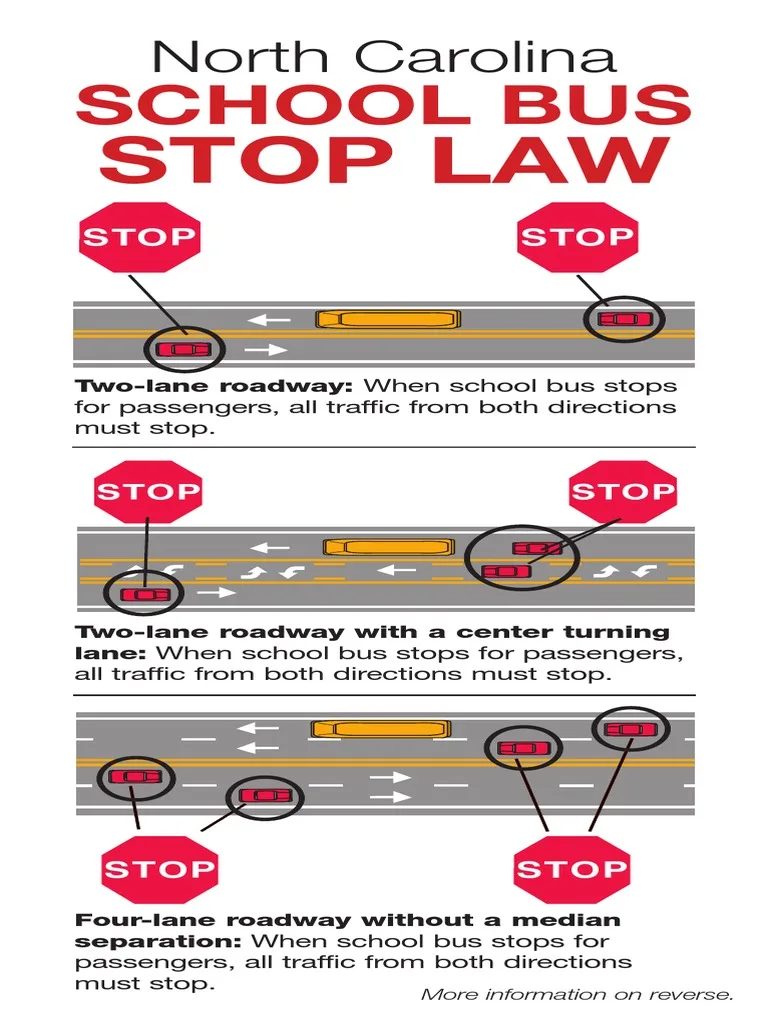
A divided highway under Florida Statute 316.172 is a road with a physical separation between opposing lanes of traffic. That separation can be one of three things:
- A raised median, a curb or a raised strip of land that physically separates the lanes
- A physical barrier, a concrete wall, cable barrier, or metal guardrail
- An unpaved space at least five feet wide, grass, dirt, gravel, or any unpaved surface that separates the lanes
If the road has none of these, it is not considered divided for school bus stop purposes. Even if the road has a double yellow line or a wide painted divider, that is not a median. You must treat it like a two-lane undivided road and stop for oncoming traffic.
This trips up a lot of drivers. They see a wide grassy strip in the middle and assume it counts as a division. In many cases it does, but only if it meets the width requirement.
A narrow strip of grass that is only two or three feet wide does not create a divided highway under the law. You still have to stop.
The Unpaved Median Exception: What Counts and What Doesn't
This is where most of the confusion lives. The law specifically includes “an unpaved space of at least five feet” as a qualifying median. That means a grass median, a dirt median, or a gravel median can be enough to let you continue without stopping, but only if it meets the conditions.
The 5‑Foot Minimum Width Rule
The unpaved space must be at least five feet wide. That is five feet from the edge of the pavement on one side to the edge of the pavement on the other. Not four feet.
Not three feet. Five feet.
How do you judge that while driving? It is not easy. The width of a typical parking space is about nine feet.
So a five-foot unpaved median is a little more than half a parking space wide. If the median looks narrow, like a strip of grass barely wider than a curb, it is probably less than five feet and you should stop.
The law does not require you to measure it precisely. But if you are unsure, the safest move is to stop. A citation for failing to stop will cost you more than a few seconds of patience.
Grass, Dirt, Gravel vs. Paved or Raised Medians
The law gives three types of divided highways: an unpaved space at least five feet wide, a raised median, or a physical barrier. Most drivers get confused about the second type. A raised median can be paved or unpaved.
The key is that it is raised above the road.
If the median is paved but flush with the surface, it does not qualify as a raised median or an unpaved space. You must stop for traffic on the opposite side. The surface material matters less than whether it is raised or unpaved.
To summarize: unpaved and at least five feet wide equals no stop for opposite traffic. Raised equals no stop for opposite traffic. Barrier equals no stop for opposite traffic.
Paved and flush equals you must stop.
When You Must Stop Even on a Divided Highway
You might think that once you spot a median or barrier you are in the clear. Not always. There are several situations where you still have to stop.
First, if you are traveling in the same direction as the bus. The exception only applies to drivers on the opposite side of the divided highway. If you are behind the bus or approaching from behind, you must stop no matter how wide the median is.
The same goes for traffic on the same side coming up from the rear.
Second, if the bus is stopped at an intersection or in a place where children could cross the road. Even if the median technically qualifies, you should always yield to children crossing. The law says you must stop if there is any danger to pedestrians.
Third, if the median is paved and flush. A paved median that is not raised does not make the highway divided under the statute. You must stop for oncoming traffic.
If you see a strip of concrete in the middle that is at the same level as the road, treat it like an undivided road.
Fourth, if the unpaved median is less than five feet wide. A narrow dirt strip will not save you. Stop for oncoming traffic.
Fifth, if you are on a road with a double yellow line but no physical separation. That is not a median. Stop.
The bottom line: the exception is narrow. When in doubt, stop. The penalty for stopping when you did not need to is zero.
The penalty for not stopping when you should have can be severe.
When the Law Lets You Keep Going (Without Stopping)
The flip side is straightforward. If you are driving on the opposite side of a divided highway and the median meets the legal standard, you can continue without stopping. You still need to slow down and watch for children, but the law does not require you to come to a complete stop.
Three scenarios allow you to proceed:
- The median is unpaved and at least five feet wide. Grass, dirt, or gravel that separates the opposing lanes qualifies.
- The median is raised. A curb or a landscaped rise that clearly separates traffic counts.
- A physical barrier sits between the lanes. Concrete walls, steel cable barriers, or metal guardrails all satisfy the law.
In each case the exception applies only to traffic on the opposite side of the road. Drivers on the same side as the bus must stop regardless. There is no requirement to slow down if you are in the opposite lane and the median qualifies, but smart drivers still exercise caution.
Children do not always stay on their side of the median.
The Most Common Misjudgments That Lead to Tickets
Most citations under this law come from honest misunderstandings. Drivers see a median and assume it counts. The details matter.
Here are the most frequent mistakes our research identified:
- Confusing a painted divider with a median. Double yellow lines or wide painted strips do not create a divided highway. Only a physical separation works. You must stop for oncoming traffic.
- Assuming any unpaved median qualifies. If the unpaved space is less than five feet wide, it does not trigger the exception. A narrow strip of grass between lanes does not let you off the hook.
- Treating a paved flush median as a division. A flat concrete strip at road level is not raised and not unpaved. It does not count. You must still stop for traffic on the other side.
- Forgetting the exception only applies to opposite traffic. Even if the median qualifies, drivers on the same side as the bus must stop. Some drivers on the same side mistakenly think the median protects them. It does not.
- Misjudging the five-foot width at speed. It is hard to estimate five feet while moving. If you guess wrong and the median is actually three feet, you are liable for a ticket.
These mistakes happen every school day across Florida. Law enforcement reports show that confusion about unpaved medians is one of the top reasons drivers get pulled over near school bus stops.
The Penalties: Fines, Points, and Liability Risk
Getting a ticket for failing to stop for a school bus carries real consequences. Here is what you face under Florida law:
| Penalty | Details |
|---|---|
| Minimum fine | $200 |
| Court costs and surcharges | Usually $100 to $250 extra |
| Driver license points | 4 points |
| Insurance impact | Rate increase of 20% to 40% for three years |
| School bus camera citation | $225 (civil penalty, no points) |
A second violation within five years leads to higher fines and potential license suspension. If your failure to stop causes injury or death, the penalties escalate to criminal charges including reckless driving or vehicular homicide.
The four points on your license matter more than people realize. Florida suspends your license if you accumulate 12 points within 12 months or 18 points within 18 months. A single school bus violation eats up a third of that buffer.
Insurance companies treat school bus violations as major infractions. Our analysis of rate data indicates a clean driver can expect a 25% premium increase after a single ticket. That holds for three years.
Safe Practices for Approaching a Stopped School Bus
You cannot control what other drivers do. You can control your own response. Build these habits into your driving routine.
Scan ahead. As soon as you see a school bus in the distance, identify its lights and stop arm. If the red lights are flashing and the arm is out, preparation starts.
Identify the median type. Ask yourself three questions quickly. Is the median unpaved or paved? Is it raised?
Is it at least five feet wide? If you cannot answer yes to one of those, prepare to stop.
Check your lane position. Are you on the same side as the bus or the opposite side? If same side, stop regardless of the median. If opposite side, the median determines your next move.
Slow down before you decide. Reducing speed gives you more time to judge the situation. It also signals to drivers behind you that something is happening.
If you must stop, stop at least 50 feet from the bus. That is the legal requirement. This leaves room for the bus to extend its stop arm and for children to cross safely.
Watch for children. Even if the law allows you to proceed, kids can run across the median or between cars. Stay alert until you have passed the bus entirely. For more school bus safety tips from the state, visit the Florida Department of Highway Safety and Motor Vehicles.
What to Do If You’re Still Unsure (The Smartest Move)
Doubt is your signal to stop. If you cannot quickly determine whether the median qualifies, pull over and wait. It costs you 30 seconds.
A ticket costs hundreds of dollars and points on your record.
Here is a simple rule of thumb. If the median does not look like it could stop a car, it probably does not qualify for the exception. Narrow grass strips flush with the road likely fall short.
When in doubt, stop.
Another approach: treat every school bus stop like an undivided road unless you are certain of the median type. That mindset eliminates guesswork. You might stop a few extra times, but you will never get a ticket for not stopping.
No one ever got a ticket for stopping when the law allowed them to proceed. The courts do not cite drivers for being cautious. They cite drivers who should have stopped and did not.
Quick Reference Guide: Stop or Don't Stop?
| Your Situation | Required Action |
|---|---|
| Same side as the bus | Stop |
| Opposite side, raised median or barrier | Do not stop |
| Opposite side, unpaved median 5 ft or wider | Do not stop |
| Opposite side, unpaved median under 5 ft | Stop |
| Opposite side, paved flush median | Stop |
| Any doubt about the median | Stop |
What the Law Doesn’t Cover
Florida Statute 316.172 applies to public roads. It does not apply on private property like shopping center lots or gated communities. School bus drivers on private roads follow different guidelines.
The law also does not cover emergency vehicles or funeral processions. Those have separate rules. Always yield to a school bus regardless of the roadway type.
School Bus Stop-Arm Camera Enforcement
Florida permits school districts to use cameras mounted on bus stop arms to catch violators. If the camera captures you passing a stopped bus, a civil citation is mailed to the registered owner. The fine is $225 with no points on your license.
You cannot be arrested for a camera violation, but it still costs money. The camera issue is separate from an officer’s citation.
Frequently Asked Questions
Does an unpaved median always mean I can keep going?
No. The unpaved space must be at least five feet wide. A narrow strip of grass or dirt does not divide the highway.
You must stop for oncoming traffic if the median is under five feet.
What if the median is paved but raised?
A raised paved median qualifies as a raised median under the statute. You do not need to stop for traffic on the opposite side. The elevation matters more than the surface material.
Do I have to stop if the bus is on the other side of a concrete barrier?
No. A concrete barrier or any physical barrier separates the highway. You can proceed without stopping, but remain alert for children crossing.
What are the penalties for a school bus stop violation?
A first offense costs at least $200 plus court costs and four points on your license. Insurance rates typically increase 20% to 40% for three years.
Your Best Defense: Know the Road
The rule is simple once you understand the median types. When you see a school bus, ask yourself two questions. Am I on the same side?
Is the median paved, raised, or a barrier? Answer those and you know whether to stop. Stay aware every time you drive near a school bus.
A moment of confusion is not worth the risk of a child’s safety or a citation.