ByMax Lee
Florida 20 MPH Rule When Passing Stationary Emergency Cars
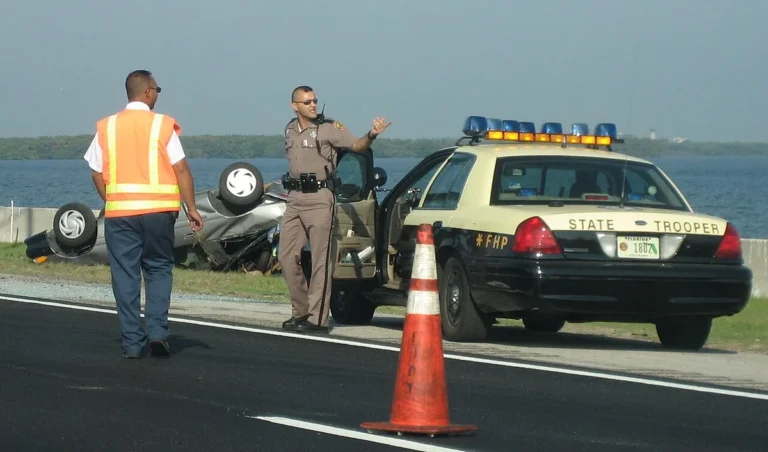
You're driving down a Florida highway and up ahead you see flashing lights. Emergency vehicles are pulled over on the shoulder. What do you do?
If you're not sure, you're not alone. The Florida 20 mph speed reduction rule when passing stationary emergency cars is one of the most important traffic laws you'll ever use, but it's also one of the most misunderstood.
As of 2026, the law is clear and the penalties are real. Florida Statute 316.126 requires you to either move over a lane or slow down to a specific speed when approaching any authorized emergency vehicle with its lights on. Get it wrong and you could face fines, points on your license, or worse, cause a serious accident.
Quick Answer
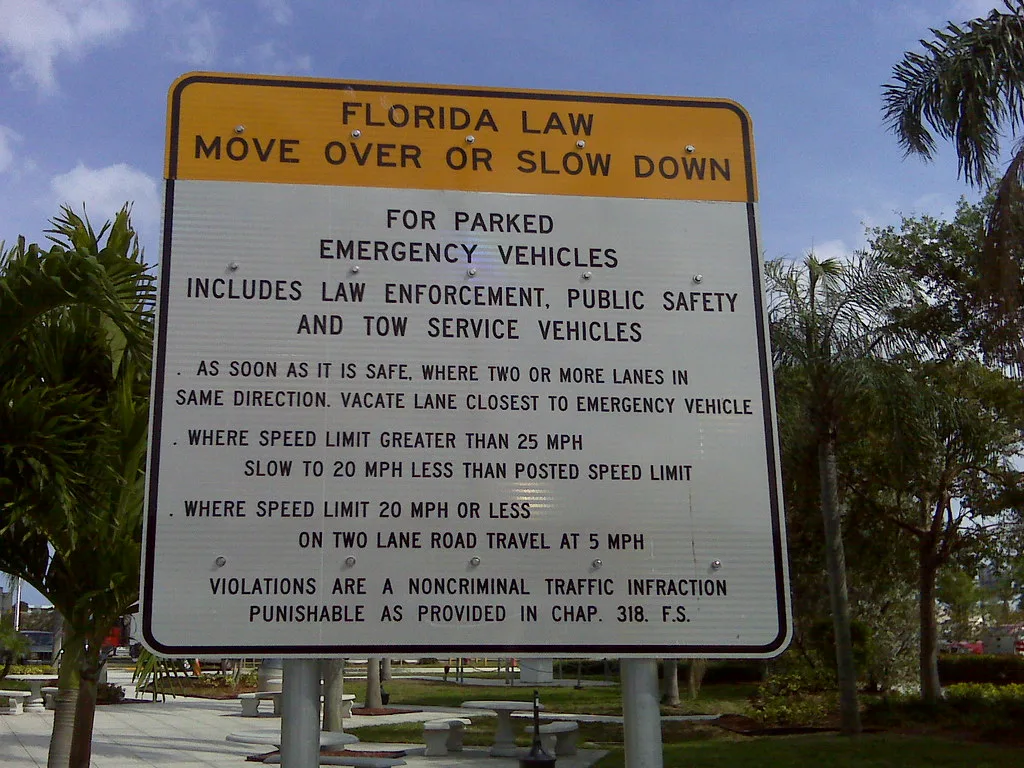
Florida law requires drivers to change lanes away from a stationary emergency vehicle with flashing lights. If you can't change lanes safely, you must reduce your speed to 20 mph below the posted speed limit. In zones where the limit is 25 mph or less, slow down to 5 mph.
This rule applies to police, fire, and ambulance vehicles on any Florida roadway.
Why This Rule Matters More Than You Think
This law isn't just about avoiding a ticket. It's about protecting people who are already in a dangerous situation. Emergency personnel put themselves at risk every time they stop on a roadside.
Secondary crashes near emergency scenes are a leading cause of line-of-duty injuries. The speed reduction rule gives officers, firefighters, and medics a safety buffer.
Other states have their own rules about emergency lighting, but Florida's law focuses squarely on driver behavior around stopped emergency vehicles. The goal is simple: slow down or move over so everyone gets home safe.
Bing (Web (fair-use with source credit))
The Exact Law: Florida Statute 316.126 Explained
The legal foundation for this rule is Florida Statute 316.126. It's the section of state law that covers how drivers must respond to emergency vehicles.
What does the statute actually say?
The law states that when you approach a stationary authorized emergency vehicle with its lights flashing, you must do one of two things.
- Move into a lane that is not immediately adjacent to the emergency vehicle. That means changing lanes away from it.
- If you cannot change lanes safely, you must slow down to a speed that is 20 mph below the posted speed limit.
Where does this law apply?
It applies on any Florida roadway. Interstates, state highways, county roads, and local streets are all included. It doesn't matter if the emergency vehicle is on the shoulder, in the median, or in a travel lane.
If it's stationary and its lights are flashing, the law is in effect.
Here is a quick summary of the two options.
| Situation | Required Action |
|---|---|
| You are on a multi-lane road and the adjacent lane is open and safe | Change lanes away from the emergency vehicle |
| You are on a two-lane road or the adjacent lane is blocked | Reduce speed by 20 mph below the limit |
| Speed limit is 25 mph or less | Reduce speed to 5 mph |
The law is strict, but it also leaves room for judgment. You must always act safely. If changing lanes would cause a crash, you are not required to do so.
But you must slow down. You can view the full text of Florida Statute 316.126 on the official state legislature site. For a broader picture, browse our collection of state driving law articles covering similar requirements across the country.
The Two-Step Requirement: Change Lanes or Reduce Speed
Many drivers think they only have to slow down. That's not correct. The law gives you two steps, and the first one is preferred.
Bing (Web (fair-use with source credit))
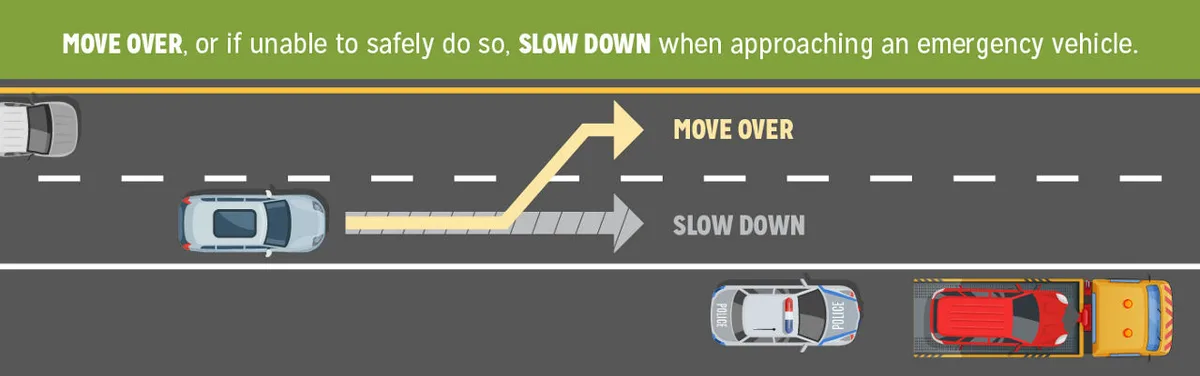
Step 1: Move over
If you are on a road with at least two lanes in your direction, and the lane next to the emergency vehicle is open and safe, you must move into that lane. This is the "Move Over" part. It creates a physical barrier between you and the workers.
Step 2: Slow down
Only when you cannot change lanes should you reduce your speed. Common situations include being on a two-lane road, or when traffic in the next lane prevents a safe merge. In that case, you must drop your speed to 20 mph below the limit.
Here is a table of the steps.
| Step | Action | When to Use |
|---|---|---|
| 1 | Move to the non-adjacent lane | Multi-lane road, safe to merge |
| 2 | Reduce speed by 20 mph (or 5 mph) | Two-lane road or unsafe to merge |
Remember, you are not allowed to just keep going at the same speed. You must take one of these actions. Ignoring both is a violation.
And keep in mind that other state-specific driving requirements may differ, so always know the rules wherever you travel.
The 20 mph Reduction and the 5 mph Exception
The 20 mph reduction is a fixed number. It is not a percentage. It is a flat decrease from the posted limit.
- On a highway with a 70 mph limit, you must slow to at least 50 mph.
- On a 45 mph road, you drop to 25 mph.
- On a 30 mph road, you go down to 10 mph.
When does the 5 mph rule apply?
If the posted speed limit is 25 mph or less, the law sets a floor. You must reduce your speed to 5 mph. This prevents a situation where a 20 mph reduction would require you to drive slower than is practical or safe.
Here is the full breakdown.
| Posted speed limit | Required speed when passing (if you can't move over) |
|---|---|
| 70 mph | 50 mph |
| 55 mph | 35 mph |
| 45 mph | 25 mph |
| 35 mph | 15 mph |
| 30 mph | 10 mph |
| 25 mph | 5 mph |
| 20 mph | 5 mph |
The 5 mph exception means you are never required to drive slower than a crawl. Even on a residential street with a 20 mph limit, 5 mph is your minimum.
Which Vehicles and Situations Are Covered
Not every stationary vehicle with flashing lights triggers this law. It applies specifically to "authorized emergency vehicles." That includes:
- Police vehicles
- Fire department vehicles
- Ambulances and other emergency medical services vehicles
- Vehicles of law enforcement agencies
Some other vehicles, like tow trucks or utility trucks, are not covered by this rule. Florida does have a separate law for utility service vehicles, but the 20 mph speed reduction is for emergency vehicles only.
What constitutes "stationary"
The vehicle must be stopped. If it is moving slowly with lights on, different rules apply. The law uses the word "stationary" specifically.
Flashing lights must be activated
The vehicle must have its warning lights on. If an officer is pulled over but has their lights off, this rule does not apply in the same way. Always assume if lights are visible, you must comply.
Bing (Web (fair-use with source credit))
A common question is whether this law applies on divided highways when the emergency vehicle is on the opposite side. In general, if there is a physical barrier, you are not required to slow down for vehicles on the other side. Still, it is wise to remain cautious.
Common Mistakes Drivers Make With This Law
Even careful drivers get this law wrong. The most frequent mistake is thinking you only have to slow down. If a lane is open and safe to move into, you must change lanes first.
Another common error is braking too hard or too late. Some drivers hit the brakes aggressively when they see lights. That can cause a rear-end crash.
You want to slow smoothly and predictably.
Here are other mistakes we see often.
- Stopping your car completely. The law does not require a full stop. You either move over or reduce speed. Do not stop in the travel lane.
- Forgetting the 5 mph floor on low-speed roads. On a 25 mph street, you need to drop to 5 mph, not 15. The law is strict about that.
- Only watching for police cars. The rule applies to fire trucks and ambulances too. Any authorized emergency vehicle with flashing lights triggers it.
- Not reacting because you think the vehicle is on the other side of a barrier. If there is a concrete median, you are generally safe. But if the road is undivided, even vehicles on the opposite shoulder require your caution.
- Waiting too long to identify the lights. At highway speeds, you need to spot the scene early. Check the road ahead frequently.
The Real Cost of Noncompliance: Fines, Points, and Liability
A violation of the 20 mph speed reduction rule is a moving traffic infraction in Florida. That means points on your license and a fine.
Financial penalties
The base fine for a violation of Florida Statute 316.126 is typically around $100 to $200. Court costs and administrative fees add on top. Total costs usually land between $150 and $300 depending on the county.
Points on your license
The Florida Department of Highway Safety and Motor Vehicles assigns 3 points to your driver record for this offense. Accumulate too many points and your license can be suspended. Even a few points raise your insurance premiums.
Here is a quick breakdown.
| Penalty | Amount / Detail |
|---|---|
| Base fine | $100 to $200 |
| Court costs | $30 to $100 additional |
| License points | 3 points |
| Insurance increase | Varies by carrier, usually 10 to 20 percent for 3 to 5 years |
| Possible surcharge | Additional $15 to $30 per year for points |
Civil liability
If you fail to slow or move over and cause an accident that injures a first responder or other driver, you can be held civilly liable. Medical bills, lost wages, and pain and suffering can run into tens of thousands of dollars.
Criminal consequences
In the worst case, a crash that results in serious injury or death can lead to criminal charges. Florida law considers reckless driving around emergency vehicles a serious offense. Penalties can include jail time and heavy fines.
Step-by-Step Guide: What to Do When You See Flashing Lights
Here is a clear process to follow. It works on any Florida road.
Step 1: Recognize the lights early
Scan the road ahead continuously. Look for flashing red, blue, or white lights. As soon as you see them, prepare to act.
You should have at least 5 to 10 seconds of reaction time at highway speeds.
Step 2: Check your mirrors and surroundings
Assess the traffic beside you and behind you. Can you safely move to the lane farther from the emergency vehicle? If yes, signal and merge.
If not, proceed to Step 3.
Step 3: Make the decision to move over or slow down
If the adjacent lane is open and safe, change lanes. Do not cross the solid white line onto the shoulder unless directed. If you cannot move over, reduce your speed.
Step 4: Reduce speed accurately
Lower your speed to 20 mph below the posted limit. On a 70 mph highway, that means 50 mph. On a 45 mph road, that means 25 mph.
On roads of 25 mph or less, slow to 5 mph.
Step 5: Pass with caution
Continue past the emergency vehicle at your reduced speed. Do not accelerate until you have fully cleared the scene. Watch for people who may be outside the vehicle.
Step 6: Resume normal speed
Once you are safely past, accelerate back to the flow of traffic. Do not stay slow longer than necessary.
Here is a quick reference table.
| Step | Action | Key Detail |
|---|---|---|
| 1 | Spot lights ahead | Scan far ahead |
| 2 | Check mirrors and traffic | Safe to merge? |
| 3 | Move over if possible | Signal and merge |
| 4 | If no lane change, reduce speed | 20 mph below limit (or 5 mph) |
| 5 | Pass carefully | Watch for people |
| 6 | Accelerate back to normal speed | After clearing scene |
If you follow these steps every time, you will stay legal and safe.
How to Safely Handle Different Road Types
Not every road is the same. The way you apply the law changes depending on the road design.
Multi-lane highway
On a highway with three or more lanes, you have room to move over. Check your mirrors. If the lane to your left is clear, move over one lane.
Do not cross the shoulder line. Slow down as a second option.
Bing (Web (fair-use with source credit))
Two-lane road
On a two-lane road with one lane each direction, you cannot move away from the emergency vehicle. In this case, you must slow down to 20 mph below the limit. Be aware that oncoming traffic also matters.
Keep your wheels straight and do not swerve into the oncoming lane.
Divided highway with a barrier
If a concrete or metal barrier separates you from the emergency vehicle, you do not have to reduce speed. The barrier provides protection. However, if you feel the situation is unsafe, slowing down is still smart.
Undivided highway
On a road with no barrier, the law applies to both directions of traffic. Even if the emergency vehicle is on the opposite shoulder, you should still react. If you can change lanes away from it, do so.
If not, reduce speed.
Local streets and residential roads
Speed limits are lower here. The 5 mph exception often applies. Approach with extreme caution because pedestrians and children may be near the scene.
What Out-of-State and Seasonal Drivers Need to Know
Florida welcomes millions of visitors each year. Many of them are not familiar with the state's specific traffic laws.
Florida's 20 mph reduction rule is stricter than in many other states. Some states require only 10 mph reduction. Others do not have a specific speed number.
If you learned to drive elsewhere, check the Florida Driver's Handbook before your trip.
Rental cars and fleet vehicles
Drivers of rental cars or commercial trucks are not exempt. The law applies to every motor vehicle on Florida roads. If you cause a crash while in a rental car, you are personally liable for fines and damages.
Tourist-heavy corridors
Areas like Orlando, Miami, Tampa, and the I-4 corridor see a high volume of out-of-state drivers. Law enforcement often patrols these areas heavily. If you are pulled over for violating this law, not knowing it is not a valid defense.
Comparison with other states
In some states, you only need to slow down if you cannot move over. Florida requires a specific speed reduction. Other states have different rules for different types of vehicles.
For example, Connecticut has its own set of regulations for vehicle equipment and laws on emergency lighting. Being aware of differences like these can help you adjust quickly when crossing state lines.
Before you drive in Florida
Read the official Florida Driver's Handbook. It covers the Move Over law in detail. Also read any materials provided by the rental agency.
When you see flashing lights, act immediately.
Expert Tips for Staying Safe and Legal
Always slow down early rather than late. Sudden braking confuses other drivers and increases crash risk. If you spot lights ahead, take your foot off the accelerator and decide your move before you reach the vehicle.
Stay off your phone near emergency scenes. Distracted driving is a major cause of secondary crashes. Keep both hands on the wheel and your eyes scanning for officers or pedestrians on the roadside.
If you are unsure whether to move over or slow down, choose to slow down. The law allows either option. But moving over when possible provides the most safety for everyone.
Where to Find the Official Law and Get Legal Guidance
The full text of Florida Statute 316.126 is available on the Florida Legislature website. Search for the current version to read the exact wording. This is the best source for accurate legal language.
For personalized legal questions, consult a Florida traffic attorney. They can advise on specific cases, including consequences of citations or accidents.
The Florida Driver's Handbook, published by the Florida Department of Highway Safety and Motor Vehicles, summarizes the Move Over law in a driver-friendly format.
Verified Summary: Your Compliance Checklist
- Spot lights ahead. Identify the emergency vehicle early.
- Check your mirrors and traffic around you.
- Move over if the adjacent lane is open and safe.
- If you cannot move over, reduce speed by 20 mph below the posted limit. On roads of 25 mph or less, slow to 5 mph.
- Pass with caution. Do not accelerate until you fully clear the scene.
- Resume normal speed only after passing safely.
- Spot lights ahead. Identify the emergency vehicle early.
- Check your mirrors and traffic around you.
- Move over if the adjacent lane is open and safe.
- If you cannot move over, reduce speed by 20 mph below the posted limit. On roads of 25 mph or less, slow to 5 mph.
- Pass with caution. Do not accelerate until you fully clear the scene.
- Resume normal speed only after passing safely.
Frequently Asked Questions
What happens if I violate the Move Over law in Florida?
You face a moving traffic infraction with a fine of $100 to $200 plus court costs. Three points go on your driving record. Insurance rates typically increase for three to five years.
Does the 20 mph reduction apply to all roads in Florida?
Yes. It applies on every public roadway in Florida. The rule covers interstates, highways, county roads, and residential streets.
The only exception is when a physical barrier separates you from the emergency vehicle.
Do tow trucks count as authorized emergency vehicles under this law?
No. Tow trucks are not covered under the 20 mph rule. Florida has a separate law for utility service vehicles and tow trucks.
The 20 mph reduction applies only to police, fire, and ambulance vehicles.
Can I get a ticket if there is no emergency vehicle present?
No. The law only applies when an authorized emergency vehicle is stationary with its lights flashing. However, if you see any emergency scene, it is wise to slow down regardless of the legal requirement.