ByMax Lee
Florida Move Over Law: Protect Emergency & Utility Workers
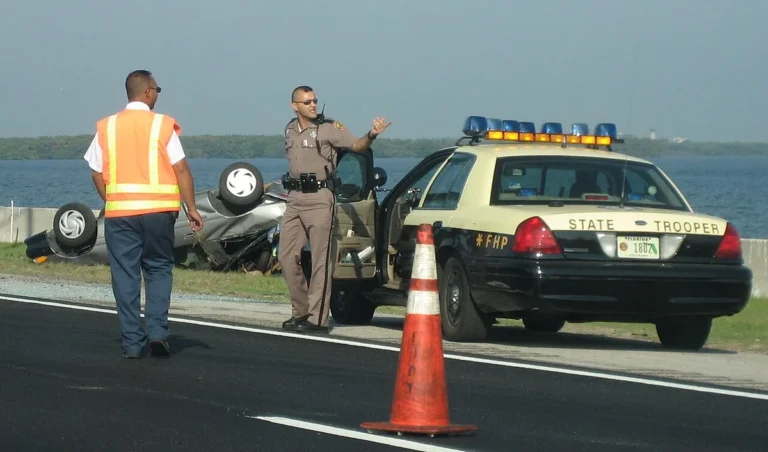
You’re driving down I‑95 and you see flashing lights ahead. In that split second, your brain has to process a lot. Do you move over?
Do you slow down? How much? The Florida move over law for emergency service and utility vehicles gives you a clear answer, but only if you know the setup.
The law isn’t just about cops. As of 2021, it covers a much wider group of roadside workers. And the action you need to take depends entirely on the road you’re on and whether you can safely change lanes.
The Florida Department of Highway Safety and Motor Vehicles reports that over 150 roadside workers are killed nationwide each year, so the stakes are solid.
Bing (Web (fair‑use with source credit))
Quick Answer
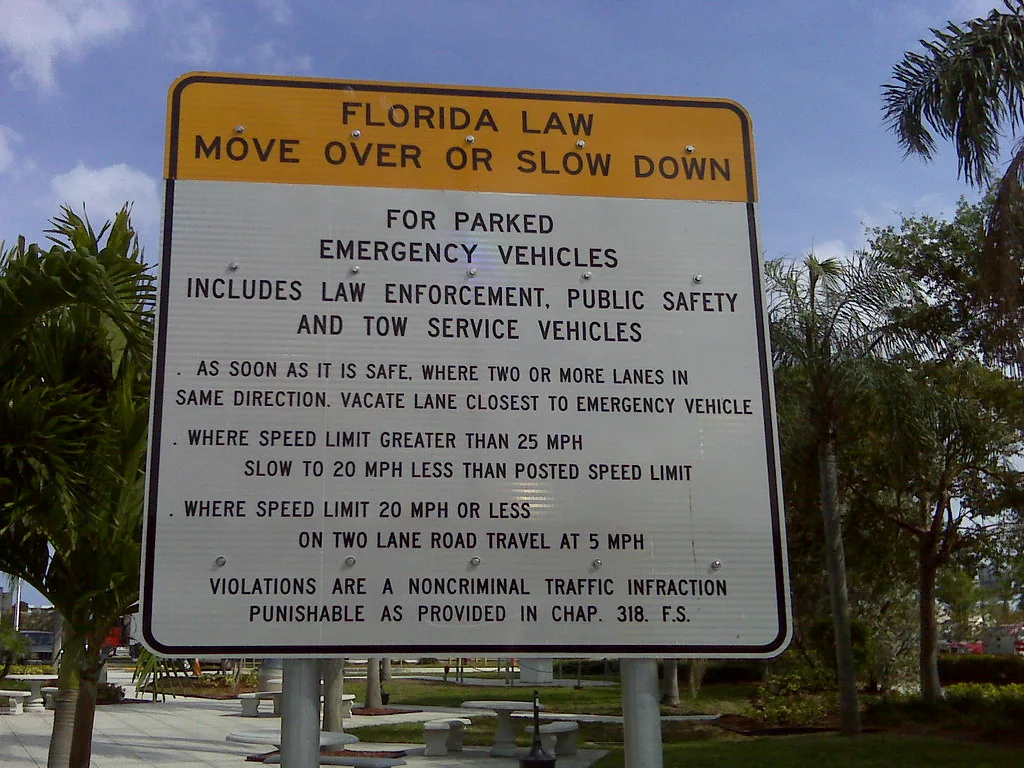
If a stopped vehicle with flashing lights is on your side of the road, you must move over one full lane. If you can’t, you must slow down to 20 mph below the posted limit (or 5 mph if the limit is under 25 mph). That’s it.
The hard part is figuring out which branch applies.
This is a conditional decision tree. Your answer changes based on the type of vehicle, the number of lanes, and whether a lane change is safe. Work through those three factors and you’ll never freeze up again.
Who the Law Covers: It’s Not Just Police Cars Anymore
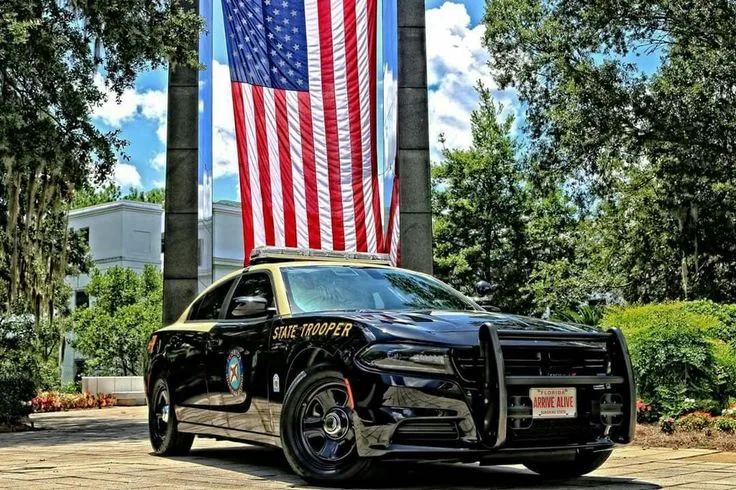
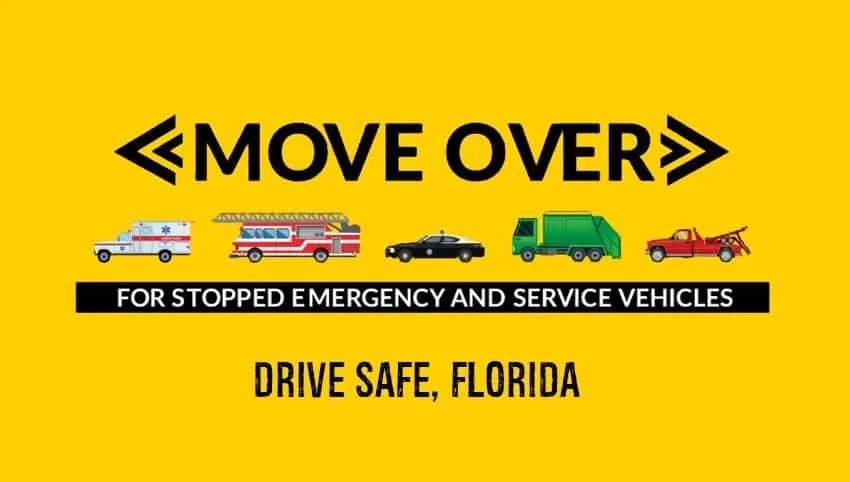
Many drivers think the “Move Over” law applies only to police cruisers with blue or red lights. It doesn’t. The Florida statute protects two broad groups.

Bing (Web (fair‑use with source credit))
Emergency Vehicles (Full Protection)
This group includes:
- Law enforcement vehicles (FHP, sheriff, city police)
- Fire trucks and fire rescue units
- Ambulances and EMS vehicles
Any of these stopped on the roadside with active warning lights triggers the full move‑over requirement. No gray area.
Utility, Tow, and Service Vehicles (Expanded 2021)
In 2021, Florida widened the law to cover a whole second tier of roadside workers. These vehicles also demand the same protection:
- Electric, gas, and water utility trucks (e.g. FPL, TECO, cable vans)
- Sanitation trucks (garbage and recycling collection)
- Tow trucks and wreckers
- Construction and maintenance vehicles (road crews)
If you see amber or white flashing lights on any of these vehicles, the law treats them the same way it treats a patrol car. Many drivers still don’t realize this, which is why Florida Highway Patrol runs regular awareness campaigns.
So the first gate is: Does the stopped vehicle have active flashing lights and belong to one of these groups? If yes, the law is live. Florida also enforces other strict vehicle equipment rules, including restrictions on certain colored lights for private vehicles.
The First Branch: Can You Move Over Safely?
Once you’ve confirmed the vehicle is covered, your next question is about the road itself. This is where the decision splits.
Two or More Lanes in Your Direction
If the road has two or more lanes heading your way, the law commands you to vacate the lane next to the stopped vehicle. That means one full lane of empty space between you and the workers.
You’re allowed to change lanes only when safe. If traffic in the next lane is heavy, you still have the option to slow down (see the next branch). But if you can move over safely, you must.
Single Lane or No Room to Move
If the road only has one lane in your direction, or if moving over would be unsafe (oncoming traffic, a shoulder that’s too narrow, a solid line), then the law shifts to a speed reduction. You don’t have to try to move over. Just slow down.
Bing (Web (fair‑use with source credit))
Keep in mind: “unsafe to move over” isn’t a free pass to ignore the law. You still have to reduce speed immediately. The slowdown requirement is every bit as strict as the lane‑change requirement.
The Second Branch: How Much to Slow Down When You’re Stuck
When you can’t move over, the law gives you a precise speed target. No guesswork.
Speed Limit 25 mph or Higher – Drop to 20 Below
If the posted speed limit is 25 mph or more, you must slow down to 20 mph below that limit. For example:
- 65 mph limit → 45 mph
- 50 mph limit → 30 mph
- 35 mph limit → 15 mph
That’s a significant drop. Most drivers instinctively tap their brakes to 55 in a 65 zone. The law expects 45.
Speed Limit Under 25 mph – Drop to 5 mph
On slower streets with a posted limit below 25 mph, you must reduce speed to 5 mph. This typically applies in residential neighborhoods or school zones where utility crews might be working.
Here’s a quick reference table for the speed reduction:
| Posted Speed Limit | Required Speed (if can’t move over) |
|---|---|
| 70 mph | 50 mph |
| 65 mph | 45 mph |
| 60 mph | 40 mph |
| 55 mph | 35 mph |
| 45 mph | 25 mph |
| 35 mph | 15 mph |
| 25 mph | 5 mph |
| 20 mph | 5 mph |
| 15 mph | 5 mph |
Notice the floor is always 5 mph, even on the slowest roads. The most common enforcement issue is drivers not slowing down enough. A 10‑mph drop is not enough if the law requires 20 below.
So check your speedometer once you see the lights. Your instinct will be to brake, but you need to brake harder than you think.
This speed rule applies for the entire stretch of road near the stopped vehicle, not just when you’re directly beside it. Keep your speed down until you’ve passed the scene by at least a couple hundred feet.
Now you know the two branches. The next part is running through the full decision tree step by step. But before that, one crucial point: if moving over would cause a crash, don’t do it.
The law explicitly says you’re not required to make an unsafe lane change. In that case, just slow down to the required speed. That’s your automatic fallback.
The law expects you to use your judgment, and it also expects you to use the speed reduction as your secondary plan.
Step-by-Step Decision Tree for Any Florida Road
Here’s how to run the decision tree from the moment you spot those lights. Follow these four steps and you’ll land on the correct action every time.
Bing (Web (fair‑use with source credit))
Step 1, Identify the vehicle and check the lights.
Only vehicles with active flashing lights count. Look for blue, red, amber, or white strobes. If the lights are off or the vehicle doesn’t fall into a covered category, the law doesn’t apply yet.
Step 2, Count the lanes in your direction.
Two or more lanes mean you have a move‑over option. One lane means you must prepare to slow down. The law bases everything on your side of the median.
Step 3, Assess whether moving over is safe.
If you have multiple lanes but the lane you want to merge into is full of traffic, don’t force it. An unsafe lane change is illegal and dangerous. Default to the slow‑down branch instead.
Step 4, Execute the required action.
- Can move over safely? Signal, merge one full lane left, pass the stopped vehicle, then return to your lane.
- Cannot move over? Reduce speed immediately. Drop to 20 mph below the posted limit (or 5 mph if the limit is under 25 mph). Maintain that speed until you’ve cleared the scene.
This process is outlined in Florida Statute 316.126, which you can reference directly. Different states handle these details differently, so it’s always worth checking local equipment and safety requirements.
Common Mistakes That Get Drivers Ticketed
Most Move Over tickets happen because drivers misunderstand one of three key points. Here’s what catches people off guard.
Thinking It’s Only for Cops
The biggest myth is that this law only protects police cars. As of 2021, it covers utility trucks, tow trucks, sanitation vehicles, and construction equipment. If you blow past a cable van with amber lights at 65 mph, you can still get a citation.
The ticket won’t be any cheaper just because it wasn’t a patrol car.
Slowing Down a Little Instead of the Full 20 mph
Your instinct is to tap the brakes and drop 10 mph. That’s not enough. In a 65 mph zone, the law expects 45 mph.
The most common ticket‑able behavior is a driver slowing from 65 to 55 and thinking that counts. It doesn’t. Use your speedometer.
Claiming “Traffic Was Too Heavy” Without Reducing Speed
If you can’t change lanes because the next lane is packed, you still have to slow down. The law is clear: it’s move over or slow down. You don’t get a free pass because traffic is heavy.
Many drivers argue that they “couldn’t move over,” but they also didn’t reduce speed. That’s a ticket every time. The slow‑down requirement is mandatory if the lane change isn’t safe.
Real Scenarios: Running the Tree on I‑95, a Two-Lane Road, and a Residential Street
Let’s apply the decision tree to three real Florida roads.
Scenario 1, I‑95 near Daytona, three lanes each direction.
You see a tow truck with amber lights stopped on the right shoulder. You’re in the middle lane.
- Tree path: Covered vehicle → multiple lanes → safe to move over? Yes, the left lane is clear.
- Action: Signal left, merge to the left lane, pass the tow truck, then return to the middle lane. Speed stays at 65 mph during the pass.
Scenario 2, A two‑lane state road (US 27) with a 55 mph limit.
A sheriff’s cruiser has pulled someone over on the shoulder. There’s oncoming traffic, so you can’t move left.
- Tree path: Emergency vehicle → single lane → can’t move over.
- Action: Reduce speed to 35 mph (55 minus 20). Pass the cruiser slowly at that speed. Don’t speed back up until you’re well past the scene.
Scenario 3, A 25 mph residential street.
A garbage truck is stopped mid‑block with amber lights flashing. There’s no room to pass without crossing the double‑yellow line.
- Tree path: Service vehicle → single lane → can’t move over.
- Action: Drop to 5 mph (speed limit is under 25 mph). Creep past the truck. Return to the normal limit only after you’ve cleared the workers.
These scenarios show how the one lane condition forces a sharp speed drop. Drivers are often surprised by how much they have to slow down.
The Cost of Getting It Wrong: Fines, Points, and Insurance Hits
A Move Over violation isn’t just a small fine. It adds points to your license, and those points follow you for years.
| Offense | Estimated Base Fine | Points Added | Additional Consequences |
|---|---|---|---|
| Standard violation | $60 + court costs | 3 points | Insurance rate increase |
| Causing injury to a roadside worker | Up to $500 | 6 points | Possible criminal charges |
| Causing death to a roadside worker | Up to $5,000 | 6 points | Felony charge, jail time |
The base fine may seem low, but court costs can double it. The 3 points are what really hurt. Three points on your license can raise your insurance premium by 10 to 20 percent.
Insurance companies see a Move Over ticket exactly like a failure‑to‑yield violation.
If your violation causes an injury or death, you’re looking at much higher fines and the possibility of a criminal record. The state takes roadside worker safety very seriously. The points system works similarly across the country, with other states enforcing strict penalties for driving on a suspended license or similar violations.
Pro Tips for Making the Right Call Every Time
You can make the decision tree automatic with a little practice. Here are some practical tips.
Always check your speedometer after braking. You might feel like you’ve slowed enough, but your perception at speed is unreliable. A quick glance at the gauge confirms you’re at 45 mph in a 65 zone.
Use your hazard lights briefly when you slow down sharply. If you’re dropping from 65 to 45, the driver behind you might not expect it. A few flashes of your hazards give them a heads‑up.
Scan ahead early. Look far down the road for any stopped vehicles with lights. The earlier you see them, the more time you have to check your mirrors and plan your lane change.
When in doubt, slow down. If you’re unsure whether the vehicle is covered or whether you can move over safely, just slow down to 20 mph below the limit. That action is always legal. You can merge later if space opens up.
Know that this applies at any time of day or night. Flashing lights are required. The law doesn’t care if it’s 3 a.m. on an empty road. The same rule applies.
Following these tips can help you avoid tickets and, more importantly, protect the people working on the roadside. It only takes a few seconds to run the tree, and those seconds matter. Staying informed with resources like the Road Worthy Labs blog helps you keep up with state‑specific driving laws.
Final Decision Guide: Your One-Minute Cheat Sheet for Flashing Lights
When you see flashing lights ahead, run this mental checklist. It takes two seconds and keeps you legal.
Covered vehicle with active lights?
No? Keep driving normally. Yes?
Continue.
Two or more lanes in your direction?
Yes, and safe to move? Signal, merge left one full lane, pass, and return. Done.
No, single lane or unsafe to move?
Drop your speed. If the limit is 25 mph or higher, go 20 mph below it. If the limit is under 25 mph, go 5 mph.
Maintain that speed until you pass the scene.
When in doubt, slow down. That action is always correct. You cannot be cited for slowing down too much.
Remember: The law covers utility trucks, tow trucks, garbage trucks, and construction vehicles. It’s not just emergency responders. If they have lights on, treat them like a patrol car.
Keep this cheat sheet in your glove box or snap a photo of it. It could save you a ticket and protect a roadside worker’s life.
Frequently Asked Questions
What vehicles are covered by Florida’s Move Over law?
The law covers two groups. The first is emergency vehicles like police, fire trucks, and ambulances. The second group includes utility trucks, tow trucks, sanitation vehicles, and construction vehicles.
All must have active flashing lights to trigger the law.
Do I have to move over for a tow truck with amber lights?
Yes. Tow trucks are covered under the 2021 expansion. If the truck is stopped on the shoulder with amber lights flashing, you must move over one lane if safe.
If not, slow down to 20 mph below the posted limit.
What’s the penalty for violating the Move Over law in Florida?
A standard violation carries a base fine of about $60 plus court costs and 3 points on your license. If you cause injury to a roadside worker, the fine can reach $500 with 6 points. Causing death can result in up to $5,000 in fines and potential felony charges.
How fast should I drive if I can’t move over?
If the posted speed limit is 25 mph or higher, reduce to 20 mph below that limit. If the limit is under 25 mph, reduce to 5 mph. Always check your speedometer after braking, as your perception of speed can be unreliable.
Does the law apply on the opposite side of a divided highway?
No. The Move Over law applies only to vehicles stopped on your side of the road or the shoulder adjacent to your direction of travel. You don’t need to slow down for a patrol car on the opposite side of a median.
Can I get a ticket if there were no other cars around?
Yes. The law does not have a traffic‑volume exception. If you fail to move over or slow down, and a law enforcement officer observes the violation, you can be cited regardless of how empty the road is.
The requirement is always active.