ByMax Lee
Florida’s 10-Day Insurance Grace Period for New Residents
Moving to Florida comes with plenty of to-do list items. One of the easiest to overlook is the Florida 10 day insurance grace period for new residents moving to state. And it's one of the most expensive to get wrong.
You get just 10 days after establishing residency to switch your auto policy to a Florida-compliant one. Drive past that deadline and you're technically uninsured under state law.
Florida uses a no-fault insurance system. That's different from many other states. You need Personal Injury Protection (PIP) and Property Damage Liability (PDL) at minimum.
Your old policy almost certainly doesn't meet those specs. As of 2026, Florida requires at least $10,000 in PIP and $10,000 in PDL.
Quick Answer
Florida gives new residents a 10-day grace period to get state-compliant auto insurance. You must carry PIP and PDL before registering your vehicle. The timer starts the day you become a Florida resident.
Driving without proper insurance risks fines up to $500 and license suspension.
What Florida's 10-Day Insurance Grace Period Actually Means for New Residents
The 10-day window is a buffer for getting your paperwork in order. It's not permission to drive without insurance during those 10 days. You must have some form of active coverage.
Your out-of-state policy still counts during this period. But only if it meets Florida's minimum requirements. Most out-of-state policies don't include PIP, which Florida mandates.
That's where the confusion usually starts.
Many new residents assume they can wait until day 9 or 10 to buy a policy and register their car. That's risky. If you get pulled over on day 8, the officer will ask for proof of insurance.
If you can't produce a Florida-compliant policy, you could get a ticket. And if your out-of-state policy has lapsed during the move, you're driving uninsured.
The grace period exists to give you time to compare insurers, gather documents, and visit the Florida Department of Highway Safety and Motor Vehicles (FLHSMV) office. It's a practical accommodation, not a loophole. Treat it as a deadline, not a free pass.
Here's the most important thing to understand: the grace period only protects you from penalties related to registration. It doesn't protect you if you cause an accident. If you're in a crash during those first 10 days and your coverage doesn't meet Florida's standards, you could be personally liable for medical bills and property damage.
The grace period is about avoiding fines, not avoiding responsibility.
Why This Rule Exists and Who It Affects
Florida has one of the highest rates of uninsured drivers in the country. The state's no-fault insurance system means every driver must carry PIP coverage. That covers your own medical expenses after an accident, regardless of who caused it.
It also covers 60 percent of lost wages up to the policy limit. The system reduces the need for lawsuits over minor injuries and keeps claims moving faster.
The 10-day rule ensures new residents transition quickly into this system. Without it, a driver from a state without mandatory PIP would be uncovered for months. That creates unnecessary risk for everyone on the road.
Florida lawmakers designed the short window to close that gap fast.
Who needs to pay attention
Anyone moving to Florida from another state triggers the clock. This includes:
- New homeowners and renters
- Military personnel stationed in Florida who establish residency
- College students who switch their residency for in-state tuition
- Snowbirds who decide to stay year-round
- Remote workers relocating from other states
If you already have a valid policy from your previous state, you still need to switch. Florida law requires you to carry a policy issued by a Florida-licensed insurer. Out-of-state policies don't count for long-term compliance.
You can explore our collection of state-specific motor vehicle guides for more details on similar laws across the country.
The Exact 10-Day Rule: What You Must Do (and When)
When does the clock start? Florida defines residency as the point when you take up residence with the intent to remain. That could be the day you sign a lease, close on a house, or enroll your children in school.
The state doesn't send you a notice. The countdown starts automatically based on your actions.
You must obtain Florida auto insurance within 10 days of establishing residency. You also have 30 days to register your vehicle and transfer your driver's license. The insurance deadline is the stricter one, so prioritize it.
Key deadlines at a glance
| Requirement | Deadline After Residency | What You Need |
|---|---|---|
| Florida auto insurance | 10 days | PIP ($10K) + PDL ($10K) minimum |
| Vehicle registration | 30 days | Proof of Florida insurance, title, ID |
| Driver's license transfer | 30 days | Proof of residency, vision test, fee |
What counts as establishing residency
Florida accepts several documents as proof of residency. Any of these can start the clock:
- A Florida driver's license or ID card
- A voter registration card
- A lease or rental agreement
- A utility bill with your name and address
- A Declaration of Domicile filed with the county clerk
Once you produce one of these documents, the 10-day window begins. If you're pulled over before you've obtained a Florida policy, the officer may check your license address against your current residence. Other states have similar notification windows with strict timelines, like the 10-day address change rule for DMV updates in California.
Florida's Minimum Auto Insurance Requirements
Florida's minimum coverage looks different from most states. Here's exactly what the law requires.
Mandatory coverage
- Personal Injury Protection (PIP): $10,000
- Property Damage Liability (PDL): $10,000
That's it. Florida does not require Bodily Injury Liability (BIL). That's unusual compared to the rest of the country.
But it's also risky to go without it.
PIP covers 80 percent of your medical expenses after an accident no matter who caused it. It also covers 60 percent of lost wages. PDL covers damage you cause to someone else's vehicle or property.
Image source: Wikimedia Commons / Patrick Henry Davenport
What's not required but strongly recommended
Skipping BIL can be a costly mistake. If you cause a serious accident, the other driver's medical bills could exceed your PIP coverage quickly. Without BIL, you'd pay those costs out of pocket.
Most insurers recommend carrying:
- Bodily Injury Liability: $100,000 per person / $300,000 per accident
- Uninsured/Underinsured Motorist Coverage: $100,000 per person / $300,000 per accident
Given Florida's high rate of uninsured drivers, that uninsured motorist coverage matters. It covers you if someone without insurance hits you. For drivers on tight budgets, there are low-cost insurance programs for eligible residents in some states, and Florida offers similar options through the Florida Automobile Joint Underwriting Association.
How Florida compares to other states
| State | PIP Required | PDL Minimum | BIL Required |
|---|---|---|---|
| Florida | Yes ($10K) | $10K | No |
| New York | Yes ($50K) | $25K | Yes ($25K/$50K) |
| Texas | No | $30K | Yes ($30K/$60K) |
| California | No | $5K | Yes ($15K/$30K) |
Your old policy from any of these states won't satisfy Florida's PIP requirement. You need a new policy issued by a Florida-licensed insurer.
Step-by-Step: How to Get Insured and Register Your Car in 10 Days
The process is straightforward if you know the order. Follow these steps and you'll land inside the window comfortably.
Step 1: Gather your documents
You'll need:
- Proof of identity (passport or out-of-state driver's license)
- Proof of Florida residency (lease, utility bill, or Declaration of Domicile)
- Your out-of-state driver's license
- Your vehicle title (or lease agreement if financed)
- Your current insurance declaration page
Step 2: Shop for a Florida policy
Contact insurers licensed to operate in Florida. Ask for a policy that meets the state's PIP and PDL minimums. If your budget allows, add BIL and uninsured motorist coverage.
Get quotes from at least three providers. Rates vary significantly based on your location and driving history.
Step 3: Purchase the policy
Set the effective date no later than day 10 after establishing residency. Most insurers can activate a policy same-day if you need it urgently. Pay the first premium and ask for your proof of insurance immediately.
Step 4: Get your proof of insurance
Florida accepts electronic proof. Save your insurance card to your phone's wallet app or keep the PDF accessible. You can also request a physical card by mail, but start with the digital version.
A traffic stop requires you to show proof on demand. Without it, you risk a ticket even if you're insured.
Step 5: Register your vehicle
Visit an FLHSMV office or a county tax collector's office. Bring your proof of Florida insurance, vehicle title, and identification. Pay the registration fee and receive your Florida license plate and registration sticker.
Step 6: Transfer your driver's license
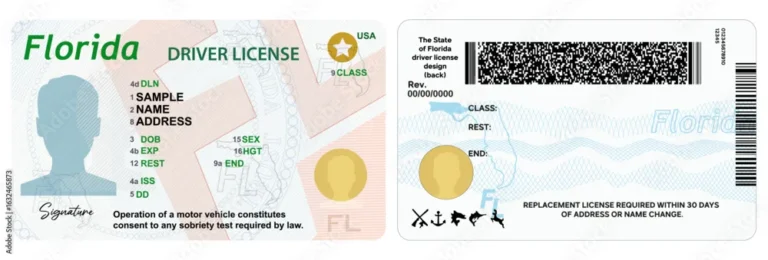
You have 30 days for this, but do it early. Visit an FLHSMV office with proof of residency. Pass the vision test.
Pay the $48 fee. You'll receive a Florida driver's license valid for up to eight years.
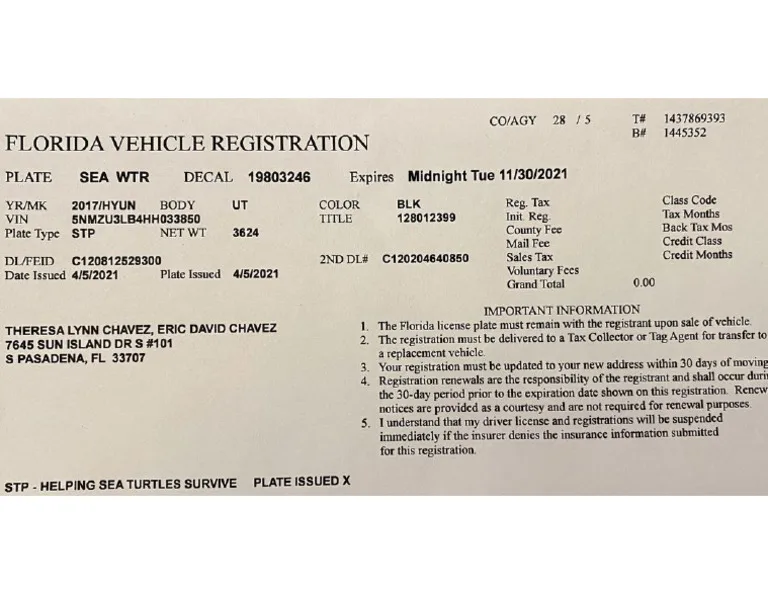
Image source: Bing (Web (fair-use with source credit))
Estimated costs
| Item | Cost Range |
|---|---|
| First insurance premium payment | $100–$300 |
| Vehicle registration fee | $225–$450 |
| Title certificate transfer | $77–$85 |
| Driver's license transfer | $48 |
Total first-year costs typically land between $450 and $850 depending on your vehicle and insurance rates. Registration procedures and fee structures vary by state, so it's worth confirming current Florida rates on the official FLHSMV website before you go.
What Happens If You Miss the Deadline?
You'll face immediate penalties. Florida law treats driving without valid insurance as a serious offense. The first violation carries a fine between $150 and $500.
Your driver's license and registration will also be suspended until you provide proof of insurance and pay a reinstatement fee.
The suspension doesn't stop there. If you're caught driving with a suspended license, you could face additional fines or even jail time. The state may also require you to file an SR-22 certificate, which proves you carry the minimum required insurance.
This stays on your record for three years and typically raises your premiums significantly.
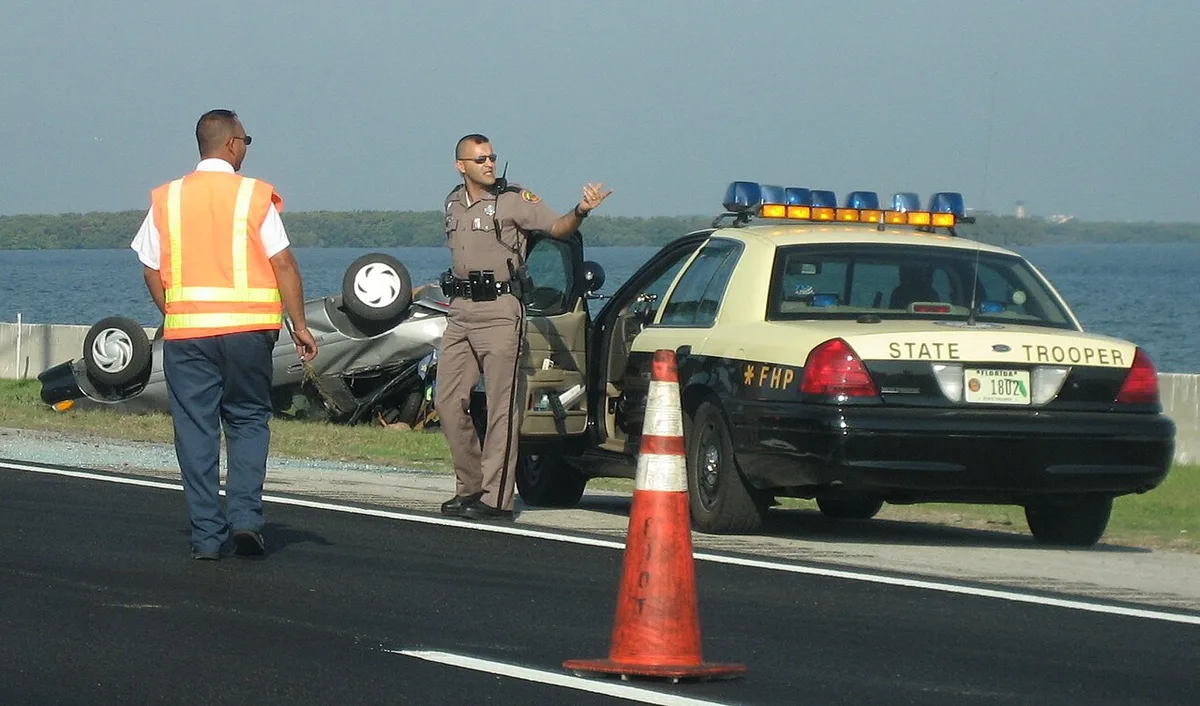
Image source: Wikimedia Commons / Tampa Gator at English Wikipedia
If you cause an accident without insurance, the financial consequences are worse. You'll be personally responsible for all damages and medical expenses. Florida's no-fault system won't protect you if you don't have PIP coverage.
The other driver can sue you directly for their costs. Driving with a suspended license can also lead to vehicle impoundment under certain circumstances, similar to rules in other states.
Common Mistakes New Residents Make (and How to Avoid Them)
Assuming your out-of-state policy works indefinitely is the biggest error. Many drivers think they can keep their old coverage until their next renewal. Florida doesn't recognize out-of-state policies as valid for registration beyond the 10-day grace period.
Another common mistake is waiting until the last minute to shop for insurance. Rates in Florida can be higher than in other states, especially in urban areas. If you wait until day 9, you might struggle to find affordable coverage quickly.
Start comparing quotes as soon as you know your move date.
Some new residents forget to update their address on their policy. If your insurer doesn't have your Florida address, they might not issue a compliant policy. Always confirm your new address is on file before the move.
Finally, don't assume digital proof of insurance is enough. While Florida accepts electronic cards, some officers may still ask for a physical copy. Keep both versions handy until you're fully settled.
Proof of Insurance: Digital vs. Paper—What Florida Accepts
Florida accepts electronic proof of insurance on your phone or tablet. The Florida Department of Highway Safety and Motor Vehicles (FLHSMV) confirms this on their official site. Your insurer's app or a PDF of your insurance card is sufficient during a traffic stop.
However, there are a few caveats. Your device must be functional and the proof must be legible. If your phone dies or the screen is cracked, the officer may not accept it.
It's smart to keep a physical copy in your glove compartment as a backup.
Some rental car companies or employers may still require a physical card. Check with them before relying solely on digital proof. The state doesn't mandate paper, but other entities might.
Florida vs. Other States: How Grace Periods Compare
Florida's 10-day grace period is shorter than many other states. Texas gives new residents 30 days to register their vehicle and obtain insurance. California allows a 20-day registration window but requires insurance immediately upon residency.
Here's how Florida stacks up against a few other states:
| State | Grace Period for Insurance | Registration Deadline | Minimum Liability Coverage |
|---|---|---|---|
| Florida | 10 days | 30 days | $10K PIP / $10K PDL |
| Texas | 30 days | 30 days | $30K/$60K/$25K |
| California | Immediate | 20 days | $15K/$30K/$5K |
| New York | Immediate | 30 days | $25K/$50K/$10K |
| Georgia | 30 days | 30 days | $25K/$50K/$25K |
Florida's short window reflects its strict no-fault insurance system. The state wants new residents to transition quickly to avoid coverage gaps. Other states with fault-based systems often allow more time.
When You Don't Get a Grace Period (Exceptions to Know)
The 10-day grace period only applies to new residents. If you're already a Florida resident and let your insurance lapse, there's no grace period. You're immediately in violation of the law.
Military personnel stationed in Florida have a slight exception. Active-duty service members can maintain their home state's insurance and registration if they don't establish Florida residency. But if you register to vote or get a Florida driver's license, you trigger the 10-day rule.
Temporary visitors don't qualify for the grace period either. If you're in Florida for less than 90 days, you can keep your out-of-state insurance and registration. But if you stay longer and establish residency, the clock starts ticking.
Finally, if you buy a car in Florida, you must have insurance before you drive it off the lot. There's no grace period for new purchases. Dealers will require proof of insurance before handing over the keys.
Frequently Asked Questions
Does the 10-day grace period apply to rental cars?
No. The grace period only covers vehicles you own or lease long-term. Rental cars require separate insurance coverage from the rental company or your personal policy.
Can I use my out-of-state insurance during the 10 days?
Yes, but only if it meets Florida's PIP and PDL minimums. Most out-of-state policies don't include PIP, so you'll likely need a new policy.
What if I don't drive my car during the 10 days?
The rule still applies. Florida requires insurance for any registered vehicle, even if it's not driven. You must have coverage before registering.
How do I prove I'm a new resident?
A lease, utility bill, or Florida driver's license works. The FLHSMV accepts several documents as proof of residency.
What's the fastest way to get Florida insurance?
Online quotes are the quickest. Many insurers can issue a policy same-day. Compare at least three providers to find the best rate.
Can I register my car without a Florida license?
Yes, but you'll need a Florida license within 30 days. You can register your vehicle using your out-of-state license as long as you have proof of insurance and residency.
Where to Get Official Help (and What to Ask)
The Florida Department of Highway Safety and Motor Vehicles (FLHSMV) is your best resource. Visit their official website for forms, fee schedules, and office locations. Ask about the exact documents needed for registration and insurance verification.
Local county tax collector offices also handle vehicle registrations. Call ahead to confirm hours and required paperwork. Bring your proof of insurance, title, and ID to avoid delays.
For insurance questions, contact a Florida-licensed agent. Ask about PIP and PDL minimums, and whether adding BIL makes sense for your situation. They can also explain how your driving history affects rates.
The Florida Office of Insurance Regulation (www.floir.com) provides consumer resources and can help if you run into issues with an insurer.
For more information on similar laws across the country, check our other state-specific guides covering everything from vehicle registration deadlines to license transfer requirements.