If your Illinois registration is due and you’re not sure whether to use Illinois EPA mobile testing units and high capacity inspection sites, you’re not alone. The state runs two distinct testing options, and the right choice depends on your location, vehicle type, and schedule. As of 2026, over 5.5 million vehicles in non-attainment areas must pass emissions testing every two years to renew registration.
The Illinois EPA Vehicle Emissions Testing Program uses both mobile units and fixed high-capacity stations to check compliance with federal Clean Air Act standards. Here’s how to decide which one fits your situation.
Quick Answer
Illinois EPA mobile testing units and high capacity inspection sites both perform the same emissions tests. Mobile units travel to underserved areas, while high-capacity sites handle 300, 500 vehicles daily. Testing is mandatory every two years for most vehicles in designated counties.
OBDII tests apply to 1996 and newer gasoline vehicles.
How Illinois EPA Vehicle Emissions Testing Works
The program covers Cook, DuPage, Lake, Kane, McHenry, Will, St. Clair, Madison, and Monroe counties. It’s part of the state’s Inspection and Maintenance (I/M) program required by the U.S.
EPA to reduce ozone and particulate pollution.
Vehicles undergo one of two test types based on model year. Gasoline vehicles from 1996 and newer use OBDII testing, which checks the vehicle’s onboard computer for emissions system readiness and fault codes. Pre-1996 vehicles get a tailpipe test using the ASM 2525 or TSI method, measuring actual exhaust emissions.
All tested vehicles also receive a gas cap pressure test and a visual inspection of emissions components. Results are printed on-site and automatically reported to the Secretary of State for registration purposes.
Mobile Testing Units vs. High-Capacity Sites: Key Differences
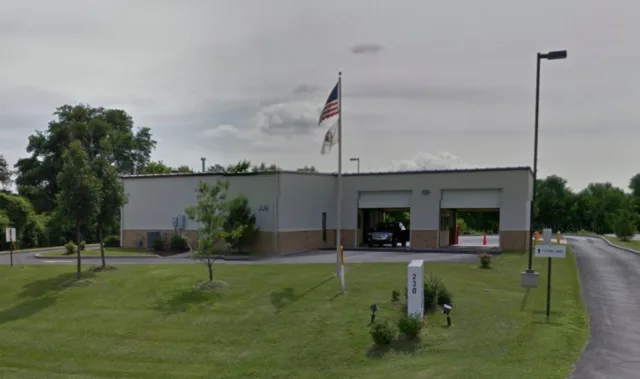
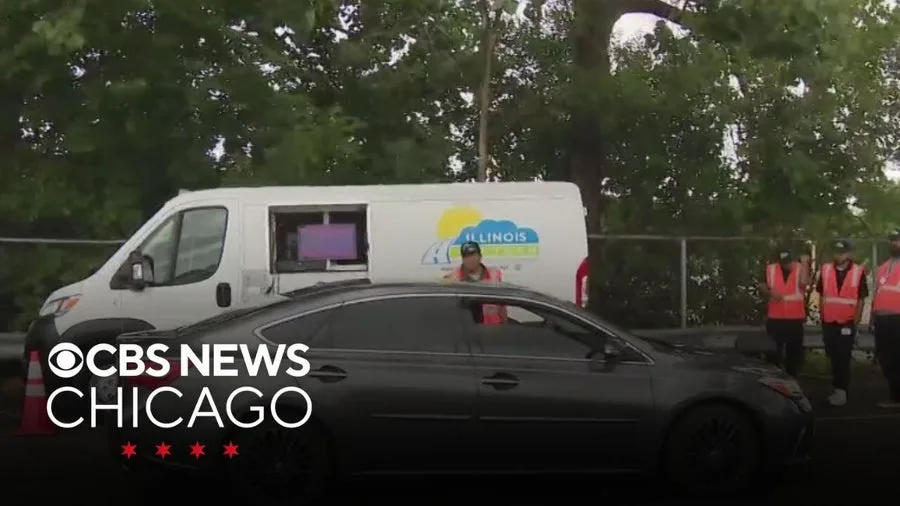
Mobile units are single-lane, self-contained vans that rotate through communities on a published schedule. They’re ideal if you live in a less populated area or can’t easily reach a fixed site during work hours. However, they operate weather-dependent and can cancel with little notice during rain, high winds, or extreme temperatures.
High-capacity sites are permanent, multi-lane facilities with indoor testing bays. They run year-round, including extended hours at some locations (7 AM, 8 PM weekdays, 7 AM, 1 PM Saturdays). These sites process hundreds of vehicles daily, making them the best choice if you need reliability and speed.
Here’s a quick comparison:
| Feature | Mobile Units | High-Capacity Sites |
|---|---|---|
| Location | Rotating schedule | Fixed addresses |
| Lanes | 1 | 4–8 |
| Hours | Varies, often 8 AM–4 PM | Extended, some 7 AM–8 PM |
| Weather | Cancels in bad weather | Operates year-round |
| Wait Time | Varies, can be long | Real-time displays available |
Who Must Test and When
Testing is required for all gasoline vehicles and diesel vehicles under 8,500 lbs GVWR registered in the designated counties. The schedule is based on your license plate: even-year plates test in even-numbered years, odd-year plates in odd-numbered years.
New Illinois residents must have their vehicle tested within 30 days of registration if they move into a non-attainment county. If you’ve recently disconnected your battery or cleared fault codes, your vehicle may not be ready for testing. The OBDII system needs time to complete its monitoring cycles, which can take 50, 100 miles of mixed driving.
Exemptions include vehicles older than 25 years, electric vehicles, and diesel vehicles over 8,500 lbs GVWR.
Step-by-Step: How to Get Your Vehicle Tested
Before You Go
Check if your test is due using the Illinois Air Team website by entering your VIN or license plate number. If you’re using a mobile unit, verify its schedule and location for the day. High-capacity sites don’t require appointments, but checking wait times can save you hours.
Prepare your vehicle for testing. Drive it for at least 15, 20 minutes to ensure the engine is warm. Make sure your gas cap is tight and your check engine light is off.
At the Test Site
Follow the signs to the correct lane. Keep your engine running and your vehicle in park (or neutral for manual transmissions) with the parking brake engaged. A technician will guide you through the process, which typically takes 10, 20 minutes at a high-capacity site.
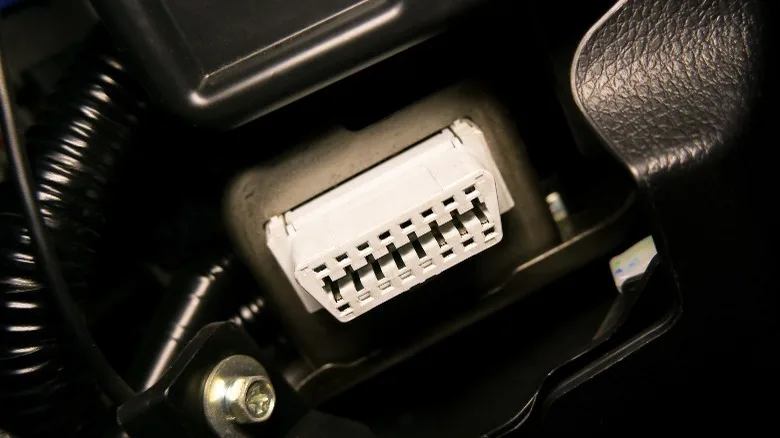
For OBDII tests, the technician will plug a scanner into your vehicle’s OBDII port, usually located under the dashboard near the steering column. For tailpipe tests, they’ll use a probe to measure emissions while your vehicle runs on a dynamometer.
After the Test
If you pass, you’ll receive a printed report, and the results are automatically sent to the Secretary of State. You can renew your registration online, by mail, or in person without any additional paperwork.
If you fail, you’ll get a Vehicle Inspection Report (VIR) detailing the reason for failure. You have 30 days to make repairs and return for a free retest at any Illinois EPA testing location.
How to Choose Between Mobile and High-Capacity
Use a mobile unit if you’re in a rural or suburban edge of the testing zone. These units rotate through park-and-rides, municipal lots, and community centers, bringing the test to you. They’re perfect for drivers who can’t easily reach a fixed site during work hours.
Pick a high-capacity site if you need speed and reliability. These locations have multiple lanes, indoor testing, and extended hours. They’re the best choice for fleet operators or anyone with a tight schedule.
If your vehicle is pre-1996, confirm the site offers tailpipe testing. Not all mobile units are equipped for ASM/TSI tests, so check the Illinois Air Team schedule before you go.
Common Reasons for Failing (and How to Fix Them)
The most common failure is a check engine light. Even if it’s for a minor issue like a loose gas cap, the test will fail automatically. Fix the underlying problem and clear the codes before retesting.
Gas cap failures account for about 3% of all test failures. The fix is usually a $15, $25 replacement. After replacing it, drive 50, 100 miles to reset the EVAP monitor before retesting.
OBDII “not ready” monitors are another frequent issue. If you’ve recently disconnected the battery or cleared codes, the vehicle’s computer needs time to complete its self-tests. A mixed driving cycle of city and highway miles usually resolves this.
Wait Times, Schedules, and How to Skip the Line
Mobile units operate on a first-come, first-served basis with no appointments. Wait times vary, but cancellations due to weather can disrupt schedules. Always check the daily schedule before heading out.
High-capacity sites also use a first-come system, but they post real-time wait times on the Illinois Air Team website and app. The last five business days of the month see the longest lines as drivers rush to meet registration deadlines.
To minimize wait times, avoid peak hours (11 AM, 2 PM) and the end of the month. Early mornings or late afternoons typically have shorter queues. Some sites offer Saturday testing, which can be less crowded than weekdays.
What Happens If You Don’t Test on Time
You can’t renew your registration without a passing emissions test. The Secretary of State will block renewal until compliance is met. Driving with expired plates can result in fines and potential vehicle impoundment.
If you miss your testing window, you’ll need to get tested as soon as possible. There’s no grace period, and late fees may apply to registration renewal.
For vehicles that fail, you have 30 days to repair and retest for free. After that, you’ll need to pay for another test. Persistent non-compliance can lead to registration suspension.
Costs, Fees, and Free Retests
The emissions test itself is free at all Illinois EPA testing locations. There are no fees for the initial test or for the first retest within 30 days of a failure.
If you need additional retests after the free window, the cost is $20. Private test-and-repair facilities may charge their own fees, which vary by location.
For vehicles that fail due to costly repairs, Illinois offers a repair waiver. If your vehicle fails twice and the estimated repairs exceed $450, you may qualify for a waiver that allows registration renewal without passing the test. Documentation of repairs and costs is required.
Expert Tips to Pass the First Time
Warm up your engine before testing. A 15, 20 minute drive ensures the catalytic converter and oxygen sensors are at operating temperature. Cold engines often trigger incomplete monitor cycles.
Check your gas cap before arriving. A loose or damaged cap is an easy fix that causes automatic failure. Tighten it until it clicks, then drive a few miles to reset the EVAP system.
Clear any pending fault codes before testing. Even minor issues like a faulty oxygen sensor will trigger a fail. Use an OBDII scanner to check for codes and address them first.
Safety / Legal / Compliance
Illinois law requires emissions testing for registration renewal in designated counties. This is mandated under 625 ILCS 5/13C and enforced by the Secretary of State. Non-compliance results in blocked registration.
Tampering with emissions controls is illegal. Removing or defeating catalytic converters, oxygen sensors, or other components violates state law and federal Clean Air Act regulations. Penalties include fines and potential vehicle impoundment.
All testing follows 35 Ill. Adm. Code 276 standards.
Technicians are certified annually, and equipment is calibrated daily. This ensures consistent, accurate results across all testing locations.
Maintenance / Long-Term Optimization
Regular vehicle maintenance helps prevent test failures. Replace spark plugs, air filters, and oxygen sensors at manufacturer-recommended intervals. A well-maintained engine runs cleaner and is more likely to pass.
Keep your fuel system clean. Dirty fuel injectors or a clogged air filter can increase emissions. Use quality fuel and consider periodic fuel system cleaning.
Monitor your check engine light. If it comes on, address the issue immediately. Driving with a lit check engine light will result in an automatic test failure.
Frequently Asked Questions
How often do I need to get my vehicle tested?
Testing is required every two years for most vehicles in designated Illinois counties. The schedule is based on your license plate number, with even-year plates testing in even years and odd-year plates in odd years.
What if my check engine light is on?
Your vehicle will automatically fail the emissions test. You’ll need to diagnose and repair the issue, then clear the codes before retesting. Drive 50, 100 miles afterward to reset the monitors.
Can I get tested at any location?
Yes, you can use any Illinois EPA testing location, including mobile units and high-capacity sites. Just confirm the site offers the test type your vehicle needs.
What documents do I need to bring?
You only need your vehicle and its registration. No additional paperwork is required. Results are automatically reported to the Secretary of State.
Is there a fee for the emissions test?
The initial test and first retest are free. Additional retests after the free window cost $20. Private test-and-repair facilities may charge their own fees.