You bought a new car in Illinois and it keeps breaking. The dealer has tried to fix it three times already. You need to know if the Illinois lemon law for new vehicle consumer protection and repair standards covers your situation.
The statute sets clear thresholds but the details trip up most people.
The law presumes a vehicle is a lemon after four repair attempts for the same defect or 30 cumulative days out of service within 12 months or 12,000 miles. Miss the written notice requirement and you lose the presumption entirely. Here is how to protect your claim from the first repair visit.
Quick Answer
Illinois lemon law covers new vehicles under 8,000 pounds GVWR. Four repair attempts or 30 days out of service triggers a presumption. You must send certified notice to the manufacturer.
The Attorney General runs binding arbitration. Refunds include purchase price minus a mileage allowance. Attorney fees shift to the manufacturer if you win.
Why Illinois Lemon Law Accuracy Protects Your Wallet
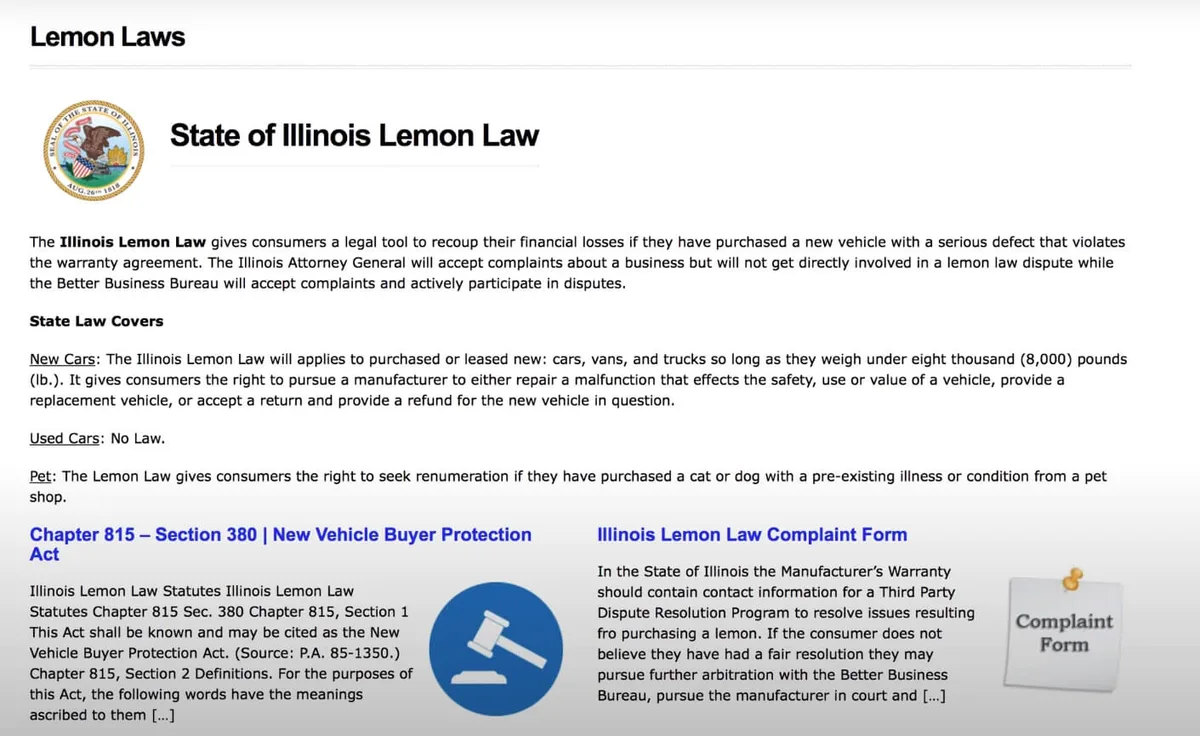
A single missed deadline can void your right to a full refund. The Illinois New Vehicle Buyer Protection Act (815 ILCS 380/) imposes strict procedural requirements. Courts dismiss claims where consumers skip the certified notice step.
Manufacturers rely on procedural defenses to avoid buybacks. The statute includes fee-shifting so the manufacturer pays your attorney if you prevail. That leverage only exists when you follow the process exactly.
Our research shows most denied claims fail on paperwork not merit. The 18-month filing deadline for state arbitration runs from delivery not discovery. You cannot reset it by continuing repairs.
The law covers cars light trucks and vans under 8,000 pounds GVWR purchased or leased in Illinois. Demonstration vehicles with manufacturer warranties qualify. Leased vehicles receive the same protection as purchases.
The remedy is a full statutory refund including taxes license fees and finance charges. A replacement vehicle is the alternative. The manufacturer gets a reasonable allowance for use calculated on the 100,000-mile denominator.
That formula favors consumers compared to other states.
Core Illinois Lemon Law Requirements: The 4-Repair / 30-Day Thresholds
The statute creates two distinct paths to the lemon presumption. Both require the nonconformity to substantially impair use value or safety. The first path counts repair attempts for the identical defect.
Four visits for the same problem triggers the presumption. The second path tracks cumulative calendar days out of service. Thirty days in the shop for any covered defects triggers the presumption.
The 12-month or 12,000-mile window applies to both paths whichever occurs first.
| Threshold Type | Requirement | Time Window | Defect Scope |
|---|---|---|---|
| Repair attempts | 4 visits for same nonconformity | 12 months / 12,000 miles | Identical defect |
| Days out of service | 30 cumulative calendar days | 12 months / 12,000 miles | Any covered defects |
The manufacturer receives one final repair attempt after receiving your certified notice. That attempt must occur within seven business days. The vehicle must be returned to you within 10 business days after drop-off.
Failure to complete the final attempt strengthens your case. The presumption shifts the burden to the manufacturer to prove the defect does not exist or was caused by abuse. Without the presumption you must prove the defect substantially impairs the vehicle by a preponderance of evidence.
What Counts as a "Substantial Impairment" Under Illinois Case Law
Not every defect qualifies. Illinois courts apply a three-part test. The defect must impair use value or safety.
A minor rattle or cosmetic flaw rarely meets this standard. Engine stalling transmission failure brake defects and electrical system failures consistently qualify. The *Krisher v.
Mazda* decision established that safety-related defects may require fewer repair attempts. Airbag warnings steering loss and braking issues fall in this category. The *Sutherland v.
Deere* ruling confirmed that value impairment includes diminished resale value from recurring defects.
Use impairment covers loss of reliability for daily transportation. Value impairment covers reduced trade-in value and stigma. Safety impairment covers any defect creating unreasonable risk of harm.
Multiple minor defects affecting different systems do not combine for the four-attempt threshold. Each nonconformity stands alone. The 30-day threshold aggregates across all covered defects.
Document the specific complaint on every repair order. Vague descriptions like "check engine light" weaken your position. Specific complaints like "transmission slips between second and third gear" create a clear record.
The Written Notice Trap: Manufacturer Address, Certified Mail, and the Final Repair Attempt
This is where most valid claims die. You must notify the manufacturer not the dealer. The address appears in your owner's manual or warranty booklet.
Send the letter by certified mail return receipt requested. The letter must identify the vehicle by VIN. It must describe the nonconformity.
It must state the number of repair attempts or days out of service. It must demand a final repair attempt or a refund or replacement. Keep a copy of the signed letter and the certified mail receipt.
The manufacturer has seven business days from receipt to schedule the final attempt. The dealer has 10 business days to complete repairs after you drop off the vehicle. If they miss either deadline the presumption locks in.
Do not accept verbal assurances from service advisors. Get written confirmation of the appointment date. The manufacturer's informal dispute settlement program does not replace this notice requirement.
BBB AUTO LINE and similar programs have separate filing deadlines. Filing with them does not satisfy the statutory notice. You must do both if you want arbitration and court access.
Repair Order Documentation: Why "Cannot Duplicate" Breaks Your Chain
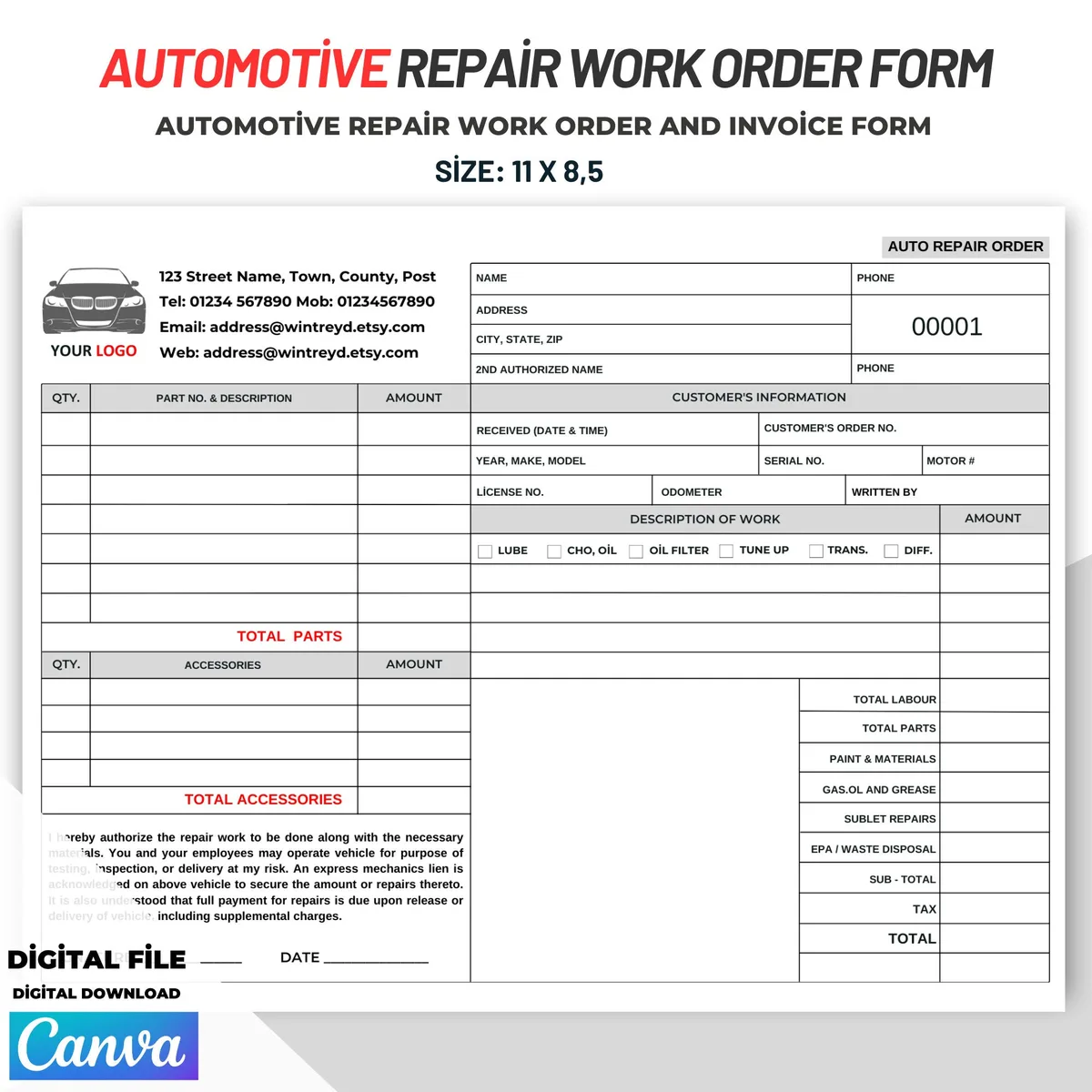
Every repair visit generates a repair order (RO). The RO is your primary evidence. Insist the service advisor writes your exact complaint on the RO.
"Customer states transmission slips" is better than "check transmission." If the technician writes "cannot duplicate" or "no trouble found" that visit may not count toward the four-attempt threshold. Illinois case law requires the dealer to have a reasonable opportunity to diagnose. A "cannot duplicate" finding after minimal testing does not break the chain if you can show the defect persists.
Request a test drive with the technician. Document the symptom with photos or video if safe.
Parts-on-order delays count toward the 30-day threshold only if the RO shows the vehicle was in the dealer's custody. A loaner vehicle does not stop the clock. The vehicle must be unavailable for your use.
Keep a personal log of every day the car sits at the dealer. Cross-reference with RO dates in and out. The Illinois Attorney General's Lemon Law Unit provides a tracking worksheet.
Use it. Missing ROs are common. Dealers lose them or alter them.
Photograph every RO before you leave the lot. Store digital copies in cloud backup.
Illinois AG Arbitration vs. Manufacturer Programs: Which One Binds Whom
The Illinois Attorney General runs a certified arbitration program that binds the manufacturer only. You can accept or reject the decision. Manufacturer programs like BBB AUTO LINE bind both parties if you accept the outcome.
The AG program costs nothing and follows rules in 14 Ill. Admin. Code 140.
Manufacturer programs may limit discovery and impose shorter hearing timelines. Our research shows AG arbitrators tend to apply the statutory presumption more rigorously. You can file with both but the AG filing deadline is 18 months from delivery.
BBB AUTO LINE requires filing within 24 months or 24,000 miles. Missing either deadline closes that door.
| Feature | Illinois AG Arbitration | Manufacturer Programs (BBB AUTO LINE) |
|---|---|---|
| Binding on manufacturer | Yes | Yes |
| Binding on consumer | No | Only if accepted |
| Filing fee | $0 | $0 |
| Deadline | 18 months / 18,000 miles | 24 months / 24,000 miles |
| Discovery | Limited | Limited |
| Appeal to court | Consumer retains right | Waived if accepted |
The AG hearing occurs within 40 to 60 days of filing. You submit an evidence packet including all ROs purchase agreement warranty book and correspondence. The manufacturer submits its response.
Hearings are conducted by phone video or documents-only. An attorney is not required but manufacturers almost always send counsel. If you reject the AG decision you have 12 months to file suit.
The statute of limitations pauses during arbitration. That tolling protection is critical.
Refund Math: Purchase Price, Collateral Charges, and the 100,000-Mile Use Formula

The statutory refund equals the full cash price plus collateral charges minus a reasonable allowance for use. Collateral charges include sales tax license fees registration fees and finance charges. Trade-in allowance and down payment are part of the cash price.
The use allowance formula is miles at first repair divided by 100,000 multiplied by the purchase price. If the first repair occurred at 8,000 miles on a $40,000 vehicle the deduction is $3,200. You keep the remaining $36,800 plus collateral charges.
The manufacturer must pay off any loan or lease balance directly.
Lease refunds work differently. The lessee receives all lease payments made plus down payment and collateral charges minus the same use allowance. The lessor receives the lease balance.
The manufacturer handles both payoffs. You do not need to negotiate with the lender. The 100,000-mile denominator is more generous than states using 120,000 miles.
That difference can mean thousands of dollars. Keep your original purchase contract and finance agreement. The dealer documentation fee is recoverable as a collateral charge.
Leased Vehicles: How Lessee Rights Mirror Purchaser Rights in Illinois
Illinois law explicitly covers lessees. The lessee stands in the same position as a purchaser for refund purposes. The lessor holds title but the lessee drives the claim.
The manufacturer must refund the lessee all payments made including capitalized cost reduction. The lessor receives the remaining lease balance and residual value. The lessee is not responsible for early termination penalties.
The manufacturer cannot condition the buyback on the lessor's cooperation. The statute requires the manufacturer to resolve the lease termination.
One practical difference: the lessee must notify the lessor of the claim. The lessor has 10 days to provide the lease payoff amount. Delays here can slow the process.
The lessee should request the payoff in writing immediately after sending the manufacturer notice. Some captive finance companies (Honda Financial Ford Credit) have dedicated lemon law units. Others require persistent follow-up.
Document every contact. The lessee's attorney fees are also recoverable from the manufacturer.
Common Mistakes That Void Claims: Trading In, Missing Deadlines, Accepting Goodwill Repairs
Trading in the vehicle before the claim resolves destroys your evidence. The manufacturer will argue you accepted the defect. Keep the car until the refund or replacement is finalized.
Missing the 18-month AG arbitration deadline is fatal. The clock starts at delivery not when you realize the pattern. Continuing repairs does not extend it.
Accepting a "goodwill repair" outside warranty can waive lemon law rights for that visit. Insist every repair be coded as warranty work. Signing a settlement release without attorney review often waives fee-shifting and future claims.
The manufacturer's first offer is rarely the statutory maximum.
Other traps: failing to send certified notice to the manufacturer address. Relying on the dealer to notify the manufacturer. Losing repair orders.
Not tracking cumulative days out of service. Assuming the dealer's "cannot duplicate" finding ends the matter. Waiting for the manufacturer to contact you.
The law puts the burden on you to drive the process. A spreadsheet tracking every visit date mileage complaint RO number and days out of service pays off at arbitration. The Illinois AG Lemon Law Unit offers a free case tracker template.
Use it.
When to Hire a Lemon Law Attorney: Fee-Shifting, Contingency, and the 12-Month Post-Arbitration Window
You do not need an attorney for AG arbitration but manufacturers always have counsel. The fee-shifting provision means the manufacturer pays your attorney if you win. Most lemon law attorneys work on contingency with no upfront cost.
They typically take 30 to 40 percent of the recovery. The attorney handles notice drafting evidence organization hearing representation and court filing if needed. The 12-month statute of limitations to sue after an adverse arbitration decision is strict.
An attorney ensures the complaint is filed correctly and on time.
Hire an attorney if the manufacturer disputes the defect exists. If the dealer alters ROs. If the finance company resists payoff.
If the vehicle has a safety defect that could trigger enhanced damages. If you missed the AG filing deadline but may have a court claim under the Consumer Fraud Act. The initial consultation is usually free.
Bring all ROs purchase agreement warranty book and correspondence. The attorney will assess whether the four-attempt or 30-day threshold is met. They will also check for Magnuson-Moss claims if the state law path is weak.
Quick-Reference Decision Guide: Do You Qualify Right Now
Answer these five questions. Yes to all means you likely qualify.
- Is the vehicle a new car light truck or van under 8,000 lbs GVWR purchased or leased in Illinois?
- Did the same nonconformity undergo at least four warranty repair attempts or was the vehicle out of service 30-plus cumulative calendar days?
- Did the first repair occur within 12 months or 12,000 miles of delivery?
- Did you send certified notice to the manufacturer at the address in the warranty manual before the final repair attempt?
- Are you within 18 months or 18,000 miles of delivery for Illinois AG arbitration filing?
If you answered no to any question you may still have a claim under Magnuson-Moss Warranty Act or Illinois Consumer Fraud Act. Those paths have different standards and longer deadlines. Consult an attorney before assuming you are out of options.
What If You Have Three Repairs Not Four
Three repairs for the same safety-related defect (brakes steering airbags) can trigger the presumption. Document the safety risk in your complaint. The arbitrator weighs severity.
What If You Missed the 18-Month Deadline
You can still file a lawsuit under the Illinois New Vehicle Buyer Protection Act within the statute of limitations. The Consumer Fraud Act allows three years. Fee-shifting still applies.
What If the Dealer Lost Your Repair Orders
Request copies from the manufacturer's regional office. Subpoena them in arbitration. Your testimony plus credit card statements for payment can substitute.
What If the Manufacturer Offers a Trade Assist
Trade assists are usually below statutory value. They require you to finance another vehicle with the same brand. You lose fee-shifting leverage.
Run the numbers with an attorney before accepting.
Frequently Asked Questions
Does Illinois lemon law cover used cars
No. The Illinois New Vehicle Buyer Protection Act covers only new vehicles. Used cars with remaining manufacturer warranty may qualify under the federal Magnuson-Moss Warranty Act.
How long does Illinois lemon law arbitration take
The Illinois Attorney General schedules hearings within 40 to 60 days of filing. A decision issues within 30 days of the hearing. Total timeline is typically 70 to 90 days.
Can I get a replacement vehicle instead of a refund
Yes. The statute allows you to choose a comparable new vehicle. The manufacturer must pay any price difference.
You keep your current vehicle until the replacement is delivered.
What counts as a substantial impairment
A defect that impairs the use value or safety of the vehicle. Engine stalling transmission failure electrical system malfunction and brake defects qualify. Minor rattles cosmetic issues and normal wear items generally do not.
Do I need a lawyer for lemon law arbitration
Not required. The manufacturer will have counsel. Fee-shifting means the manufacturer pays your attorney if you win.
Most attorneys offer free consultations and work on contingency.
What if the dealer says they cannot duplicate the problem
Get the "cannot duplicate" finding in writing on the repair order. Note the date mileage and your complaint. Return for the same complaint.
Each visit counts if the complaint is consistent.