Indiana reporting a traffic crash to local law enforcement for damages isn’t optional if the wreck meets certain thresholds. Even minor fender-benders can turn into legal headaches if you skip the paperwork.
In Indiana, you must report any crash causing injury, death, or property damage over $1,000 to law enforcement as of 2026. That threshold is lower than many drivers realize, and missing it can cost you far more than the deductible.
Quick Answer
Indiana reporting a traffic crash to local law enforcement for damages is required if the crash causes injury, death, or over $1,000 in property damage. You must call police immediately if anyone is hurt or killed. If police don’t come to the scene, you have 10 days to file a written report.
Failing to report can result in license suspension.
Do You Need to Report a Traffic Crash in Indiana?
Yes, if the crash meets any of these conditions:
- Someone is injured or killed
- Total property damage appears to exceed $1,000
- The crash involves a parked vehicle or unattended property
- A driver leaves the scene without exchanging information
If none of these apply, you’re not legally required to report. But even in minor crashes, filing a report can protect you later.
When Indiana Law Requires You to Report a Crash
Indiana Code 9-26-1-1.1 sets the rules. You must report immediately if:
- There’s injury or death
- Damage exceeds $1,000
- A driver is uninsured or underinsured
If police don’t investigate at the scene, you have 10 days to file a written report with the Indiana Bureau of Motor Vehicles or local law enforcement.
What Counts as “Reportable” Damage in Indiana?

The $1,000 threshold is the key number. That includes:
- Vehicle repair costs
- Damage to other property (fences, buildings, etc.)
- Towing and storage fees
Even if the damage seems minor at the scene, repair estimates often exceed expectations. A dented bumper might cost $800 to fix, but add a cracked headlight and alignment issues, and you’re over the limit.
How to Report a Crash to Local Law Enforcement

If the crash is serious, call 911 immediately. For non-emergency situations, contact your local police department or the Indiana State Police non-emergency line.
If Police Are Already at the Scene
The responding officer will file the report for you. Make sure to:
- Get the officer’s name and badge number
- Ask for the report number
- Confirm how to obtain a copy
If Police Weren’t Called to the Scene
You’ll need to file a report yourself. Here’s how:
- Contact the police department with jurisdiction over where the crash occurred
- Request a crash report form
- Fill it out completely and accurately
- Submit it within 10 days
For crashes in unincorporated areas, contact the county sheriff’s office. For state highways, contact the Indiana State Police. You can find the appropriate contact information on the Indiana State Police website.
What Information You’ll Need for the Report
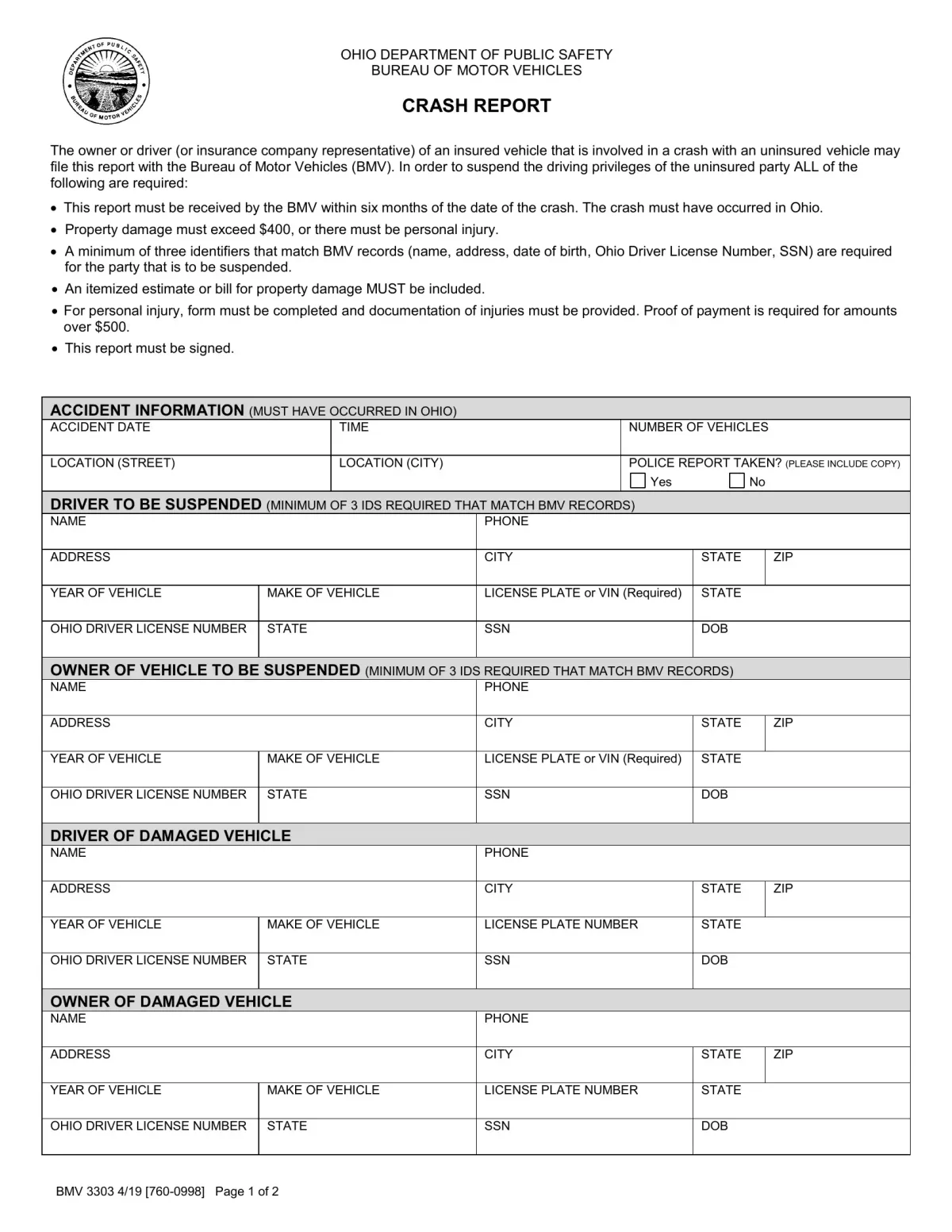
You’ll need details about all parties involved:
- Full names and contact information
- Driver’s license numbers
- Vehicle descriptions (make, model, year, color)
- Insurance information
Also gather the basics of the crash itself:
- Date, time, and exact location
- Weather and road conditions
- Description of what happened
Witness information is valuable too. Get names and contact details from anyone who saw the crash.
How to Get a Copy of Your Indiana Crash Report
You can obtain a copy from the law enforcement agency that filed it. For Indiana State Police reports, use their online portal. Local police departments have their own procedures.
There’s usually a small fee, typically around $10 to $15. Processing times vary, but most agencies provide reports within a few business days.
Common Mistakes That Hurt Your Claim (or Break the Law)
Leaving the scene without reporting is a serious offense. Even if the damage seems minor, staying and exchanging information is the law.
Another mistake is underestimating damage. What looks like a small dent might hide structural issues. Always get a professional assessment before deciding not to report.
Failing to get witness information can also hurt you. Memories fade, and without contact details, you might lose valuable support for your case.
What Happens If You Don’t Report?
The consequences can be severe. Indiana law requires reporting for crashes meeting certain thresholds. Failure to do so can result in:
- License suspension
- Fines
- Criminal charges in some cases
Your insurance company might also deny your claim. Most policies require prompt reporting of accidents. Without a police report, they may refuse to cover the damages.
How Reporting Affects Your Insurance Claim
A police report provides official documentation of the crash. This helps your insurance company determine fault and process your claim faster.
Without a report, you and the other driver might dispute what happened. The report serves as an unbiased account of the incident.
Indiana-Specific Rules You Might Not Know
Indiana has some unique requirements. If the crash involves a parked car, you must locate the owner or leave a note with your contact information. This applies even if the damage seems minor.
Another rule: if the crash damages property other than vehicles, like a fence or building, you must notify the property owner. You’re also required to report this to law enforcement if the damage exceeds $1,000.
Out-of-state drivers aren’t exempt. If you’re visiting Indiana and get into a crash, you must follow the same reporting rules as residents.
Quick Decision Guide: Should You Report?
Report if any of these apply:
- Injury or death occurred
- Damage appears to exceed $1,000
- The other driver is uninsured or leaves the scene
- You’re unsure about the damage extent
Don’t report if:
- No injuries occurred
- Damage is clearly under $1,000
- Both parties agree to handle it privately
When in doubt, report. It’s better to have the documentation and not need it than to need it and not have it.
Frequently Asked Questions
What if the other driver says not to report?
You’re not obligated to follow their request. If the damage meets Indiana’s thresholds, you must report. Protect yourself legally and financially.
How long do I have to file a report?
If police don’t investigate at the scene, you have 10 days to file a written report. Don’t wait until the last minute.
Can I file a report online?
Some agencies offer online reporting for minor crashes. Check with your local police department or the Indiana State Police website. Not all crashes qualify for online reporting.
What if I don’t have all the information?
File the report with what you have. You can provide additional details later if needed. Don’t delay reporting because you’re missing some information.
Will reporting affect my insurance rates?
It might, but not reporting can be worse. Your insurer needs accurate information to process your claim. Hiding an accident can lead to denied claims or policy cancellation.