ByMax Lee
Kansas TR-216: Seller’s Liability Release Guide
Selling a car in Kansas means you’re on the hook until the state knows it’s no longer yours. The Kansas TR-216 seller's notification of sale to release liability is the only way to officially cut ties and prove you’ve transferred ownership. Without it, you could still be responsible for tickets, accidents, or fees tied to the vehicle.
Per Kansas law, you have 30 days from the sale date to file this form with the Department of Revenue. Miss that deadline, and the liability stays with you.
Bing (Web (fair-use with source credit))
Quick Answer
The Kansas TR-216 seller's notification of sale to release liability is a legal form. It removes your responsibility for a sold vehicle. File it within 30 days of the sale.
Submit it to the Kansas Department of Revenue.
What the Kansas TR-216 Form Is and Why It Matters
This form is your official notice to Kansas that you’ve sold your vehicle. It’s not just paperwork, it’s your legal protection. Without it, you remain the owner of record, meaning you’re liable for anything involving the car after the sale.
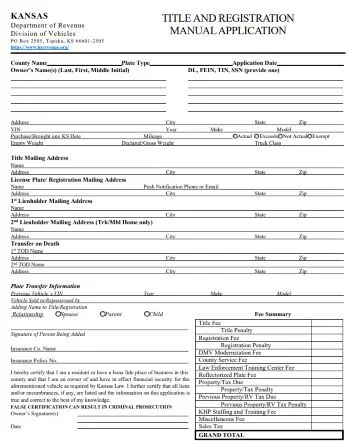
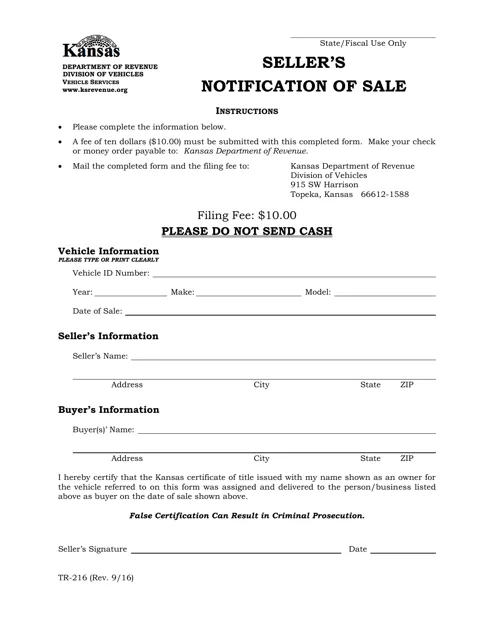
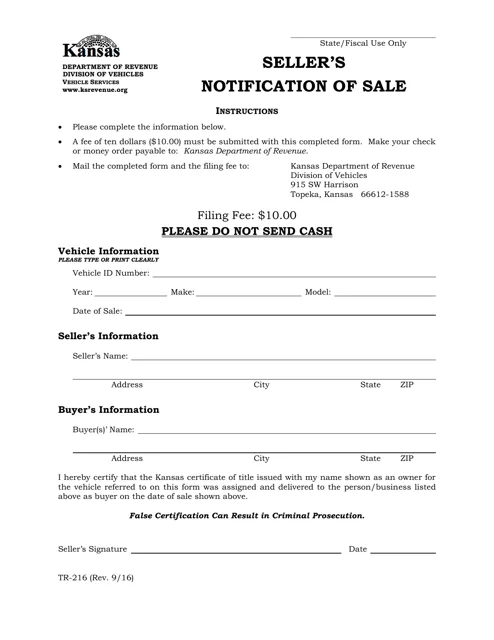
The TR-216 captures key details: VIN, make, model, year, and the names and addresses of both seller and buyer. It’s a one-page document, but it carries serious weight. Think of it as the final step in a sale, the one that closes the loop with the state.
Bing (Web (fair-use with source credit))
When You Actually Need to File a TR-216
You must file this form if you sell a vehicle privately in Kansas. It applies to cars, trucks, motorcycles, anything with a title. Even gifting a vehicle to family requires it.
If you trade in your car to a dealer, they usually handle the paperwork. But for private sales, the responsibility is yours alone.
What Happens If You Skip It
Skip the TR-216 and you’re still the legal owner in the state’s system. That means if the new owner gets a ticket, causes an accident, or abandons the car, you could be held responsible. The state has no way of knowing you sold it unless you file.
Worse, if the buyer never transfers the title, you could face fines or even pay registration fees for a car you no longer own. It’s a risk that’s easily avoided by filing on time.
Who’s Responsible for Filing—You or the Buyer?
You are. As the seller, it’s your job to complete and submit the TR-216. The buyer has their own tasks, like applying for a new title, but those don’t replace your obligation.
Don’t assume the buyer knows about the TR-216. Protect yourself by filing it right after the sale.
Step-by-Step: How to Fill Out and Submit the TR-216
Start with the basics: your name, address, and the buyer’s name and address. Errors here can delay processing, so double-check.
Next, fill in the vehicle details: VIN, make, model, year, and odometer reading. These must match the title exactly. A mismatch could get your form rejected.
Finally, sign and date it. Without your signature, the form is invalid. Keep a copy for your records before submitting.
Bing (Web (fair-use with source credit))
Where to Send It (Online vs. Mail vs. In Person)
You’ve got three options. The fastest is online through the Kansas Department of Revenue’s portal. You’ll get a confirmation email immediately.
Mail is reliable but slower. Send it to the address on the form and allow 7 to 10 business days for processing.
In-person submissions work best if you need same-day confirmation. Visit your local county treasurer’s office. They’ll stamp your copy on the spot.

Bing (Web (fair-use with source credit))
Deadlines and What Counts as “On Time”
The 30-day countdown starts the day you sell the vehicle. File the TR-216 within that window to release liability.
Weekends and holidays don’t extend the deadline. If the 30th day falls on a Sunday, submit by the Friday before.
Late submissions may still be accepted, but you remain exposed until processed. File early to avoid any gaps.
Common Mistakes That Keep Your Liability Alive
Forgetting to sign the form is the top error. Without it, the state won’t process your release.
Incorrect VINs or misspelled names also cause rejections. Always cross-check with the title.
Not keeping a copy is another mistake. If the buyer disputes the sale, you’ll need proof.
How to Check If the Buyer Finished Their Part
The buyer must transfer the title into their name. You can verify this using the Kansas Department of Revenue’s online title status tool.
If the title hasn’t been transferred after 30 days, follow up with the buyer. If they’re unresponsive, contact the KDOR for guidance.
You can also request a title status report by mail. It takes longer but provides official documentation.
What to Do If You Lost the Form or Made a Mistake
If you lost the TR-216, download a new copy from the Kansas Department of Revenue website. The form is free and printable.
If you made a mistake, don’t cross it out. Start fresh with a new form to avoid rejection.
For major errors after submission, contact the KDOR immediately. They’ll guide you on next steps, which may include filing an amended form.
Kansas TR-216 vs. Other States’ Release Forms
Kansas requires the TR-216 for liability release. Other states have similar forms but different rules.
California uses a "Release of Liability" form with a 5-day filing window. Texas has a "Vehicle Transfer Notification" with a 30-day window like Kansas.
Always check the specific requirements for the state where you’re selling. What works in Kansas may not apply elsewhere.
FAQs About the TR-216 in Kansas
Is the TR-216 required for all vehicle sales?
Yes. It’s mandatory for private sales in Kansas. Dealers handle their own paperwork, but private sellers must file the TR-216.
Can I submit the TR-216 electronically?
Yes. The Kansas Department of Revenue offers an online portal. It’s the fastest way to file and get confirmation.
What if the buyer never transfers the title?
You’re still protected if you filed the TR-216. But follow up with the buyer and the KDOR to ensure the title transfer is completed.
How long does it take to process the TR-216?
Online submissions are processed immediately. Mail-in forms take 7 to 10 business days. In-person submissions are handled on the spot.
What happens if I file late?
You remain liable until the form is processed. Late filings may still be accepted, but you risk exposure during the delay.
Do I need to notify the DMV separately?
No. The TR-216 goes to the Kansas Department of Revenue, which handles vehicle records. The DMV isn’t involved in this step.