ByMax Lee
Kansas TR-41 Power of Attorney for Vehicle Transactions
Need to transfer a car title or register a vehicle for someone else in Kansas? The Kansas power of attorney TR-41 requirements for vehicle transactions are what you’ll follow to do it legally. This state-specific form lets you act on behalf of the owner, but only if it’s filled out right.
As of 2026, Kansas requires the TR-41 to be notarized and include exact vehicle details like the VIN. Get it wrong, and the DMV will turn you away.
Bing (Web (fair-use with source credit))
Quick Answer
The Kansas TR-41 is the only POA form accepted for vehicle transactions. It must list the vehicle’s VIN, make, and model. The principal and agent must sign in front of a notary.
Kansas DMV offices reject generic POAs.
What the Kansas TR-41 Power of Attorney Is (And Why It’s Required for Vehicle Transactions)
The TR-41 is a limited power of attorney designed solely for vehicle-related tasks in Kansas. Unlike a general POA, it’s tailored to meet the Kansas Department of Revenue Division of Vehicles’ strict requirements. Without it, you can’t legally sign title transfers, registrations, or other DMV paperwork on someone else’s behalf.
This form exists because Kansas law treats vehicle ownership as a high-risk transaction. The state wants to prevent fraud and ensure the person signing has explicit, verifiable permission.
When You Actually Need a TR-41 vs. a Regular POA
Use the TR-41 if you’re handling any of these for someone else:
- Transferring a vehicle title
- Registering or re-registering a vehicle
- Applying for a duplicate title
- Signing off on a lien release
A regular power of attorney won’t work for Kansas DMV transactions. Even if it’s notarized, the state requires the TR-41’s specific format and vehicle details. The only exception is if the principal is physically present at the DMV to sign in person.
For non-vehicle tasks, a general POA is fine. But for anything at the DMV, the TR-41 is mandatory.
Kansas TR-41 Requirements: What Must Be on the Form
Wikimedia Commons / Internet Archive Book Images
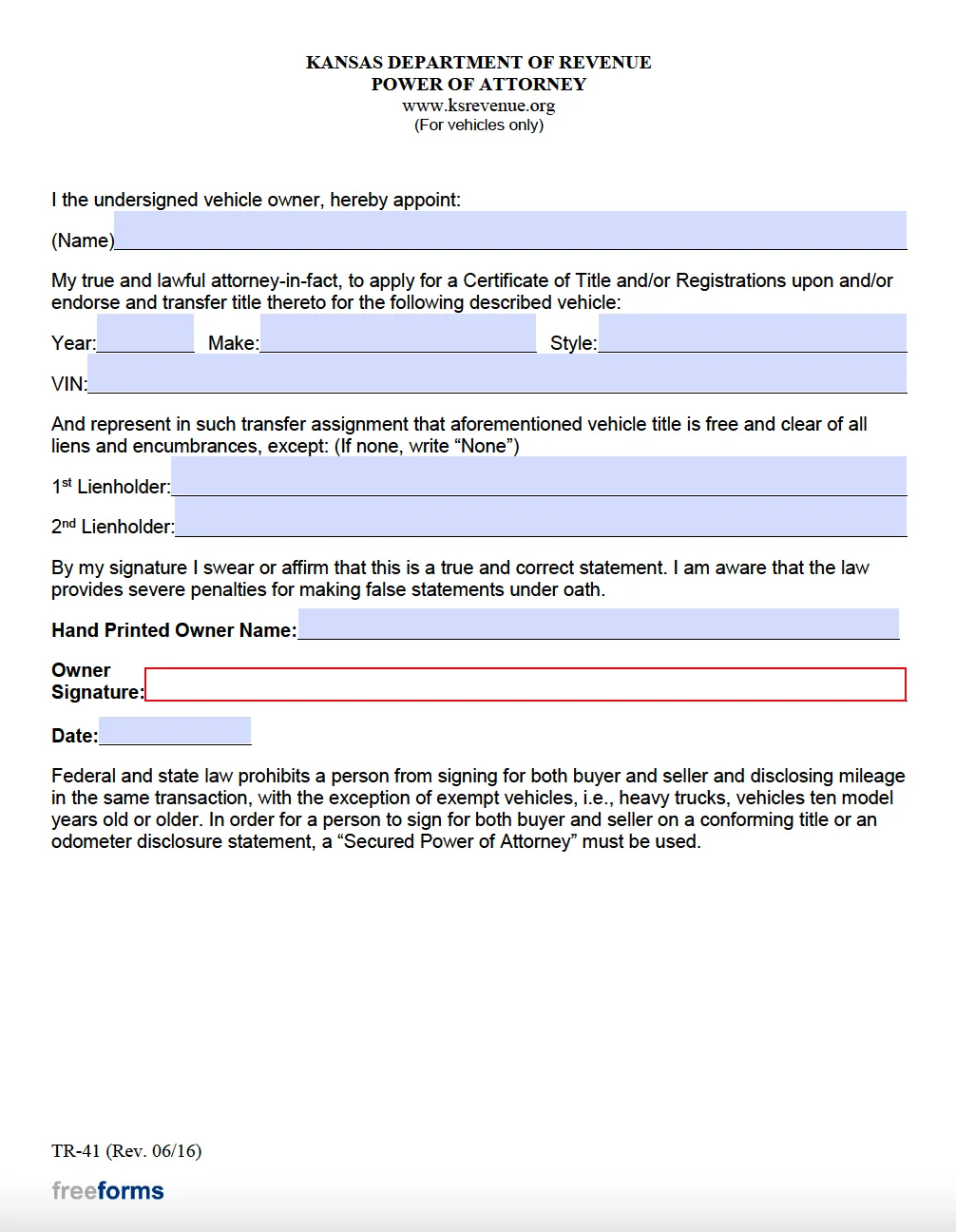
The TR-41 must include these fields to be valid:
| Field | Requirement |
|---|---|
| Principal’s full name | Must match the vehicle title exactly |
| Agent’s full name | The person authorized to act on the principal’s behalf |
| Vehicle VIN | 17-character VIN with no errors |
| Vehicle make/model/year | Must match the title and registration |
| Authorized actions | Check boxes for title transfer, registration, etc. |
| Notary seal/signature | Required for both principal and agent |
| Date | Must be current; some offices reject forms older than 60–90 days |
Leave any field blank, and the DMV will reject the form. Double-check the VIN, it’s the most common reason for denial.
Step-by-Step: How to Fill Out the TR-41 Correctly
1. Download the form
Get the latest TR-41 from the Kansas Department of Revenue website. Using an outdated version can get your submission rejected.
2. Fill in the principal’s information
Enter the vehicle owner’s legal name as it appears on the title. No nicknames or abbreviations.
3. Add the agent’s details
This is the person who’ll handle the transaction. Include their full name and contact information.
4. List the vehicle details
Copy the VIN, make, model, and year directly from the title. A single digit error in the VIN will void the form.
5. Specify the authorized actions
Check only the boxes for the tasks the agent is allowed to perform. If you’re only registering the vehicle, don’t check the title transfer box.
6. Sign in front of a notary
Both the principal and agent must sign with a notary present. The notary will stamp and sign the form. As of 2026, Kansas does not accept remote online notarization for vehicle POAs.
Notarization Rules for the TR-41 in Kansas
Wikimedia Commons / KingMarineWP (CC BY-SA)
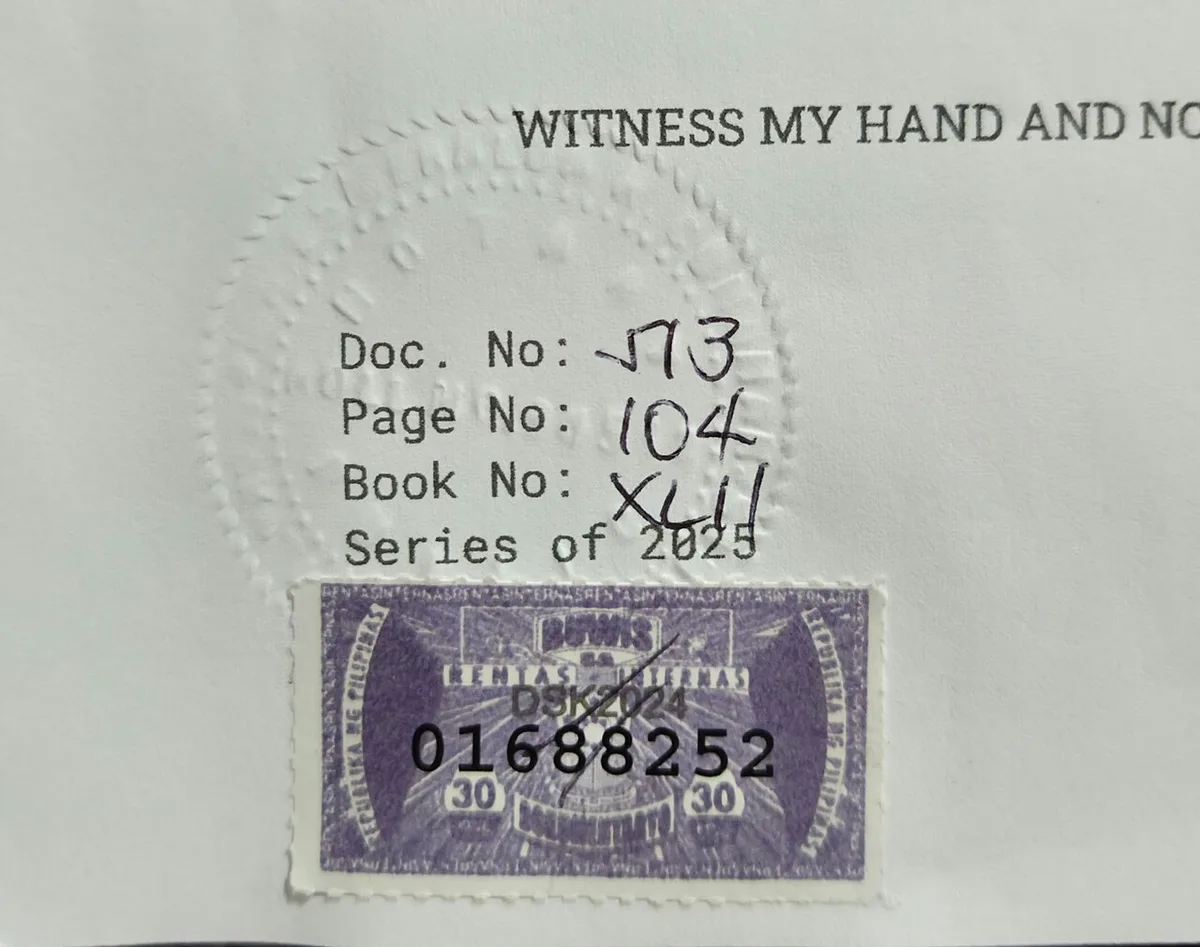
Both the principal and agent must sign the TR-41 in the presence of a notary. Kansas does not accept remote or online notarization for this form. The notary must stamp the document and record the transaction in their journal.
The notary’s commission must be active in Kansas. Out-of-state notaries are not accepted unless they’re specifically authorized to perform Kansas notarizations.
How to Use the TR-41 at the DMV or County Clerk
Bing (Web (fair-use with source credit))
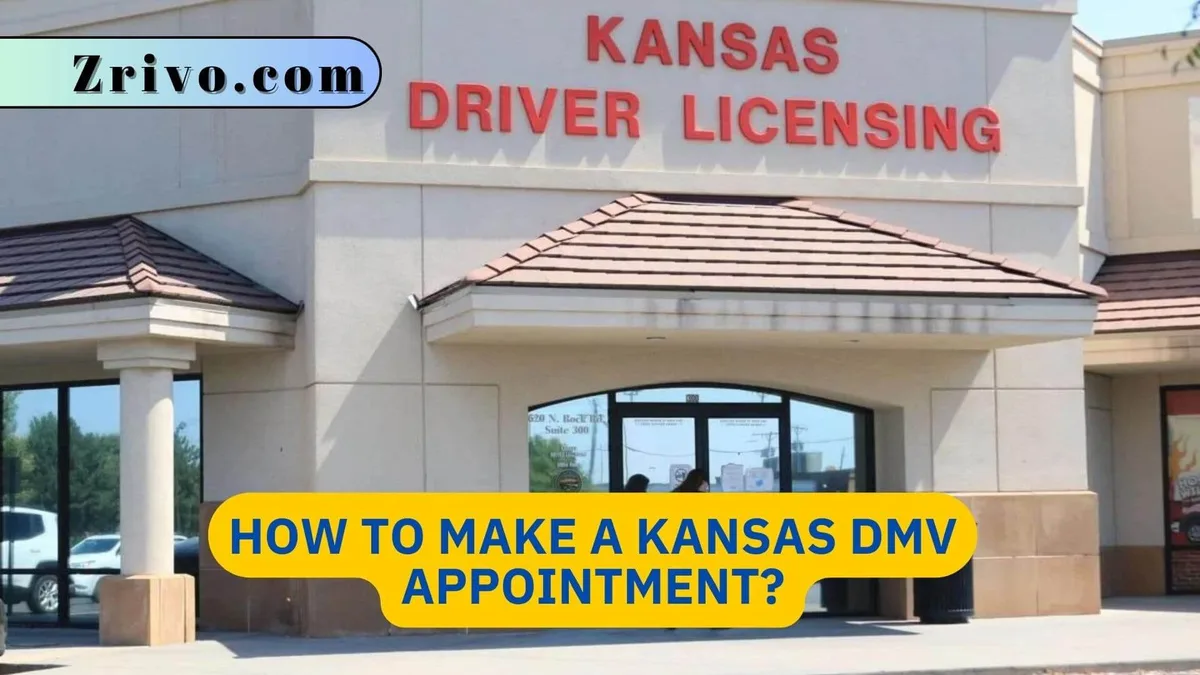
Bring the completed TR-41, the vehicle title, and valid ID for both the agent and principal. The DMV will verify the form’s details against the title. If the VIN or names don’t match, they’ll reject the submission.
Some county clerks may require additional paperwork for specific transactions. Call ahead to confirm. Processing times vary, but most offices handle TR-41 submissions on the spot if everything is in order.
Common Mistakes That Get Your TR-41 Rejected
Using an outdated TR-41 form is a top reason for rejection. Always download the latest version from the Kansas Department of Revenue.
Missing or incorrect VINs are another frequent issue. Even a single digit error will void the form. Double-check the title before submitting.
Forgetting to notarize the form is a guaranteed rejection. The DMV will not accept unsigned or unstamped TR-41s under any circumstances.
What the TR-41 Doesn’t Let You Do
The TR-41 only covers vehicle-related transactions. It does not authorize the agent to sell the vehicle unless explicitly stated. Most TR-41 forms limit actions to title transfers, registrations, and lien releases.
It also doesn’t override existing liens or legal ownership disputes. If the vehicle has a lien, the lienholder must be involved in the transaction.
Costs, Fees, and Processing Times
The TR-41 form itself is free to download. Notary fees typically range from $5 to $15 per signature. Some banks offer free notarization for customers.
DMV fees for title transfers and registrations vary by vehicle type and weight. As of 2026, standard passenger vehicle title transfers cost around $10 to $15. Registration fees depend on the vehicle’s age and value.
Who Should (and Shouldn’t) Use a TR-41
The TR-41 is ideal for caregivers managing a family member’s vehicle paperwork. It’s also useful for business owners who need employees to handle fleet registrations.
Avoid using it if the principal is mentally incapacitated. Kansas requires the principal to be of sound mind when signing. If there’s any doubt, consult a lawyer before proceeding.
What Happens If You Skip the TR-41?
Without a valid TR-41, the DMV will refuse to process any vehicle transaction. This means no title transfers, no registrations, and no lien releases.
If you attempt to sign on someone else’s behalf without proper authorization, you risk legal consequences. Fraudulent vehicle transactions can lead to fines or even criminal charges.
Where to Get the Official TR-41 Form
The TR-41 is available for free on the Kansas Department of Revenue website. You can also pick up a copy at any Kansas DMV office or county clerk’s office.
Avoid third-party sites selling the form. These are often outdated or incorrect. Always use the official source to ensure compliance.
Frequently Asked Questions
Can I use a TR-41 to sell a car for someone else?
Yes, but only if the form explicitly authorizes the sale. Most TR-41 forms include a checkbox for this purpose. Without it, the DMV won’t process the transaction.
Does the TR-41 expire?
Kansas does not specify an expiration date, but some DMV offices reject forms older than 60 to 90 days. Always use the most recent version and complete transactions promptly.
Can I revoke a TR-41?
Yes. The principal can revoke the TR-41 at any time by notifying the agent and the DMV in writing. The revocation should include the vehicle details and the date.
What if the principal dies after signing the TR-41?
The TR-41 becomes invalid upon the principal’s death. Vehicle transactions must then go through the probate process. The agent cannot use the form post-mortem.
Can I use a TR-41 for multiple vehicles?
No. Each TR-41 form covers only one vehicle. If you need to handle transactions for multiple vehicles, you’ll need a separate TR-41 for each.
Do I need a lawyer to fill out the TR-41?
No, but legal advice is recommended for complex situations. If the principal has doubts about capacity or the transaction involves disputes, consult an attorney.