ByMax Lee
Kansas Following Too Closely Law Explained
Kansas law on following too closely at a reasonable and prudent distance often surprises drivers who think tailgating is the only violation. You might leave a car length behind, yet still get pulled over if conditions demanded more space. A rear-end crash or a simple ticket can turn on that judgment call.
The rule is written into Kansas Statute 8-1523 (Following Too Closely), requiring every driver to maintain a "reasonable and prudent" gap. Per Kansas Highway Patrol guidance, the 2-3 second rule is the standard benchmark as of 2026.
Quick Answer
Kansas law on following too closely at a reasonable and prudent distance exists. It is defined in Kansas Statute 8-1523. Drivers must keep a safe gap behind other cars.
The gap changes with speed, weather, and traffic. Kansas patrol advises the 2-3 second rule.
What Kansas Law Actually Says About Following Too Closely
Kansas Statute 8-1523 is the core law you need to know. It states no driver shall follow another vehicle more closely than is reasonable and prudent. The statute explicitly factors in speed, traffic, and roadway condition.
This is not a fixed car-length rule. It is a flexible standard judged by circumstances. A Kansas court will look at what a careful driver would do.
Violating the statute is a traffic infraction, not a felony. But it carries real consequences. You face fines, license points, and possible civil liability after a crash.
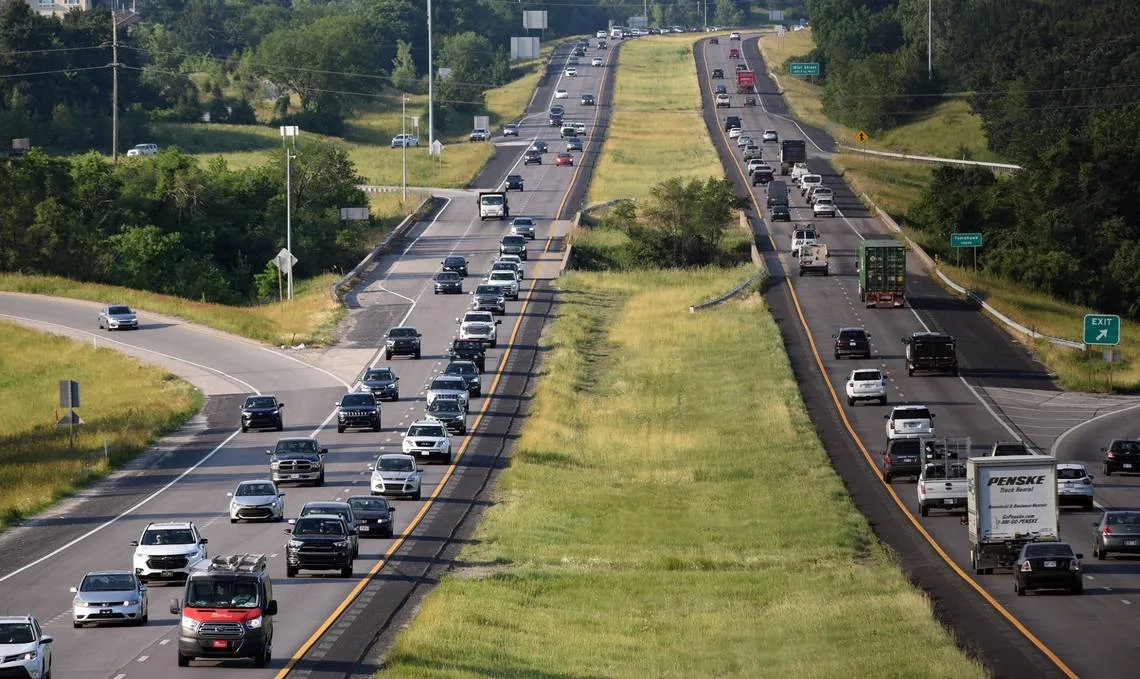
The law applies to all public roads in Kansas. That includes interstates like I-70, city streets, and rural highways. Enforcement is common in congestion and after collisions.
The "Reasonable and Prudent Distance" Rule Explained
The phrase "reasonable and prudent" sounds vague, yet courts give it solid meaning. A prudent driver leaves room to stop without hitting the car ahead. That room grows with speed and shrinks in clear, slow conditions.
Judges weigh several factors. They look at weather, visibility, and how heavy your vehicle is. A loaded truck needs more space than a compact car at the same speed.
If you follow too close and a crash happens, the law calls it negligence per se. That means the violation itself proves fault in many civil cases. Your insurance rates will feel that.
A common myth is that one car length per 10 mph is enough. That old rule fails at highway speeds because braking distance grows exponentially. The statute avoids silly formulas on purpose.
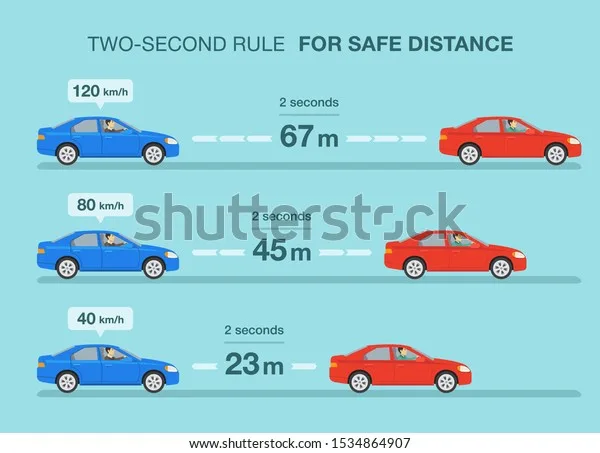
Practical tip: pick a fixed object ahead. When the car in front passes it, count "one thousand one, one thousand two." If you reach it before three, you're too close.
How Kansas Defines a Safe Following Distance
Kansas does not print a numeric distance in the statute. Instead, the Kansas Highway Patrol recommends the 2-3 second rule as the floor. That means you should pass a landmark at least two seconds after the vehicle ahead.
Speed changes everything. The table below shows why time matters more than feet.
| Speed (mph) | 2-sec gap (feet) | 3-sec gap (feet) |
|---|---|---|
| 30 | 88 | 132 |
| 50 | 147 | 220 |
| 70 | 206 | 308 |
These numbers assume dry pavement and alert driving. Add a second or two in rain or fog.
The statute's "condition of the roadway" clause covers potholes, ice, and construction. A wet Kansas turnpike demands more than three seconds.
Motorcycles get special care. You should leave extra room because they stop faster and tip easily. The same goes for buses and farm equipment.
Why the 2-3 Second Rule Is the Standard (And When It’s Not Enough)
The 2-3 second rule is easy to teach and measure. It scales with speed automatically, unlike a fixed car length. That is why Kansas patrol and most driver ed programs use it.
But the rule is a minimum, not a shield. At 70 mph in a downpour, three seconds may still be unsafe. Your stopping distance includes thinking time plus brake time.
Large vehicles need more. A semi truck should use four to six seconds behind a car. Tanker loads shift, and brake lag is real.
Night driving on empty rural roads still needs the gap. Deer strikes happen, and the car ahead may brake hard for one.
When You Can Still Get a Ticket Even If You’re Not Tailgating
You might keep two car lengths and still get cited. The officer judges prudence, not just inches. Here are real cases where the gap looked fine but the ticket stuck.
Sudden slowdowns in construction zones are a classic trap. The law expects you to anticipate lane shifts. If you rear-end a slowing truck, 8-1523 applies even at two seconds.
Following a motorcycle too close is risky. They can stop in half your distance. Kansas courts have called a three-second car gap "unreasonable" behind a bike in heavy traffic.
Emergency scenes trigger extra caution. If you crowd a patrol car at a stop, you may get the following too closely charge plus another citation.
Distracted driving ties in tightly. Looking at your phone for two seconds means you traveled blind. The gap on the road does not matter if your eyes were off it.
How Kansas Proves You Were Following Too Closely
Kansas officers build a case with direct observation. They note the gap, road condition, and your speed. Dashcam footage from the patrol car often seals it.
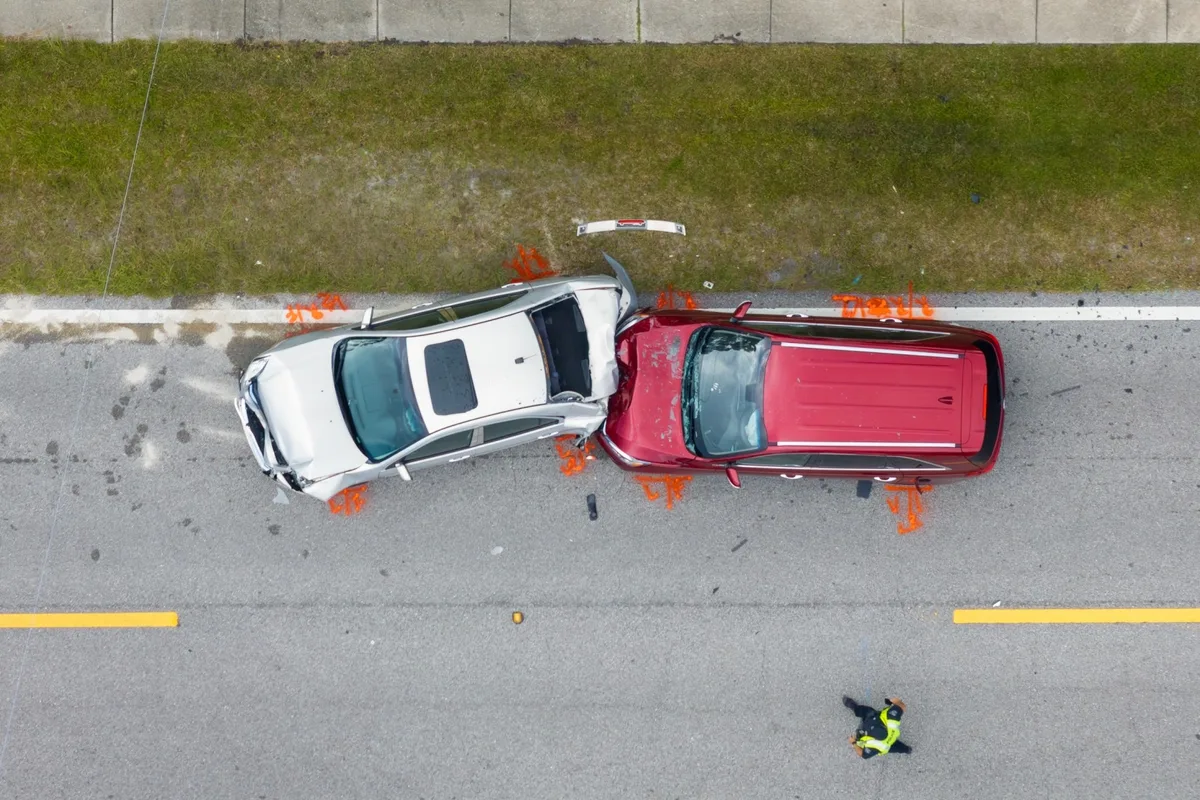
The state uses negligence per se after a crash. If you broke 8-1523, fault is presumed in civil court. That shifts the burden to you to prove prudence.
Skid mark length tells the story. Short or absent marks mean you gave no space to react. Accident reconstruction teams measure these in feet.
Witness statements add weight. A passenger in the front car can confirm you rode their bumper. Courts trust consistent accounts over self-serving denials.
The National Highway Traffic Safety Administration (NHTSA) publishes stopping distance data that judges may cite. You can review their research at NHTSA.
What Happens If You’re Cited for Following Too Closely in Kansas
A conviction adds points to your Kansas driving record. The exact count depends on the court, but it typically hits two or three. Too many points trigger a suspension.
Fines vary by county. You might pay $75 in a small town or over $200 in Wichita. Court costs stack on top of the base fine.
Insurance feels it next. Carriers pull your record and raise rates for a moving violation.
| Consequence | Typical Impact |
|---|---|
| License points | 2 to 3 |
| Fine range | $75 to $200+ |
| Insurance hike | Up to 15% |
Commercial drivers face federal reporting. A CDL holder must list the conviction even for a personal vehicle. That paper trail hurts job prospects.
How to Fight a "Following Too Closely" Ticket in Kansas
Request a hearing fast. Kansas gives you a court date on the citation. Missing it means automatic conviction.
Bring your own evidence. A dashcam clip showing three seconds of space defeats most officers. Weather logs prove rain demanded a longer gap.
Argue the prudence standard directly. Show you matched the 2-3 second rule under those conditions.
Consider traffic school. Some Kansas courts drop the point if you complete a defensive course. That keeps insurance clean.
Hire a local attorney for a crash case. They know the county court's tolerance. Self-representation risks a negligence per se ruling.
Real-World Scenarios: When Distance Matters Most
School zones need extra room. Kids dart out, and the car ahead may brake hard. Use four seconds there, not two.
Construction zones on I-35 pack cars tight. Lane shifts happen fast, so anticipate slowdowns early.
Rural roads bring farm tractors. Their slow-moving vehicle emblems warn you to hang back. A tractor can stop quicker than your loaded pickup.
Ice storms rewrite the rule. Three seconds becomes six on packed snow.
Commercial Drivers: Stricter Rules and Bigger Penalties
CDL holders answer to Kansas and federal standards. The Commercial Vehicle Safety Alliance says trucks need six seconds. That beats the passenger car minimum.
A truck's brake lag adds stopping time. At 65 mph, a semi needs over 500 feet to halt. Following too close invites a catastrophic rear-end.
Fines double for commercial tags. A fleet company eats the cost and the safety score drop.
If you drive for pay, log the gap. Electronic logs now pair with dashcams. That proof saves your license in a dispute.
Defensive Driving Tips to Stay Safe (and Ticket-Free)
Scan ahead 12 to 15 seconds. This gives you time to spot brake lights and adjust early.
Use the three-second rule as your baseline. Pick a sign or overpass and count when the car ahead passes it. If you reach it before three, back off.
Double the gap in bad weather. Rain, fog, or ice cut traction and visibility.
Avoid the pack. If traffic bunches up, leave an escape route. This prevents chain-reaction crashes when someone slams the brakes.
Check your mirrors every 5 to 8 seconds. This keeps you aware of tailgaters behind you. If someone rides your bumper, increase your following distance ahead.
Kansas vs. Other States: How Following Distance Laws Compare
Kansas uses a prudence standard. Some states set fixed distances like 200 or 300 feet. Others use car lengths at certain speeds.
California and Texas also rely on reasonable distance. Their courts interpret it like Kansas does. The difference is in enforcement intensity.
Florida adds a three-foot passing rule for bikes. Kansas has no such law, but the prudence standard covers it.
New York uses a two-second rule in its driver manual. Kansas patrol recommends three. Both states treat violations as moving infractions.
FAQs About Kansas’ Following Too Closely Law
What is the minimum safe following distance in Kansas?
Kansas law does not set a fixed minimum. The Kansas Highway Patrol recommends the 2-3 second rule as a baseline. Adjust for speed, weather, and traffic.
Can I get a ticket for following too closely if I didn’t cause a crash?
Yes. Officers can cite you for violating 8-1523 even without a collision. They judge the gap, not the outcome.
How many points does a following too closely ticket add to my license?
A conviction typically adds 2 to 3 points. Too many points can suspend your license. Check your record with the Kansas Department of Revenue.
Does the 2-3 second rule apply to motorcycles?
Yes, but leave extra room. Motorcycles stop faster and are less stable. Kansas courts have upheld tickets for following bikes too close at three seconds.
What should I do if someone is tailgating me?
Increase your following distance ahead. This gives you more room to react. Avoid tapping your brakes, as it can escalate the situation.
Can I take a defensive driving course to dismiss a ticket?
Some Kansas courts allow it. Completing a course may remove the points. Check with the court listed on your citation.