Black Friday deals are live on Amazon · limited-time discounts, grab them before they’re gone
Grab the deals

ByMax Lee
Are Automatic Car Washes Bad for Black Cars? Shocking Truth Revealed!
A black car does not automatically need different paint products, but it does reveal poor washing technique more clearly than almost any other color. Fine scratches, circular swirl marks, mineral deposits, dried soap and uneven polishing all stand out against dark paint.
So, are automatic car washes bad for black cars?
Sometimes—but not every automatic wash causes damage. The real risk depends on whether the wash uses friction, how clean its brushes or cloth strips are, the condition of your vehicle’s clear coat and how the car is dried afterward. A well-maintained touchless wash may be a sensible option for a lightly dirty vehicle, while a neglected brush tunnel can gradually dull black paint. You can also read our guide on how to do a car wash for fundraising.
The Short Answer
Automatic car washes can harm black cars when:
- Shared brushes or cloth strips hold grit from previous vehicles.
- Rotating material rubs dirt across the clear coat.
- Strong chemicals strip protection or dry onto the paint.
- The drying system leaves mineral-rich water behind.
- A vehicle enters the wash covered in sand, mud or road salt.
- The wash uses excessive friction on an already scratched or weakened finish.
However, automatic washing is not automatically destructive. A modern, well-maintained wash can remove loose dirt safely enough for routine cleaning, especially when speed and convenience matter.
The safest choice for maximum gloss is usually a careful hand wash. The best practical choice depends on how dirty the vehicle is, how valuable the finish is to you and whether the wash uses contact or contact-free equipment. You can also read our guide on how to keep a black car clean between washes.
Why Black Paint Shows Damage So Easily
Most modern vehicle paint consists of a colored base coat protected by a clear coat. Black paint is not necessarily softer than white or silver paint, but its dark, reflective surface makes defects easier to see.
A black car commonly reveals:
- Fine linear scratches
- Circular swirl patterns
- Holograms from improper polishing
- Water spots from mineral deposits
- Dull patches caused by oxidation or chemical staining
- Dust and dried detergent residue
The marks are especially visible in direct sunlight or under bright parking-lot lighting. A light-colored car may have the same defects, but contrast makes them less obvious. You can also read our guide on are automatic car washes bad for your car.
A common mistake is to assume that frequent washing causes the damage. In practice, the combination of abrasive dirt, contact and pressure is usually the problem. Washing a dirty car with clean water and proper lubrication is very different from dragging gritty material across dry paint.
What Actually Happens in an Automatic Car Wash?
Automatic systems generally fall into three categories.
1. Friction or soft-cloth washes
These systems use cloth strips, foam rollers or other contact materials to scrub the vehicle. They often clean more thoroughly than touchless systems, but the material physically touches the paint.
The cloth itself is not automatically dangerous. The concern is contamination. If sand, road grit or brake dust remains trapped in the material, it can act like fine sandpaper when the rollers move across the car.
The risk increases when:
- The vehicle is heavily muddy or sandy.
- The wash equipment is poorly maintained.
- The car is pushed through a busy facility without adequate rinsing.
- The same material contacts many vehicles between cleaning cycles.
2. Brush washes
Older or poorly maintained brush systems present the greatest concern for visible marring. Stiff, contaminated brushes can leave random scratches and circular marks in the clear coat.
These marks may not appear after one visit. Repeated exposure can gradually reduce clarity and make the paint look hazy instead of reflective.
3. Touchless washes
Touchless systems use water pressure and cleaning chemicals without brushes or cloth contacting the paint. That eliminates the main source of friction-related swirls.
The trade-off is cleaning power. Because nothing physically agitates the surface, touchless washes may leave behind:
- Road film
- Grease
- Insect residue
- Heavy mud
- Tar and oily deposits
To compensate, some facilities use stronger detergents or higher water pressure. Those chemicals can affect waxes and some sealants, particularly when used frequently or allowed to dry on hot paint.
Are Soft-Cloth Washes Safe for Black Cars?
Soft-cloth washes are generally less aggressive than hard-brush systems, but “soft” does not mean risk-free. The important questions are whether the cloth is clean, whether the wash provides a strong pre-rinse and whether the drying equipment is maintained.
For occasional use, a reputable soft-cloth wash may be reasonable for a car with a durable factory finish. It is less suitable for:
- A freshly polished show car
- A vehicle with delicate single-stage paint
- A car covered in loose sand or caked mud
- A dark vehicle where perfect gloss is a priority
- Paint protected with a delicate or poorly bonded coating
If you use one, choose a facility that visibly maintains its equipment and offers a thorough pre-rinse. Avoid entering immediately after driving on a beach, gravel road or salted winter roadway unless loose contamination has been rinsed away first.
Do Touchless Washes Prevent Scratches?
They substantially reduce the risk of wash-induced swirl marks because there is no rotating material rubbing the clear coat. That makes touchless washing attractive for black cars.
They do not make every other type of damage impossible. A touchless wash can still contribute to problems if:
- The detergent is highly alkaline or acidic.
- The car is washed in direct heat and left to dry.
- High-pressure water is aimed at damaged trim, loose decals or failing paint.
- Old road film remains and is later wiped off without lubrication.
- The drying process uses dirty towels.
Touchless is often the better automatic option when the vehicle has light dust or road salt that needs rinsing away. For heavily soiled paint, it may require a proper follow-up hand wash rather than repeated visits through increasingly strong chemical cycles.
How Swirl Marks Form
Swirl marks are fine scratches or marring that scatter reflected light. They often appear as circular patterns because the washing or drying movement follows rotating paths.
The usual sequence is:
- Grit lands on the vehicle.
- The grit is not fully removed during pre-rinsing.
- A brush, cloth, sponge or towel moves it across the paint.
- Pressure forces the particles against the clear coat.
- Repeated washing creates a visible pattern.
Dry wiping is one of the most common causes. So is using one towel for the wheels, lower doors and upper paint. Wheel dust contains abrasive particles and should never be transferred to painted panels.
For owners who prefer a controlled routine, a properly arranged paint-safe wash routine reduces the chance of moving contamination from one panel to another.
Why Water Spots Appear on Black Paint
Water spots are mineral deposits left behind when droplets evaporate. Tap water can contain calcium, magnesium and other dissolved minerals. When the water disappears, those minerals remain as pale outlines or cloudy patches.
Water spotting becomes more likely when:
- The vehicle is washed in direct sunlight.
- The panel is hot.
- The rinse water is hard.
- The wash’s drying system is weak.
- The car sits outside before the remaining water evaporates.
- Rainwater or sprinkler water dries on the finish.
Fresh deposits may respond to a suitable water-spot remover, but etched spots can require machine polishing. Do not aggressively scrub them with a dry towel; that can add scratches to the clear coat.
After any wash, inspect the horizontal surfaces first. The hood, roof and trunk usually show drying defects before vertical panels do.
Is Hand Washing Always Better?
A careful hand wash generally provides the most control, but an improvised hand wash can be worse than a good automatic wash. A dirty sponge, household dish detergent, old bath towel or dry wiping technique can create significant marring.
A safer hand-washing process is:
- Work in shade. Keep the paint cool enough that soap and rinse water do not dry immediately.
- Rinse thoroughly. Remove loose grit before making contact with the paint.
- Use automotive shampoo. Household cleaners may remove protection more quickly and may not provide suitable lubrication.
- Separate wheel tools from paint tools. Never use a wheel brush on the body.
- Wash from top to bottom. The lower panels usually hold the most abrasive dirt.
- Rinse the mitt frequently. A rinse bucket or clean running water helps release grit.
- Rinse soap completely. Dried detergent can leave streaks and spots.
- Dry with clean microfiber towels or forced air. Do not drag a visibly dirty towel over the finish.
- Inspect before applying protection. Remove remaining contamination with an appropriate method rather than rubbing harder.
Use a dedicated microfiber drying towel and replace it when it becomes saturated or contaminated. The goal is not simply to make the car wet and shiny; it is to remove contamination while minimizing friction.
A Practical Automatic-Wash Decision Guide
| Vehicle condition | Better choice | Reason |
|---|---|---|
| Light dust or loose road film | Touchless wash | Removes loose contamination without contact |
| Moderate dirt with no heavy grit | Reputable soft-cloth wash | Convenient and usually cleans more thoroughly |
| Heavy mud, sand or salt | Pre-rinse, then hand wash | Reduces the amount of abrasive material dragged over paint |
| Freshly polished black paint | Careful hand wash | Preserves the corrected finish |
| Winter road salt | Touchless rinse followed by a careful wash | Helps flush salt from paint, wheel wells and underbody |
| Show-quality or ceramic-coated vehicle | Manufacturer-approved washing method | Avoids unsuitable detergents and brushes |
No wash type is perfect. The best option is the one that removes contamination with the least unnecessary contact.
How to Use an Automatic Wash More Safely
If convenience requires an automatic wash, reduce the risk with these steps:
Choose the right facility
Prefer a facility with:
- A strong pre-rinse
- Clearly maintained equipment
- Modern soft-cloth or touchless technology
- Separate wheel cleaning equipment
- A clean, well-managed drying area
- An option to skip abrasive tire or wheel brushes when appropriate
Do not assume the most expensive package is the gentlest. “Premium” often means added wax, sealant or underbody services—not necessarily safer contact materials.
Rinse off loose grit first
If you can, rinse the vehicle before entering the tunnel. Pay attention to the lower doors, wheel arches, rear bumper and areas behind the wheels.
This is especially important after driving through construction zones, unpaved roads or areas treated with winter de-icing material.
Avoid brushes after severe contamination
A brush or cloth system should not be the first tool used on a car coated in sand or thick mud. Remove as much loose material as possible with water before any contact occurs.
Dry the car promptly
Use a clean microfiber towel after the wash if water remains on the panels. Blotting or gliding lightly with a clean towel is safer than forceful rubbing.
If your vehicle has been washed in winter, a short drive can help remove water from door seals and mirrors. You can also use clean compressed air around emblems, mirrors and trim; owners who maintain their own equipment may find a guide to choosing suitable air capacity useful for this type of garage work.
Does Wax or Ceramic Coating Protect Black Paint?
Wax, synthetic sealants and ceramic coatings can make contamination easier to rinse away, but none makes paint scratch-proof.
Their benefits may include:
- Easier maintenance washing
- Better water behavior
- Reduced bonding of some dirt
- More consistent gloss
- Some protection from light chemical exposure
A coating cannot prevent a contaminated brush from touching the clear coat. Likewise, wax does not repair existing swirls. Protection works best as part of a low-friction washing routine, not as permission to use aggressive equipment.
Before applying a product, check its instructions. Some automatic washes add detergents or spray-on protectants that may interfere with the appearance or performance of an existing coating.
How Often Should You Wash a Black Car?
There is no universal two-week rule. Wash frequency should follow contamination rather than the calendar.
Wash sooner when the vehicle has:
- Bird droppings
- Insect remains
- Tree sap
- Road salt
- Fresh mud
- Sprinkler or hard-water deposits
These contaminants can stain or etch paint if left in place. In mild conditions, a lightly driven car may need washing less often. A vehicle driven daily through construction areas or winter salt may need attention several times per month.
The safest habit is to remove harmful contamination promptly while avoiding unnecessary contact washing when the vehicle is only lightly dusty.
Black-Car Maintenance Beyond Washing
Cleaning is only one part of preserving a dark finish. Also consider:
- Inspecting paint in direct sunlight rather than judging it under soft garage lighting
- Removing bird droppings with lubrication instead of dry wiping
- Keeping tires and wheel tools separate from paint tools
- Replacing worn microfiber towels
- Maintaining trim and weather seals so water does not carry dirt back onto panels
- Using a paint-safe decontamination process when bonded particles remain
- Correcting severe swirls professionally or with appropriate equipment rather than repeatedly polishing by hand
Seasonal vehicle care matters too. If you drive in mountain conditions, reviewing winter equipment expectations can help you prepare the entire vehicle—not just its paint—for snow, ice and road-treatment residue. A general vehicle inspection checklist is also useful before long trips, when neglected tires, lights or wipers can create a greater safety issue than cosmetic paint marks.
If the car is older or especially valuable, preserving its original condition may also be part of its ownership history; keeping long-term vehicle records organized can be helpful when documenting maintenance and condition.

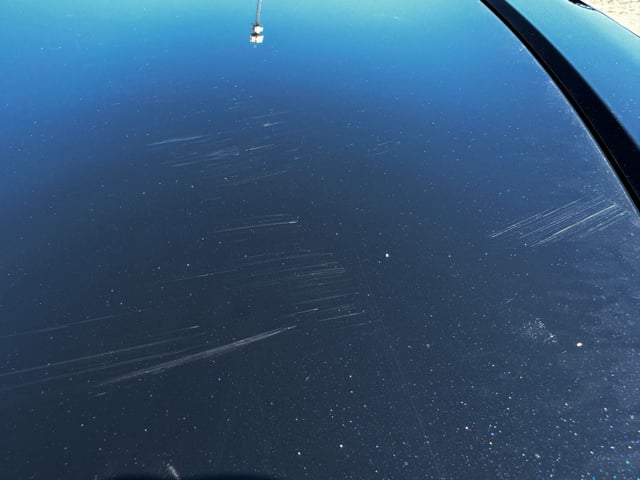
Credit: www.reddit.com
Dark paint makes fine wash-related marring easier to notice in reflected light.
Environmental Considerations
Car-wash runoff can carry detergent, oil, brake dust and road contaminants into storm drains. Commercial facilities often collect and treat wastewater, while washing at home may send runoff directly toward a street drain.
Local rules differ, but the U.S. Environmental Protection Agency explains why stormwater pollution matters and why preventing contaminated runoff is important. If you wash at home, use a suitable area where water can drain into soil or sanitary wastewater systems where permitted, and avoid letting dirty water flow into storm drains.
This is another reason a responsible commercial wash can be preferable in some locations: water recovery and wastewater controls may be better than an uncontrolled driveway wash.
Final Verdict: Are Automatic Car Washes Bad for Black Cars?
Automatic car washes are not automatically bad for black cars, but friction-based systems increase the risk of swirl marks, especially when equipment is dirty or poorly maintained.
For the best finish:
- Hand wash with clean tools and plenty of lubrication.
- Use a touchless wash when the vehicle has light dirt and avoiding contact is the priority.
- Choose a reputable soft-cloth wash when convenience matters and the car is not heavily contaminated.
- Rinse away sand, mud and salt before any brush or cloth touches the paint.
- Dry promptly with clean microfiber towels.
- Use wax, a sealant or a suitable coating as added protection—not as a substitute for careful washing.
The “shocking truth” is that the wash label matters less than the combination of contamination, friction, pressure and drying technique. Treat black paint gently, and occasional automatic washing can be practical without automatically ruining its shine.
Frequently Asked Questions
Do automatic car washes damage black paint?
Some can. Dirty brushes, contaminated cloth strips and aggressive drying can create fine scratches that are highly visible on black paint. A well-maintained touchless wash removes the friction risk, while a reputable soft-cloth facility may be acceptable for routine cleaning.
Are touchless car washes better for black cars?
They are usually better for reducing swirl marks because nothing rubs against the paint. However, they may not remove heavy road film, and stronger cleaning chemicals can reduce wax or sealant durability. A touchless wash is most useful when the car has light or moderately loose contamination.
Are soft-cloth washes safer than brush washes?
Usually, but not always. Soft cloth is less likely to cause severe marring than stiff or contaminated brushes, yet it can still carry grit across the finish. Facility maintenance and pre-rinsing matter as much as the material’s name.
Can an automatic wash remove existing swirl marks?
No. Washing can remove dirt that makes swirls look worse, but it cannot repair scratches. True correction generally requires polishing, paint correction or professional refinishing, depending on how deep the damage is.
Why does my black car have white spots after washing?
The spots are commonly mineral deposits left behind when rinse water evaporates. They can also be dried soap or residue from a spray-on protection product. Remove fresh spots gently with a suitable paint-safe product; etched deposits may require polishing.
How often should a black car be washed?
Wash it whenever harmful contamination accumulates, especially bird droppings, tree sap, insects, mud or road salt. A fixed schedule is less important than preventing contamination from drying and bonding to the paint.
Does wax prevent automatic-wash scratches?
No. Wax can make dirt easier to remove and provide limited surface protection, but it cannot stop a gritty brush or cloth from marring clear coat. Washing technique remains the primary defense.
Is hand washing always safer?
Only when it is done correctly. A dirty sponge, dry towel or household cleaner can cause more damage than a carefully maintained automatic wash. Use clean automotive tools, rinse frequently and keep wheel-cleaning equipment away from painted panels.








