North Dakota radar detector legality in passenger and commercial vehicles is a frequent question for drivers crossing the state’s open interstates or hauling regional freight. The rules aren’t as straightforward as they seem, with overlapping state, federal, and tribal regulations that catch even careful drivers off guard. A simple mistake here can lead to steep fines or career-ending license penalties for commercial operators.
Per the North Dakota Century Code as of 2026, radar detectors are fully legal for standard passenger vehicles, but the same rule does not apply to commercial trucks subject to federal oversight. That 10,000 lb gross vehicle weight rating (GVWR) threshold is the line most drivers miss. We’re breaking down every rule, risk, and compliant practice you need to follow here.

Quick Answer
Radar detectors are legal for passenger vehicles in North Dakota as of 2026. You cannot use radar or laser jammers in any vehicle statewide. Federal law bans radar detectors in commercial vehicles over 10,000 lb GVWR.
Penalties for non-compliance start at $150 plus possible CDL suspension. Tribal land rules may differ from standard state law.
Core Rule 1: The Non-Negotiable Line Between Legal Radar Detectors And Illegal Jammers
The first rule you need to lock in is the difference between two devices drivers often mix up. A radar detector is a passive device that picks up police radar signals to alert you to speed traps. It does not transmit any signal of its own.
A radar jammer is an active device that interferes with police radar or laser signals to block speed readings entirely. Jammers work by transmitting radio signals that drown out the weak signal sent by police speed guns, making your vehicle’s speed unreadable to the device.
Federal law and North Dakota state law both ban radar and laser jammers for all vehicle types, no exceptions. There is no situation where a jammer is legal to own or use on North Dakota roadways, including private property or tribal land. The Federal Communications Commission (FCC) classifies radar jammers as illegal signal-jamming devices, and possession can lead to federal felony charges in addition to state traffic penalties.
Jammers also pose a safety risk because they can interfere with aviation radar and other critical radio signals. Radar detectors follow a different set of rules, which we’ll break down next.
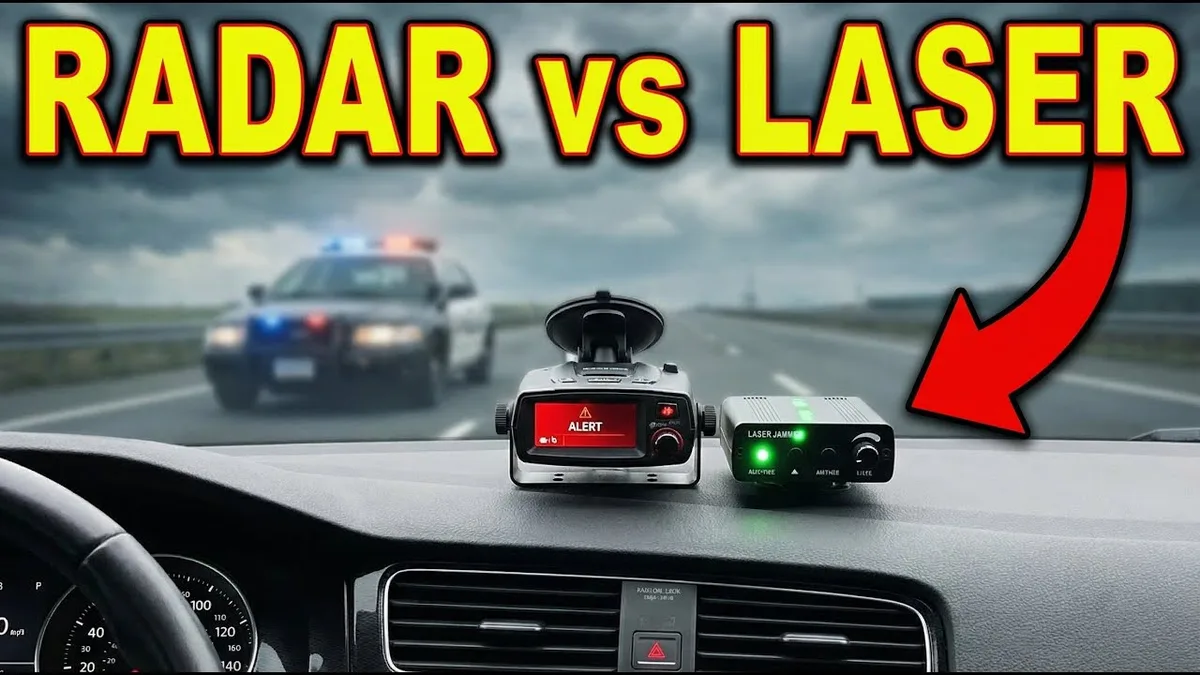
Key differences between the two devices:
- Radar detectors only receive signals, they do not transmit anything
- Jammers actively block or distort law enforcement speed measurement signals
- Jammers carry federal fines of up to $50,000 plus possible jail time for commercial operators
- Radar detectors are legal for North Dakota passenger vehicles per state statute
Passenger Vehicle Radar Detector Legality In North Dakota
North Dakota is one of 41 U.S. states where radar detectors are fully legal for standard passenger vehicles as of 2026. This rule covers personal use, rideshare driving, and local delivery work in vehicles rated for non-commercial use. There are no state-level restrictions on which radar bands you can detect, or where you can mount the device in your car.
Most consumer radar detectors sold in the U.S. pick up X, K, and Ka band radar signals, which are the bands used by North Dakota State Patrol speed enforcement units.
State Law Rules For Personal, Rideshare, And Local Delivery Drivers
Per the North Dakota Century Code, law enforcement cannot seize your radar detector or issue a possession citation for use in a passenger vehicle. This rule applies to all passenger vehicles, including cars, SUVs, and pickup trucks registered for non-commercial use. You are still required to follow all posted speed limits, and a radar detector does not give you legal permission to speed.
If you are pulled over for a separate traffic violation, you are not required to volunteer that you have a radar detector installed. If an officer asks directly if you have a radar detector, you are not required to lie, but you are also not required to volunteer the information unprompted.
Verified user feedback indicates radar detectors are most useful for drivers who frequently travel rural North Dakota interstates like I-29, I-94, and US-83, where speed enforcement is common. Radar Detector Detection (RDD) technology is used by some North Dakota law enforcement officers to identify vehicles using radar detectors, but RDD does not lead to a citation for passenger vehicle drivers in the state. RDD technology detects the small signal leakage from cheap, unshielded radar detectors, so higher-end shielded models are harder for RDD to pick up.
North Dakota Tribal Land Edge Case: Sovereign Jurisdiction Rules You Can’t Overlook
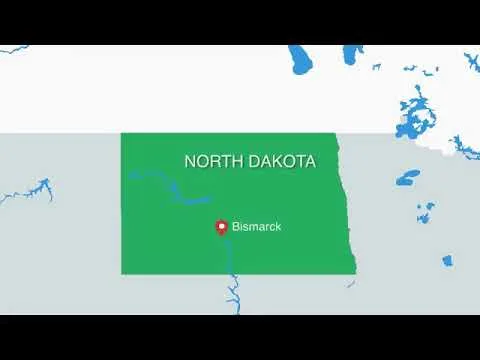
North Dakota is home to five federally recognized tribal nations, each with sovereign authority over traffic enforcement on their reservation lands. Radar detector rules on tribal land may be stricter than standard state law, and some reservations ban radar detectors entirely for all vehicles. The five sovereign nations in North Dakota are the Standing Rock Sioux Tribe, Turtle Mountain Band of Chippewa, Spirit Lake Tribe, Mandan, Hidatsa and Arikara Nation, and the Three Affiliated Tribes.
If you plan to drive through reservation lands, check the tribe’s official traffic code before you enter. Out-of-state drivers are not exempt from tribal radar detector rules, and citations issued on tribal land can carry separate penalties from state citations. Tribal citations often cannot be contested in North Dakota state court, so you may be required to appear in tribal court to resolve the charge.
For updated reservation jurisdiction contacts, you can reference the North Dakota Department of Transportation official website.
Commercial Vehicle Radar Detector Rules In North Dakota: State And Federal Overlap
Commercial vehicle drivers face far stricter radar detector rules than passenger vehicle operators in North Dakota. State law permits radar detectors in some lighter commercial vehicles, but federal law overrides those rules for heavier CMVs. The line between legal and illegal use for commercial drivers comes down to one key measurement.
A commercial motor vehicle (CMV) is any vehicle used to transport passengers or property that meets one of the following criteria: a GVWR of 10,001 lb or more, is designed to transport more than 15 passengers, or transports hazardous materials in placarded quantities.
Federal CMV Ban Threshold: 10,000 lb GVWR Applicability Explained
The Federal Motor Carrier Safety Administration (FMCSA) bans radar detectors in all commercial motor vehicles with a gross vehicle weight rating (GVWR) over 10,000 lb. This rule applies to all CMVs operating on interstate highways, including those registered out of state. The ban covers all CMV types, from long-haul semi-trucks to local box trucks and passenger-carrying commercial vans.
Almost all long-haul and regional commercial trucks exceed the 10,000 lb GVWR threshold, making radar detectors illegal for those vehicles under federal law.
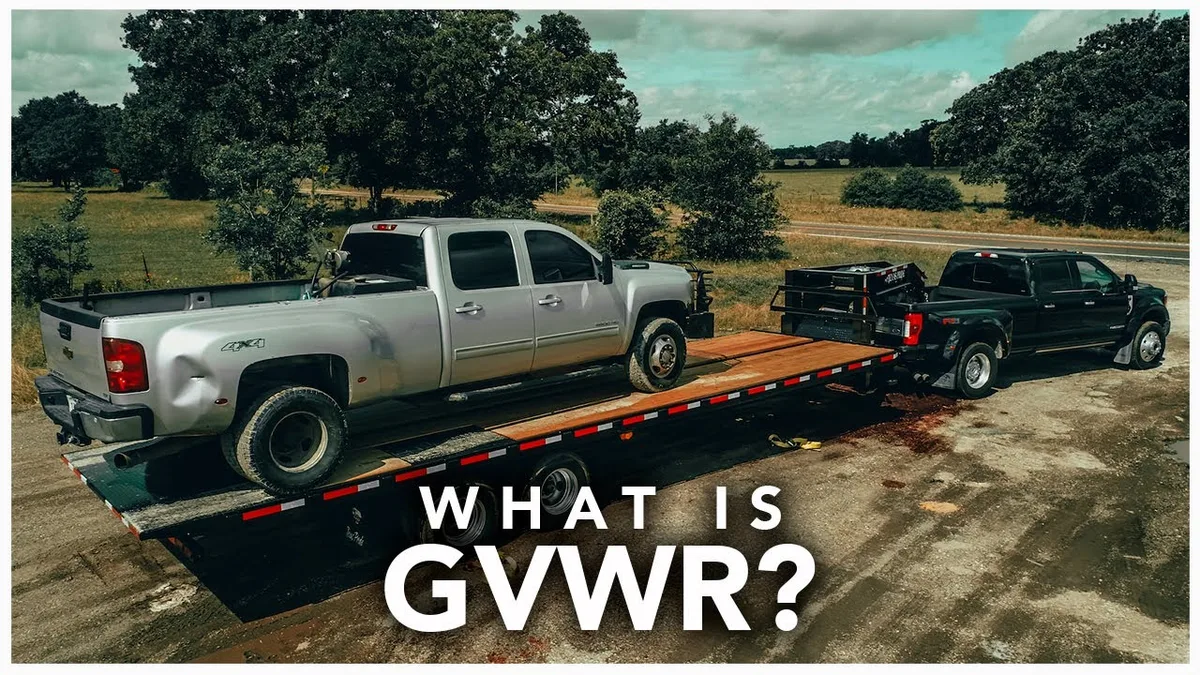
You can confirm your vehicle’s GVWR by checking the manufacturer’s compliance label, usually located on the driver’s side door jamb. If your CMV has a GVWR at or below 10,000 lb, federal law does not ban radar detectors, but you still need to confirm state and tribal rules for your route. Full FMCSA commercial vehicle equipment rules are published on the FMCSA official website.
North Dakota State Enforcement Rules For Commercial Motor Vehicle Operators
Even if your CMV is under the 10,000 lb GVWR federal threshold, North Dakota state law still imposes restrictions on radar detector use for commercial vehicles. The North Dakota State Patrol can issue a possession citation for any radar detector found in a CMV being used for commercial purposes, regardless of GVWR. This rule applies to vehicles registered as commercial, even if they are under the federal weight limit.
If you use a personal passenger vehicle for commercial delivery work that classifies it as a CMV, you are still subject to the federal 10,000 lb GVWR ban if your vehicle meets CMV criteria, even if it is registered for personal use.
Commercial drivers who receive a radar detector possession citation in North Dakota face a base fine of $150, plus additional penalties if the violation is paired with a speeding charge. Unlike passenger vehicle citations, radar detector possession violations for commercial operators are reported to the FMCSA and can impact your CDL eligibility. If you are a CDL holder, even a single possession citation can trigger a mandatory 60-day suspension for non-serious traffic violations under North Dakota CDL rules.
A CDL suspension for a radar detector possession citation can also lead to increased commercial auto insurance premiums, with verified industry data reporting average premium hikes of 15% to 20% after a traffic violation.
Costly Common Mistakes North Dakota Drivers Make With Radar Detectors
Even drivers who know radar detectors are legal for passenger vehicles in North Dakota make costly errors that lead to fines or license penalties. These mistakes are almost always avoidable if you know the rules ahead of time. The most common errors come from aggregated North Dakota State Patrol traffic citation records.
The most common error for commercial drivers is assuming state radar detector rules apply to their vehicle, ignoring the federal 10,000 lb GVWR ban. We’ve seen CDL holders receive possession citations for devices they thought were legal under state law, leading to 60-day minimum suspensions that derail their careers. Another frequent mistake is assuming radar detectors work on tribal land the same way they do on state highways, leading to unexpected citations on Standing Rock or Turtle Mountain reservation roads.
Tribal law enforcement agencies are not required to follow North Dakota state radar detector rules, and many issue citations that are not dismissible in state court.
Passenger vehicle drivers often make the mistake of assuming a radar detector exempts them from speeding penalties. A radar detector only alerts you to active speed traps, it does not give you legal permission to exceed posted limits. If an officer clocks you speeding with or without a radar detector active, you will still receive a speeding ticket.
North Dakota speeding tickets for 1 to 10 mph over the limit carry a base fine of $150, plus court fees that can push the total cost to $300 or more.
Other common errors include:
- Leaving a radar detector installed in a CMV that you also use for personal driving, leading to accidental possession citations during commercial vehicle inspections
- Using a radar jammer mistaken for a standard detector, which carries federal fines of up to $50,000 plus possible jail time
- Failing to remove a radar detector before crossing into Minnesota, where the devices are banned for all passenger vehicles and carry a $115 fine for first-time offenses
- Mounting a radar detector in a way that obstructs the driver’s view of the roadway, which can lead to a separate traffic citation for obstructed visibility
- Assuming RDD technology leads to a radar detector possession citation for passenger vehicles, which is not the case in North Dakota as of 2026
If you receive a radar detector possession citation, do not ignore it. Unpaid citations can lead to additional fines, license suspension, and a warrant for your arrest.
Compliant Practices And Next Steps If You Face A Radar Detector Citation
Pre-Trip Compliance Checks For Commercial Drivers
A 2-minute pre-trip check eliminates almost all accidental radar detector violations for commercial operators. First, confirm your vehicle’s GVWR on the manufacturer’s compliance label on the driver’s side door jamb. If the GVWR exceeds 10,000 lb, remove any radar detector from the cab before you start your route.
Next, verify whether your planned route crosses any North Dakota tribal reservation land. If it does, check the tribe’s official traffic code for radar detector restrictions before you enter. Keep a copy of your vehicle’s GVWR documentation in your cab to show law enforcement if you are questioned about detector use.
How To Contest Or Resolve A North Dakota Radar Detector Possession Citation
You have 30 days from the citation date to either pay the fine or contest the charge in North Dakota traffic court. If you plan to contest, gather evidence immediately. This includes photos of your vehicle’s GVWR label, proof of detector removal, and route documentation showing you were not on tribal land at the time of the citation.
If the citation was issued in error, such as for a detector in a passenger vehicle or a CMV under the 10,000 lb GVWR threshold, bring that evidence to your court date. Tribal land citations must be contested in tribal court, not North Dakota state court. Unpaid citations accrue late fees and can lead to a suspended driver’s license.
Alternatives And Complementary Tools For North Dakota Drivers
Radar detectors are not your only option for avoiding speed traps in North Dakota, and some tools carry no legal risk for any driver. The most popular legal alternative is community-driven speed trap alert apps, which rely on user-submitted reports rather than passive signal detection. These apps do not transmit any signals, so they are allowed for passenger and commercial drivers statewide.

Waze is the most widely used speed trap alert app in North Dakota, with real-time user reports for speed traps and accident zones across the state. Verified user feedback indicates Waze alert accuracy is highest on high-traffic interstates like I-29 and I-94. For commercial drivers who cannot use radar detectors in CMVs over 10,000 lb, Waze is the only legal real-time speed enforcement alert option as of 2026.
Real-World Scenarios: When North Dakota Radar Detector Rules Apply Differently
Small details like vehicle type, route, and location change whether a radar detector is legal in North Dakota. These three scenarios show how the rules apply in practice.
Scenario 1: A Fargo rideshare driver uses a radar detector in their personal Honda Civic. This is fully legal under North Dakota state law, as the Civic is a registered passenger vehicle. The driver cannot be cited for detector possession even if an officer uses RDD technology to detect the device.
Scenario 2: A regional delivery driver operates a Ford Transit van with a GVWR of 9,500 lb. This vehicle is under the 10,000 lb federal CMV ban threshold, so a radar detector is legal under federal law. If the van is registered as a commercial vehicle, North Dakota State Patrol can still issue a possession citation for commercial-use vehicles regardless of GVWR.
Scenario 3: A long-haul truck driver with a 15,000 lb GVWR semi-truck crosses North Dakota on I-94. This vehicle exceeds the 10,000 lb federal threshold, so radar detectors are illegal in the cab regardless of state law. A driver pulled over with a detector installed faces a $150 fine plus possible CDL suspension.
Frequently Asked Questions About North Dakota Radar Detector Laws
Are radar detectors legal in North Dakota for passenger vehicles?
Yes, radar detectors are fully legal for passenger vehicles in North Dakota as of 2026. State law does not restrict passive radar detectors in cars, SUVs, or non-commercial pickup trucks. Jammers are illegal for all vehicle types, and detectors do not exempt drivers from speeding penalties.
Can I use a radar detector in a commercial vehicle in North Dakota?
Federal law bans radar detectors in all CMVs with a GVWR over 10,000 lb, overriding state rules for most commercial trucks. Lighter CMVs under the 10,000 lb threshold may be allowed under federal law, but North Dakota state enforcement can still issue citations for commercial-registered vehicles regardless of weight.
What is the fine for a radar detector possession citation in North Dakota?
The base fine is $150, plus court fees that can push the total to $300 or more. CDL holders face a mandatory 60-day license suspension plus 15% to 20% increases in commercial auto insurance premiums after a possession citation.
Are radar detectors legal on tribal land in North Dakota?
Tribal land rules vary by reservation, as sovereign tribal nations set their own traffic codes. Some reservations ban radar detectors entirely for all vehicles, and tribal land citations must be contested in tribal court, not North Dakota state court. Check the specific tribe’s traffic code before entering reservation land.
What should I do if I get a radar detector citation in North Dakota?
You have 30 days to either pay the fine or contest the citation in traffic court. Unpaid citations accrue late fees and can lead to a suspended driver’s license. If you contest, bring evidence such as your vehicle’s GVWR label or proof of detector removal to support your case.